
Why is Glass Reinforced Epoxy used in harsh marine areas?
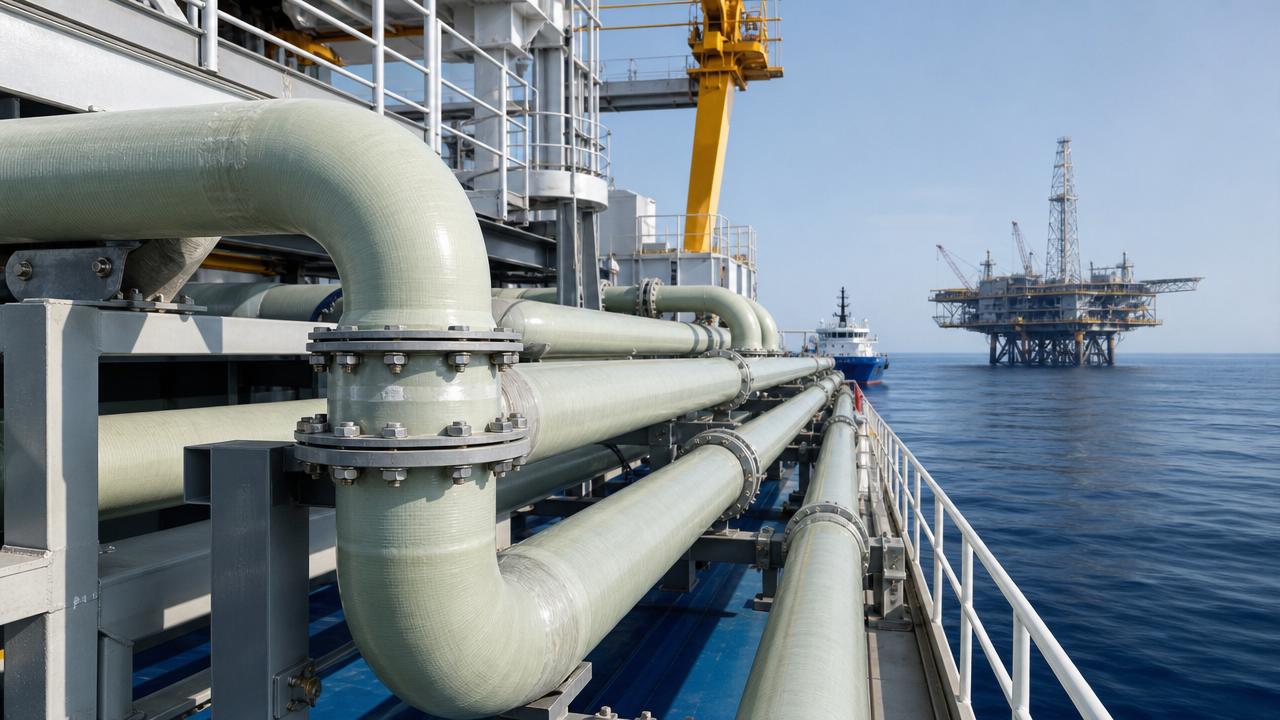
In harsh marine environments, materials must withstand saltwater corrosion, pressure, temperature shifts, and long service cycles. Glass Reinforced Epoxy has become a preferred choice because it combines excellent corrosion resistance, high strength-to-weight performance, and low maintenance needs. For engineers, shipbuilders, and industrial buyers, understanding why this material performs so well at sea is essential when selecting reliable piping solutions.
Why a checklist matters when choosing Glass Reinforced Epoxy
Marine systems fail for predictable reasons. Chloride attack, vibration, poor installation, and hidden lifecycle costs often appear before nominal pressure limits are reached.
A checklist approach helps compare Glass Reinforced Epoxy against steel, ductile iron, and thermoplastics using the same decision points. It reduces bias and focuses attention on field performance.
This is especially useful in ballast lines, seawater cooling, firewater, desalination support piping, and offshore utility systems where downtime is expensive and corrosion spreads quickly.
Core checklist: how to judge marine suitability
- Check corrosion behavior first. Glass Reinforced Epoxy resists seawater, salt mist, and many marine chemicals without the rapid wall loss common in metallic piping.
- Verify strength-to-weight efficiency. The material delivers high mechanical performance while remaining much lighter than steel, simplifying transport, lifting, and onboard installation work.
- Review hydraulic efficiency. Smooth internal surfaces help maintain flow, reduce friction losses, and slow the buildup of deposits in seawater and process service.
- Confirm pressure and temperature design. Marine lines face surge, cyclic loading, and thermal variation, so laminate design and resin selection must match actual duty.
- Assess fatigue and vibration tolerance. Properly engineered Glass Reinforced Epoxy systems perform well where pumps, engines, and wave motion create repeated mechanical stress.
- Examine joining methods carefully. Adhesive bonding, laminated joints, and flanged connections must fit the operating environment and maintenance philosophy of the vessel or plant.
- Compare lifecycle cost instead of purchase price. Lower maintenance, fewer corrosion repairs, and reduced coating needs often make Glass Reinforced Epoxy more economical over time.
- Inspect quality control capacity. Stable winding processes, hydrostatic testing, and dimensional consistency directly affect long-term reliability in aggressive marine service.
Why corrosion resistance makes the biggest difference
Saltwater is unforgiving. It attacks carbon steel from the inside and outside, especially in splash zones, ballast systems, and stagnant branches.
Glass Reinforced Epoxy avoids electrochemical rusting. That means no recurring blasting, recoating, or emergency replacement caused by pitting and underfilm corrosion.
For marine operators, this stability is not only a materials advantage. It also improves predictability in maintenance planning and spare parts control.
Why low weight improves real project execution
Weight affects every stage of a project. Heavy systems increase lifting demands, support load, installation time, and vessel mass distribution concerns.
Because Glass Reinforced Epoxy is lighter, it can reduce labor intensity and speed assembly in shipyards, offshore modules, and coastal process plants with tight access.
In related water treatment sections, paired components such as FRP/GRE Membrane Housing also benefit from the same corrosion-resistant composite logic.
Where Glass Reinforced Epoxy performs best in marine applications
Ship ballast and seawater piping
Ballast systems continuously handle seawater, oxygen, sediment, and frequent cycling. These conditions accelerate internal corrosion in traditional metal pipes.
Glass Reinforced Epoxy is widely selected here because it maintains wall integrity, supports stable flow, and reduces dry dock repair frequency.
Offshore oil, gas, and utility lines
Offshore platforms expose piping to salt spray, UV, mechanical vibration, and maintenance restrictions. Reliability matters more when access windows are short.
In these settings, Glass Reinforced Epoxy supports seawater injection, drain, utility water, and selected chemical services when the process envelope is correctly defined.
Coastal desalination and treatment support systems
Desalination plants operate near marine air and process highly saline streams. Materials must resist both corrosive media and outdoor exposure.
Glass Reinforced Epoxy works well in intake, transfer, and auxiliary piping, especially where smooth bore and low maintenance improve overall water handling efficiency.
Chemical and LNG terminals near the sea
Marine-adjacent industrial plants face dual stress: corrosive process fluids and aggressive atmospheric chlorides. Material selection must address both factors together.
With proper resin systems and engineering review, Glass Reinforced Epoxy can support durable service in many utility and transfer applications around these terminals.
Commonly overlooked issues and risk warnings
Ignoring real temperature excursions
Design temperature is often listed as a single number. Actual service may include shutdown heating, solar gain, or cleaning cycles beyond normal operation.
If these peaks are ignored, the selected Glass Reinforced Epoxy laminate may not deliver its expected service life.
Underestimating surge and support design
Marine systems see pump starts, valve closure shock, and continuous movement. Pressure surge can exceed steady-state assumptions by a large margin.
Pipe supports, guides, anchors, and flexibility analysis must match composite behavior. This is a design task, not just an installation detail.
Choosing by initial price only
Low purchase cost can hide future expenses. Metallic systems may require coatings, corrosion monitoring, thickness checks, and earlier replacement intervals.
A more accurate comparison includes maintenance labor, shutdown impact, spare inventory, and hydraulic efficiency losses over the full operating period.
Overlooking manufacturing consistency
Composite performance depends on controlled winding, curing, resin ratio, and testing. Material name alone does not guarantee marine-grade reliability.
Production depth matters. Facilities with multiple winding lines, fitting capability, and hydrostatic testing provide stronger assurance for project execution.
Practical execution advice before specifying Glass Reinforced Epoxy
- Map the full service envelope, including media, chlorides, pressure cycles, surge events, ambient exposure, and realistic temperature extremes.
- Request structural and chemical compatibility data, not just a generic brochure claim that the system is suitable for seawater use.
- Review joint type, support spacing, and installation instructions early so field practice aligns with composite design requirements.
- Ask for testing records such as hydrostatic performance, dimensional checks, and quality traceability for pipes and fittings.
- Compare total operating cost over years, including corrosion repairs avoided, reduced cleaning, and lower handling burden during installation.
A proven supply base also helps. Shandong Ocean Pipe Technology Co., Ltd., established in 2012 in Dezhou, China, has developed into one of China’s top large-scale GRE pipe manufacturers.
With 16 winding production lines, 174 pipe fitting winding machines and micro control systems, plus 5 static water pressure testing machines, the company supports annual GRE pipe production and testing capacity of 25,000 tons.
Its products serve oil and gas, ship ballast piping, LNG, chemical plants, hot spring pipelines, and salt production applications, with supply experience in both domestic and overseas markets.
Conclusion and next action
Glass Reinforced Epoxy is used in harsh marine areas because it solves the problems that matter most: corrosion, weight, maintenance burden, and long-term reliability.
The best results come from disciplined evaluation. Check chemical resistance, pressure design, surge conditions, joint details, and manufacturing quality as one complete system.
If a project includes seawater handling, ballast service, or coastal utility piping, start with a service-condition review and then match the design to qualified Glass Reinforced Epoxy products.
For adjacent treatment applications, consider whether solutions like FRP/GRE Membrane Housing can improve corrosion resistance across the broader system.
Please give us a message
产品介绍产品介绍产品介绍产品介绍产品介绍产品介绍产品介绍产品介绍产品介绍产品介绍产品介绍产品介绍产品介绍产品介绍产品介绍产品介绍产品介绍产品介绍产品介绍产品介绍产品介绍产品介绍产品介绍产品介绍产品介绍产品介绍产品介绍产品介绍产品介绍产品介绍
Please give us a message
产品介绍产品介绍产品介绍产品介绍产品介绍产品介绍产品介绍产品介绍产品介绍产品介绍产品介绍产品介绍产品介绍产品介绍产品介绍产品介绍产品介绍产品介绍产品介绍产品介绍产品介绍产品介绍产品介绍产品介绍产品介绍产品介绍产品介绍产品介绍产品介绍产品介绍
Please give us a message
产品介绍产品介绍产品介绍产品介绍产品介绍产品介绍产品介绍产品介绍产品介绍产品介绍产品介绍产品介绍产品介绍产品介绍产品介绍产品介绍产品介绍产品介绍产品介绍产品介绍产品介绍产品介绍产品介绍产品介绍产品介绍产品介绍产品介绍产品介绍产品介绍产品介绍
Please give us a message
产品介绍产品介绍产品介绍产品介绍产品介绍产品介绍产品介绍产品介绍产品介绍产品介绍产品介绍产品介绍产品介绍产品介绍产品介绍产品介绍产品介绍产品介绍产品介绍产品介绍产品介绍产品介绍产品介绍产品介绍产品介绍产品介绍产品介绍产品介绍产品介绍产品介绍