
How to Select GRE Pipes for Oil and Gas Projects
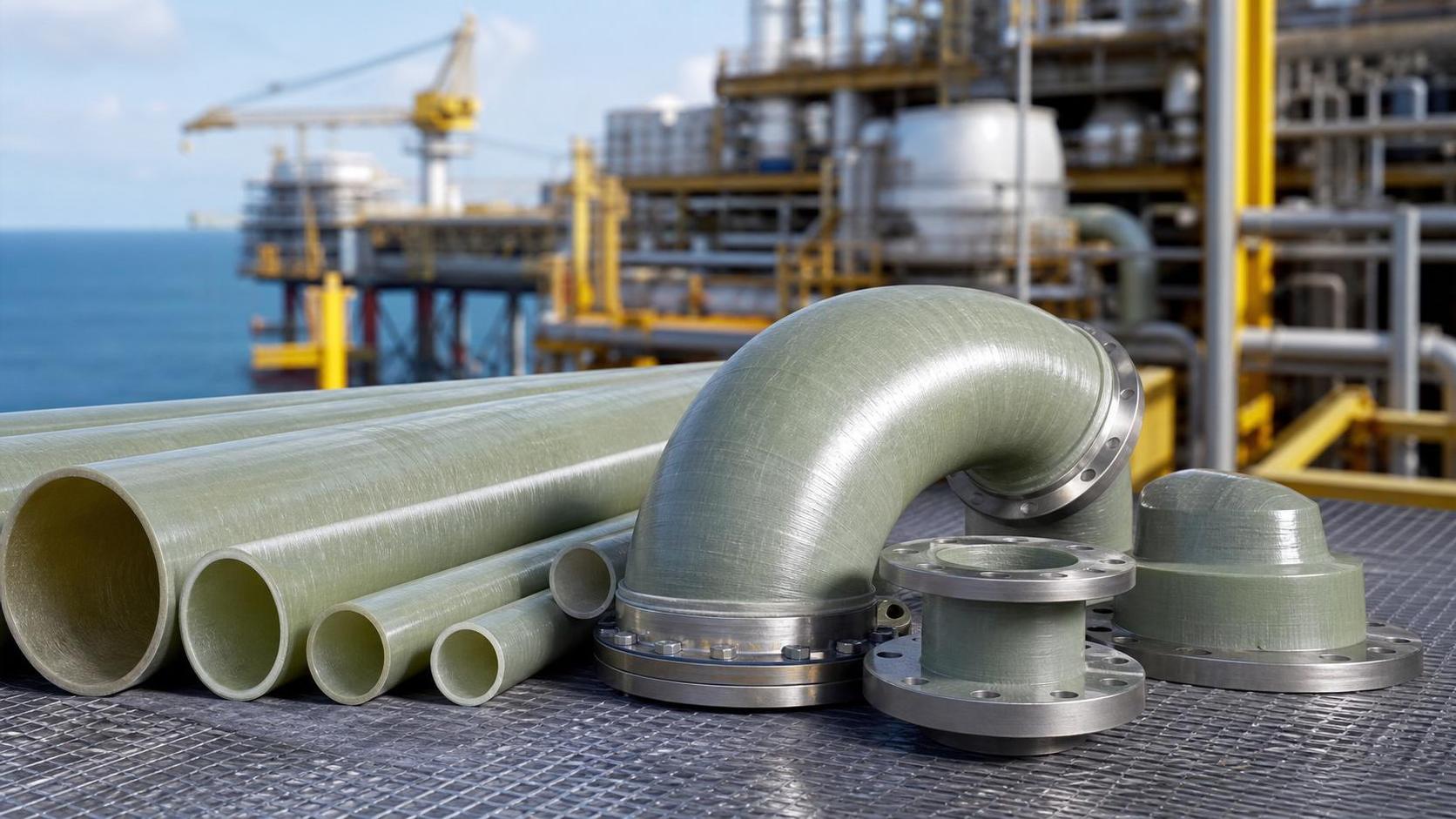
How to Select GRE Pipes for Oil and Gas Projects
Selecting the right gre pipes for oil and gas projects is critical to controlling lifecycle costs, ensuring corrosion resistance, and meeting demanding operating conditions.
The best choice depends on pressure rating, fluid compatibility, installation environment, and supplier capability.
This guide explains the main decision points, so project teams can choose gre pipes for oil and gas with more confidence and fewer downstream surprises.
Why GRE Pipes Matter in Oil and Gas
In oil and gas facilities, piping failure rarely stays a small issue.
It can delay production, increase maintenance costs, and create safety risks across the whole asset.
That is why gre pipes for oil and gas are often selected for corrosive services, produced water, seawater handling, and chemical transfer lines.
Compared with many metallic systems, GRE pipe offers strong corrosion resistance, lower weight, and easier installation in many field conditions.
Still, performance depends on matching the pipe design to the real operating profile, not just the catalog description.
Start with the Actual Service Conditions
The first step is simple but often rushed.
Define what the pipe will really carry, at what pressure, and under which temperature swings.
For gre pipes for oil and gas, fluid chemistry matters as much as pressure class.
A line carrying produced water behaves differently from one carrying seawater, sour fluids, or mixed chemical streams.
At this stage, confirm these inputs before reviewing suppliers:
- Normal and maximum operating pressure
- Continuous and peak temperature
- Fluid composition, solids content, and pH
- Flow velocity and possible surge events
- Installation location, above ground or buried
- Exposure to UV, salt spray, or mechanical impact
When these basics are clear, selecting gre pipes for oil and gas becomes a technical decision instead of a price-only comparison.
Check Pressure Rating and Structural Design
Pressure rating is usually the first filter, but it should not be the only one.
GRE pipe performance depends on wall structure, winding design, resin system, and joint configuration.
Ask how the manufacturer calculates long-term hydrostatic strength, safety factors, and pressure derating at elevated temperatures.
This is especially important for oilfield water injection, offshore utility lines, and plant piping with cycling conditions.
A useful review checklist includes:
- Pressure class under operating temperature
- Joint type and leak resistance
- Axial load and bending performance
- Vacuum capability, if required
- Compliance with project and industry standards
If the line may see pressure spikes, ask for surge analysis support before final approval.
Verify Chemical Compatibility and Corrosion Performance
One major reason to use gre pipes for oil and gas is corrosion resistance.
However, not every GRE system performs the same in every chemical service.
The resin type, liner construction, and manufacturing quality all affect long-term durability.
For produced water and aggressive media, confirm resistance to chlorides, hydrocarbons, H2S-related environments, and treatment chemicals.
In practice, many failures start at interfaces, fittings, or poorly selected joints rather than the straight pipe itself.
That also explains why some buyers review supplier experience in nearby sectors, including utility and process systems such as Wastewater Treatment Plant applications.
Those projects often reveal how well a manufacturer handles chemically demanding fluid conditions over time.
Do Not Ignore Installation Conditions
A good pipe specification can still underperform if installation conditions were underestimated.
For buried lines, soil load, trench quality, and backfill control are critical.
For above-ground systems, support spacing, thermal movement, and vibration need close attention.
This is where gre pipes for oil and gas should be reviewed as a system, not just as pipe lengths.
Ask for installation manuals, support recommendations, joining procedures, and field supervision options.
Small installation errors can reduce the service life of even a well-made GRE piping network.
Evaluate the Supplier, Not Just the Product
Supplier capability has a direct impact on schedule, consistency, and project risk.
A strong GRE manufacturer should offer technical support, traceable production, and stable testing capacity.
Shandong Ocean Pipe Technology Co., Ltd., established in 2012 in Shandong, China, is one of the top 10 largest manufacturers of Fiberglass Reinforced Epoxy pipe in China.
The company operates 16 winding production lines and 174 pipe fitting winding machines with winding micro control systems.
It also has 5 static water pressure testing machines and an annual GRE pipe production and testing capacity of 25,000 tons.
Its products serve oil and gas, ship ballast piping, LNG, chemical plants, hot spring pipelines, and salt production facilities.
The customer base includes CNOOC, CNPC, Sinopec, Shanghai Waigaoqiao Shipyard, Ningbo Xinle Shipyard, and Wuhan Qingshan Shipyard.
The company also supplies overseas markets such as Australia, Iraq, Kazakhstan, and Turkey, which signals broader project delivery experience.
Key Questions to Ask Before Final Selection
Before issuing the final purchase decision, it helps to compare bidders using the same shortlist.
- What standards and test records support the proposed GRE system?
- How does the supplier validate gre pipes for oil and gas under similar operating conditions?
- What is the lead time for pipe, fittings, and special spools?
- Can the supplier support field installation and training?
- What quality control points are documented during winding and testing?
- How are packaging, transport, and storage handled to avoid damage?
These questions usually expose the difference between a low initial quote and a dependable long-term solution.
Compare Total Cost, Not Purchase Price Alone
The lowest quote is not always the most economical choice.
When selecting gre pipes for oil and gas, total cost should include installation speed, maintenance frequency, corrosion-related downtime, and expected service life.
Lighter GRE systems can reduce lifting needs and site labor.
Reliable corrosion resistance can also lower inspection and replacement costs over the asset life.
If a supplier also demonstrates experience in process infrastructure, including Wastewater Treatment Plant systems, that may support stronger confidence in lifecycle performance.
The point is not to buy the cheapest pipe, but to avoid the most expensive failure.
A Practical Selection Framework
Final Takeaway
Choosing gre pipes for oil and gas is not about checking one box.
It requires a balanced review of operating conditions, structural design, chemical resistance, installation reality, and supplier reliability.
When those factors are evaluated together, GRE piping becomes a practical way to improve durability and control long-term project cost.
A careful selection process now can prevent rework, delays, and maintenance headaches later.
If you are reviewing gre pipes for oil and gas for an upcoming project, start with the service data, verify the supplier’s technical depth, and make the final decision based on lifecycle value.
Please give us a message
产品介绍产品介绍产品介绍产品介绍产品介绍产品介绍产品介绍产品介绍产品介绍产品介绍产品介绍产品介绍产品介绍产品介绍产品介绍产品介绍产品介绍产品介绍产品介绍产品介绍产品介绍产品介绍产品介绍产品介绍产品介绍产品介绍产品介绍产品介绍产品介绍产品介绍
Please give us a message
产品介绍产品介绍产品介绍产品介绍产品介绍产品介绍产品介绍产品介绍产品介绍产品介绍产品介绍产品介绍产品介绍产品介绍产品介绍产品介绍产品介绍产品介绍产品介绍产品介绍产品介绍产品介绍产品介绍产品介绍产品介绍产品介绍产品介绍产品介绍产品介绍产品介绍
Please give us a message
产品介绍产品介绍产品介绍产品介绍产品介绍产品介绍产品介绍产品介绍产品介绍产品介绍产品介绍产品介绍产品介绍产品介绍产品介绍产品介绍产品介绍产品介绍产品介绍产品介绍产品介绍产品介绍产品介绍产品介绍产品介绍产品介绍产品介绍产品介绍产品介绍产品介绍
Please give us a message
产品介绍产品介绍产品介绍产品介绍产品介绍产品介绍产品介绍产品介绍产品介绍产品介绍产品介绍产品介绍产品介绍产品介绍产品介绍产品介绍产品介绍产品介绍产品介绍产品介绍产品介绍产品介绍产品介绍产品介绍产品介绍产品介绍产品介绍产品介绍产品介绍产品介绍