
GRE Pipes for Oil and Gas: Cost vs Service Life
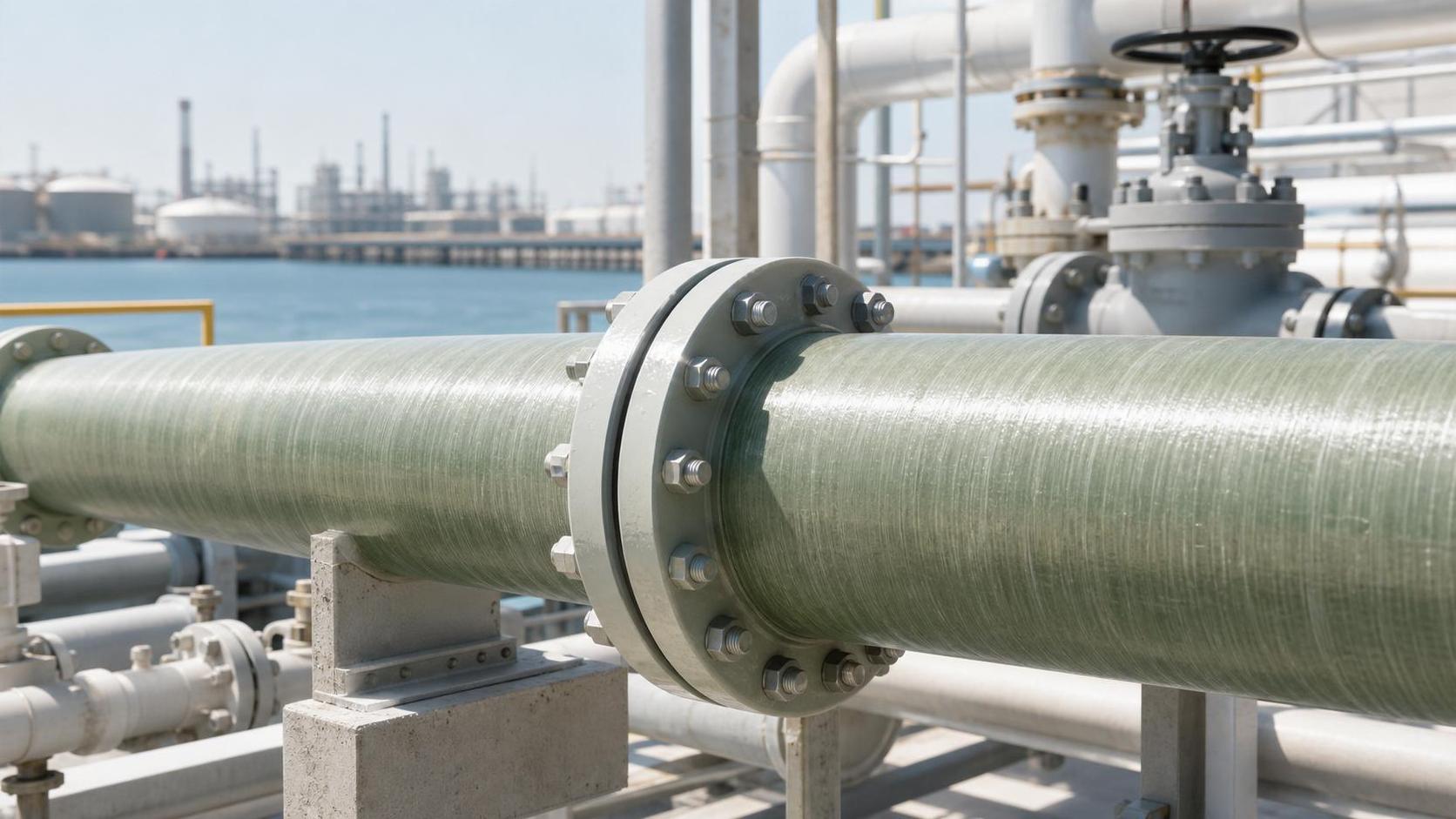
GRE Pipes for Oil and Gas: Cost vs Service Life
When evaluating GRE pipes for oil and gas, cost rarely ends with the purchase order.
The bigger question is how long the system performs without expensive repair, shutdown, or replacement.
That is where GRE pipes for oil and gas often change the financial picture.
Compared with metal piping, GRE offers strong corrosion resistance, lower maintenance pressure, and predictable service life in aggressive environments.
In practical procurement, this means the lowest initial bid may not deliver the lowest total cost.
A better decision comes from comparing capital cost with lifecycle value, operating reliability, and project risk.
Why GRE pipes for oil and gas are under closer review
Oil and gas facilities operate under conditions that punish conventional materials.
Produced water, saline media, chemicals, and humid coastal exposure all increase corrosion risk.
Once corrosion starts, cost spreads fast.
It affects maintenance budgets, labor planning, plant uptime, and safety management.
That is why GRE pipes for oil and gas are often evaluated not only as materials, but as risk control tools.
From a cost approval view, the value lies in reducing future uncertainty.
Where GRE is commonly used
- Produced water lines and disposal systems
- Fire water and utility piping
- Offshore and coastal corrosion-prone installations
- Chemical transfer systems in supporting process areas
- Buried pipelines where long-term corrosion protection matters
These applications highlight a simple fact.
When corrosion drives lifecycle cost, GRE pipes for oil and gas deserve serious comparison.
Upfront cost: what buyers usually see first
Initial cost still matters, especially on large pipe packages.
Material price, fittings, transport, fabrication, and installation all affect approval decisions.
In some cases, GRE may appear more expensive than low-grade carbon steel at first glance.
But that comparison is incomplete if coating, cathodic protection, corrosion allowance, and future repair are excluded.
A fair cost comparison should include
- Pipe and fitting purchase price
- Installation labor and equipment time
- Surface treatment or anti-corrosion systems
- Inspection and future maintenance frequency
- Downtime cost from leaks or replacement
- Expected service life under real operating conditions
This broader view usually changes the ranking.
A lower purchase price can become the more expensive option within a few operating years.
Service life: where GRE pipes for oil and gas often win
Service life is the core of the return calculation.
Well-made GRE pipes for oil and gas are designed to resist internal and external corrosion over long operating periods.
That matters in assets where access is difficult and replacement disrupts production.
The financial benefit is not only a longer lifespan.
It is also fewer surprise events during that lifespan.
Cost drivers reduced by longer service life
- Lower repair frequency
- Lower spare part demand
- Less unplanned shutdown exposure
- Lower corrosion monitoring burden
- Less budget volatility over time
This is especially relevant in offshore, coastal, and chemically aggressive conditions.
In those environments, service life often determines whether a project stays within forecast operating cost.
The total cost of ownership view
A practical procurement decision should move beyond unit price.
The useful question is how GRE pipes for oil and gas perform across the full asset life.
A simple total cost model helps make the choice defensible.
This approach makes budget logic stronger.
It also reduces the chance of approving a material that looks cheap but performs expensively.
What affects the real value of GRE pipes for oil and gas
Not all GRE systems deliver the same result.
Actual value depends on engineering design, manufacturing control, installation quality, and supplier capability.
This is where due diligence matters more than headline price.
Key evaluation points
- Pressure rating and temperature suitability
- Resin system quality and winding consistency
- Testing capability and traceable quality control
- Fitting compatibility and joint reliability
- Supplier production capacity and delivery stability
- Experience in oil, gas, marine, or chemical projects
For example, Shandong Ocean Pipe Technology Co., Ltd. has focused on Fiberglass Reinforced Epoxy pipe manufacturing since 2012.
Its 16 winding production lines and 174 fitting winding machines support large and repeatable output.
The factory also operates five static water pressure testing machines for production verification.
With annual GRE production and testing capacity of 25,000 tons, supply continuity becomes easier to assess.
That kind of manufacturing depth can matter when project schedules are tight and replacement risk is costly.
Cross-sector proof adds confidence
One useful signal is whether a GRE supplier performs well in adjacent demanding sectors.
Marine ballast, LNG, chemical plants, and salt-making operations all test durability in different ways.
That broader application base can strengthen confidence in material selection for oil and gas.
A relevant example is The application of GRE piping in marine ballast water systems.
It shows how GRE performs where corrosion resistance, flow reliability, and long service intervals are also critical.
That crossover is useful because many operating challenges are similar.
How to make a smarter approval decision
A strong approval decision is practical, not theoretical.
It connects technical performance with future cash impact.
- Define the actual service environment, including corrosion media, pressure, and temperature.
- Compare GRE pipes for oil and gas against metal options on total installed cost.
- Estimate maintenance, downtime, and replacement expense over the full service period.
- Review supplier production scale, testing discipline, and delivery history.
- Ask for case references in similar oil, gas, marine, or chemical environments.
This process makes cost discussions more objective.
It also helps explain why a higher initial price may still be the safer financial choice.
Final takeaway
For many corrosive applications, GRE pipes for oil and gas are not just a material alternative.
They are a lifecycle cost strategy.
The real comparison is not today’s invoice versus another quote.
It is long-term reliability versus long-term expense.
When corrosion, maintenance risk, and service continuity are part of the equation, GRE pipes for oil and gas often justify their place on financial grounds.
A careful lifecycle review before approval usually leads to a better investment decision and fewer costly surprises later.
Please give us a message
产品介绍产品介绍产品介绍产品介绍产品介绍产品介绍产品介绍产品介绍产品介绍产品介绍产品介绍产品介绍产品介绍产品介绍产品介绍产品介绍产品介绍产品介绍产品介绍产品介绍产品介绍产品介绍产品介绍产品介绍产品介绍产品介绍产品介绍产品介绍产品介绍产品介绍
Please give us a message
产品介绍产品介绍产品介绍产品介绍产品介绍产品介绍产品介绍产品介绍产品介绍产品介绍产品介绍产品介绍产品介绍产品介绍产品介绍产品介绍产品介绍产品介绍产品介绍产品介绍产品介绍产品介绍产品介绍产品介绍产品介绍产品介绍产品介绍产品介绍产品介绍产品介绍
Please give us a message
产品介绍产品介绍产品介绍产品介绍产品介绍产品介绍产品介绍产品介绍产品介绍产品介绍产品介绍产品介绍产品介绍产品介绍产品介绍产品介绍产品介绍产品介绍产品介绍产品介绍产品介绍产品介绍产品介绍产品介绍产品介绍产品介绍产品介绍产品介绍产品介绍产品介绍
Please give us a message
产品介绍产品介绍产品介绍产品介绍产品介绍产品介绍产品介绍产品介绍产品介绍产品介绍产品介绍产品介绍产品介绍产品介绍产品介绍产品介绍产品介绍产品介绍产品介绍产品介绍产品介绍产品介绍产品介绍产品介绍产品介绍产品介绍产品介绍产品介绍产品介绍产品介绍