
Common Failure Risks in GRE Oil and Gas Pipelines
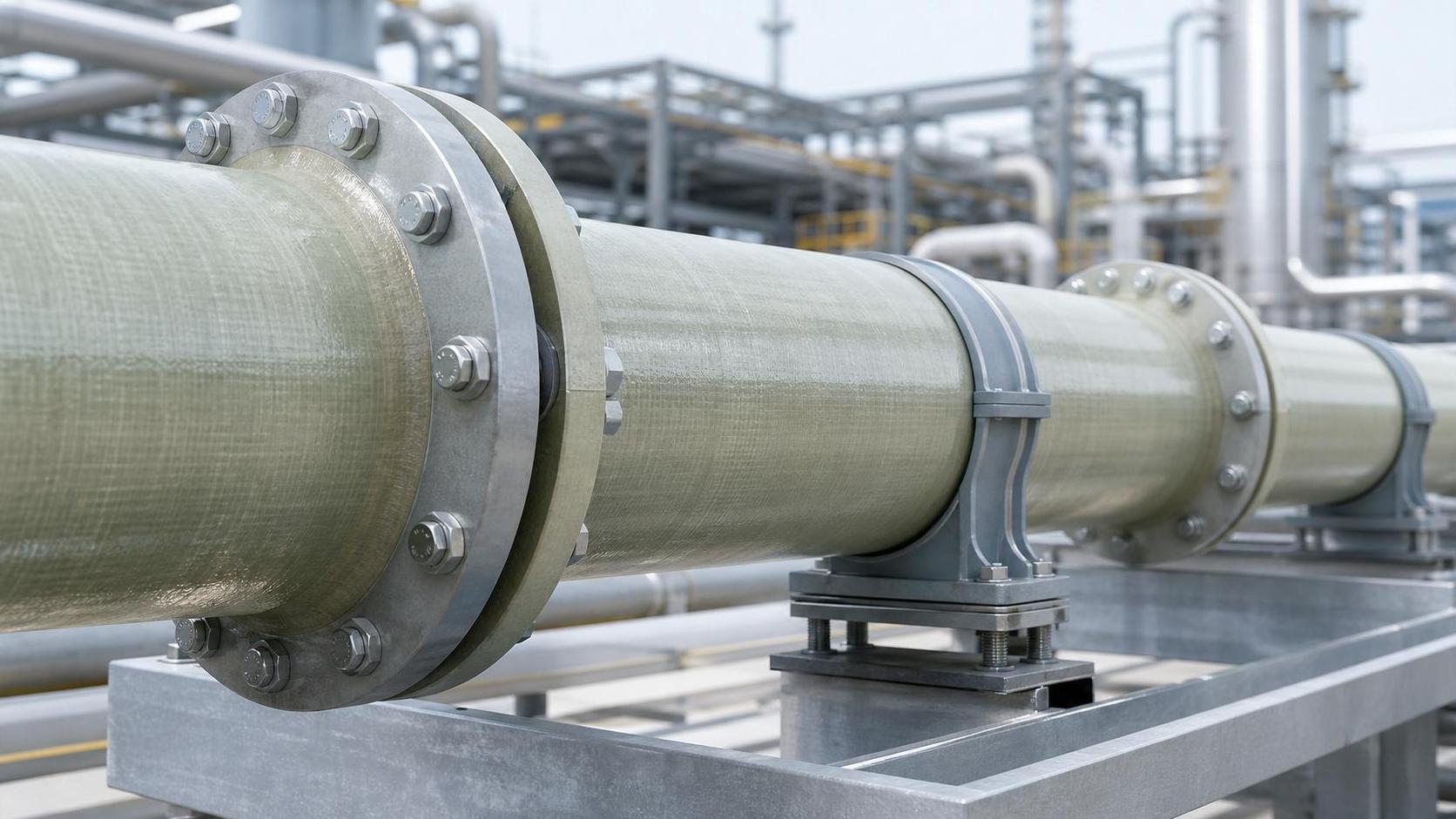
Why failure risk changes from one oil and gas line to another
In field use, gre pipes for oil and gas rarely fail for one isolated reason.
Problems usually appear when material behavior, operating pressure, temperature swing, and installation quality interact over time.
That is why risk control cannot stop at checking a datasheet.
A buried produced-water line, an offshore utility run, and a chemical injection branch may all use the same GRE concept.
Yet their weak points are different.
For fiberglass reinforced epoxy systems, the glass structure, resin selection, winding consistency, and joint integrity matter as much as nominal pressure class.
This is especially relevant in the glass and ceramic materials sector, where long-term stability depends on controlled manufacturing and predictable chemical resistance.
Companies with large-scale winding capability and hydrostatic testing capacity, such as Shandong Ocean Pipe Technology, are positioned to reduce variation before pipes reach site.
Even so, the field environment still decides how gre pipes for oil and gas will age.
Installation-heavy projects often fail before service life really begins
One common scenario is a new pipeline system that shows leaks or cracking soon after commissioning.
In most cases, the root issue is not the GRE material alone.
It is poor alignment, over-tight support spacing, rushed adhesive curing, or uncontrolled handling during transport and lifting.
GRE has strong corrosion resistance, but it does not forgive point loading well.
If a spool is forced into position, residual stress stays inside the line.
Later, pressure cycling exposes that hidden damage.
In practical installation planning, the better judgment is to check joint type, angular tolerance, trench bedding, support design, and curing conditions together.
For gre pipes for oil and gas, early-stage errors are often more expensive than later maintenance.
What deserves attention during installation
- Check whether pipe ends remain round after transport and storage.
- Confirm support spans against fluid density, not empty-line assumptions.
- Protect joints from dust, moisture, and low-temperature curing delays.
- Avoid forcing connection by cranes or chain blocks.
- Record hydrotest conditions, because test quality affects later fault tracing.
Pressure fluctuation is a different risk than steady high pressure
Another frequent misunderstanding is to focus only on maximum design pressure.
In service, gre pipes for oil and gas may suffer more from pressure variation than from a stable high load.
This is common in pump discharge lines, produced-water transfer loops, and systems with repeated start-stop conditions.
A water hammer event does not always break the pipe immediately.
More often, it weakens joints, enlarges microcracks, or disturbs supports.
The risk becomes higher when pressure cycling combines with elevated temperature.
That is because the resin-rich layers react differently from the glass reinforcement under repeated loading.
Where process water quality is inconsistent, operators sometimes coordinate line reliability with nearby treatment assets, including systems like Wastewater Treatment Plant, because fluid condition affects deposit formation and transient flow behavior.
Different operating situations change the judgment point
Chemical exposure is not judged by media name alone
A line labeled water, brine, or produced fluid can still create very different conditions for GRE.
The real question is not only what the fluid is called.
It is how concentration, temperature, solids, dissolved gas, and cleaning chemicals change during operation.
For gre pipes for oil and gas, internal corrosion resistance is one of the strongest advantages.
Still, not every epoxy formulation behaves the same under caustic wash, aromatic exposure, or hot saline conditions.
This is where manufacturing discipline matters.
A producer with multiple winding lines, fitting machines, and pressure testing stations can better maintain repeatability across batches.
That consistency becomes valuable when projects span onshore gathering, LNG support systems, and chemical plant interfaces.
The mistake to avoid is assuming similar fluids mean identical service conditions.
Offshore, buried, and plant-mounted lines age in different ways
The environment around the pipe often changes the failure path more than the fluid inside it.
In offshore service, vibration, clamp wear, UV exposure during storage, and movement at equipment interfaces deserve close review.
In buried lines, bedding quality, backfill stones, settlement, and third-party loading become more important.
Inside process plants, thermal expansion mismatch and nozzle loads often dominate.
These are very different aging environments for gre pipes for oil and gas.
A pipe that performs well in one location may face avoidable damage in another if supports, guides, or joint details are copied without adjustment.
That is why field-proven export experience across regions such as Australia, Iraq, Kazakhstan, and Turkey matters.
Different climates and installation practices reveal different weaknesses.
Typical misjudgments in these environments
- Treating buried and above-ground support rules as interchangeable.
- Using metal-pipe vibration assumptions for composite lines.
- Ignoring movement near pumps, tanks, and rotating equipment.
- Selecting by purchase price without reviewing maintenance access.
Long service life depends on inspection logic, not only initial quality
Even high-quality gre pipes for oil and gas need inspection methods matched to their failure modes.
Metal-line habits do not always transfer well.
External rust is not the warning sign here.
The more useful indicators are leakage at joints, surface damage at supports, unusual deflection, repeated pressure excursions, and changes after shutdowns or modifications.
In some facilities, utilities and process-water systems are reviewed together, especially where line condition links back to broader water handling infrastructure like a Wastewater Treatment Plant.
That broader view helps identify whether a pipeline issue comes from material stress, unstable media quality, or operational upset.
The most reliable approach is to pair periodic visual checks with operating history, repair records, and site-specific inspection intervals.
What to confirm before choosing or reviewing GRE service conditions
Before final selection or troubleshooting, it helps to organize the application by real service conditions rather than by pipe name alone.
- Define the actual fluid envelope, including upset chemistry and cleaning media.
- Review pressure profile, not only rated design pressure.
- Check temperature range, cycling frequency, and nearby heat sources.
- Match support, burial, or clamp details to the installation environment.
- Confirm joint method, curing control, and hydrotest records.
- Plan inspections around likely damage points instead of generic intervals.
When these checks are handled early, gre pipes for oil and gas become easier to evaluate on service life, maintenance burden, and operating reliability.
The practical next step is to compare each line section by environment, pressure behavior, and media condition, then build an application-specific risk checklist before installation or replacement.
Please give us a message
产品介绍产品介绍产品介绍产品介绍产品介绍产品介绍产品介绍产品介绍产品介绍产品介绍产品介绍产品介绍产品介绍产品介绍产品介绍产品介绍产品介绍产品介绍产品介绍产品介绍产品介绍产品介绍产品介绍产品介绍产品介绍产品介绍产品介绍产品介绍产品介绍产品介绍
Please give us a message
产品介绍产品介绍产品介绍产品介绍产品介绍产品介绍产品介绍产品介绍产品介绍产品介绍产品介绍产品介绍产品介绍产品介绍产品介绍产品介绍产品介绍产品介绍产品介绍产品介绍产品介绍产品介绍产品介绍产品介绍产品介绍产品介绍产品介绍产品介绍产品介绍产品介绍
Please give us a message
产品介绍产品介绍产品介绍产品介绍产品介绍产品介绍产品介绍产品介绍产品介绍产品介绍产品介绍产品介绍产品介绍产品介绍产品介绍产品介绍产品介绍产品介绍产品介绍产品介绍产品介绍产品介绍产品介绍产品介绍产品介绍产品介绍产品介绍产品介绍产品介绍产品介绍
Please give us a message
产品介绍产品介绍产品介绍产品介绍产品介绍产品介绍产品介绍产品介绍产品介绍产品介绍产品介绍产品介绍产品介绍产品介绍产品介绍产品介绍产品介绍产品介绍产品介绍产品介绍产品介绍产品介绍产品介绍产品介绍产品介绍产品介绍产品介绍产品介绍产品介绍产品介绍