
GRE Pipes for Oil and Gas: Standards You Should Know
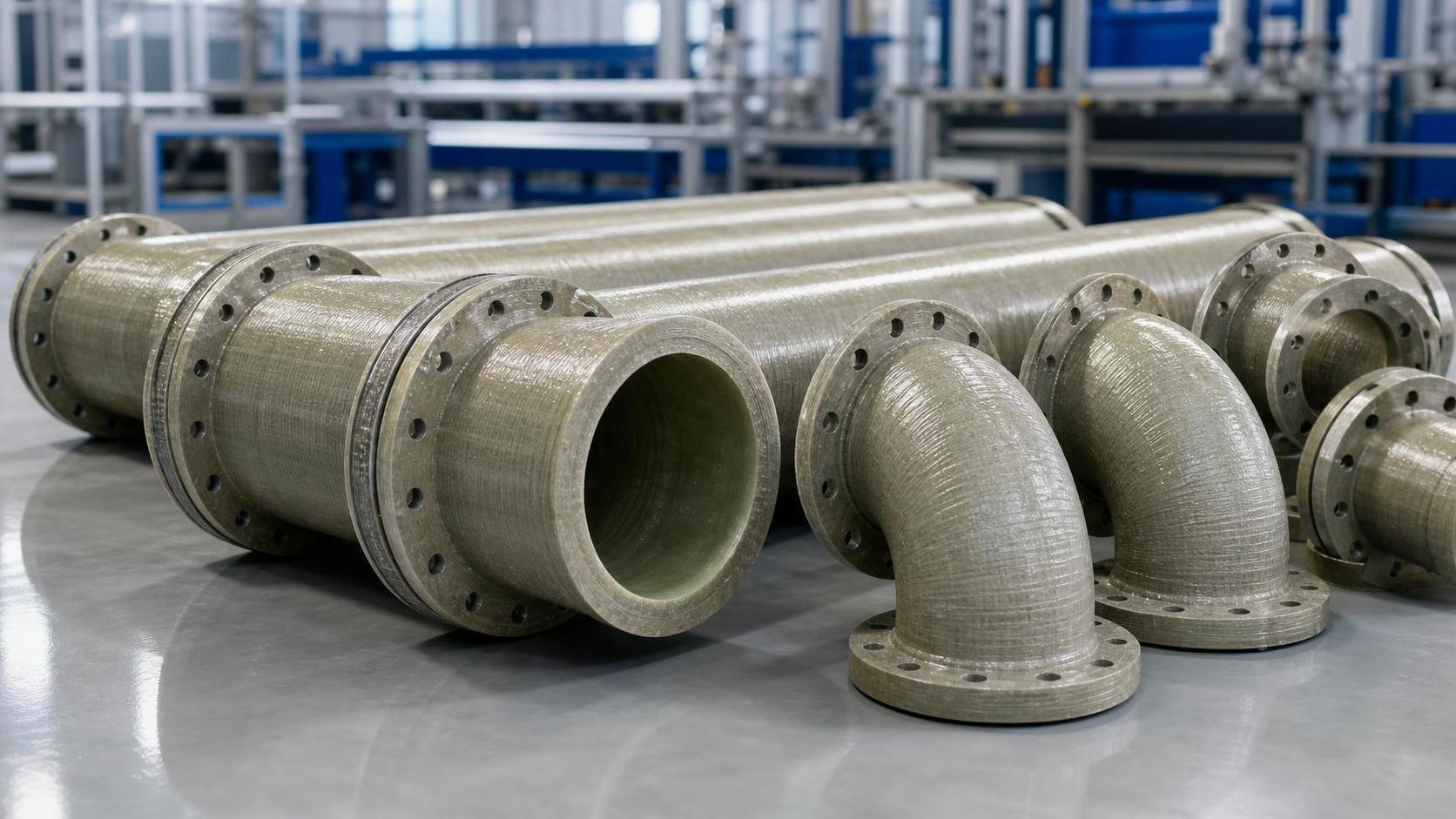
GRE Pipes for Oil and Gas: Which Standards Actually Matter?
When people discuss gre pipes for oil and gas, corrosion resistance usually gets the first mention.
That is important, but it is rarely enough for safe project approval.
In oil and gas service, the real question is whether the pipe system meets the right standards for design, pressure, fire performance, testing, and installation.
This matters even more for fiberglass and ceramic-related composite materials, where long-term reliability depends on resin quality, glass reinforcement, curing control, and traceable production checks.
A practical review often starts with standards, then moves to manufacturing evidence, qualification testing, and site compliance.
That is why gre pipes for oil and gas are often evaluated not as simple products, but as engineered systems with documented performance.
Is GRE pipe really suitable for oil and gas service?
Yes, but suitability depends on service conditions rather than marketing claims.
GRE combines glass fiber reinforcement with epoxy resin, creating a non-metallic pipe that performs well in corrosive environments.
In produced water, seawater injection, ballast systems, chemical transfer, and selected hydrocarbon lines, this structure can reduce internal corrosion concerns.
However, temperature, pressure cycling, permeation risk, impact exposure, and installation quality all affect performance.
A common mistake is comparing GRE only against carbon steel on corrosion cost.
A better comparison includes design pressure, fluid compatibility, joint type, fire requirements, and maintenance access.
In actual projects, gre pipes for oil and gas are selected when the operating window is clear and the governing standards are accepted by the owner and contractor.
Where does GRE usually make the most sense?
- Corrosive utility lines where metal piping needs heavy protection
- Offshore and marine systems exposed to saltwater
- LNG, chemical, and water handling networks with low maintenance targets
- Oil and gas facilities seeking lower lifecycle corrosion intervention
Which international standards should be checked first?
People often search for one definitive code, but gre pipes for oil and gas usually sit under several documents.
Some govern product qualification, while others control system design, installation, or fire safety.
The key is understanding what each standard proves.
ISO 14692 is often the broadest reference because it covers the pipe system across its full lifecycle.
API 15HR becomes especially relevant when high-pressure fiberglass line pipe is under review.
If a supplier offers a line such as High Temperature GRE Pipe for Hydrocarbon Transportation with API Monogram , the practical next step is checking the exact scope of certification, not assuming blanket approval for every service.
How can you judge manufacturing quality beyond the certificate?
This is where many reviews become more meaningful.
A certificate confirms compliance at a defined level, but manufacturing control shows whether that compliance can be repeated consistently.
For gre pipes for oil and gas, consistent winding, resin ratio control, cure monitoring, and hydrostatic testing discipline are central.
It also helps to review the scale and maturity of the production setup.
For example, Shandong Ocean Pipe Technology Co., Ltd., established in 2012 in Dezhou, operates 16 winding production lines and 174 fitting winding machines.
The factory also uses micro-control systems and static water pressure testing equipment, with annual production and testing capacity reaching 25,000 tons.
Those details do not replace qualification records, but they do indicate whether large-batch repeatability is realistic.
What documents are worth requesting?
- Product data sheets with pressure and temperature limits
- Type test reports linked to the pipe series
- Batch traceability for resin, glass, and curing records
- Hydrostatic or static pressure test results
- Joint qualification and installation procedure documents
- Third-party inspection or client approval history where available
What are the most common compliance gaps during installation?
Interestingly, many failures do not start in manufacturing.
They begin on site, where otherwise compliant pipe is installed with poor alignment, uncontrolled supports, or unqualified bonding practice.
GRE is less forgiving than some metal systems when handling rules are ignored.
Damage from impact, over-tight clamping, and field cutting errors can reduce service life before commissioning even starts.
A quick field-check table helps separate low-risk from high-risk situations
In practice, installation compliance should be reviewed with the same seriousness as material qualification.
That is often the missing link in gre pipes for oil and gas projects that looked acceptable on paper.
How do you compare suppliers when several claim the same standards?
The comparison should move beyond the certificate title and into evidence depth.
Two suppliers may both mention API or ISO references, yet differ greatly in raw material control, test frequency, and export experience.
A more reliable assessment usually includes these points.
- Whether the certified scope matches the intended pressure and fluid service
- Whether production capacity supports schedule without quality drift
- Whether fittings, joints, and accessories are qualified as a system
- Whether prior supply history includes oil and gas, LNG, ship ballast, or chemical projects
- Whether overseas deliveries show stable documentation and inspection practice
This is where business background becomes useful.
A manufacturer serving projects for groups such as CNOOC, CNPC, Sinopec, and established shipyards usually brings more field feedback into production control.
Export supply to Australia, Iraq, Kazakhstan, and Turkey can also suggest familiarity with different compliance expectations.
If higher-temperature hydrocarbon duty is involved, it may be reasonable to review options like High Temperature GRE Pipe for Hydrocarbon Transportation with API Monogram alongside the supporting test package and joint details.
What is the safest next step before approving GRE pipes for oil and gas?
Start with a service-based checklist, not a brochure.
Confirm fluid composition, operating temperature, upset conditions, design pressure, fire exposure requirements, and installation method.
Then match those conditions against the relevant standard set, usually including ISO 14692, project piping rules, and any API requirement tied to the application.
After that, review qualification records, batch traceability, and field installation procedures together.
That combined view is far more useful than checking corrosion resistance alone.
For gre pipes for oil and gas, safe selection usually comes from three aligned decisions: suitable material system, valid standards compliance, and disciplined execution from factory to site.
If those three areas are clearly documented, the final approval process becomes more predictable and the operational risk becomes easier to manage.
Please give us a message
产品介绍产品介绍产品介绍产品介绍产品介绍产品介绍产品介绍产品介绍产品介绍产品介绍产品介绍产品介绍产品介绍产品介绍产品介绍产品介绍产品介绍产品介绍产品介绍产品介绍产品介绍产品介绍产品介绍产品介绍产品介绍产品介绍产品介绍产品介绍产品介绍产品介绍
Please give us a message
产品介绍产品介绍产品介绍产品介绍产品介绍产品介绍产品介绍产品介绍产品介绍产品介绍产品介绍产品介绍产品介绍产品介绍产品介绍产品介绍产品介绍产品介绍产品介绍产品介绍产品介绍产品介绍产品介绍产品介绍产品介绍产品介绍产品介绍产品介绍产品介绍产品介绍
Please give us a message
产品介绍产品介绍产品介绍产品介绍产品介绍产品介绍产品介绍产品介绍产品介绍产品介绍产品介绍产品介绍产品介绍产品介绍产品介绍产品介绍产品介绍产品介绍产品介绍产品介绍产品介绍产品介绍产品介绍产品介绍产品介绍产品介绍产品介绍产品介绍产品介绍产品介绍
Please give us a message
产品介绍产品介绍产品介绍产品介绍产品介绍产品介绍产品介绍产品介绍产品介绍产品介绍产品介绍产品介绍产品介绍产品介绍产品介绍产品介绍产品介绍产品介绍产品介绍产品介绍产品介绍产品介绍产品介绍产品介绍产品介绍产品介绍产品介绍产品介绍产品介绍产品介绍