
Where GRE Pipes Fit Best in Oil and Gas Systems
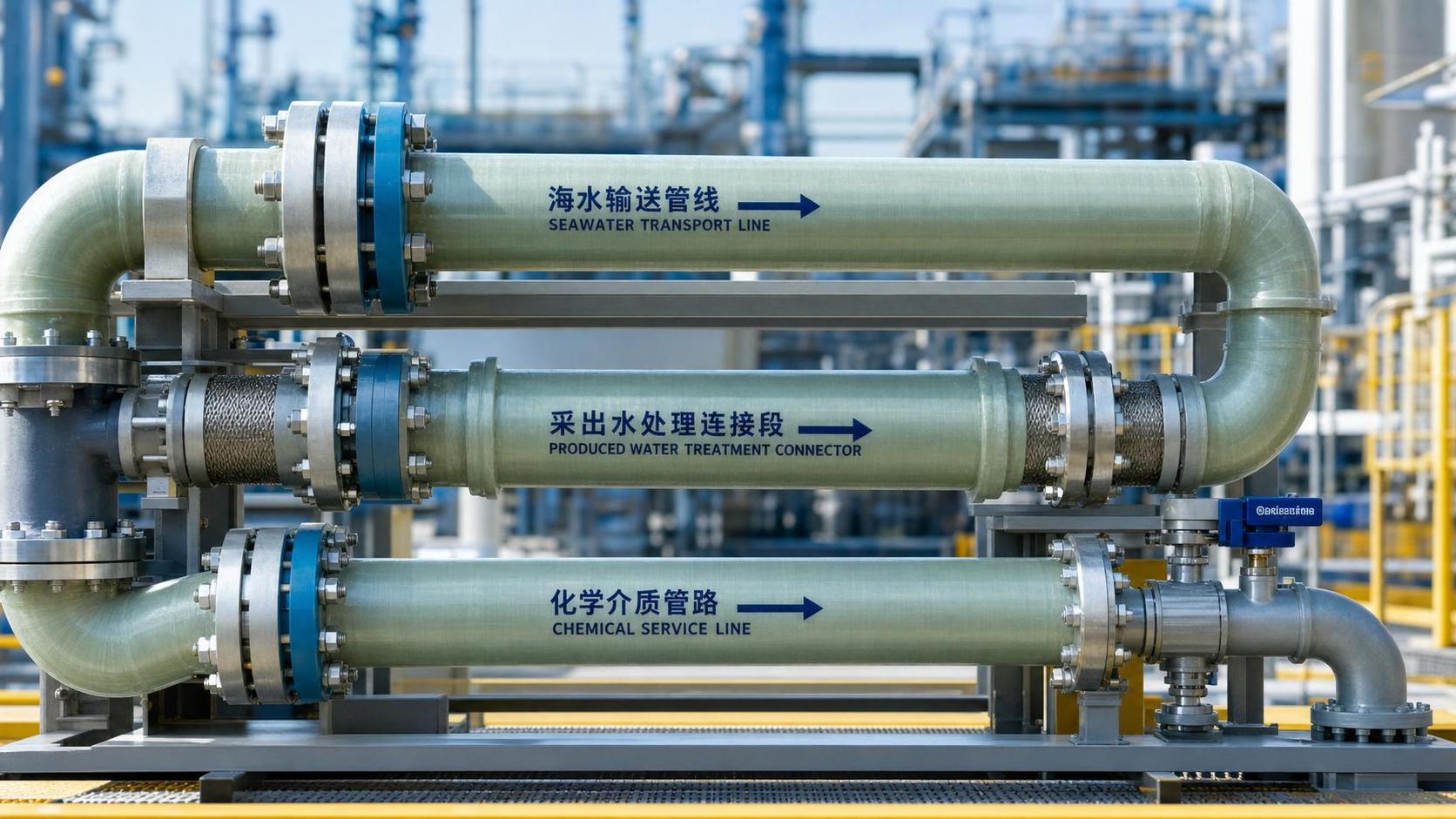
Where GRE pipes fit best in oil and gas systems
In energy projects, pipe selection rarely depends on pressure alone.
Media chemistry, external environment, installation limits, and maintenance access usually decide whether a material performs well over time.
That is why gre pipes for oil and gas are often evaluated against steel, lined steel, and thermoplastics in a much broader way.
They combine corrosion resistance with low weight, which matters in offshore modules, treatment skids, and remote field layouts.
Because GRE is a fiberglass and epoxy composite, it also sits naturally within the wider glass and ceramic materials landscape.
Its non-metallic structure changes how engineers judge service life, joining methods, and inspection routines.
In practice, the question is not whether gre pipes for oil and gas are good in general.
The better question is where they fit best, and where another material may still be the safer choice.
Actual use conditions change the decision
Similar-looking lines can behave very differently once fluid composition and operating cycles are reviewed.
Produced water may contain chlorides, solids, residual oil, and treatment chemicals.
Seawater injection lines face external salt exposure and internal erosion concerns.
Chemical transfer headers may run at lower pressure, yet compatibility becomes far more critical than strength margin.
This is where gre pipes for oil and gas usually stand out.
They are often selected when corrosion risk drives lifecycle cost higher than the initial purchase price.
Manufacturing quality also matters.
A producer with controlled winding systems, hydrostatic testing capacity, and field experience across oil, LNG, marine, and chemical applications can reduce execution uncertainty.
That background is relevant when evaluating suppliers such as Shandong Ocean Pipe Technology, whose scale and project references indicate repeatable GRE production rather than occasional custom fabrication.
Produced water and disposal lines are often the strongest fit
Produced water service is one of the most common reasons teams move toward gre pipes for oil and gas.
The fluid is chemically aggressive enough to challenge carbon steel, especially when oxygen ingress or bacteria increase corrosion rates.
In these lines, the main decision points are internal corrosion, solids content, temperature stability, and expected shutdown frequency.
GRE tends to perform well when corrosion dominates and operating temperatures remain within qualified limits.
It becomes less attractive if abrasive solids are high and flow velocity cannot be managed.
A common mistake is to classify all water lines as low risk.
In reality, disposal water chemistry can fluctuate more than process teams expect, especially after chemical dosing changes or reservoir aging.
When that variability exists, material compatibility review should cover upset conditions, not only normal operation.
Seawater systems benefit when corrosion and weight both matter
Seawater lift, cooling, and firewater systems create a different set of priorities.
Here, chloride resistance is essential, but installation weight and handling constraints also shape the final material choice.
This is especially true in offshore topsides, FPSO utility zones, and compact skid layouts.
gre pipes for oil and gas can reduce structural load compared with metallic alternatives.
That advantage may simplify supports, reduce lifting complexity, and shorten field assembly time.
However, seawater systems are not automatically a GRE decision.
Transient surge, vacuum conditions, support spacing, and ultraviolet exposure still need review.
The best results usually come when hydraulic design and support design are developed together, rather than after material selection is already fixed.
Chemical handling lines need tighter compatibility checks
Chemical injection and transfer lines look attractive for GRE because corrosion resistance is a core strength.
Still, this application demands more discipline than many water services.
Epoxy resin systems react differently to acids, alkalis, oxidizers, and solvent blends.
For that reason, gre pipes for oil and gas should be matched to actual concentration, temperature, and cleaning procedures.
The issue is not only continuous exposure.
Short-duration flushing chemicals and shutdown preservation agents can also influence service life.
This is also where adjacent systems matter.
Sites that already integrate process water recovery or an Wastewater Treatment Plant often gain value from using corrosion-resistant non-metallic piping across related treatment loops.
The material strategy becomes more consistent, and maintenance teams handle fewer corrosion failure modes.
Not every hydrocarbon line should move to GRE
This is one of the most important judgment points.
Some discussions about gre pipes for oil and gas become too broad and ignore service boundaries.
High-temperature hydrocarbon service, rapid thermal cycling, and severe impact zones may favor other materials.
Even where pressure ratings appear acceptable, joints, supports, and fire exposure requirements can change the recommendation.
More cautious selection is usually needed for crude gathering, unstable multiphase flow, and lines exposed to repeated mechanical abuse.
In those cases, GRE may still be suitable for auxiliary or side systems, but not as a direct replacement everywhere.
Different scenarios require different decision filters
The same composite material can solve very different problems depending on the service.
A quick comparison makes the differences clearer.
Where projects often misread the fit
Most material mistakes happen before procurement, not after installation.
Several patterns appear repeatedly when gre pipes for oil and gas are assessed too quickly.
- Only pressure is reviewed, while upset chemistry is ignored.
- Operating temperature is checked, but cleaning cycles are not.
- Pipe body performance is studied, while joint details are treated as routine.
- Purchase cost is compared, yet corrosion repair access is missing from the model.
- A successful seawater case is copied into another service with very different chemistry.
These are not minor issues.
They directly affect whether GRE delivers the expected service life advantage.
Practical ways to confirm the right match
A more reliable evaluation path is usually straightforward.
Start with the real fluid envelope, including transient chemistry and cleaning media.
Then review pressure, temperature, surge, support conditions, and installation access together.
For gre pipes for oil and gas, site execution details are part of material performance, not a separate topic.
- Confirm the exact fluid composition, not a generic service name.
- Check normal, startup, shutdown, and upset temperatures separately.
- Review supports and anchors early, especially in lightweight systems.
- Match joining method and installation practice to field constraints.
- Use supplier testing and project references as a quality filter.
In integrated utility areas, the same review can also highlight whether related treatment loops should align with an Wastewater Treatment Plant or other corrosion-sensitive systems.
A balanced next step for material selection
The best use of gre pipes for oil and gas is usually selective, not universal.
They often deliver the strongest value in produced water, seawater, and certain chemical services where corrosion and weight shape total ownership cost.
They need more caution in lines dominated by thermal shock, heavy abrasion, or demanding hydrocarbon exposure.
A useful next step is to map each line by fluid, temperature range, mechanical exposure, maintenance access, and failure consequence.
Once those conditions are clear, the fit of gre pipes for oil and gas becomes much easier to judge with confidence.
Please give us a message
产品介绍产品介绍产品介绍产品介绍产品介绍产品介绍产品介绍产品介绍产品介绍产品介绍产品介绍产品介绍产品介绍产品介绍产品介绍产品介绍产品介绍产品介绍产品介绍产品介绍产品介绍产品介绍产品介绍产品介绍产品介绍产品介绍产品介绍产品介绍产品介绍产品介绍
Please give us a message
产品介绍产品介绍产品介绍产品介绍产品介绍产品介绍产品介绍产品介绍产品介绍产品介绍产品介绍产品介绍产品介绍产品介绍产品介绍产品介绍产品介绍产品介绍产品介绍产品介绍产品介绍产品介绍产品介绍产品介绍产品介绍产品介绍产品介绍产品介绍产品介绍产品介绍
Please give us a message
产品介绍产品介绍产品介绍产品介绍产品介绍产品介绍产品介绍产品介绍产品介绍产品介绍产品介绍产品介绍产品介绍产品介绍产品介绍产品介绍产品介绍产品介绍产品介绍产品介绍产品介绍产品介绍产品介绍产品介绍产品介绍产品介绍产品介绍产品介绍产品介绍产品介绍
Please give us a message
产品介绍产品介绍产品介绍产品介绍产品介绍产品介绍产品介绍产品介绍产品介绍产品介绍产品介绍产品介绍产品介绍产品介绍产品介绍产品介绍产品介绍产品介绍产品介绍产品介绍产品介绍产品介绍产品介绍产品介绍产品介绍产品介绍产品介绍产品介绍产品介绍产品介绍