
2026 Outlook for GRE Pipes in Oil and Gas
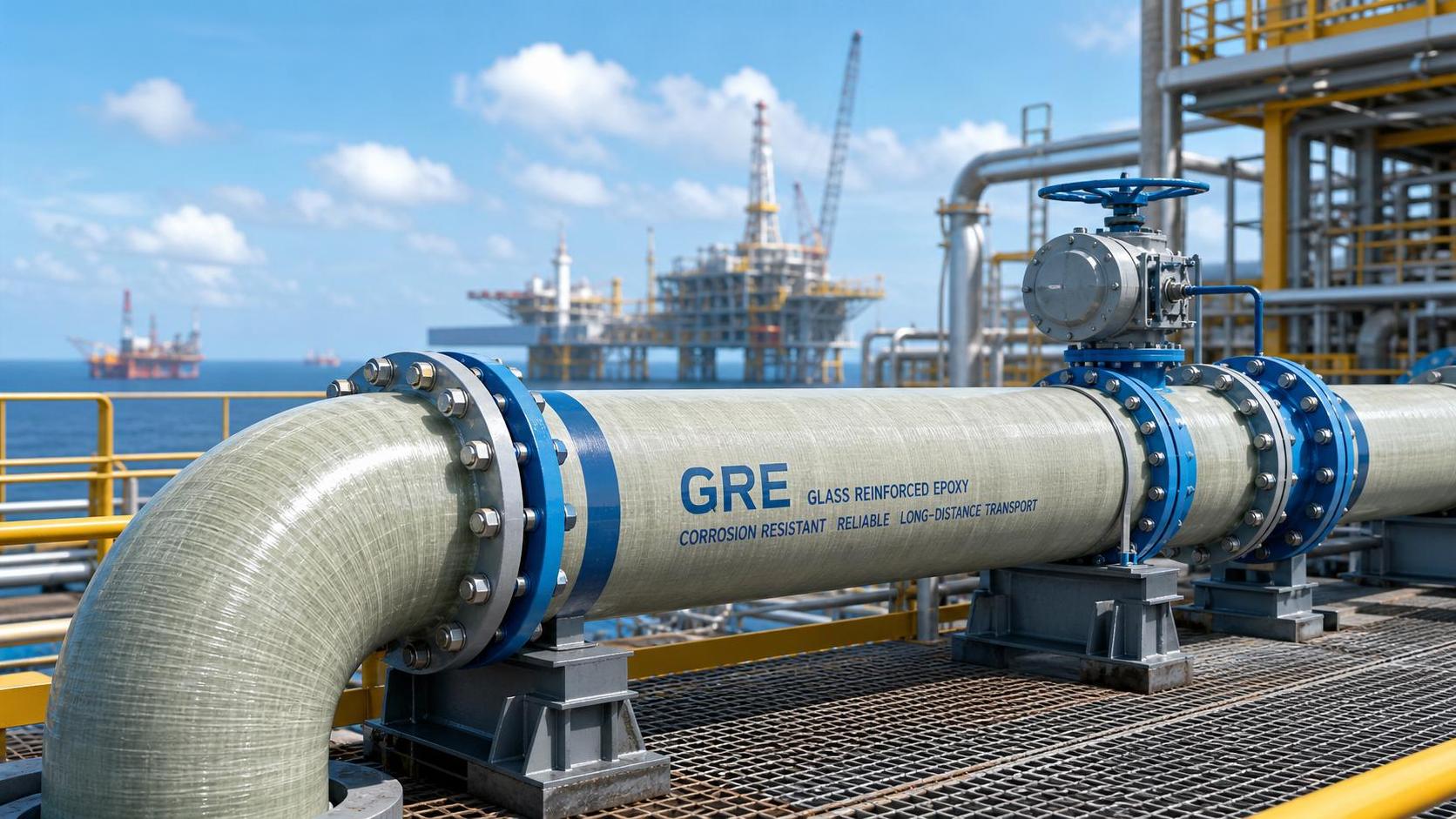
Why 2026 looks different for GRE pipes in oil and gas
As 2026 approaches, material selection is moving closer to the center of oil and gas investment decisions.
That shift is making gre pipes for oil and gas more relevant in projects where corrosion, lifecycle cost, and maintenance exposure are difficult to ignore.
The discussion is no longer limited to replacing metal in isolated lines.
It now includes field development strategy, uptime planning, and long-term asset reliability in aggressive service environments.
In the glass and ceramic materials space, GRE sits in an interesting position.
Its value comes from fiberglass reinforcement, resin formulation, and controlled winding quality rather than from a single headline performance claim.
That matters because operators are becoming more selective about total system behavior, not just purchase price.
From recent demand patterns, the stronger signal is clear.
Projects want piping materials that can maintain flow assurance, reduce shutdown risk, and hold performance across remote or chemically demanding operations.
The market signals are becoming harder to miss
Several changes are pushing gre pipes for oil and gas into broader technical and commercial conversations.
Produced water handling is expanding.
Sour service exposure remains a concern.
Offshore and coastal assets continue to face salt-heavy conditions that challenge conventional materials over time.
Meanwhile, operators are under pressure to cut unplanned maintenance without compromising safety compliance.
This is where GRE pipe demand gains momentum.
Its corrosion resistance and low maintenance profile align with systems that cannot tolerate repeated intervention.
The appeal becomes stronger when projects extend across gathering lines, utility networks, water injection, and secondary process piping.
This does not mean steel disappears from the picture.
It means material choice is becoming more segmented, with gre pipes for oil and gas gaining ground in service conditions where corrosion economics dominate.
What is driving this shift beneath the surface
The first driver is operating reality.
A pipe that survives chemically aggressive media with fewer interventions can change the economics of an entire line class.
The second driver is construction planning.
Lighter composite systems can help simplify handling and installation in certain layouts, especially where access is constrained.
The third driver is supply confidence.
A material may look attractive on paper, but adoption grows only when manufacturing scale, fitting consistency, and testing discipline are visible.
That is one reason established Chinese GRE manufacturers are drawing more attention in export markets.
Shandong Ocean Pipe Technology Co., Ltd., founded in 2012 in Dezhou, reflects this broader trend.
With 16 winding lines, 174 fitting winding machines, micro control systems, and static pressure testing equipment, it represents the kind of production visibility many projects now expect.
Annual production and testing capacity of 25,000 tons also matters.
It suggests that gre pipes for oil and gas are no longer a niche sourcing decision when larger project packages are being evaluated.
Impact is spreading across more than one application
The influence of this material shift is not confined to upstream transmission lines.
It is appearing across utility systems, ballast-related infrastructure, LNG-linked facilities, and chemical handling networks.
That broader pattern matters because it shows how composite know-how moves between sectors.
Experience in marine and industrial corrosion control often shapes expectations in oil and gas piping design.
A useful example appears in The application of GRE piping in marine ballast water systems.
That reference is relevant not because ballast systems are identical to oilfield lines.
It is relevant because both environments reward materials that can resist corrosion, support long service cycles, and reduce maintenance disruption.
- Produced water systems gain from reduced internal corrosion risk.
- Offshore auxiliary piping benefits where salt exposure accelerates metal degradation.
- LNG and chemical support lines value dimensional consistency and predictable service behavior.
- Shipyard-linked energy infrastructure increasingly favors materials with lower upkeep demands.
In practical terms, the market is rewarding materials that perform across adjacent industrial conditions, not only inside a narrow specification box.
What deserves closer attention before 2026 commitments are locked in
The next phase of adoption will depend less on awareness and more on evaluation discipline.
Not every GRE system is equal in winding quality, resin design, pressure class suitability, or fitting reliability.
That is why supplier review should move beyond brochures.
A stronger review framework usually includes the following points.
- Check pressure testing capability and consistency across pipe sizes and fittings.
- Review installation support, joint design, and field handling guidance.
- Match chemical resistance to actual fluid composition, not generic labels.
- Confirm production scale for phased delivery, especially on export or multi-site projects.
- Look at track record in oil and gas, LNG, marine, and chemical plant environments.
From a market perspective, this is where proven manufacturers gain an edge.
Ocean Pipe’s customer base, including major energy and shipbuilding groups, signals more than market reach.
It points to the growing importance of execution credibility in gre pipes for oil and gas sourcing decisions.
A practical reading of the 2026 outlook
The 2026 outlook is not simply about higher demand volumes.
It is about a more selective market that understands where composite piping creates measurable operational value.
That value is strongest where corrosion exposure is persistent, maintenance access is expensive, and downtime has disproportionate cost.
For that reason, gre pipes for oil and gas are likely to gain share in defined service windows rather than through blanket substitution.
More importantly, the quality conversation will intensify.
Material performance, winding control, testing rigor, and supply stability will shape project decisions more than headline claims alone.
A sensible next step is to compare current line classes against actual corrosion history, maintenance frequency, and expansion plans.
Then review whether existing specifications still reflect field conditions expected in 2026 and beyond.
Where the answer is no, gre pipes for oil and gas deserve a closer technical and commercial assessment.
That approach keeps the decision grounded in service reality, not market noise.
Please give us a message
产品介绍产品介绍产品介绍产品介绍产品介绍产品介绍产品介绍产品介绍产品介绍产品介绍产品介绍产品介绍产品介绍产品介绍产品介绍产品介绍产品介绍产品介绍产品介绍产品介绍产品介绍产品介绍产品介绍产品介绍产品介绍产品介绍产品介绍产品介绍产品介绍产品介绍
Please give us a message
产品介绍产品介绍产品介绍产品介绍产品介绍产品介绍产品介绍产品介绍产品介绍产品介绍产品介绍产品介绍产品介绍产品介绍产品介绍产品介绍产品介绍产品介绍产品介绍产品介绍产品介绍产品介绍产品介绍产品介绍产品介绍产品介绍产品介绍产品介绍产品介绍产品介绍
Please give us a message
产品介绍产品介绍产品介绍产品介绍产品介绍产品介绍产品介绍产品介绍产品介绍产品介绍产品介绍产品介绍产品介绍产品介绍产品介绍产品介绍产品介绍产品介绍产品介绍产品介绍产品介绍产品介绍产品介绍产品介绍产品介绍产品介绍产品介绍产品介绍产品介绍产品介绍
Please give us a message
产品介绍产品介绍产品介绍产品介绍产品介绍产品介绍产品介绍产品介绍产品介绍产品介绍产品介绍产品介绍产品介绍产品介绍产品介绍产品介绍产品介绍产品介绍产品介绍产品介绍产品介绍产品介绍产品介绍产品介绍产品介绍产品介绍产品介绍产品介绍产品介绍产品介绍