
Fiberglass Pipe lasts longer when these install errors are avoided
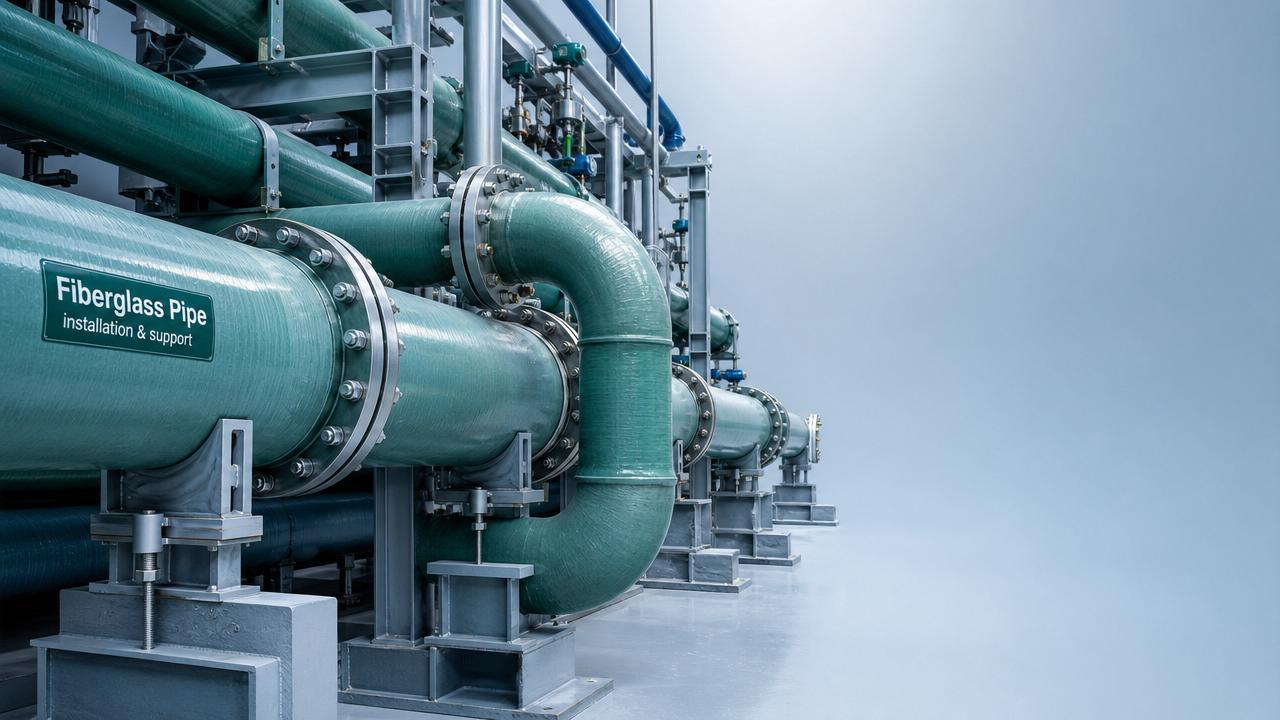
Fiberglass Pipe can last for decades in aggressive industrial service, but that service life depends heavily on correct installation. For operators, the most important fact is simple: many leaks, joint failures, and early maintenance problems are not caused by the pipe material itself, but by avoidable mistakes made during handling, alignment, joining, support, testing, and startup.
In real operating conditions, Fiberglass Pipe performs well because it offers corrosion resistance, smooth internal flow, and lower weight than many metal alternatives. However, it is also a designed composite system. That means its long-term reliability depends on installers respecting load limits, joint instructions, and support conditions from the first day of the project.
This article focuses on the installation errors that most often shorten service life. It is written for users and operators who need practical guidance, not just product theory. If you understand where failures usually begin, you can identify risks earlier, reduce downtime, and help your piping system deliver the performance it was designed to provide.
Why installation quality matters more than many operators expect
Many users assume a pipe either meets specification or it does not. In practice, Fiberglass Pipe can meet all design requirements at delivery and still fail early if installation introduces stress that was never intended. Composite piping is strong, but it is not forgiving of repeated abuse, poor alignment, or unsupported movement.
Most early-life problems follow a predictable pattern. The line is mishandled, cut incorrectly, forced into position, over-tightened at connections, or tested without proper support. The system may still pass initial commissioning, but hidden damage grows during pressure cycles, temperature change, vibration, or normal process operation.
For operators, this matters because the visible failure often appears much later than the original mistake. A small crack at a joint, local delamination, or distortion near a support point may have started during installation. By the time leakage appears, the root cause is often incorrectly blamed on service conditions alone.
The most common handling mistakes happen before installation even begins
One major source of shortened service life is improper storage and lifting. Fiberglass Pipe should not be dragged across rough ground, dropped from vehicles, or lifted with chains that create point loading. Even when no immediate fracture is visible, surface gouges and impact damage can weaken the structure.
Operators should also pay attention to how pipe sections are stacked on site. Uneven support under stored lengths can lead to distortion. Exposure to debris, sharp metal edges, or uncontrolled traffic around the laydown area increases the chance of damage before the pipe reaches the line.
A practical rule is to inspect each pipe and fitting before installation. Look for cracks, deep scratches, chipped ends, out-of-round sections, damaged liners, and contamination on bonding surfaces. A damaged section should never be installed simply because the defect looks small. Small defects can become high-stress points once pressure and thermal movement begin.
This is especially important in demanding applications such as process transfer lines in a Chemical Plant, where chemical exposure and operating cycles can quickly accelerate damage that began during rough handling.
Bad alignment creates constant stress that shortens pipe life
Misalignment is one of the most serious and most underestimated installation errors. When pipe sections do not line up naturally, some crews try to pull them together with bolts, clamps, or force. This may save time during assembly, but it places continuous stress on joints, flanges, and fittings.
Fiberglass Pipe should be installed so that the system sits in its intended position without forced correction. If the pipe must be bent or twisted to meet the connection point, the line is already carrying stored strain before operation even starts. Pressure, temperature variation, and vibration then add more load on top of that initial strain.
Operators should watch for warning signs such as gaps at flanges, uneven face contact, joints that only fit after prying, and supports that lift or shift after assembly. These are not minor visual issues. They usually indicate a load path that can cause leakage, cracking, or premature joint wear.
Good alignment practice includes checking centerlines, elevation, support spacing, and equipment nozzle position before final joining. It is always better to correct fit-up at this stage than to rely on the joint to absorb installation error later.
Incorrect cutting and joint preparation often lead to leaks later
Many field problems begin at pipe ends. If Fiberglass Pipe is cut with unsuitable tools, the end may become uneven, overheated, splintered, or contaminated. Poorly prepared ends make it harder to achieve a correct joint, whether the system uses adhesive bonding, laminated joints, mechanical couplings, or flanged connections.
End preparation should follow the manufacturer’s specified method. That usually includes making a clean square cut, checking dimensions, removing debris, and keeping the joining surface dry and clean. Oil, dust, moisture, or damaged fibers can reduce bonding quality and create weak points.
Operators should also understand cure and assembly timing where adhesive or laminated joining is used. If installers rush the process, disturb the joint before full cure, or work outside acceptable temperature conditions, the connection may appear acceptable at first but fail under operating load.
Because joints are often the first location where trouble becomes visible, careful preparation deserves more attention than it typically receives on site. A well-made joint protects the whole system. A rushed joint can define its failure point.
Support spacing and anchoring mistakes cause hidden structural damage
Even high-quality Fiberglass Pipe can lose service life quickly if supports are missing, badly spaced, or incorrectly designed. Composite pipe systems rely on proper support to control deflection, vibration, and thermal movement. Unsupported spans create bending stress that may not be obvious until the line is operating at full load.
Problems often appear where pipe is expected to carry weight it was not designed to carry. This includes valves without independent support, branch connections left unsupported, or attached equipment pulling on the line. In these cases, the pipe becomes a structural member instead of a fluid carrier.
Support contact surfaces also matter. Sharp edges, narrow saddles, or poorly fitted clamps can create local stress concentrations. Supports should distribute load properly and allow movement where movement is required. Anchors and guides must be positioned according to the piping design, not improvised during installation.
From an operator’s perspective, clues include sagging runs, unusual vibration, recurring flange leakage, and wear marks at support points. These signs should be investigated early. They often indicate a support issue that will continue damaging the system until corrected.
Over-tightening flanges and connections can damage the pipe more than users realize
Another common error is treating Fiberglass Pipe flanges like heavy steel flanges. Excessive bolt torque can crush sealing surfaces, distort flange faces, or introduce local cracking. Once that damage begins, leakage may continue even after gaskets are replaced.
Correct bolting requires the proper tightening sequence, controlled torque, suitable gasket selection, and clean flange faces. Uneven tightening is especially risky because it creates non-uniform stress around the flange. One section may seal while another carries excessive load and slowly degrades.
Operators should be cautious whenever repeated tightening is used to stop a leak. If the connection was poorly aligned, incorrectly gasketed, or already damaged, more torque may worsen the problem. The better approach is to isolate the cause, inspect the flange condition, and rebuild the connection properly if needed.
In mixed-material systems, connection transitions deserve extra care. Different stiffness and thermal behavior between components can increase loading at the flange. Installation practice must account for that difference, especially in systems with temperature fluctuation or dynamic service.
Pressure testing mistakes can create damage before the system enters service
Hydrostatic testing is essential, but if done incorrectly it can shorten the life of Fiberglass Pipe instead of verifying its integrity. The most common mistakes include inadequate support during testing, trapped air, over-pressurization, rapid pressurization, and ignoring ambient temperature effects.
Trapped air is especially dangerous because compressed air stores energy differently from water and can create unstable conditions. The line should be vented correctly so test pressure is applied as intended. The test setup must also ensure that temporary loads are not transferred into unsupported pipe sections or joints.
Another mistake is using pressure test procedures developed for metal piping without adjusting for composite system requirements. Fiberglass Pipe needs testing that follows the manufacturer’s and project specifications. A test that is too aggressive may produce no visible failure but still leave behind damage that reduces long-term reliability.
Operators involved in commissioning should verify the pressure level, hold time, ramp rate, support status, and inspection points before testing starts. Good testing confirms quality. Bad testing can become the first major overload event in the pipe’s life.
Thermal expansion, vibration, and movement must be considered from the start
Some installation errors only become visible once the process starts and the line heats up, cools down, or experiences pump-related vibration. If expansion loops, guides, anchors, or flexible arrangements are not installed according to design, the pipe may move in ways that overload joints and fittings.
Fiberglass Pipe can perform very well across many services, but it must be allowed to move as designed. Restricting thermal movement at one location often transfers stress to another, usually at elbows, tees, flanges, or equipment connections. These points then become common maintenance locations.
Vibration is another issue operators should never ignore. Repeated low-level vibration can slowly fatigue supports and connections, especially where the line is already misaligned or poorly supported. If movement is visible during operation, the system should be checked before the condition escalates.
This is highly relevant in facilities where pumps, compressors, or process cycling are frequent, including another typical Chemical Plant environment that combines corrosive media with thermal and mechanical loading.
What operators should inspect after installation and during early operation
Even if operators were not involved in installation, they can still help extend service life by checking for early warning signs. The first months of operation are critical because hidden installation errors often reveal themselves under real process conditions.
Routine inspection should include flange leakage, unusual movement, support condition, abrasion at contact points, visible cracks, whitening of stressed laminate, and signs of joint displacement. Also listen for changes such as vibration noise, impact sounds, or flow instability near fittings and branches.
It is useful to compare operating conditions with original design assumptions. If the system is exposed to higher pressure fluctuation, more frequent shutdown cycles, or stronger vibration than expected, even a correctly installed pipe may need closer monitoring. But if failures appear very early, installation quality should be reviewed first.
Good records also make a difference. Operators should document where leaks happen, how often bolts are retightened, whether supports are modified, and when movement is first noticed. Patterns in these records often point directly to the installation error that started the problem.
How proper installation supports the full value of Fiberglass Pipe
The long service life of Fiberglass Pipe is one of its main advantages, especially in corrosive and weight-sensitive industrial systems. But that advantage is only fully realized when the installation preserves the design intent of the material and the piping layout.
For users and operators, the key takeaway is that most serious problems do not begin as dramatic failures. They begin as small, preventable mistakes: rough handling, poor fit-up, bad joint preparation, missing supports, excessive bolt torque, or uncontrolled testing. Each one adds stress that the system carries every day afterward.
If those errors are avoided, Fiberglass Pipe can provide reliable service, low maintenance, and strong long-term value. If they are ignored, the result is often recurring repair work, leakage risk, process interruption, and avoidable cost.
In short, Fiberglass Pipe lasts longer when installation is treated as a performance-critical stage, not just a construction task. Operators who understand that link are better prepared to protect system reliability, improve safety, and get the full benefit of the piping system over its intended life.
Please give us a message
产品介绍产品介绍产品介绍产品介绍产品介绍产品介绍产品介绍产品介绍产品介绍产品介绍产品介绍产品介绍产品介绍产品介绍产品介绍产品介绍产品介绍产品介绍产品介绍产品介绍产品介绍产品介绍产品介绍产品介绍产品介绍产品介绍产品介绍产品介绍产品介绍产品介绍
Please give us a message
产品介绍产品介绍产品介绍产品介绍产品介绍产品介绍产品介绍产品介绍产品介绍产品介绍产品介绍产品介绍产品介绍产品介绍产品介绍产品介绍产品介绍产品介绍产品介绍产品介绍产品介绍产品介绍产品介绍产品介绍产品介绍产品介绍产品介绍产品介绍产品介绍产品介绍
Please give us a message
产品介绍产品介绍产品介绍产品介绍产品介绍产品介绍产品介绍产品介绍产品介绍产品介绍产品介绍产品介绍产品介绍产品介绍产品介绍产品介绍产品介绍产品介绍产品介绍产品介绍产品介绍产品介绍产品介绍产品介绍产品介绍产品介绍产品介绍产品介绍产品介绍产品介绍
Please give us a message
产品介绍产品介绍产品介绍产品介绍产品介绍产品介绍产品介绍产品介绍产品介绍产品介绍产品介绍产品介绍产品介绍产品介绍产品介绍产品介绍产品介绍产品介绍产品介绍产品介绍产品介绍产品介绍产品介绍产品介绍产品介绍产品介绍产品介绍产品介绍产品介绍产品介绍