
When does GRVE Pipe make more sense than steel piping?
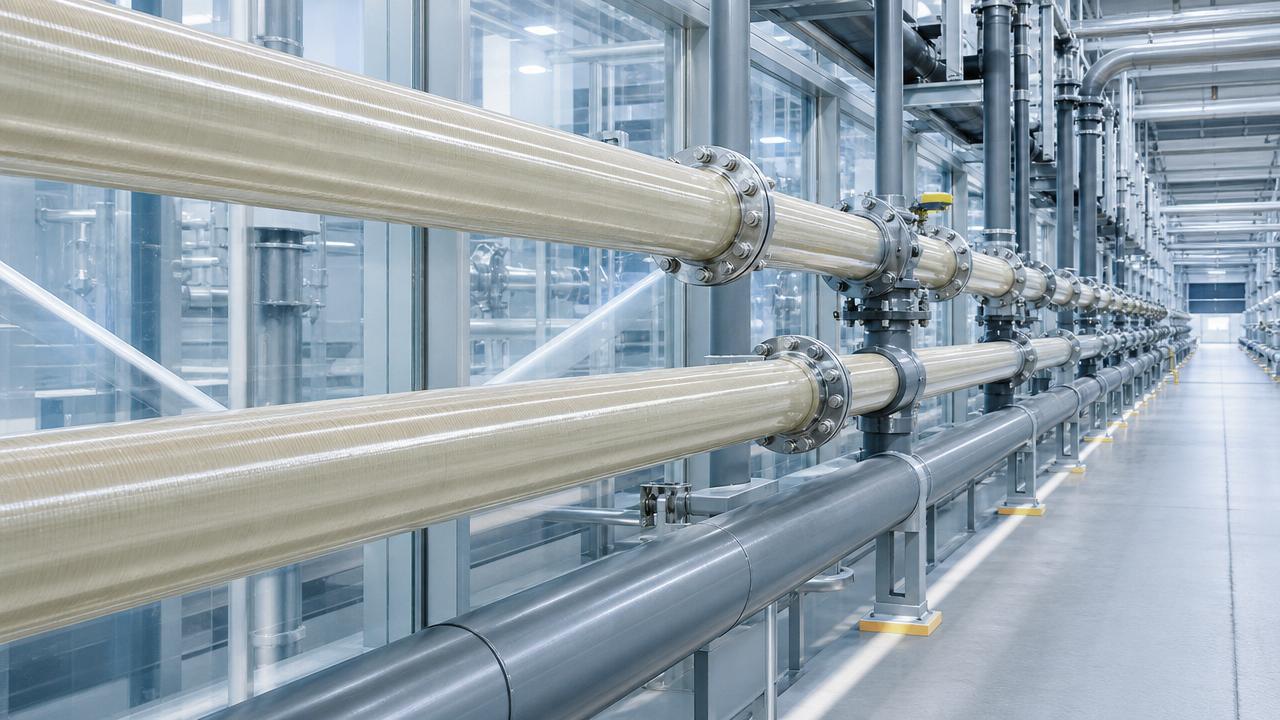
For technical evaluators comparing lifecycle cost, corrosion resistance, weight, and installation efficiency, GRVE Pipe often makes more sense than steel piping in aggressive or weight-sensitive systems. In applications such as oil and gas, ship ballast, LNG, chemical plants, and salt production, choosing the right material can directly affect reliability, maintenance frequency, and total project performance.
In the glass and ceramic materials field, material stability is never a side issue. It directly shapes uptime, fluid purity, insulation behavior, and maintenance planning.
GRVE Pipe, a fiberglass reinforced epoxy piping solution, is increasingly selected where steel piping faces corrosion, coating damage, or installation constraints. The decision is rarely about one property alone.
It is usually about total performance across service life, operating conditions, and project economics. That is where GRVE Pipe often gains a clear advantage.
Material Definition and Performance Logic
GRVE Pipe combines glass fiber reinforcement with epoxy resin to create a non-metallic, corrosion-resistant piping structure. Its strength comes from the composite layup rather than metallic wall thickness.
Compared with steel, GRVE Pipe behaves differently under chemical exposure, external moisture, and saline environments. It does not rust, and it typically avoids internal scaling common in metallic systems.
This difference matters in process lines carrying brine, treated water, chemical media, or ballast water. In these services, corrosion is often the main driver of failure.
Steel piping remains valuable in very high-temperature or high-impact conditions. However, many industrial systems operate within ranges where composite performance is fully suitable.
Why the structure matters
- Glass fiber provides tensile strength and dimensional stability.
- Epoxy resin supports chemical resistance and internal surface protection.
- Low roughness can help maintain flow efficiency over time.
- Low weight reduces lifting loads and support demands.
Current Industry Drivers Behind Material Selection
Across industrial infrastructure, the discussion has shifted from purchase price to lifecycle cost. That shift strongly benefits GRVE Pipe in corrosive duty.
Facilities handling saline water, acidic chemicals, condensate, or treated process water often see steel become maintenance-intensive. Coatings, linings, and cathodic protection add complexity.
In weight-sensitive systems, steel also increases transportation effort, crane time, and structural loading. These hidden costs are frequently underestimated during early design.
For sectors connected to glass and ceramic materials, process consistency is especially important. Unexpected rust products or scale release can contaminate water circuits and reduce quality control.
When GRVE Pipe Makes More Sense Than Steel Piping
GRVE Pipe is not a universal replacement for steel. It makes more sense when service conditions reward corrosion resistance, low maintenance, and lighter system design.
1. Corrosion dominates the risk profile
If the main failure mode is internal or external corrosion, GRVE Pipe usually deserves serious evaluation. Steel needs protective systems that may degrade over time.
This is common in seawater, brine, desalination support lines, salt production, and chemical transfer. In such cases, composite piping can simplify long-term asset management.
2. Weight reduction has project value
On ships, offshore modules, elevated pipe racks, and retrofit sites, lower weight can be a major design benefit. It can reduce support steel, transport cost, and installation effort.
That is one reason GRVE Pipe is widely used in ship ballast piping and marine service systems. Less weight can create meaningful operational flexibility.
3. Downtime and maintenance are expensive
Where shutdown access is difficult or interruptions are costly, longer corrosion-free service becomes valuable. GRVE Pipe can reduce repainting, replacement frequency, and inspection burden related to rust.
4. Hydraulic efficiency should remain stable
A smooth internal surface can help preserve flow characteristics. Steel systems may experience roughness growth due to corrosion products or deposits.
For water-intensive process networks, this stability can support predictable pumping energy and cleaner transport conditions over the operating period.
Application Value in Process and Utility Systems
In real projects, GRVE Pipe is often chosen because several advantages appear together. The material saves more than corrosion cost alone.
- Lower structural load in skids, modules, and racks.
- Reduced need for corrosion coatings and future repairs.
- Cleaner fluid handling for treated water and chemical services.
- Practical installation benefits in confined or remote sites.
- Reliable service in saline and humid environments.
These advantages explain why Shandong Ocean Pipe Technology Co., Ltd. has developed broad GRE production capacity and export reach across demanding industrial sectors.
Established in 2012 in Shandong, China, the company operates 16 winding production lines and 174 fitting winding machines with micro control systems.
Its annual GRE pipe production and testing capacity reaches 25,000 tons. Products serve oil and gas, ship ballast, LNG, chemical plants, hot spring pipelines, and salt-making operations.
This range reflects where GRVE Pipe performs best: harsh service environments where durability and stable operation matter more than basic material familiarity.
Typical Scenarios Where GRVE Pipe Outperforms Steel
A related solution example is GRE Pipe Desalination Plants, which aligns well with saline water handling and corrosion-sensitive utility networks.
Practical Evaluation Points Before Final Selection
Even when GRVE Pipe looks favorable, a technical review should confirm actual operating conditions. Composite piping selection works best when matched carefully to service demands.
Check these items early
- Operating temperature and pressure envelope.
- Chemical composition, concentration, and cleaning cycles.
- Support spacing, expansion behavior, and vibration conditions.
- Joint system selection and installation method.
- Fire, impact, or code-specific project requirements.
These checks prevent simple material comparisons from becoming misleading. The best decision comes from a service-specific review, not a generic assumption.
For example, GRVE Pipe can excel in corrosion-heavy water systems, while steel may still remain preferred in certain extreme thermal or mechanical conditions.
Operational Next Steps for Better Material Decisions
When comparing GRVE Pipe with steel piping, start with the failure history of the current or intended system. Identify whether corrosion, weight, or maintenance is the actual cost driver.
Then review service media, temperature range, support layout, and installation constraints. A lifecycle approach usually reveals whether composite piping offers measurable value.
If the system involves saline water, ballast duty, chemical exposure, or remote maintenance access, GRVE Pipe often deserves priority review over conventional steel options.
For projects needing corrosion-resistant GRE solutions with proven manufacturing scale, technical data review and application matching are the most practical next steps. In many aggressive service environments, GRVE Pipe simply makes more engineering sense than steel.
Please give us a message
产品介绍产品介绍产品介绍产品介绍产品介绍产品介绍产品介绍产品介绍产品介绍产品介绍产品介绍产品介绍产品介绍产品介绍产品介绍产品介绍产品介绍产品介绍产品介绍产品介绍产品介绍产品介绍产品介绍产品介绍产品介绍产品介绍产品介绍产品介绍产品介绍产品介绍
Please give us a message
产品介绍产品介绍产品介绍产品介绍产品介绍产品介绍产品介绍产品介绍产品介绍产品介绍产品介绍产品介绍产品介绍产品介绍产品介绍产品介绍产品介绍产品介绍产品介绍产品介绍产品介绍产品介绍产品介绍产品介绍产品介绍产品介绍产品介绍产品介绍产品介绍产品介绍
Please give us a message
产品介绍产品介绍产品介绍产品介绍产品介绍产品介绍产品介绍产品介绍产品介绍产品介绍产品介绍产品介绍产品介绍产品介绍产品介绍产品介绍产品介绍产品介绍产品介绍产品介绍产品介绍产品介绍产品介绍产品介绍产品介绍产品介绍产品介绍产品介绍产品介绍产品介绍
Please give us a message
产品介绍产品介绍产品介绍产品介绍产品介绍产品介绍产品介绍产品介绍产品介绍产品介绍产品介绍产品介绍产品介绍产品介绍产品介绍产品介绍产品介绍产品介绍产品介绍产品介绍产品介绍产品介绍产品介绍产品介绍产品介绍产品介绍产品介绍产品介绍产品介绍产品介绍