
GRP Pipe performance often depends on this overlooked factor
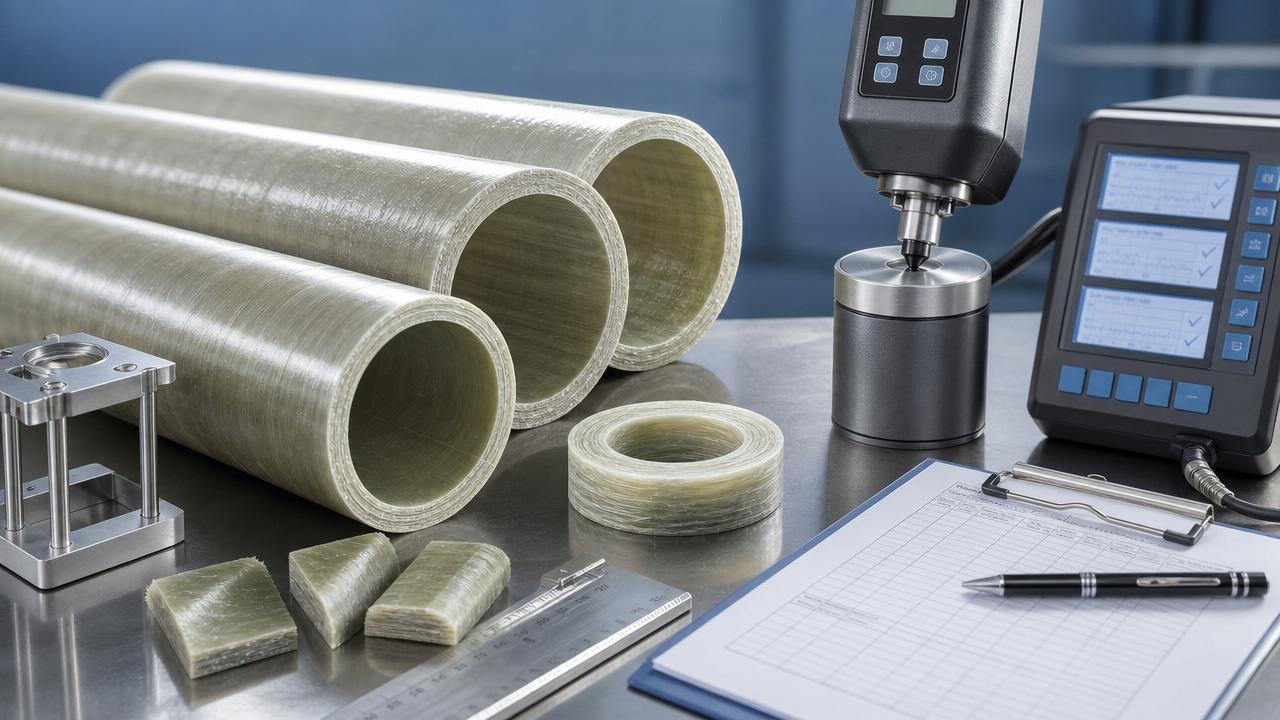
When GRP Pipe performance falls short, the cause is often not poor routing or weak installation practice. The hidden factor is curing quality, especially how resin crosslinking is controlled during winding, post-curing, and final inspection. In glass and ceramic materials industries, this single variable shapes strength retention, chemical resistance, leak prevention, and service life. A clear checklist helps reduce failure risk and improves confidence in every inspection result.
Why this overlooked factor matters for GRP Pipe
GRP Pipe is valued for corrosion resistance, low weight, and high design flexibility. Yet those benefits depend on a stable bond between glass reinforcement and the cured resin matrix.
If curing is incomplete, the pipe may still look acceptable. However, internal stresses, microvoids, softness, and poor chemical resistance can appear long before visible failure.
This is why two GRP Pipe systems with the same dimensions may perform very differently in oil and gas, LNG, ballast piping, chemical transfer, or hot spring service.
For Fiberglass Reinforced Epoxy products, curing quality affects hoop strength, interlaminar bonding, heat resistance, and dimensional stability. It also influences whether hydrostatic and long-term qualification results truly reflect field performance.
Use this checklist to judge curing quality accurately
Apply the following checks before accepting production batches, approving installation, or investigating weak GRP Pipe performance in service.
- Verify resin and hardener ratios against the approved process sheet, because small proportion errors can reduce crosslink density and weaken long-term chemical and pressure resistance.
- Check ambient temperature and humidity during winding, since unstable shop conditions can alter resin flow, wet-out quality, cure speed, and laminate consistency.
- Review winding tension records to confirm fibers were placed uniformly, because uneven tension creates local resin-rich or fiber-starved areas that cure differently.
- Inspect laminate thickness distribution carefully, as thin or irregular sections may heat and cure unevenly, especially at sockets, bends, reducers, and fittings.
- Measure hardness using a consistent method and location plan, because scattered readings often reveal under-cured zones hidden beneath an acceptable surface finish.
- Confirm post-curing time and temperature history, not just nominal setpoints, because actual thermal exposure determines whether epoxy reaches the intended mechanical properties.
- Compare hydrostatic test data with production dates, since a pipe tested too early may pass initially but still lack stable long-term cured performance.
- Look for odor, tackiness, discoloration, or unusual dusting during cutting, as these can indicate incomplete cure or matrix degradation.
- Use destructive coupon testing where needed to confirm glass content, void level, and bond condition when field symptoms conflict with standard acceptance reports.
- Trace each batch to raw materials, machine settings, and operator logs so recurring GRP Pipe defects can be linked to one controllable process variable.
How curing quality affects different applications
Oil, gas, and chemical lines
In corrosive process systems, under-cured GRP Pipe often loses resistance before it loses shape. The resin matrix may soften, absorb media, or crack under cyclic pressure.
That risk grows when temperature fluctuates or chemicals attack weak polymer chains. In these cases, cure control matters as much as wall design and joining method.
Ship ballast and marine piping
Marine systems expose GRP Pipe to saltwater, vibration, and changing loads. A laminate with poor curing may develop interface fatigue around supports, flanges, or fittings.
This is especially important when production includes many fittings. Stable curing helps maintain sealing surfaces and prevents progressive weakening under movement and pressure pulses.
Mining and abrasive slurry service
In abrasive duty, the matrix must support reinforcement while resisting wear. If the resin cure is weak, the surface can erode faster and expose fibers to damage.
This matters in systems related to Mining, where slurry impact and solids concentration can quickly reveal weak laminate quality.
Hot water, LNG, and thermal cycling
Thermal movement magnifies cure defects. A GRP Pipe wall that is not fully stabilized may distort, crack, or lose stiffness when exposed to repeated heating and cooling.
For hot spring lines or low-temperature process piping, verified cure data should be reviewed alongside thermal expansion assumptions and support spacing calculations.
Commonly missed warning signs
A smooth surface does not prove a sound laminate. Cosmetic appearance can hide poor crosslinking, especially when visual inspection is the only release tool.
Passing a pressure test does not guarantee durable GRP Pipe performance. Short-term success may mask weak long-term resistance to heat, chemicals, and fatigue.
Documentation can also mislead when actual oven loading, local temperature variation, or shop-floor delays are not captured in the curing record.
Another common gap is focusing only on straight pipe. Fittings often see more complex laminate geometry and are more sensitive to incomplete curing.
Storage conditions matter too. Even well-made GRP Pipe can suffer if post-cured parts are exposed to contamination, sunlight, or mechanical damage before delivery.
Practical execution steps that improve reliability
- Set acceptance criteria for hardness, cure cycle records, and batch traceability before production starts.
- Audit winding and post-curing data weekly, not only after a nonconformance appears.
- Sample both straight pipe and fittings, because curing variation is often greater in complex shapes.
- Link field complaints to manufacturing history, including resin lot, ambient conditions, and machine settings.
- Use third-party or internal verification testing when service conditions involve chemicals, high temperature, or abrasive media.
Established in 2012, Shandong Ocean Pipe Technology Co., Ltd. has developed large-scale GRE manufacturing capacity with 16 winding production lines, 174 pipe fitting winding machines and micro control systems, plus dedicated static water pressure testing capability. That scale supports stronger process repeatability, which is essential when curing quality is the deciding factor behind dependable GRP Pipe performance.
With products used in oil and gas, ship ballast piping, LNG, chemical plants, hot spring pipe systems, and overseas projects, process consistency becomes more important than any single inspection snapshot. In demanding sectors, even a robust product portfolio, including solutions for Mining, must still be backed by disciplined cure control.
Conclusion and next action
The overlooked factor behind weak GRP Pipe performance is often curing quality rather than pipe geometry alone. When cure control is measured carefully, inspection becomes more meaningful and long-term safety improves.
Start with a simple action plan: review batch records, verify hardness trends, compare fittings with straight pipe, and confirm post-cure history before release. That checklist can prevent costly failures and raise confidence in every GRP Pipe system placed into service.
Please give us a message
产品介绍产品介绍产品介绍产品介绍产品介绍产品介绍产品介绍产品介绍产品介绍产品介绍产品介绍产品介绍产品介绍产品介绍产品介绍产品介绍产品介绍产品介绍产品介绍产品介绍产品介绍产品介绍产品介绍产品介绍产品介绍产品介绍产品介绍产品介绍产品介绍产品介绍
Please give us a message
产品介绍产品介绍产品介绍产品介绍产品介绍产品介绍产品介绍产品介绍产品介绍产品介绍产品介绍产品介绍产品介绍产品介绍产品介绍产品介绍产品介绍产品介绍产品介绍产品介绍产品介绍产品介绍产品介绍产品介绍产品介绍产品介绍产品介绍产品介绍产品介绍产品介绍
Please give us a message
产品介绍产品介绍产品介绍产品介绍产品介绍产品介绍产品介绍产品介绍产品介绍产品介绍产品介绍产品介绍产品介绍产品介绍产品介绍产品介绍产品介绍产品介绍产品介绍产品介绍产品介绍产品介绍产品介绍产品介绍产品介绍产品介绍产品介绍产品介绍产品介绍产品介绍
Please give us a message
产品介绍产品介绍产品介绍产品介绍产品介绍产品介绍产品介绍产品介绍产品介绍产品介绍产品介绍产品介绍产品介绍产品介绍产品介绍产品介绍产品介绍产品介绍产品介绍产品介绍产品介绍产品介绍产品介绍产品介绍产品介绍产品介绍产品介绍产品介绍产品介绍产品介绍