
Is corrosion resistant FRP pipe worth the higher upfront cost?
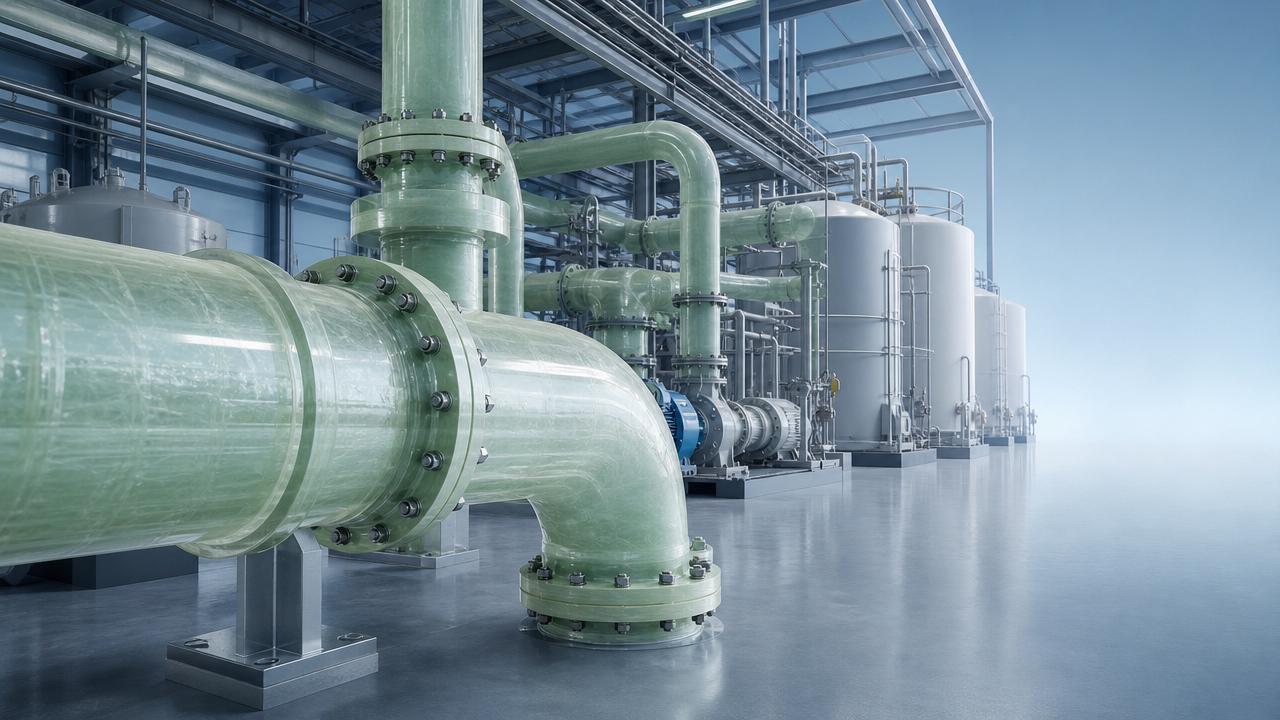
When evaluating long-term piping investments, many buyers ask whether corrosion resistant FRP pipe truly justifies its higher upfront price. For commercial decision-makers in demanding sectors such as oil and gas, marine, and chemical processing, the answer depends on lifecycle cost, maintenance savings, and service reliability. This article explores where FRP pipe delivers measurable value and when the investment makes strong business sense.
Why do buyers question the cost of corrosion resistant FRP pipe?
Business evaluation teams rarely focus on purchase price alone. They must compare service life, shutdown risk, installation complexity, repair frequency, and compliance exposure before approving a piping budget.
In glass and ceramic materials related process environments, pipelines may carry saline water, chemicals, slurry, brine, or heated media. These conditions often accelerate internal and external corrosion in traditional metallic systems.
That is why corrosion resistant FRP pipe often enters the discussion. The initial unit price may be higher than some carbon steel options, but the commercial decision should be based on total operating impact.
- Unplanned maintenance can interrupt plant output and increase labor costs.
- Corrosion failures may create safety, environmental, and contractual risks.
- Material replacement cycles affect long-term capital planning.
- Weight and installation requirements influence project schedules, especially offshore and marine jobs.
What makes FRP and GRE systems commercially relevant?
Fiberglass reinforced systems combine glass fiber reinforcement with resin-based corrosion resistance. In GRE pipe, epoxy resin supports strong mechanical performance and chemical resistance for many industrial applications.
For buyers comparing long-life assets, corrosion resistant FRP pipe can reduce the hidden cost of recoating, corrosion monitoring, frequent inspection, and emergency replacement. Those savings become significant in remote or high-risk environments.
Where does corrosion resistant FRP pipe create the strongest business value?
Not every project needs the same piping material. The value of corrosion resistant FRP pipe is strongest when media, environment, and maintenance constraints make corrosion a recurring expense.
Typical high-value applications
- Oil and gas produced water lines where internal corrosion can shorten metal pipe life.
- Ship ballast piping exposed to seawater and harsh marine atmospheres.
- Chemical plants handling corrosive fluids that challenge unlined steel systems.
- LNG auxiliary lines and industrial utility systems requiring weight reduction and reliable service.
- Hot spring and salt-making projects where mineral content and temperature can damage conventional piping.
These are not theoretical cases. Shandong Ocean Pipe Technology Co., Ltd., established in 2012 in Dezhou, Shandong, manufactures Fiberglass Reinforced Epoxy pipe for applications including oil and gas, ship ballast piping, LNG, chemical plants, hot spring systems, and salt-making facilities.
Its customer base includes large industrial groups and shipyards, while overseas supply has extended to markets such as Australia, Iraq, Kazakhstan, and Turkey. For procurement teams, this range matters because it indicates practical exposure to varied operating environments.
How does corrosion resistant FRP pipe compare with metal alternatives?
The table below helps commercial evaluators compare corrosion resistant FRP pipe with common metallic choices across core procurement dimensions rather than headline material cost alone.
This comparison shows why corrosion resistant FRP pipe is rarely selected on material price alone. It tends to outperform when a project values low corrosion exposure, lower weight, and reduced maintenance burden over many years.
What buyers often miss in steel comparisons
A low steel purchase price can appear attractive in early budgeting. However, coatings, cathodic protection, corrosion allowances, welding requirements, heavy lifting, and outage repairs can significantly change the total financial picture.
For commercial teams under pressure to defend capital decisions, the more useful question is not “Which pipe is cheaper today?” but “Which system creates lower cost per year of reliable service?”
What cost factors should a business evaluator include?
A sound business case for corrosion resistant FRP pipe requires more than a quotation comparison. The table below outlines practical lifecycle cost items used in industrial procurement reviews.
If the project environment is moderately to highly corrosive, corrosion resistant FRP pipe often becomes easier to justify because maintenance and downtime costs can exceed the initial price gap in a relatively short time.
A practical decision rule
- Estimate likely corrosion management cost for metallic options over the expected operating life.
- Assign a realistic cost to production loss from one unplanned failure.
- Compare that combined figure against the upfront premium of corrosion resistant FRP pipe.
- If the premium is materially lower than projected risk and maintenance cost, FRP deserves serious commercial preference.
Which technical factors matter most before buying?
The right corrosion resistant FRP pipe is not chosen by resin label alone. Commercial teams should ask suppliers to align design details with actual service conditions and installation demands.
Key specification checkpoints
- Operating medium, including chemical composition, chloride level, solids content, and pH range.
- Operating and design temperature, because thermal conditions influence resin suitability and pressure capability.
- Working pressure, surge pressure, and possible vacuum conditions.
- Installation location, such as buried, above-ground, offshore, process plant, or shipboard routing.
- Joint type, fittings availability, and compatibility with project assembly methods.
- Required testing, inspection records, and project documentation before shipment.
Shandong Ocean Pipe Technology operates 16 winding production lines and 174 sets of pipe fitting winding machines and winding micro control systems. For procurement teams, this manufacturing depth matters when a project requires coordinated pipe and fitting supply rather than isolated components.
The factory is also equipped with 5 static water pressure testing machines, supporting annual GRE pipe production and testing capacity of 25,000 tons. That capacity can be important for buyers managing large-volume schedules or multi-batch deliveries.
How should procurement teams evaluate supplier capability?
A good material choice can still fail commercially if the supplier cannot support volume, fittings, testing, packaging, or export coordination. For business evaluators, supplier review should be as rigorous as material review.
Supplier assessment checklist
For example, projects that combine GRE pipe with filtration, completion, or process accessories may also require associated products. In some system discussions, buyers explore items such as Sand Control Screens alongside broader flow-control infrastructure, especially when upstream or industrial process requirements overlap.
When is the higher upfront cost not justified?
A balanced procurement decision should also identify cases where corrosion resistant FRP pipe may not be the most economical answer. Material selection should match the service profile, not trend preference.
Scenarios where caution is needed
- Short-duration temporary lines where long lifecycle value cannot be fully realized.
- Mild service environments where corrosion risk is genuinely low and maintenance access is easy.
- Projects with incomplete media data, creating a risk of under-specifying the laminate or resin system.
- Applications with special mechanical or thermal demands that require careful engineering review before selection.
This does not reduce the value of corrosion resistant FRP pipe. It simply means the commercial case is strongest where corrosion, maintenance difficulty, and operating continuity have meaningful cost implications.
FAQ: what do business evaluators ask most often?
How long does corrosion resistant FRP pipe usually last?
Service life depends on media, temperature, pressure, installation quality, and whether the pipe system is correctly specified. In suitable corrosive applications, buyers often choose FRP or GRE because they expect a more stable service life than unprotected metal alternatives.
Is corrosion resistant FRP pipe suitable for marine and ballast systems?
Yes, this is one of the environments where its value is often clear. Seawater service and marine atmospheres can be demanding for metallic pipes, while lower weight also helps in shipboard installation and support planning.
What should be confirmed before requesting a quotation?
Confirm medium, concentration, design temperature, operating pressure, pipe size range, fittings scope, joint preference, testing requirements, and delivery location. Clear data improves quotation accuracy and reduces later commercial revisions.
Can the higher price be justified for budget-sensitive projects?
Often yes, if corrosion-related maintenance, outage cost, or replacement frequency is expected to be high. In those cases, corrosion resistant FRP pipe may protect cash flow by lowering future operating disruption.
Why many long-term projects still choose corrosion resistant FRP pipe
For commercial decision-makers, the answer is not that corrosion resistant FRP pipe is always worth a higher upfront cost. The answer is that it is often worth it in corrosive, maintenance-intensive, or reliability-critical environments.
In oil and gas, marine, LNG, chemical, hot spring, and salt-related systems, the business case can become compelling when lifecycle cost replaces purchase price as the main benchmark. That is especially true when shutdowns are expensive and replacement access is difficult.
Why choose us for project evaluation and supply support?
Shandong Ocean Pipe Technology Co., Ltd. brings focused GRE manufacturing experience, 16 winding production lines, extensive fitting capability, hydrostatic testing resources, and application exposure across oil and gas, ship ballast piping, LNG, chemical plants, hot spring systems, and salt-making projects.
If you are comparing corrosion resistant FRP pipe for a new project or replacement program, you can consult us on practical topics that matter to business evaluators:
- Parameter confirmation for media, pressure, temperature, and routing conditions.
- Product selection across pipe, fittings, and project-specific configurations.
- Estimated delivery planning based on quantity and scope.
- Customized solution discussions for marine, chemical, or salt-service environments.
- Documentation and testing expectations for procurement review.
- Sample support and quotation communication for project budgeting.
If your team needs a commercially grounded assessment rather than a generic material recommendation, a detailed inquiry can help determine whether corrosion resistant FRP pipe is the right lifecycle investment for your operating conditions.
Please give us a message
产品介绍产品介绍产品介绍产品介绍产品介绍产品介绍产品介绍产品介绍产品介绍产品介绍产品介绍产品介绍产品介绍产品介绍产品介绍产品介绍产品介绍产品介绍产品介绍产品介绍产品介绍产品介绍产品介绍产品介绍产品介绍产品介绍产品介绍产品介绍产品介绍产品介绍
Please give us a message
产品介绍产品介绍产品介绍产品介绍产品介绍产品介绍产品介绍产品介绍产品介绍产品介绍产品介绍产品介绍产品介绍产品介绍产品介绍产品介绍产品介绍产品介绍产品介绍产品介绍产品介绍产品介绍产品介绍产品介绍产品介绍产品介绍产品介绍产品介绍产品介绍产品介绍
Please give us a message
产品介绍产品介绍产品介绍产品介绍产品介绍产品介绍产品介绍产品介绍产品介绍产品介绍产品介绍产品介绍产品介绍产品介绍产品介绍产品介绍产品介绍产品介绍产品介绍产品介绍产品介绍产品介绍产品介绍产品介绍产品介绍产品介绍产品介绍产品介绍产品介绍产品介绍
Please give us a message
产品介绍产品介绍产品介绍产品介绍产品介绍产品介绍产品介绍产品介绍产品介绍产品介绍产品介绍产品介绍产品介绍产品介绍产品介绍产品介绍产品介绍产品介绍产品介绍产品介绍产品介绍产品介绍产品介绍产品介绍产品介绍产品介绍产品介绍产品介绍产品介绍产品介绍