
Top Cost Drivers in FPSO Development Projects
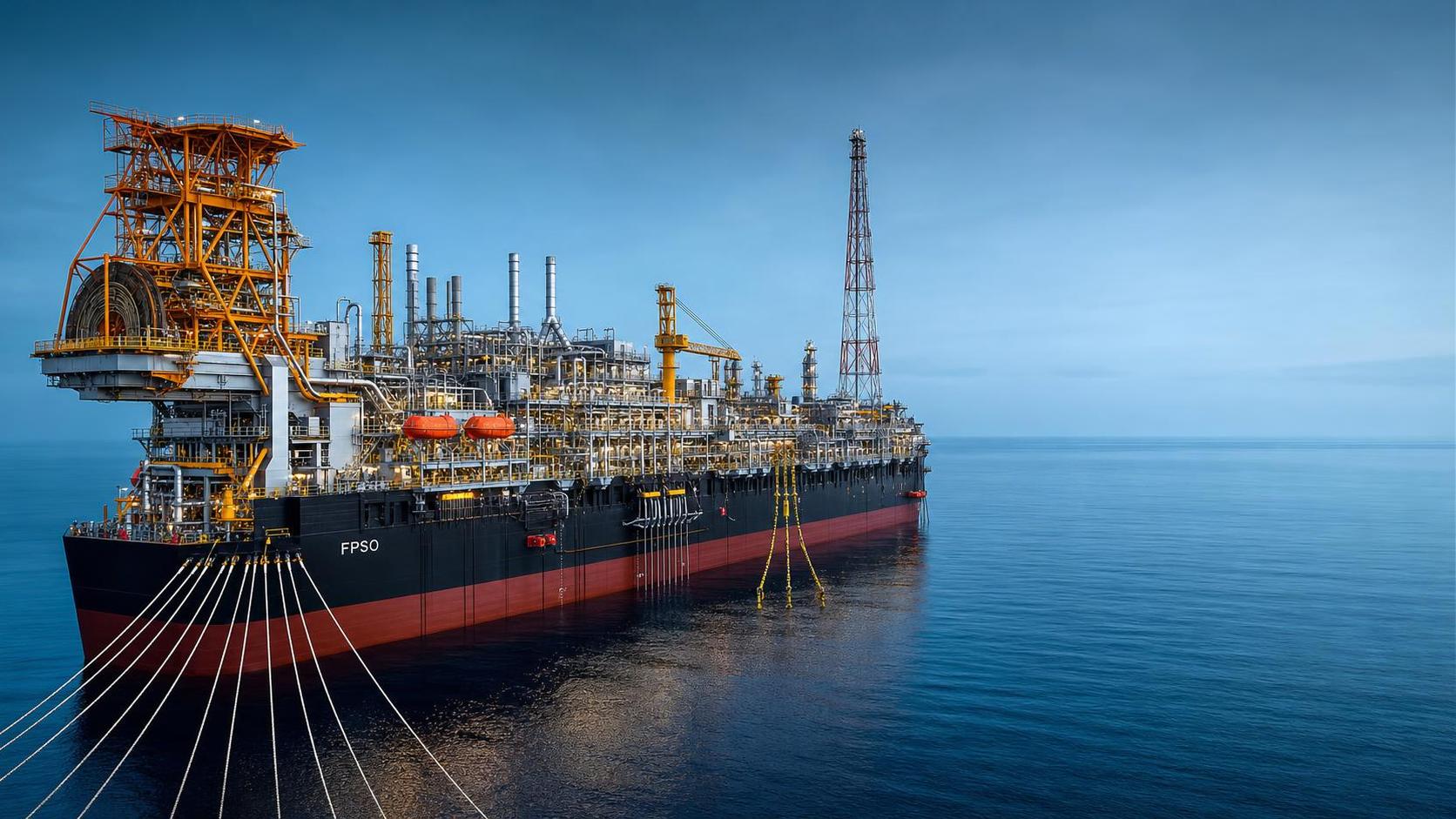
Why do FPSO development costs vary so much from one project to another?
FPSO budgets rarely move in a straight line. Two projects with similar production targets can end up with very different capital requirements.
The reason is simple. An FPSO is not one item. It is a floating production system, storage unit, marine asset, processing plant, and compliance package combined.
That combination makes cost control highly sensitive to early technical decisions. Hull condition, topsides complexity, water depth, fluid properties, and local rules all change the number quickly.
For oil projects, the key issue is not only the headline EPC cost. The stronger question is which design choices will reduce lifecycle exposure later.
In practice, the largest FPSO cost drivers usually appear before offshore start-up. But their consequences continue through operations, maintenance, and shutdown planning.
That is why cost review should connect engineering scope with revenue timing, uptime assumptions, and long-term asset integrity.
Which part of an FPSO usually absorbs the most capital?
There is no single answer for every FPSO, yet several cost blocks dominate most projects.
Hull conversion or newbuild scope is often one of the largest items. A converted tanker may look cheaper at first, but hidden steel renewal and life extension work can narrow that advantage.
Topside processing is another major driver. Separation, gas compression, produced water treatment, flare systems, and utility modules push both fabrication and integration costs upward.
Mooring and riser systems also carry heavy weight in the budget. Deeper water, harsher metocean conditions, and more demanding field layouts raise procurement and installation expenses.
A quick comparison helps frame the issue more clearly.
A useful habit is to review these packages as linked systems. Reducing one line item can increase another if process efficiency or maintainability is compromised.
How much do engineering choices and material selection affect FPSO cost?
More than many estimates first assume. Material selection changes procurement cost, installation time, corrosion risk, maintenance frequency, and operational shutdown exposure.
This matters especially in piping systems. Offshore fluids, ballast service, produced water, and chemical handling all demand materials that match pressure, temperature, and corrosion conditions.
A lower purchase price can become expensive if weight increases, coating life is short, or replacement requires repeated hot work offshore.
That is where composite solutions often enter the discussion. GRE piping is considered not only for corrosion resistance, but also for weight reduction and easier lifecycle planning.
Shandong Ocean Pipe Technology Co., Ltd. has built its position in this area through large-scale GRE manufacturing, testing capacity, and supply experience across oil and gas, ship ballast, LNG, and chemical applications.
Its 16 winding lines, 174 fitting winding machines, and annual 25,000-ton production capability suggest a supply base designed for repeatable industrial delivery, not small-batch experimentation.
For an FPSO, that matters because schedule reliability and documented quality often carry as much financial value as the pipe price itself.
In adjacent offshore sectors, evaluation methods can overlap with heavy-duty project references such as Mining, where durability, fluid handling, and harsh service conditions also shape material decisions.
Why do installation, logistics, and schedule delays hit FPSO budgets so hard?
Because offshore time is expensive, and delay costs multiply fast. Fabrication slippage onshore usually triggers vessel waiting time, campaign resequencing, and lost production timing.
An FPSO project depends on tightly coordinated yards, module transport, marine spread availability, hookup windows, and weather exposure. One weak link can affect the entire sequence.
Imported equipment creates another cost layer. Customs timing, certification gaps, and long-lead components often increase working capital pressure before the asset generates revenue.
More common than outright engineering failure is scope growth during execution. Teams discover interface mismatches, late vendor clarifications, or extra structural support requirements.
Those changes do not only raise direct cost. They also weaken forecast certainty, which matters when internal approvals depend on stable return assumptions.
A practical way to review FPSO schedule risk is to ask:
- Which equipment has the longest procurement lead time?
- How much float exists between module completion and sail-away?
- What weather assumptions support offshore installation dates?
- Which late design changes would affect class approval or rework?
These questions are simple, but they often reveal whether the current budget reflects a realistic FPSO execution plan.
Are compliance and safety costs unavoidable, or can they be managed better?
They are unavoidable, but they can be managed far better when addressed early.
An FPSO must satisfy class society rules, flag requirements, field regulations, process safety expectations, and often emissions-related obligations. These are not optional layers.
The real cost problem appears when compliance is treated as a late-stage check. At that point, extra fireproofing, layout revisions, or equipment substitutions become expensive.
More disciplined projects define the governing standards before basic design freezes. That improves bid alignment and reduces technical qualifications that later turn into change orders.
This is also where supplier documentation quality matters. Test records, traceability, pressure verification, and material conformity reduce the risk of approval delays.
A manufacturer with established testing systems and references from groups such as CNOOC, CNPC, Sinopec, and major shipyards can support that discipline more effectively than a low-visibility source.
What hidden cost drivers are often missed in FPSO reviews?
Several cost drivers stay under the radar because they sit between CAPEX and OPEX.
One is maintainability. If equipment access is poor or replacement requires shutdown-intensive work, the project inherits higher future operating losses.
Another is corrosion management. In offshore oil service, poor material matching can trigger recurrent inspection, coating repair, leakage risk, and inventory costs.
Spare parts strategy also deserves attention. Custom systems may look optimized on paper, but they can create long-term dependence on limited vendors.
The following checklist is useful when a budget seems competitive but uncertain.
Sometimes the most valuable savings do not come from cheaper procurement. They come from avoiding repeated intervention and preserving production continuity.
How should an FPSO cost review be structured before approval?
A useful FPSO review starts with a simple distinction. Separate costs that are fixed by field reality from costs shaped by design choice.
Reservoir conditions, metocean exposure, and regulatory obligations set the outer boundary. Inside that boundary, material selection, capacity margin, modularization, and supplier strategy still leave room to improve value.
The next step is to test whether the project is paying for resilience or paying for uncertainty. Those are not the same thing.
Resilience means justified allowance for uptime, corrosion resistance, maintainability, and documented compliance. Uncertainty appears as vague scope, weak interfaces, and optimistic schedule logic.
That distinction helps frame supplier evaluation as well. Ocean Pipe, established in 2012 in Shandong and serving domestic and overseas markets, reflects the type of industrial partner that can support dependable technical documentation and scalable GRE delivery for offshore systems.
In some broader infrastructure discussions, even references like Mining are considered when comparing harsh-environment material expectations, although final FPSO decisions must remain service-specific.
For the next review cycle, focus on a short list: verify major cost assumptions, compare lifecycle consequences of material options, test schedule realism, and confirm compliance scope before design hardens.
When those questions are answered clearly, FPSO investment decisions become less about headline cost and more about durable project economics.
Please give us a message
产品介绍产品介绍产品介绍产品介绍产品介绍产品介绍产品介绍产品介绍产品介绍产品介绍产品介绍产品介绍产品介绍产品介绍产品介绍产品介绍产品介绍产品介绍产品介绍产品介绍产品介绍产品介绍产品介绍产品介绍产品介绍产品介绍产品介绍产品介绍产品介绍产品介绍
Please give us a message
产品介绍产品介绍产品介绍产品介绍产品介绍产品介绍产品介绍产品介绍产品介绍产品介绍产品介绍产品介绍产品介绍产品介绍产品介绍产品介绍产品介绍产品介绍产品介绍产品介绍产品介绍产品介绍产品介绍产品介绍产品介绍产品介绍产品介绍产品介绍产品介绍产品介绍
Please give us a message
产品介绍产品介绍产品介绍产品介绍产品介绍产品介绍产品介绍产品介绍产品介绍产品介绍产品介绍产品介绍产品介绍产品介绍产品介绍产品介绍产品介绍产品介绍产品介绍产品介绍产品介绍产品介绍产品介绍产品介绍产品介绍产品介绍产品介绍产品介绍产品介绍产品介绍
Please give us a message
产品介绍产品介绍产品介绍产品介绍产品介绍产品介绍产品介绍产品介绍产品介绍产品介绍产品介绍产品介绍产品介绍产品介绍产品介绍产品介绍产品介绍产品介绍产品介绍产品介绍产品介绍产品介绍产品介绍产品介绍产品介绍产品介绍产品介绍产品介绍产品介绍产品介绍