
When Does an FPSO Make More Sense Than a Fixed Platform?
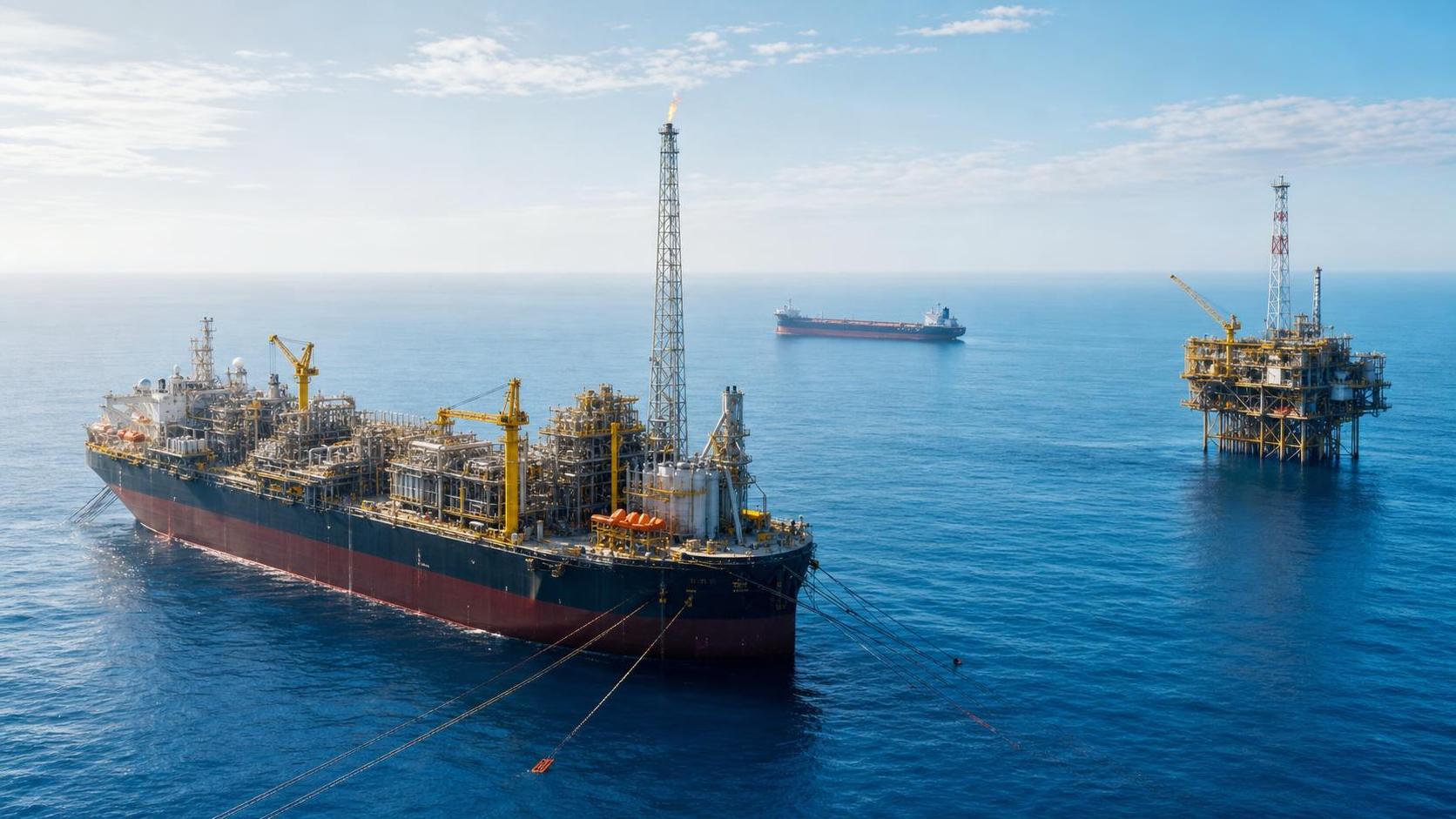
When Does an FPSO Make More Sense Than a Fixed Platform?
For offshore oil projects, the choice between an FPSO and a fixed platform shapes both economics and execution.
It affects first oil timing, capital exposure, field flexibility, and even future exit options.
That is why the FPSO question usually appears early in concept selection, not late in engineering.
In simple terms, an FPSO often makes more sense when the field needs mobility, faster deployment, or lower permanent infrastructure commitment.
A fixed platform usually becomes stronger when reservoir life is long, water depth is moderate, and export routes are stable.
The real decision, however, sits in the details of water depth, reserves, tie-back distance, metocean risk, and financing structure.
Why FPSO Selection Keeps Gaining Attention
Recent offshore developments show a clear shift toward flexible production systems.
More operators are targeting deepwater, remote basins, and marginal reserves that do not justify heavy fixed infrastructure.
That trend naturally puts the FPSO at the center of many field development studies.
An FPSO combines production, storage, and offloading in one floating unit.
This reduces dependence on nearby export pipelines and onshore storage terminals.
For projects in frontier regions, that can change the commercial picture very quickly.
A fixed platform, by contrast, is anchored in place and usually tied to longer-term infrastructure assumptions.
Those assumptions can be valid, but only when the field supports them.
The Core Situations Where an FPSO Makes More Sense
1. Deepwater or Ultra-Deepwater Development
Water depth is one of the strongest signals.
As depth increases, the complexity and cost of fixed platforms rise sharply.
Jacket structures become less practical, while compliant towers and other alternatives still require major capital.
An FPSO avoids much of that structural burden.
It can process fluids at surface and store crude onboard, then offload to shuttle tankers.
For deepwater provinces, this is often the most practical route to development.
2. Remote Fields with Limited Export Infrastructure
Distance from shore changes project logic.
If a field sits far from pipelines, terminals, or support bases, a fixed platform may trigger large secondary investments.
Those costs are often underestimated during early screening.
An FPSO brings built-in storage and export flexibility.
That makes it attractive for isolated offshore assets, especially where pipeline approval or construction may take years.
3. Marginal Fields or Uncertain Reserve Profiles
Not every reservoir supports a permanent fixed platform.
If reserves are modest or reservoir performance is still uncertain, flexibility becomes more valuable than permanence.
This is where the FPSO often wins.
The unit can be leased, redeployed, or upgraded with less stranded asset risk than a large fixed installation.
In commercial terms, that can protect downside without blocking upside.
4. Faster First Oil Requirements
Schedule pressure is often decisive.
When commodity cycles are favorable, operators may want production online before market conditions change.
A converted or standardized FPSO can shorten the path to first oil.
A fixed platform usually requires longer fabrication, installation, and export system coordination.
Where timing strongly affects project value, FPSO selection gains weight.
When a Fixed Platform Still Has the Advantage
The FPSO is not always the better answer.
For shallow to medium water depths, long-life reservoirs, and stable export routes, a fixed platform may deliver lower life-cycle cost.
It can also simplify operations where production profiles are predictable and storage offshore is unnecessary.
In some mature basins, fixed platforms benefit from existing pipeline networks, contractor familiarity, and established maintenance systems.
That existing ecosystem can offset the flexibility advantages of an FPSO.
A Practical FPSO vs Fixed Platform Decision Framework
In actual project screening, the decision becomes clearer when a few questions are tested early.
- Is the field too deep for a cost-effective fixed structure?
- Is export pipeline development expensive, delayed, or uncertain?
- Are reserves moderate, phased, or still being appraised?
- Does the project need faster first oil to secure returns?
- Would leasing an FPSO improve capital discipline?
- Can the unit be redeployed after field decline?
If several of these answers are yes, an FPSO usually deserves priority in concept ranking.
If most answers are no, the fixed platform case becomes stronger.
Key Technical and Commercial Trade-Offs
These differences matter most when they are linked to actual field economics.
An FPSO may look attractive technically, but the final answer still depends on net present value, uptime assumptions, and contracting strategy.
Infrastructure Choices Also Depend on Piping Reliability
Platform type is only one part of offshore system performance.
Material selection inside marine and offshore piping networks also affects uptime, maintenance, and corrosion control.
For ballast, utility, and process support systems, composite solutions are gaining more attention.
One relevant option is GRE Pipe for Marine & Offshore.
Shandong Ocean Pipe Technology Co., Ltd., established in 2012 in Dezhou, China, is among the major Chinese GRE pipe manufacturers.
Its production base includes 16 winding lines and 174 pipe fitting winding machines.
The company serves oil and gas, LNG, ship ballast piping, chemical plants, hot spring systems, and salt making operations.
In offshore projects, durable piping choices can support both FPSO and fixed platform reliability targets.
Common Mistakes in FPSO Evaluation
One common mistake is comparing only upfront capex.
That can make a fixed platform seem stronger than it really is.
Another mistake is ignoring future field uncertainty.
When reserves, production rates, or export routes may change, flexibility has real financial value.
A third mistake is underestimating marine operating conditions.
Mooring, offloading windows, cyclone exposure, and maintenance access can all reshape the FPSO case.
Better decisions come from integrated technical, commercial, and operational screening.
Final Takeaway
An FPSO makes more sense than a fixed platform when the project needs flexibility more than permanence.
That usually happens in deepwater, remote, infrastructure-light, or uncertain field developments.
It also becomes compelling when first oil speed and capital discipline matter more than long-term fixed asset ownership.
A fixed platform still fits the right basin and the right reservoir.
But when the offshore development case includes uncertainty, distance, and timing pressure, the FPSO often stands out as the smarter option.
The most practical next step is to test both concepts against reservoir life, export strategy, capex timing, and operating risk before locking the development path.
Please give us a message
产品介绍产品介绍产品介绍产品介绍产品介绍产品介绍产品介绍产品介绍产品介绍产品介绍产品介绍产品介绍产品介绍产品介绍产品介绍产品介绍产品介绍产品介绍产品介绍产品介绍产品介绍产品介绍产品介绍产品介绍产品介绍产品介绍产品介绍产品介绍产品介绍产品介绍
Please give us a message
产品介绍产品介绍产品介绍产品介绍产品介绍产品介绍产品介绍产品介绍产品介绍产品介绍产品介绍产品介绍产品介绍产品介绍产品介绍产品介绍产品介绍产品介绍产品介绍产品介绍产品介绍产品介绍产品介绍产品介绍产品介绍产品介绍产品介绍产品介绍产品介绍产品介绍
Please give us a message
产品介绍产品介绍产品介绍产品介绍产品介绍产品介绍产品介绍产品介绍产品介绍产品介绍产品介绍产品介绍产品介绍产品介绍产品介绍产品介绍产品介绍产品介绍产品介绍产品介绍产品介绍产品介绍产品介绍产品介绍产品介绍产品介绍产品介绍产品介绍产品介绍产品介绍
Please give us a message
产品介绍产品介绍产品介绍产品介绍产品介绍产品介绍产品介绍产品介绍产品介绍产品介绍产品介绍产品介绍产品介绍产品介绍产品介绍产品介绍产品介绍产品介绍产品介绍产品介绍产品介绍产品介绍产品介绍产品介绍产品介绍产品介绍产品介绍产品介绍产品介绍产品介绍