
FPSO Basics: What It Means in Offshore Production
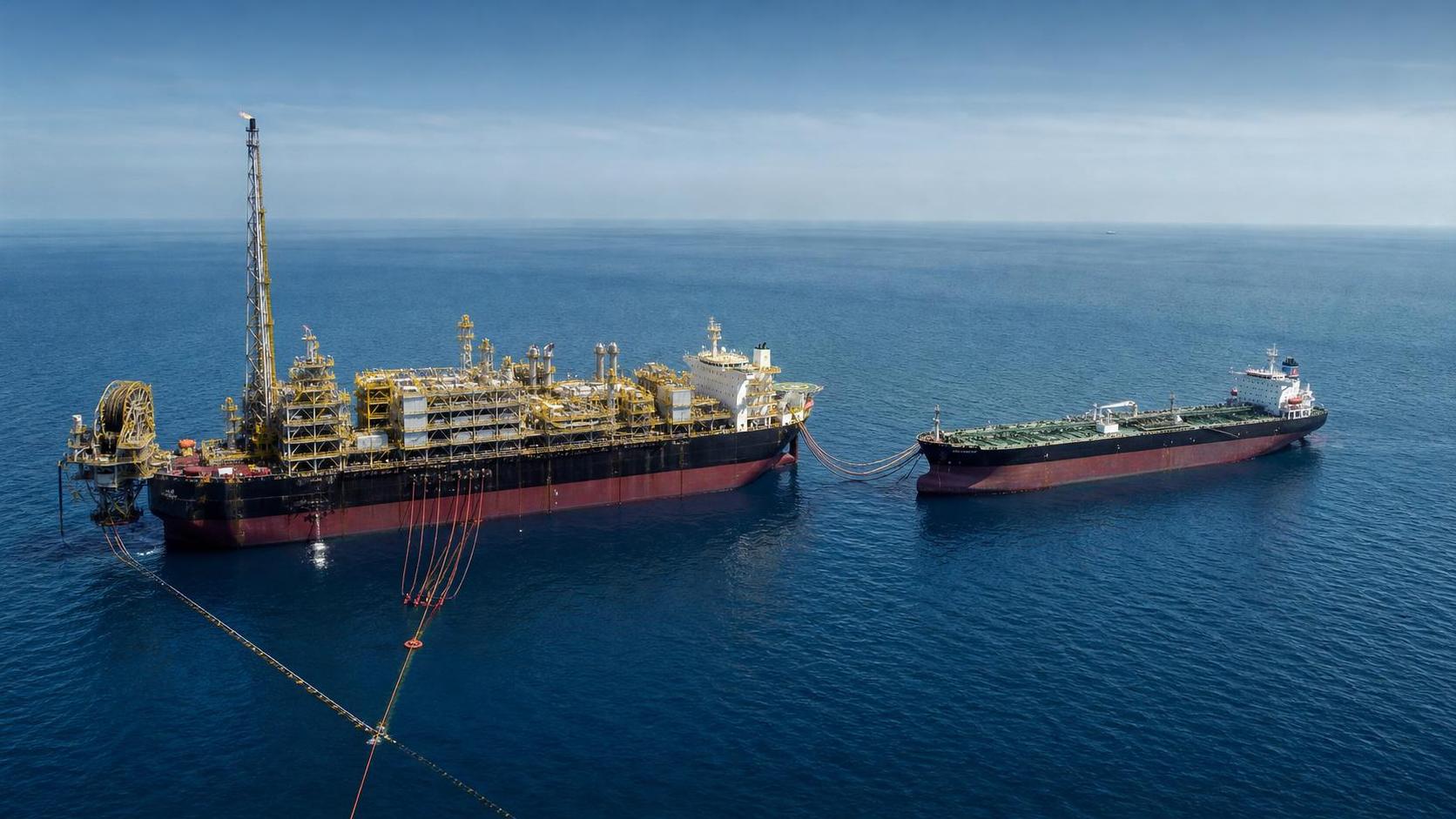
FPSO is one of the most important terms in offshore oil and gas, yet it is often misunderstood outside project teams. In simple terms, it describes a floating unit that can produce, store, and offload crude oil directly at sea.
That matters because many offshore reservoirs sit far from coastal infrastructure. An FPSO allows operators to develop those fields with more flexibility, while keeping production closer to the asset instead of relying on fixed export systems alone.
The concept also connects directly to equipment choices. Offshore production depends on piping, storage, safety, corrosion control, and stable flow management. In that environment, materials such as GRE pipes become part of the wider FPSO performance picture.
What an FPSO actually does offshore
FPSO stands for Floating Production, Storage and Offloading. It is usually a ship-shaped vessel or converted tanker designed to receive hydrocarbons from subsea wells and process them offshore.
After production fluids arrive on board, the system separates oil, gas, and water. The treated crude is stored in the hull, then transferred to shuttle tankers for transport to market.
This makes the FPSO different from a simple transport vessel. It is both a production facility and a temporary storage terminal, operating in locations where pipelines or fixed platforms may be less practical.
For offshore developments in deepwater, remote basins, or regions with limited coastal infrastructure, the FPSO model can shorten development pathways and support phased field expansion.
Why the FPSO model keeps attracting attention
Interest in FPSO projects has grown because offshore operators want flexible production systems that can adapt to changing field economics. A floating unit can often be redeployed, upgraded, or configured for different reservoir conditions.
There is also a commercial reason. Building long export pipelines is expensive, especially in deep water or politically complex routes. An FPSO can reduce dependence on large onshore receiving infrastructure.
At the same time, expectations are rising. Operators now look beyond first oil. They want uptime, easier maintenance, corrosion resistance, safer handling of produced water, and predictable lifecycle costs.
That is why the discussion around FPSO no longer focuses only on hull size or storage volume. Material reliability, piping networks, testing discipline, and marine durability are now central decision factors.
Key systems that shape FPSO reliability
An FPSO is not a single machine. It is a combination of processing modules, utility systems, ballast lines, fire protection, produced water handling, chemical injection, cargo storage, and offloading arrangements.
Piping sits across almost every one of those functions. It carries seawater, hydrocarbons, drainage, ballast fluids, and treatment streams. If piping integrity fails, operations, safety, and maintenance planning are affected immediately.
The table below shows where FPSO system performance is often judged in practice.
Where GRE piping fits into FPSO operations
In many offshore applications, GRE piping is selected because corrosion is a constant concern. Saltwater exposure, chemical contact, and long service cycles can make traditional material choices more demanding to maintain.
GRE, or Glassfiber Reinforced Epoxy, is widely used for ballast systems, cooling water, fire water, and other marine piping duties. On an FPSO, those support systems are not secondary details. They influence availability and inspection workload.
This is where manufacturing capability becomes relevant. Shandong Ocean Pipe Technology Co., Ltd., established in 2012 in Dezhou, Shandong, has developed into one of China’s top ten large GRE pipe manufacturers.
Its production base includes 16 winding lines, 174 pipe fitting winding machines and micro control systems, plus static hydrostatic testing equipment. Annual GRE pipe production and testing capacity reaches 25,000 tons.
That scale matters for offshore projects because supply consistency, fitting accuracy, and pressure verification are part of project risk control. FPSO schedules are tight, and replacement or rework offshore is expensive.
Ocean Pipe products are already used across oil and gas, ship ballast piping, LNG, chemical plants, hot spring lines, and salt production. That cross-sector experience is useful because FPSO systems combine marine and process demands.
Common FPSO scenarios and what changes between them
Not every FPSO project looks the same. Field location, water depth, reservoir fluids, local regulations, and export strategy all change the technical priorities.
Deepwater developments
These projects often emphasize compact topside design, subsea tiebacks, and long operating cycles. Reliability becomes critical because intervention costs are high and logistics are slower.
Brownfield redeployments
A converted or relocated FPSO may require system upgrades. In these cases, material compatibility, retrofit timing, and inspection history deserve close attention.
Harsh marine environments
High salinity, temperature variation, and wave loading can raise demands on external coatings, supports, joints, and non-metallic piping systems. Long-term corrosion performance becomes a leading issue.
In adjacent sectors such as Mining, buyers often assess materials through lifecycle durability. That same mindset is useful when reviewing FPSO piping solutions.
How to assess FPSO-related piping and system choices
For research or supplier evaluation, it helps to move beyond broad product claims. The stronger questions usually concern service conditions, testing standards, delivery capability, and long-term operating fit.
- Check the actual media involved, including seawater, produced water, chemicals, and temperature range.
- Review pressure ratings together with joint design and fitting consistency.
- Ask how hydrostatic testing, quality traceability, and production control are handled.
- Look at past project exposure in oil and gas, shipbuilding, LNG, or marine utility systems.
- Consider logistics and support, especially for offshore replacement schedules or phased delivery.
Those points sound basic, but they often determine whether an FPSO system performs smoothly over time or becomes a maintenance issue later.
What this means for the next decision
Understanding FPSO basics is really about understanding offshore production as a system. The vessel, the process modules, the storage function, and the piping network all work together under difficult marine conditions.
For that reason, an FPSO should be evaluated not only by headline capacity, but also by how well each supporting system can hold performance over years of service. Materials, testing, corrosion resistance, and supplier depth all shape that outcome.
A practical next step is to compare project conditions against piping material requirements, verification methods, and supplier track record. That creates a clearer basis for judging offshore readiness than broad technical claims alone.
Please give us a message
产品介绍产品介绍产品介绍产品介绍产品介绍产品介绍产品介绍产品介绍产品介绍产品介绍产品介绍产品介绍产品介绍产品介绍产品介绍产品介绍产品介绍产品介绍产品介绍产品介绍产品介绍产品介绍产品介绍产品介绍产品介绍产品介绍产品介绍产品介绍产品介绍产品介绍
Please give us a message
产品介绍产品介绍产品介绍产品介绍产品介绍产品介绍产品介绍产品介绍产品介绍产品介绍产品介绍产品介绍产品介绍产品介绍产品介绍产品介绍产品介绍产品介绍产品介绍产品介绍产品介绍产品介绍产品介绍产品介绍产品介绍产品介绍产品介绍产品介绍产品介绍产品介绍
Please give us a message
产品介绍产品介绍产品介绍产品介绍产品介绍产品介绍产品介绍产品介绍产品介绍产品介绍产品介绍产品介绍产品介绍产品介绍产品介绍产品介绍产品介绍产品介绍产品介绍产品介绍产品介绍产品介绍产品介绍产品介绍产品介绍产品介绍产品介绍产品介绍产品介绍产品介绍
Please give us a message
产品介绍产品介绍产品介绍产品介绍产品介绍产品介绍产品介绍产品介绍产品介绍产品介绍产品介绍产品介绍产品介绍产品介绍产品介绍产品介绍产品介绍产品介绍产品介绍产品介绍产品介绍产品介绍产品介绍产品介绍产品介绍产品介绍产品介绍产品介绍产品介绍产品介绍