
FPSO Maintenance Priorities for Stable Uptime
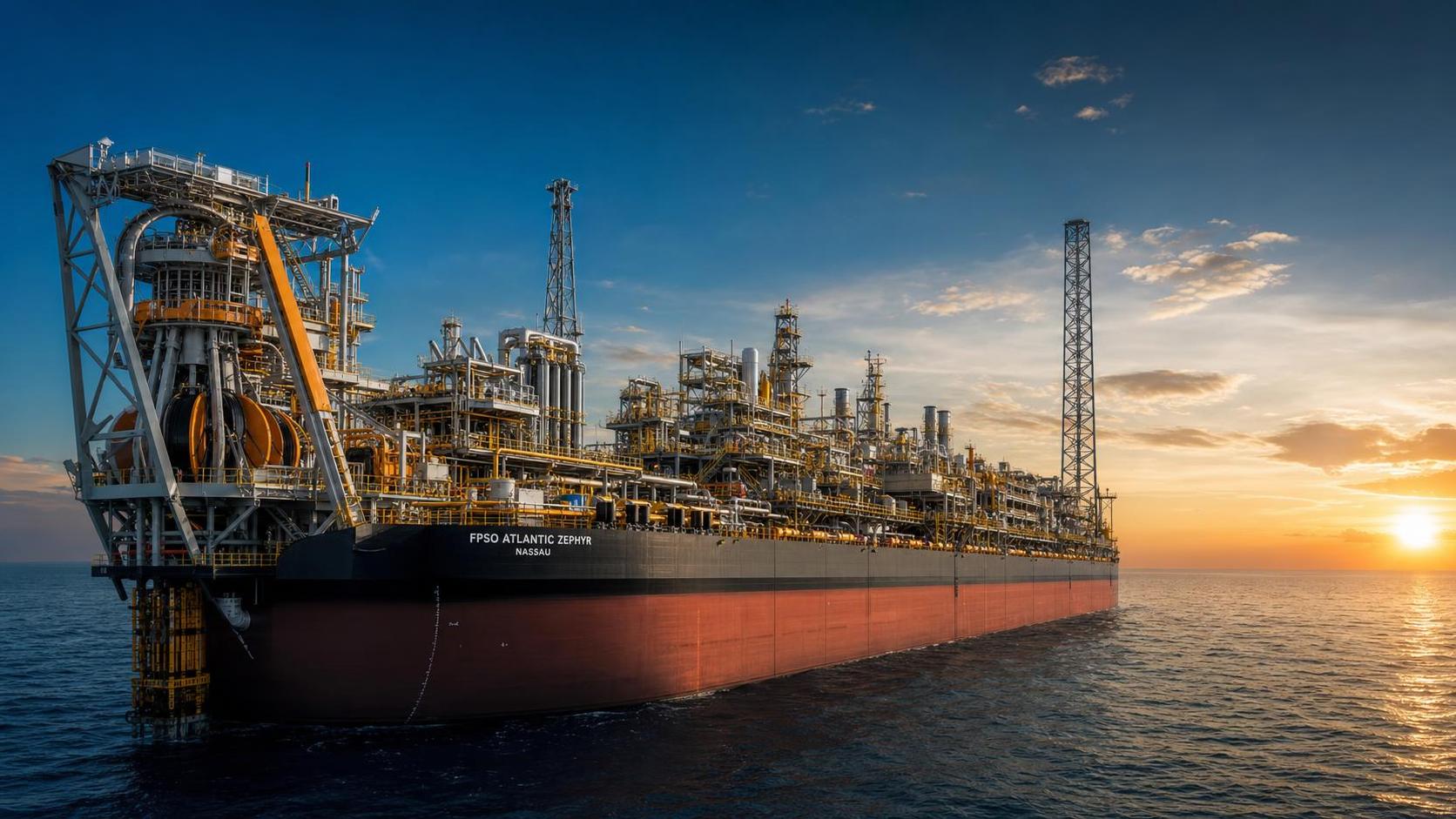
FPSO Maintenance Priorities for Stable Uptime
For after-sales maintenance teams, stable FPSO uptime depends on prioritizing the right inspection, repair, and corrosion-control tasks before minor issues become costly shutdowns.
In harsh offshore conditions, a focused maintenance strategy improves reliability, extends service life, and reduces operational risk during every FPSO intervention.
That sounds straightforward, but daily reality is less tidy.
Salt spray, vibration, pressure cycling, chemical exposure, and limited shutdown windows constantly compete for attention on an FPSO.
The practical answer is not doing more tasks. It is ranking the right tasks first.
Why FPSO Uptime Is Won Through Priorities
An FPSO is a tight network of process, marine, utility, and safety systems.
When one weak component slips, the effect can spread far beyond a single line or package.
A small leak may trigger isolation, production reduction, cleanup work, and extra inspection rounds.
A neglected valve actuator may delay startup and stretch a planned outage into lost production time.
That is why stable FPSO uptime starts with a maintenance sequence based on consequence, failure rate, and repair timing.
The First Screening Questions
- Will this defect affect hydrocarbon containment or personnel safety?
- Can this issue stop production, cargo handling, or essential utilities?
- Is deterioration accelerating because of corrosion, vibration, or fatigue?
- Can repair be completed online, or does it require shutdown access?
- Is there a spare, workaround, or temporary protection method available?
Those questions help sort urgent FPSO work from tasks that can safely wait for the next maintenance window.
Top FPSO Maintenance Priorities That Protect Uptime
1. Corrosion Hotspots
Corrosion remains one of the most persistent FPSO threats.
It appears in topside piping, ballast systems, drains, supports, deck penetrations, and splash-zone interfaces.
From recent field patterns, under-insulation corrosion and hidden moisture traps deserve extra attention.
More obvious warning signs include blistered coating, rust staining, thickness loss, and repeated clamp repairs.
For many non-metallic service applications, material selection also shapes long-term maintenance effort.
Where corrosion resistance and lower lifecycle intervention matter, GRE Tubing can support more stable offshore piping performance.
2. Rotating Equipment Reliability
Pumps, compressors, and fans are central to FPSO continuity.
A vibration trend that looks minor today may become tomorrow’s forced shutdown.
Seal condition, bearing temperature, lubrication quality, and alignment should stay on the short list.
If spares are limited offshore, predictive checks become even more valuable for FPSO maintenance planning.
3. Valves and Actuation Systems
Valves often fail quietly before they fail completely.
Slow stroke times, position drift, air leaks, and sticky operation are early indicators.
On an FPSO, emergency shutdown valves and isolation valves deserve the highest response priority.
A valve that cannot seal or move on demand changes both uptime risk and safety exposure.
4. Piping Integrity and Joint Condition
Piping failures rarely arrive without clues.
Watch for support movement, flange seepage, joint stress, vibration marks, and repeated tightening history.
This is especially important around chemical lines, produced water systems, ballast circuits, and utility services.
An FPSO piping review should always connect inspection findings with operating pressure, media, and temperature cycling.
5. Instrumentation and Utility Support
Instrumentation issues do not always look dramatic, but they can distort decisions fast.
Pressure transmitters, level devices, analyzers, and alarm circuits need reliable calibration and healthy impulse paths.
Likewise, utilities such as instrument air, cooling water, and power distribution support the whole FPSO process chain.
If utility reliability slips, multiple systems begin to fail at once.
A Practical FPSO Maintenance Workflow
A useful plan should fit offshore reality, not just maintenance theory.
The best FPSO workflow is simple enough to repeat, yet detailed enough to defend priorities.
- Identify defects by consequence, not appearance alone.
- Confirm operating data, inspection history, and failure progression.
- Separate immediate containment issues from monitor-and-plan items.
- Match repair scope with access, permits, and shutdown opportunity.
- Record temporary repairs with expiry dates and follow-up ownership.
- Close the loop with post-repair inspection and trend review.
This approach keeps FPSO maintenance disciplined when workload rises and weather narrows the work window.
How Material Choices Reduce Future FPSO Repairs
Maintenance priorities are not only about inspection frequency.
They are also shaped by what was installed in the first place.
In actual offshore service, materials that resist corrosion and chemical attack reduce recurring repair demand.
Shandong Ocean Pipe Technology Co., Ltd., established in 2012 in Shandong, China, is among the larger Chinese manufacturers of fiberglass reinforced epoxy piping systems.
With 16 winding production lines and an annual production and testing capacity of 25,000 tons, the company serves oil and gas, ship ballast, LNG, chemical, and related sectors.
Its products are used by major groups including CNOOC, CNPC, Sinopec, and leading shipyards in China and overseas markets.
For FPSO operators evaluating lifecycle cost, material options such as GRE Tubing deserve review in corrosion-sensitive service areas.
Common FPSO Mistakes That Increase Downtime
- Treating repeated minor leaks as routine instead of root-cause events.
- Overloading shutdown scopes with low-value work.
- Relying on temporary repairs without strict replacement timing.
- Ignoring vibration and support problems around piping runs.
- Separating corrosion data from process and operating context.
- Missing spare-part risk for critical FPSO equipment.
These gaps usually do not come from lack of effort. They come from weak ranking logic.
What to Do Next for More Stable FPSO Uptime
Start with a live list of the top ten FPSO failure risks by consequence and repair urgency.
Then review whether each item is being monitored, repaired, or simply tolerated.
That step alone often reveals where uptime losses are quietly forming.
Stable FPSO performance does not come from broad maintenance activity.
It comes from focused action on corrosion, integrity, utilities, actuation, and rotating equipment before failure spreads.
When priorities stay clear, every offshore intervention becomes more efficient, and FPSO uptime becomes much easier to protect.
Please give us a message
产品介绍产品介绍产品介绍产品介绍产品介绍产品介绍产品介绍产品介绍产品介绍产品介绍产品介绍产品介绍产品介绍产品介绍产品介绍产品介绍产品介绍产品介绍产品介绍产品介绍产品介绍产品介绍产品介绍产品介绍产品介绍产品介绍产品介绍产品介绍产品介绍产品介绍
Please give us a message
产品介绍产品介绍产品介绍产品介绍产品介绍产品介绍产品介绍产品介绍产品介绍产品介绍产品介绍产品介绍产品介绍产品介绍产品介绍产品介绍产品介绍产品介绍产品介绍产品介绍产品介绍产品介绍产品介绍产品介绍产品介绍产品介绍产品介绍产品介绍产品介绍产品介绍
Please give us a message
产品介绍产品介绍产品介绍产品介绍产品介绍产品介绍产品介绍产品介绍产品介绍产品介绍产品介绍产品介绍产品介绍产品介绍产品介绍产品介绍产品介绍产品介绍产品介绍产品介绍产品介绍产品介绍产品介绍产品介绍产品介绍产品介绍产品介绍产品介绍产品介绍产品介绍
Please give us a message
产品介绍产品介绍产品介绍产品介绍产品介绍产品介绍产品介绍产品介绍产品介绍产品介绍产品介绍产品介绍产品介绍产品介绍产品介绍产品介绍产品介绍产品介绍产品介绍产品介绍产品介绍产品介绍产品介绍产品介绍产品介绍产品介绍产品介绍产品介绍产品介绍产品介绍