
FPSO Market Outlook: What to Watch in 2026
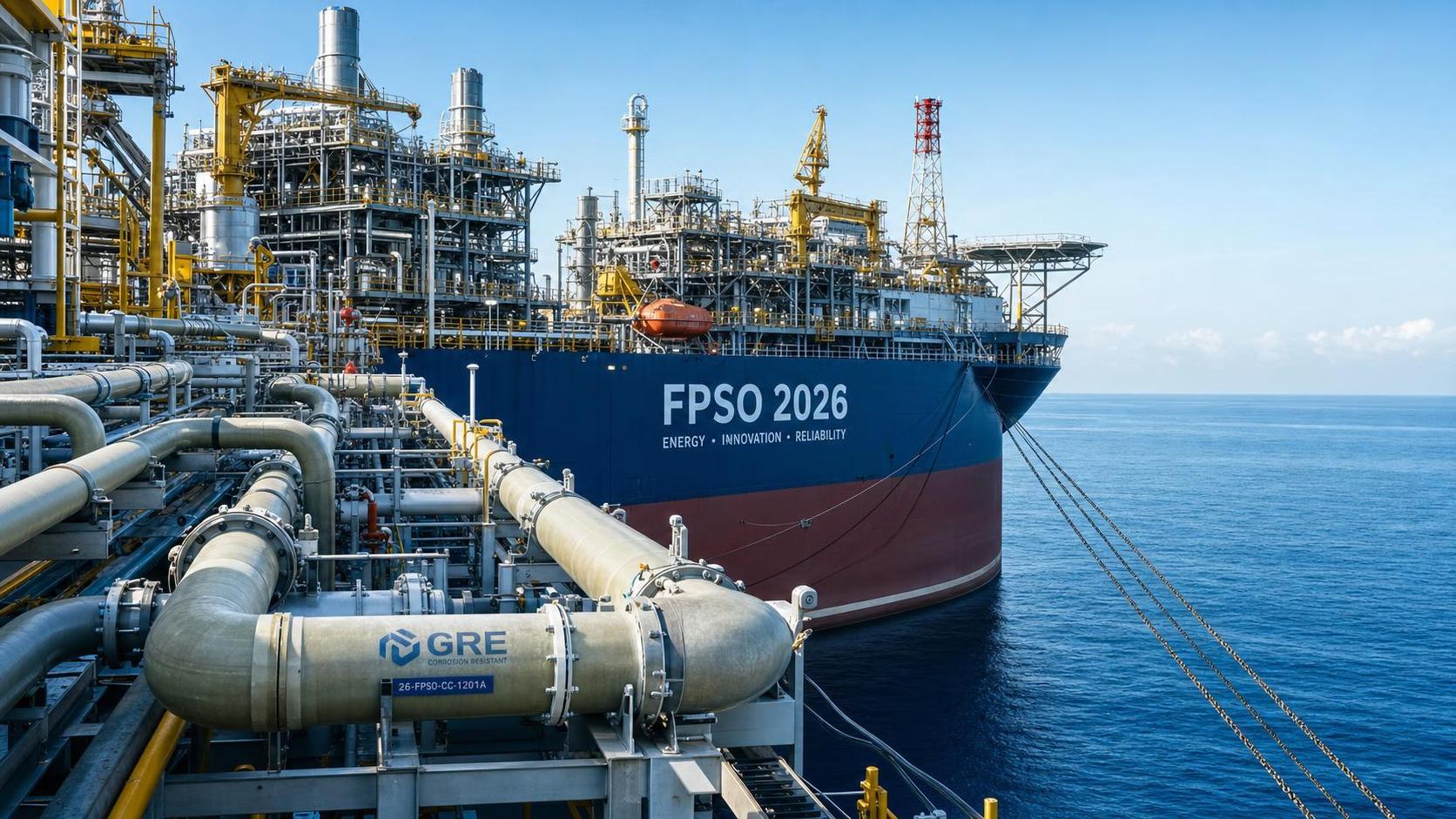
FPSO Market Outlook: What to Watch in 2026
The FPSO market is entering 2026 with a different tone than it had two years ago.
Offshore projects are still moving forward, but capital is being screened more carefully.
That shift matters because FPSO decisions now extend beyond hull availability and charter rates.
They increasingly affect materials strategy, maintenance planning, delivery timing, and risk allocation across the oil and gas value chain.
From a commercial evaluation standpoint, the key question is no longer whether FPSO demand remains active.
The more useful question is which parts of the FPSO market are becoming harder to predict, and why.
Recent signals show a more selective FPSO cycle
The broad offshore recovery has not disappeared, but the FPSO market is becoming more selective.
Developers are prioritizing projects with stronger reservoir economics, clearer export assumptions, and more disciplined execution paths.
This favors deepwater provinces with established infrastructure, especially where field tie-backs and phased development reduce early uncertainty.
At the same time, some marginal projects are slowing because inflation has changed their breakeven logic.
The FPSO market in 2026 is therefore not just about new awards.
It is also about which projects can still protect lifecycle value after procurement, conversion, and operating costs are recalculated.
Why this change is becoming easier to see
Several signals now point in the same direction.
These are not isolated issues.
Together, they are reshaping how the FPSO market is evaluated before major commitments are made.
Cost pressure is pushing decisions deeper into the system
One of the clearest changes is where cost scrutiny now lands.
It no longer stops at topsides modules, mooring packages, or vessel conversion scope.
More reviews now reach secondary systems, utility lines, ballast piping, and hydrocarbon service networks.
That matters in the FPSO market because smaller material choices can create large operating differences over time.
Corrosion resistance, weight reduction, easier installation, and lower maintenance exposure are receiving more attention.
This is where engineered composite systems are entering more commercial discussions.
In offshore environments, GRE piping is being reviewed not simply as a substitute material, but as a lifecycle decision.
For companies with established GRE production depth, this shift creates relevance beyond basic supply capacity.
Shandong Ocean Pipe Technology Co., Ltd., founded in 2012 in Dezhou, has built that relevance through scale and repeatability.
Its 16 winding lines, 174 pipe fitting winding systems, and annual 25,000-ton production and testing capacity reflect industrial readiness rather than niche capability.
That becomes meaningful when the FPSO market starts valuing delivery confidence and verified quality under compressed project windows.
Supply chain reliability is now part of market judgment
In earlier upcycles, many evaluations treated procurement as a downstream execution issue.
That is less true in the current FPSO market.
Today, supplier resilience is affecting project ranking much earlier.
The reason is straightforward.
A delayed material package can disrupt offshore integration, prolong yard occupancy, and weaken first-oil assumptions.
As a result, the FPSO market is assigning more value to suppliers that can show manufacturing visibility, testing discipline, and cross-border delivery experience.
Ocean Pipe’s customer history across CNOOC, CNPC, Sinopec, major Chinese shipyards, and overseas markets such as Australia, Iraq, Kazakhstan, and Turkey fits this pattern.
Those references matter because 2026 project teams are likely to compare operational credibility, not only technical datasheets.
What is gaining weight in evaluations
- Factory testing capability tied to actual throughput, not nominal capacity
- Experience across oil and gas, ship ballast, LNG, and corrosive process systems
- Ability to support multi-location projects without unstable lead times
- Documented compliance for offshore service conditions and hydrocarbon exposure
These points are practical signals inside the FPSO market, not abstract preferences.
Material selection is becoming a stronger strategic lever
More operators now want piping decisions that support uptime, lower corrosion intervention, and simpler maintenance planning.
That change is especially relevant in FPSO systems exposed to saline conditions, thermal variation, and continuous operational stress.
From recent demand patterns, attention is shifting toward materials that can reduce whole-life burden rather than only installed cost.
This is why solutions such as High Temperature GRE Pipe for Hydrocarbon Transportation with API Monogram are appearing more naturally in project conversations.
The point is not product branding.
It is that the FPSO market increasingly rewards materials that align with temperature requirements, hydrocarbon service, and certification expectations at the same time.
Where this becomes decisive is during trade-off reviews between capex restraint and operational continuity.
If a piping system lowers corrosion exposure but complicates qualification, its advantage narrows.
If it meets performance needs while also easing lifecycle burden, its commercial case improves quickly.
The impact will not stay inside offshore engineering teams
An active FPSO market changes behavior across several linked functions.
That includes contracting, project finance, materials qualification, marine integration, and long-term asset support.
More importantly, delays or weak choices in one layer now affect the economics of the full development package.
This is why the FPSO market deserves close watching in 2026.
Its influence reaches much further than floating production unit demand alone.
Where to focus before 2026 decisions harden
The most useful preparation is not broad market optimism.
It is a tighter reading of project quality, supplier readiness, and specification risk.
A practical approach is to watch a few indicators consistently.
- Track which offshore basins continue moving from concept to award without repeated scope resets
- Compare material strategies in ballast, utility, and hydrocarbon piping instead of treating them as routine packages
- Review whether suppliers can show both scale and test discipline under realistic delivery timelines
- Examine lifecycle assumptions behind low-cost options, especially in corrosive offshore service
In that context, even a specialized item such as High Temperature GRE Pipe for Hydrocarbon Transportation with API Monogram should be read as part of a broader FPSO market signal.
The signal is that technical reliability and commercial resilience are converging.
By 2026, the FPSO market is likely to reward choices that hold up across engineering, delivery, and operating life.
That makes this a good moment to recheck assumptions, compare material pathways, and build a staged response around the projects most likely to proceed.
Please give us a message
产品介绍产品介绍产品介绍产品介绍产品介绍产品介绍产品介绍产品介绍产品介绍产品介绍产品介绍产品介绍产品介绍产品介绍产品介绍产品介绍产品介绍产品介绍产品介绍产品介绍产品介绍产品介绍产品介绍产品介绍产品介绍产品介绍产品介绍产品介绍产品介绍产品介绍
Please give us a message
产品介绍产品介绍产品介绍产品介绍产品介绍产品介绍产品介绍产品介绍产品介绍产品介绍产品介绍产品介绍产品介绍产品介绍产品介绍产品介绍产品介绍产品介绍产品介绍产品介绍产品介绍产品介绍产品介绍产品介绍产品介绍产品介绍产品介绍产品介绍产品介绍产品介绍
Please give us a message
产品介绍产品介绍产品介绍产品介绍产品介绍产品介绍产品介绍产品介绍产品介绍产品介绍产品介绍产品介绍产品介绍产品介绍产品介绍产品介绍产品介绍产品介绍产品介绍产品介绍产品介绍产品介绍产品介绍产品介绍产品介绍产品介绍产品介绍产品介绍产品介绍产品介绍
Please give us a message
产品介绍产品介绍产品介绍产品介绍产品介绍产品介绍产品介绍产品介绍产品介绍产品介绍产品介绍产品介绍产品介绍产品介绍产品介绍产品介绍产品介绍产品介绍产品介绍产品介绍产品介绍产品介绍产品介绍产品介绍产品介绍产品介绍产品介绍产品介绍产品介绍产品介绍