
FRP pipe for oil and gas can reduce downtime in tough fields
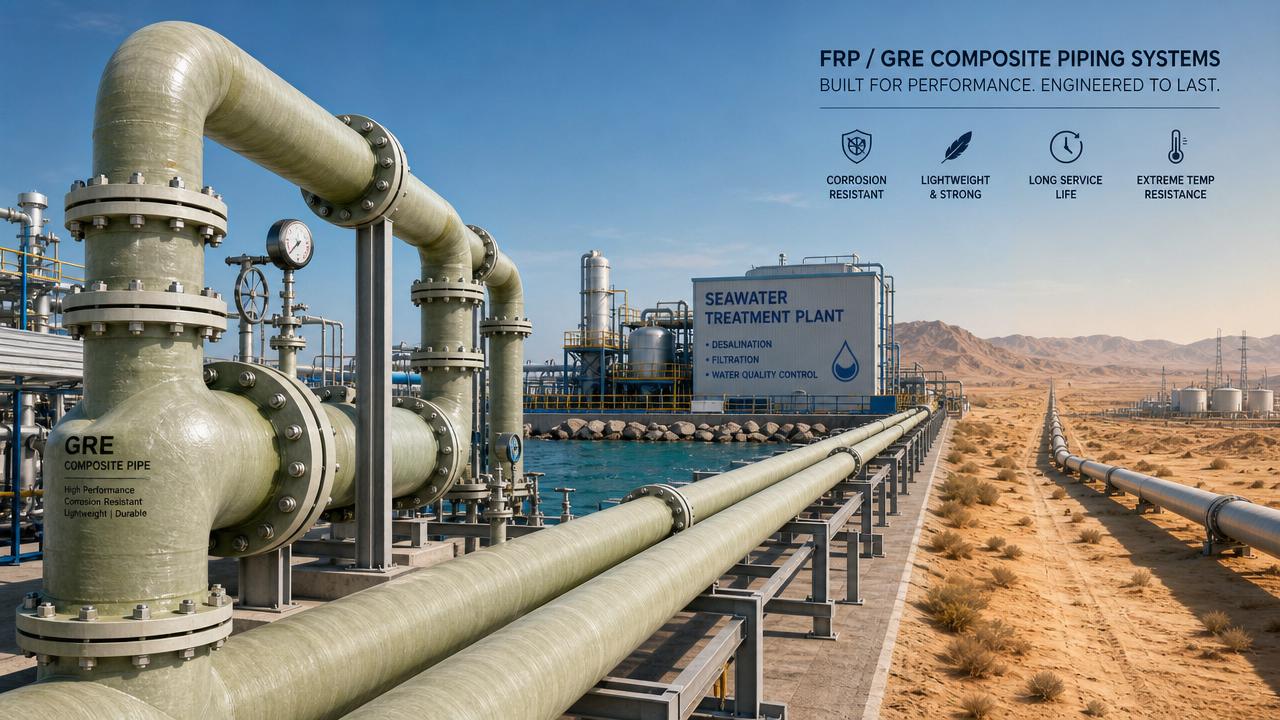
Why downtime pressure is different in harsh oil and gas fields
In demanding oil and gas environments, every hour of downtime can drive up risk and project costs. FRP pipe for oil and gas offers a reliable solution with strong corrosion resistance, long service life, and lower maintenance needs. For project managers seeking dependable performance in tough fields, it can help improve system stability and keep operations moving efficiently.
Not every field creates the same failure pattern. Some sites suffer from sour fluids. Others face saline water, sand erosion, or unstable temperatures. Material selection must match the actual operating scene.
This is where FRP pipe for oil and gas becomes valuable. As a glass-based composite solution, it combines fiberglass strength with resin protection. That combination can reduce corrosion-driven shutdowns across diverse systems.
How to judge whether FRP pipe for oil and gas fits a specific field
A useful decision starts with field conditions, not only pipe price. The best result comes from comparing fluid chemistry, pressure level, installation limits, and expected maintenance cycles.
FRP pipe for oil and gas is often chosen when metal piping fails early from internal corrosion or external exposure. It is also preferred when lower weight simplifies transport and installation.
- High chloride or saline water exposure
- Produced water lines with corrosive media
- Remote sites with limited maintenance windows
- Buried or above-ground pipelines needing long service life
- Facilities where lightweight piping reduces handling risk
In these scenarios, FRP pipe for oil and gas can deliver lower lifecycle cost, even when the initial evaluation includes several material options.
Typical field scenarios where FRP pipe for oil and gas reduces downtime
Produced water gathering systems in corrosive service
Produced water often contains salts, chemicals, and gases that accelerate steel corrosion. Frequent repair work in these lines creates shutdown risk and raises labor demand.
FRP pipe for oil and gas performs well here because corrosion resistance is built into the composite structure. A stable internal surface also helps maintain flow efficiency over time.
Injection water and seawater handling near coastal assets
Coastal and offshore-linked systems face constant saline exposure. Traditional metal piping may require coatings, cathodic protection, and repeated inspections.
In such conditions, FRP pipe for oil and gas can reduce maintenance complexity. Its corrosion resistance supports long operating periods with fewer unplanned interventions.
Remote desert fields with difficult logistics
Remote projects often struggle with spare parts access, skilled labor shortages, and narrow shutdown windows. Heavy piping increases transport and lifting demands.
Because composite pipes are lighter than many metal alternatives, installation can be faster and safer. FRP pipe for oil and gas is especially attractive where downtime recovery is expensive.
Buried pipelines exposed to aggressive soil conditions
Buried pipe networks can fail from both internal media and external soil attack. Repairs may require excavation, isolation, and production disruption.
FRP pipe for oil and gas avoids many external corrosion concerns linked to metallic systems. That makes it a practical option for buried transfer lines in harsh ground conditions.
What demand differences matter across oil and gas scenarios
Different scenes call for different pipe design priorities. Pressure class alone cannot determine the right composite solution. Resin system, joint method, and operating profile also matter.
For many operators, FRP pipe for oil and gas is not a universal replacement. It is a targeted answer for corrosion-heavy, maintenance-sensitive, or access-limited applications.
Practical adaptation advice before selecting FRP pipe for oil and gas
Field adaptation improves results more than generic material selection. A strong project review should connect operating conditions with pipe structure, fitting design, and testing requirements.
- Confirm fluid composition, including chlorides, hydrocarbons, gases, and treatment chemicals.
- Check operating and surge pressure rather than using only nominal pressure.
- Review temperature range, cycling frequency, and installation environment.
- Match joints and fittings to layout stress points and maintenance plans.
- Require hydrostatic testing and quality control records before delivery.
These steps help determine whether FRP pipe for oil and gas will reduce downtime in real operation, not only on technical paper.
Composite expertise from related sectors can also support selection logic. One relevant example is The application of GRE piping in marine scrubber systems, which shows how GRE performs in corrosive fluid handling environments.
Common misjudgments that increase downtime instead of reducing it
Some projects choose materials by initial cost alone. That approach often ignores repair frequency, shutdown impact, and inspection burden. In corrosive services, lifecycle cost usually matters more.
Another mistake is treating all composite pipes as equal. Resin selection, winding quality, and fitting consistency strongly affect long-term performance.
Improper installation is another avoidable issue. Even high-quality FRP pipe for oil and gas can underperform if supports, alignment, or joint procedures are poorly controlled.
- Ignoring pressure spikes during startup and shutdown
- Overlooking soil or UV exposure conditions
- Using unsuitable fittings for complex routing
- Skipping site-specific support design reviews
Why GRE manufacturing quality matters in tough fields
The performance of FRP pipe for oil and gas depends on manufacturing discipline as much as material theory. Stable winding control, consistent fittings, and complete testing reduce future uncertainty.
Shandong Ocean Pipe Technology Co., Ltd. was established in 2012 in Dezhou, Shandong, China. It has developed into one of China’s top GRE pipe manufacturers, supported by large-scale winding capacity.
With 16 winding production lines, 174 fitting winding machines, and micro control systems, the company supports consistent fabrication. Static water pressure testing equipment further strengthens product verification.
Its GRE piping is widely used in oil and gas, LNG, chemical plants, ship ballast systems, hot spring pipelines, and salt-making operations. This broad application base reflects practical adaptation across corrosive environments.
Next steps for evaluating field-ready composite piping
If shutdowns are driven by corrosion, repair delays, or difficult field access, a structured review of FRP pipe for oil and gas is worth starting now.
Begin with one pipeline segment that shows repeated maintenance issues. Compare failure history, fluid chemistry, pressure profile, and replacement intervals against a GRE-based alternative.
Then verify manufacturing capacity, testing procedures, and fitting support from the supplier. A practical, scene-based assessment often reveals where FRP pipe for oil and gas can create the biggest uptime advantage.
In tough fields, better material matching can mean fewer interruptions, lower maintenance exposure, and more stable production. That is the real value behind choosing the right composite piping system.
Please give us a message
产品介绍产品介绍产品介绍产品介绍产品介绍产品介绍产品介绍产品介绍产品介绍产品介绍产品介绍产品介绍产品介绍产品介绍产品介绍产品介绍产品介绍产品介绍产品介绍产品介绍产品介绍产品介绍产品介绍产品介绍产品介绍产品介绍产品介绍产品介绍产品介绍产品介绍
Please give us a message
产品介绍产品介绍产品介绍产品介绍产品介绍产品介绍产品介绍产品介绍产品介绍产品介绍产品介绍产品介绍产品介绍产品介绍产品介绍产品介绍产品介绍产品介绍产品介绍产品介绍产品介绍产品介绍产品介绍产品介绍产品介绍产品介绍产品介绍产品介绍产品介绍产品介绍
Please give us a message
产品介绍产品介绍产品介绍产品介绍产品介绍产品介绍产品介绍产品介绍产品介绍产品介绍产品介绍产品介绍产品介绍产品介绍产品介绍产品介绍产品介绍产品介绍产品介绍产品介绍产品介绍产品介绍产品介绍产品介绍产品介绍产品介绍产品介绍产品介绍产品介绍产品介绍
Please give us a message
产品介绍产品介绍产品介绍产品介绍产品介绍产品介绍产品介绍产品介绍产品介绍产品介绍产品介绍产品介绍产品介绍产品介绍产品介绍产品介绍产品介绍产品介绍产品介绍产品介绍产品介绍产品介绍产品介绍产品介绍产品介绍产品介绍产品介绍产品介绍产品介绍产品介绍