
FRP Pipe buying mistakes that often raise project costs
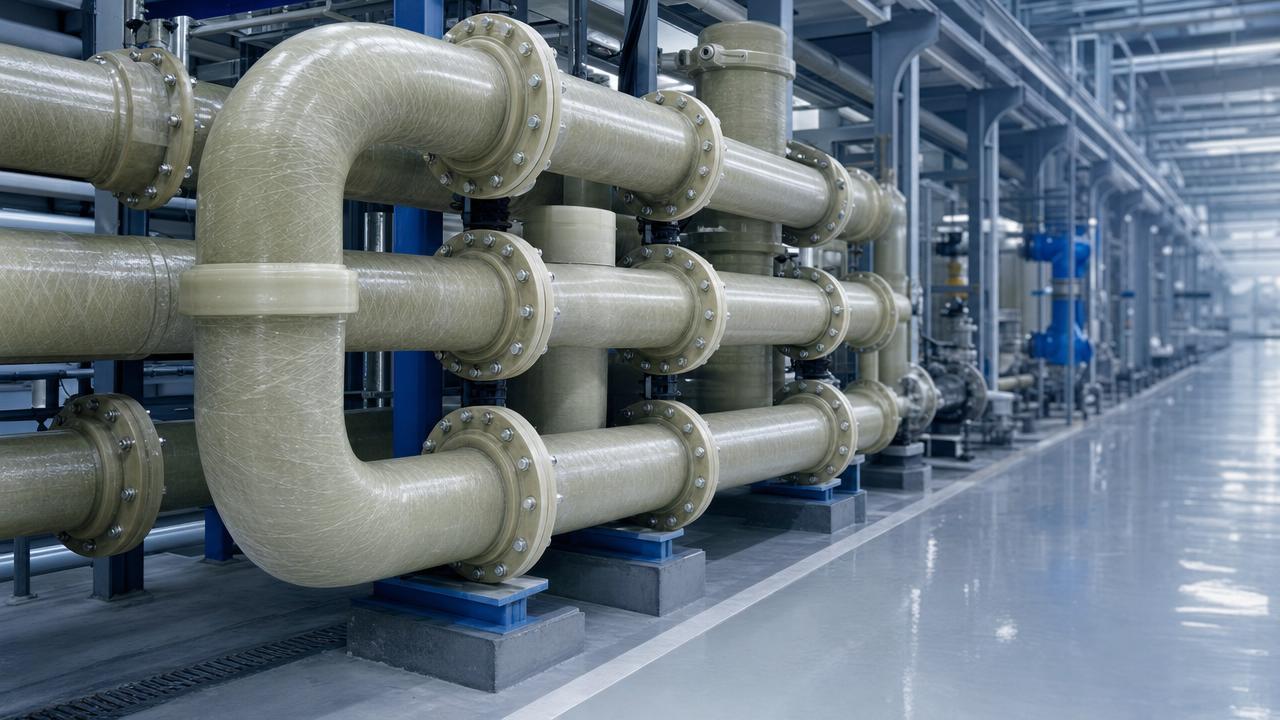
FRP Pipe buying mistakes often begin with the wrong project assumptions
Buying the wrong FRP Pipe can silently drive up total project costs through premature failure, installation delays, and avoidable maintenance. For industrial projects, early material decisions shape lifecycle cost far more than initial unit price.
In glass and ceramic materials related industries, piping often faces corrosive media, temperature shifts, abrasive flow, and demanding installation conditions. A poor FRP Pipe choice may seem acceptable at purchase, yet become expensive after commissioning.
This article explains common FRP Pipe buying mistakes by project scenario. It also shows how to compare requirements, avoid hidden risks, and select a more reliable piping solution.
Why project scenario matters before selecting FRP Pipe
Not every FRP Pipe operates under the same service conditions. Chemical plants, ballast systems, LNG support lines, hot spring networks, and mining duties all create different performance demands.
A pipe designed for one environment may underperform in another. Mistakes often happen when buyers focus on diameter and pressure, while ignoring resin system, liner structure, joining method, and installation load.
Shandong Ocean Pipe Technology Co., Ltd., established in 2012 in Dezhou, China, has developed large-scale GRE manufacturing capability with 16 winding lines and extensive testing resources. This production depth matters because quality consistency depends on process control, not only on product claims.
Scenario 1: Corrosive process lines where chemical resistance is underestimated
One costly mistake is treating all FRP Pipe as equally corrosion resistant. In reality, resin chemistry determines long-term performance against acids, salts, solvents, and mixed industrial fluids.
If the media analysis is incomplete, the selected pipe may soften, blister, or lose structural strength. The result is shutdowns, replacement labor, and production risk that easily exceed any upfront savings.
Key checks for corrosive service
- Confirm full chemical composition, not only the main medium.
- Check operating and upset temperature ranges.
- Review concentration variation during cleaning or startup.
- Match liner and resin system to actual service exposure.
For chemical transport, a detailed compatibility review is one of the most important FRP Pipe purchasing steps. Skipping it creates hidden cost far beyond material price.
Scenario 2: High-temperature or cyclic systems where thermal behavior is ignored
Another frequent error is selecting FRP Pipe only by pressure class. Temperature changes affect stiffness, expansion behavior, joint performance, and long-term durability.
Hot spring pipelines, heated process loops, and some utility lines see repeated thermal cycling. A system that looks adequate on paper may fail at supports, bends, or couplings after repeated expansion and contraction.
What should be verified
- Maximum continuous temperature and short-term peak temperature.
- Thermal expansion allowance in supports and anchors.
- Joint type suitability for cyclic movement.
- Design safety margin under real operating loads.
A lower-cost FRP Pipe can become expensive if thermal loads force redesign, re-supporting, or frequent maintenance during operation.
Scenario 3: Abrasive or solids-bearing flow where wear resistance is overlooked
In slurry, salt, or solids-laden transport, wear can be more damaging than corrosion. This is especially relevant in industrial systems linked to material processing and resource handling.
When evaluating FRP Pipe for such conditions, internal surface design and flow velocity become critical. Abrasion can thin liners, damage fittings, and shorten service life at elbows or reducers.
Projects involving Mining duties should pay extra attention to particle size, solids percentage, and velocity profile. Those variables often decide whether a pipe remains economical over time.
Common buying mistake
The mistake is assuming corrosion-resistant FRP Pipe is automatically wear-resistant. These are related, but not identical, performance properties.
Scenario 4: Marine and ship systems where installation reality is underestimated
Ship ballast piping and marine utility systems bring unique challenges. Tight routing, vibration, limited installation windows, and onboard joining conditions all affect final performance.
Some FRP Pipe buying errors happen because the product is technically suitable, but not installation-friendly for the site. This leads to field modification, alignment trouble, and unexpected labor cost.
Important judgment points
- Available space for joint assembly and inspection.
- Tolerance control for fittings and spool sections.
- Vibration support design and restraint layout.
- Delivery sequencing for modular installation.
A high-quality FRP Pipe system must fit both the process and the installation environment. Ignoring either one increases total project cost.
How different application scenarios change FRP Pipe requirements
Practical FRP Pipe selection advice for cost control
The safest buying approach is to compare lifecycle performance, not only quotation price. A structured review reduces technical mismatch and protects schedule reliability.
- Define the service environment in detail before asking for offers.
- Request pressure, temperature, chemical, and support data together.
- Review testing capacity and production consistency of the supplier.
- Verify fittings, joints, and installation method as one system.
- Ask for references in similar FRP Pipe applications.
Ocean Pipe serves oil and gas, LNG, ship ballast piping, chemical plants, hot spring pipe networks, and salt-making operations. Such multi-scenario experience is useful because it supports more accurate adaptation instead of generic recommendations.
Common FRP Pipe buying mistakes that are still missed in reviews
Choosing by unit price alone
The lowest-priced FRP Pipe may have higher installation, inspection, or maintenance cost. True value comes from service life and stable operation.
Ignoring fittings and joint quality
Many failures start at elbows, tees, reducers, or joints. Pipe body quality alone does not guarantee system reliability.
Using incomplete operating data
Design assumptions based on normal conditions can miss cleaning cycles, pressure surges, or upset temperatures. Those events often trigger early damage.
Overlooking supplier manufacturing depth
FRP Pipe quality depends on winding control, testing discipline, and repeatable process management. Strong factory capability reduces variation between batches and fittings.
Neglecting specialized duty adaptation
In some systems, including Mining transport, flow behavior can change sharply over time. A static specification may not reflect actual wear conditions.
Next steps for smarter FRP Pipe decisions
A better FRP Pipe decision starts with clearer project data, scenario-based evaluation, and supplier verification. This process lowers the risk of hidden failure cost later.
Before final selection, prepare a checklist covering media, temperature, pressure, solids content, support layout, joint method, and installation constraints. Then compare each option against real operating conditions.
When FRP Pipe is matched correctly to the application, it can deliver corrosion resistance, efficient installation, and strong lifecycle value. Avoiding common buying mistakes is often the fastest way to protect project budget and long-term reliability.
Please give us a message
产品介绍产品介绍产品介绍产品介绍产品介绍产品介绍产品介绍产品介绍产品介绍产品介绍产品介绍产品介绍产品介绍产品介绍产品介绍产品介绍产品介绍产品介绍产品介绍产品介绍产品介绍产品介绍产品介绍产品介绍产品介绍产品介绍产品介绍产品介绍产品介绍产品介绍
Please give us a message
产品介绍产品介绍产品介绍产品介绍产品介绍产品介绍产品介绍产品介绍产品介绍产品介绍产品介绍产品介绍产品介绍产品介绍产品介绍产品介绍产品介绍产品介绍产品介绍产品介绍产品介绍产品介绍产品介绍产品介绍产品介绍产品介绍产品介绍产品介绍产品介绍产品介绍
Please give us a message
产品介绍产品介绍产品介绍产品介绍产品介绍产品介绍产品介绍产品介绍产品介绍产品介绍产品介绍产品介绍产品介绍产品介绍产品介绍产品介绍产品介绍产品介绍产品介绍产品介绍产品介绍产品介绍产品介绍产品介绍产品介绍产品介绍产品介绍产品介绍产品介绍产品介绍
Please give us a message
产品介绍产品介绍产品介绍产品介绍产品介绍产品介绍产品介绍产品介绍产品介绍产品介绍产品介绍产品介绍产品介绍产品介绍产品介绍产品介绍产品介绍产品介绍产品介绍产品介绍产品介绍产品介绍产品介绍产品介绍产品介绍产品介绍产品介绍产品介绍产品介绍产品介绍