
Why is GRE pipe for offshore gaining attention in new projects?
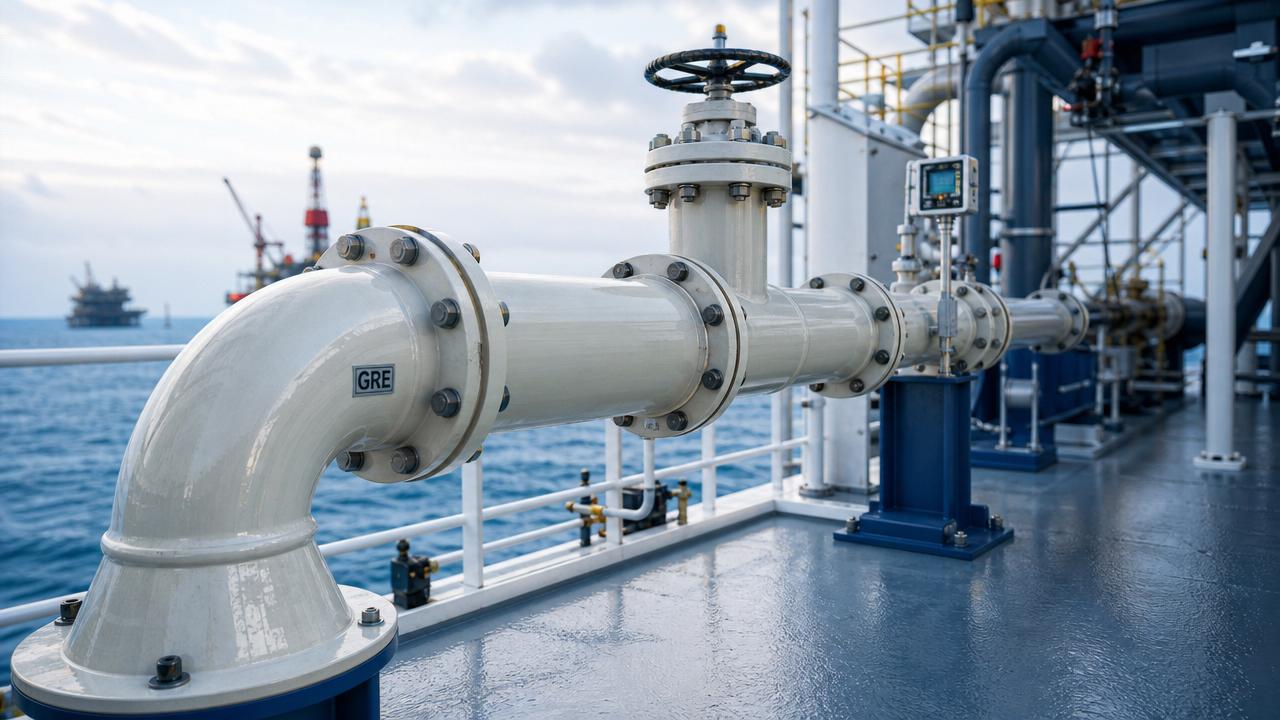
As offshore projects aim for longer service life, lower maintenance, and stronger resistance to seawater and chemical corrosion, GRE pipe for offshore is gaining attention for practical reasons. Engineers and planners increasingly see it as a reliable alternative to metal piping in systems where corrosion, weight, and lifecycle cost directly affect project performance.
The growing interest is not simply about using a newer material. It is about solving familiar offshore problems more effectively. In many new projects, GRE helps reduce corrosion-related failures, simplify installation, and improve long-term cost control without sacrificing operational reliability.
Why are new offshore projects paying closer attention to GRE pipe for offshore?
The core reason is simple: offshore operators want piping systems that last longer with less intervention. Traditional steel piping remains common, but corrosion protection, coating maintenance, and weight management continue to create cost and operational pressure.
GRE pipe for offshore offers a different value proposition. It combines corrosion resistance, relatively low weight, and stable hydraulic performance, which makes it appealing in seawater, ballast, utility, firewater, and selected process applications.
For project planners in the research stage, this material is gaining attention because it supports broader industry goals. Those goals include longer design life, lower total maintenance exposure, easier handling during installation, and better predictability in aggressive marine environments.
In other words, GRE is attracting interest not because it replaces every metal pipe, but because it fits many offshore service conditions where corrosion is the dominant long-term risk. That practical fit is what is driving new project discussions.
What problems does GRE solve better than traditional metal piping?
The first issue is corrosion. Offshore systems are exposed to saltwater, humidity, chlorides, chemicals, and temperature variation. Carbon steel often requires coatings, cathodic protection, inspection cycles, and repair planning to maintain integrity over time.
GRE does not rust like steel. In many offshore utility systems, that alone changes the maintenance equation. Instead of planning around corrosion control as a constant concern, operators can focus more on system function and less on progressive material degradation.
The second issue is weight. Offshore platforms, FPSOs, and marine vessels are always sensitive to load. Lower piping weight can support easier transportation, simpler lifting, and reduced structural burden, especially in complex retrofit or modular construction environments.
The third issue is flow efficiency. GRE pipe has a smooth internal surface, which can help maintain hydraulic performance over time. In systems where scaling or internal corrosion affects metal piping, this smoother surface can support more stable flow conditions.
The fourth issue is lifecycle disruption. Corrosion in metal systems can lead to shutdowns, replacement work, safety concerns, and hidden labor costs. GRE gains attention because many owners now evaluate materials based on total operational impact, not purchase price alone.
Which offshore applications are most suitable for GRE piping?
Not every offshore service should automatically use GRE, but several applications are especially suitable. Seawater cooling lines, ballast systems, firewater lines, produced water handling, drainage, and other non-hydrocarbon utility systems are among the most common examples.
Ship ballast piping is a particularly strong use case. These systems operate in a highly corrosive environment, and material reliability matters because maintenance access can be difficult. GRE has become a recognized option where long-term corrosion resistance is a priority.
In LNG-related and marine support systems, GRE is also considered where media compatibility and operating conditions fall within design limits. The same logic applies in chemical and salt-heavy environments, where corrosion performance strongly affects system durability.
This is one reason manufacturers with wide industrial experience stand out. Shandong Ocean Pipe Technology Co., Ltd., established in 2012, has developed GRE pipe solutions used in oil and gas, ship ballast piping, LNG, chemical plants, hot spring pipelines, and salt-making facilities.
Its production base includes 16 winding lines, 174 pipe fitting winding machines and winding micro control systems, plus static water pressure testing capacity. That manufacturing depth matters for buyers researching supplier stability, consistency, and project-scale delivery capability.
Why does lifecycle cost matter more than initial material cost?
Many buyers first compare GRE with steel on unit price, but that is rarely the most useful decision method in offshore projects. Material selection should reflect the full cost of ownership across installation, inspection, maintenance, repair, and replacement exposure.
A lower-priced pipe can become more expensive if it needs frequent coating repair, corrosion monitoring, shutdown-related intervention, or earlier replacement. Offshore work magnifies these costs because labor access, safety control, and downtime are unusually expensive.
GRE pipe for offshore gains attention because its value often appears over the operating life of the asset. Reduced corrosion-related intervention can lower maintenance planning burden and improve long-term budget visibility for owners and engineering teams.
Weight also affects cost more than some early estimates suggest. Lighter piping may reduce lifting complexity, support faster handling, and simplify certain installation stages. On offshore projects, these indirect benefits can influence schedules and contractor coordination.
For decision-makers, the better question is not “Is GRE cheaper than steel today?” It is “Which option gives the project lower risk and lower total lifecycle cost under actual offshore operating conditions?” That is where GRE often becomes compelling.
What concerns do engineers and project planners usually have about GRE?
The most common concern is whether GRE can handle the project’s design pressure, temperature, and service media. This is a valid question because GRE is highly capable in many systems, but it must still be matched carefully to operating requirements.
Another concern is standards compliance and quality consistency. Buyers want confidence that the manufacturer can produce pipes and fittings with stable dimensions, reliable joining systems, and repeatable mechanical performance supported by proper testing procedures.
Installation practices are another important topic. Unlike metal systems, GRE requires correct handling, alignment, joint preparation, and trained installation teams. Poor field practice can undermine the advantages of a well-made product, so execution quality matters.
Fire performance and safety acceptance may also be reviewed, depending on the offshore facility type and local regulations. Material selection in offshore environments is rarely based on one property alone; it depends on system classification and project approval requirements.
Finally, researchers often worry about supplier credibility. Offshore projects need dependable manufacturing, documented testing, and the ability to support fittings, accessories, and technical coordination. This is especially important in international or multi-package procurement environments.
How should buyers evaluate a GRE pipe supplier for offshore projects?
Start with application experience, not just product brochures. A supplier that has served oil and gas, marine, LNG, chemical, and ballast piping applications is usually better prepared to understand offshore system requirements and practical installation realities.
Next, assess manufacturing capability. Production line count, fitting fabrication capacity, micro control systems, and hydrostatic testing resources all indicate whether the supplier can support quality consistency and larger project volumes without excessive delivery uncertainty.
For example, Ocean Pipe reports an annual GRE pipe production and testing capacity of 25,000 tons and has supplied customers such as CNOOC, CNPC, Sinopec, major Chinese shipyards, and overseas markets including Australia, Iraq, Kazakhstan, and Turkey.
This kind of track record does not replace technical review, but it helps reduce procurement risk. It suggests the supplier has experience with industrial quality expectations, export coordination, and project requirements beyond a single domestic niche.
Buyers should also request technical data relevant to their use case: pressure ratings, resin system details, joint type, testing records, applicable standards, chemical resistance range, and guidance for transport, storage, and field installation.
In some industrial projects, decision-makers also compare utility infrastructure choices across different systems. For instance, treatment and piping planning may intersect when facilities review broader plant support needs such as Wastewater Treatment Plant integration.
Why is GRE especially relevant in offshore projects being designed today?
New offshore projects are shaped by tighter cost discipline, stricter reliability expectations, and more attention to operational continuity. Owners no longer want materials that appear acceptable at startup but generate recurring maintenance headaches later in service.
At the same time, engineering teams are under pressure to optimize asset life from the beginning. Material choices now receive more scrutiny because they influence not only capex, but also inspection strategy, spare parts planning, and long-term operating workload.
GRE pipe for offshore fits this shift because it aligns with preventive asset thinking. Instead of accepting corrosion as an unavoidable maintenance issue, more project teams are selecting materials that inherently reduce the likelihood of corrosion-related degradation.
This trend is also supported by wider industry familiarity. As more projects use GRE successfully, confidence grows among designers, EPC contractors, and end users. A material that once required extra explanation now enters discussions earlier in front-end engineering.
That growing familiarity matters. Adoption often accelerates when project teams can reference existing applications in shipbuilding, offshore utilities, and industrial corrosive services rather than treating the material as an unfamiliar specialty solution.
When is GRE the right choice, and when should projects be more selective?
GRE is the right choice when corrosion resistance, lower weight, and reduced maintenance are primary project goals, and when the service conditions fit the pipe’s design envelope. Offshore seawater and utility applications are common examples where it delivers clear value.
Projects should be more selective when temperatures, pressures, fire exposure requirements, or media characteristics push beyond suitable operating conditions. In those cases, material selection must be based on detailed engineering review rather than broad preference.
The most effective approach is not to ask whether GRE is universally better than metal. It is to define the system duty clearly, compare lifecycle performance honestly, and confirm that the supplier can support the project with proven manufacturing and technical documentation.
That balanced view helps information-stage readers make better decisions. It avoids both extremes: dismissing GRE as a niche material, or assuming it should automatically replace steel everywhere. Good engineering comes from matching material behavior to service reality.
Conclusion
GRE pipe for offshore is gaining attention in new projects because it addresses some of the offshore sector’s most persistent challenges: corrosion, weight, maintenance burden, and lifecycle cost. Its rising profile is driven by practical performance, not marketing alone.
For researchers and planners, the key takeaway is clear. GRE deserves serious evaluation wherever offshore systems face aggressive marine exposure and long-term reliability matters more than simple upfront price comparison. In the right applications, it can be a highly strategic material choice.
The best next step is a disciplined review of service conditions, standards, installation requirements, and supplier capability. When those factors align, GRE can provide durable value across offshore utility and marine piping systems for many years of operation.
Please give us a message
产品介绍产品介绍产品介绍产品介绍产品介绍产品介绍产品介绍产品介绍产品介绍产品介绍产品介绍产品介绍产品介绍产品介绍产品介绍产品介绍产品介绍产品介绍产品介绍产品介绍产品介绍产品介绍产品介绍产品介绍产品介绍产品介绍产品介绍产品介绍产品介绍产品介绍
Please give us a message
产品介绍产品介绍产品介绍产品介绍产品介绍产品介绍产品介绍产品介绍产品介绍产品介绍产品介绍产品介绍产品介绍产品介绍产品介绍产品介绍产品介绍产品介绍产品介绍产品介绍产品介绍产品介绍产品介绍产品介绍产品介绍产品介绍产品介绍产品介绍产品介绍产品介绍
Please give us a message
产品介绍产品介绍产品介绍产品介绍产品介绍产品介绍产品介绍产品介绍产品介绍产品介绍产品介绍产品介绍产品介绍产品介绍产品介绍产品介绍产品介绍产品介绍产品介绍产品介绍产品介绍产品介绍产品介绍产品介绍产品介绍产品介绍产品介绍产品介绍产品介绍产品介绍
Please give us a message
产品介绍产品介绍产品介绍产品介绍产品介绍产品介绍产品介绍产品介绍产品介绍产品介绍产品介绍产品介绍产品介绍产品介绍产品介绍产品介绍产品介绍产品介绍产品介绍产品介绍产品介绍产品介绍产品介绍产品介绍产品介绍产品介绍产品介绍产品介绍产品介绍产品介绍