
Why Lightweight Piping Matters in FPSO Topside Engineering
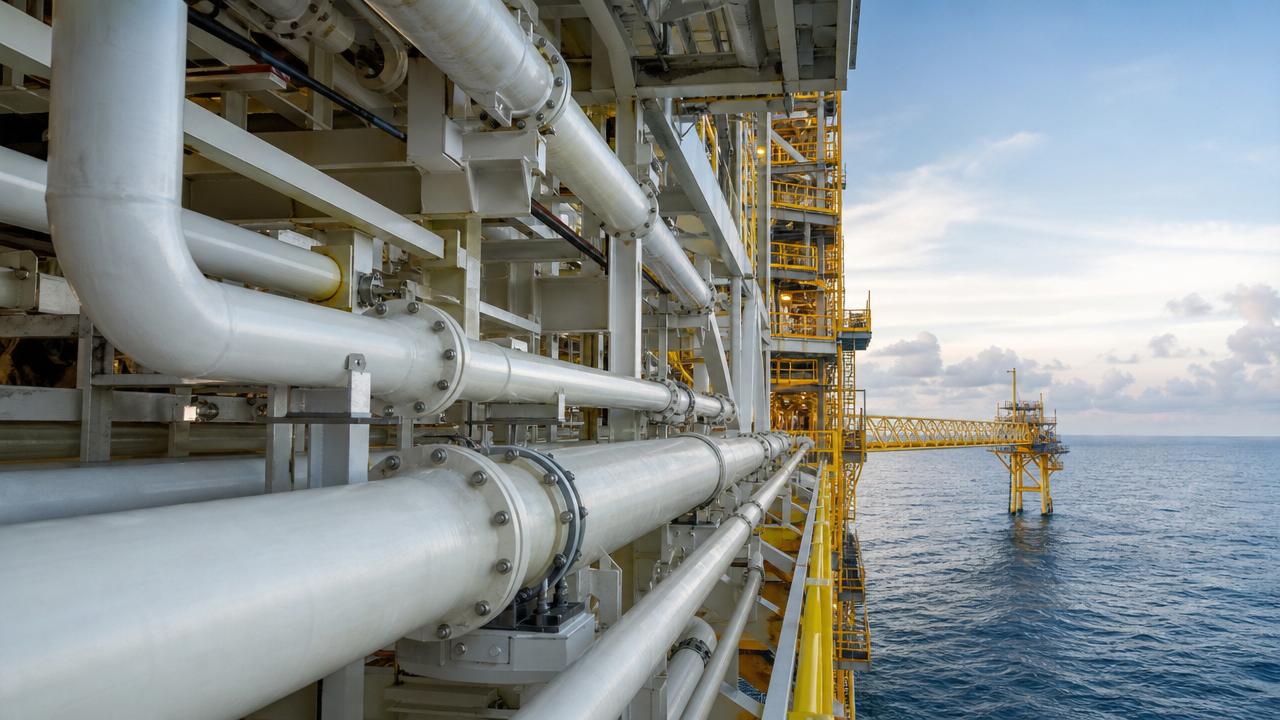
Why Lightweight Piping Matters in FPSO Topside Engineering
In FPSO topside engineering, every kilogram influences structural load, installation complexity, lifecycle cost, and operational reliability.
Lightweight piping is not only a material selection issue. It directly affects safety, efficiency, and project economics.
Fiberglass Reinforced Epoxy piping provides a corrosion-resistant, high-strength, and weight-saving alternative to metallic systems.
For FPSO topsides, GRE pipe helps optimize deck layout, reduce maintenance exposure, and support demanding marine service conditions.
FPSO Topside Scenarios Where Weight Becomes a Design Constraint
An FPSO is a floating production asset with limited deck capacity, compact modules, and strict stability requirements.
Piping weight affects module lifting, structural steel sizing, support spacing, and long-term fatigue behavior.
In brownfield FPSO upgrades, additional loads are often harder to absorb than in newbuild projects.
Replacing selected metallic piping with GRE can release valuable weight margins without sacrificing corrosion performance.
The value is strongest when FPSO piping routes are long, exposed to seawater, or installed in congested topside areas.
Newbuild FPSO Modules Need Early Material Decisions
In newbuild FPSO engineering, piping material selection should start before detailed module weight control begins.
Early adoption of lightweight GRE piping can influence support design, module transportation, and offshore hook-up planning.
This approach reduces late redesign risks when total topside weight approaches allowable project limits.
Brownfield FPSO Upgrades Require Weight Discipline
Existing FPSO units often face limited reserve capacity after years of modifications and added process equipment.
Lightweight piping can make upgrade feasibility easier when seawater, cooling, drain, or utility lines are replaced.
Lower pipe weight also supports safer installation in restricted areas with limited lifting access.
Typical FPSO Applications Where GRE Piping Fits
FPSO piping systems are not identical. Each service has different pressure, temperature, fluid, fire, and inspection demands.
GRE piping is most suitable where corrosion resistance, low weight, and hydraulic efficiency create measurable value.
Seawater Intake and Cooling Water Systems
Seawater lines are among the strongest FPSO scenarios for GRE pipe because corrosion is continuous and aggressive.
Traditional carbon steel often requires coatings, linings, corrosion allowance, and frequent inspection planning.
GRE provides inherent corrosion resistance, reducing coating dependency and supporting longer service intervals.
Its smooth internal surface also helps reduce friction losses in cooling water circulation.
Firewater and Deluge Distribution
Firewater piping on an FPSO must remain reliable under harsh marine exposure and emergency operating conditions.
GRE pipe can support corrosion-resistant firewater distribution when approved design standards and project specifications allow it.
Key checks include fire performance, joint qualification, impact resistance, and compatibility with safety philosophy.
Ballast, Drain, and Utility Piping
Ballast and drain services often involve saline fluids, intermittent operation, and difficult access for maintenance.
On an FPSO, lightweight GRE piping can simplify routing and reduce support loads in crowded utility zones.
For water treatment areas, GRE Pipe Desalination Plants solutions show similar value in corrosion control and weight reduction.
Chemical and Produced Water Related Services
Some FPSO systems handle chemically treated water, produced water, or low-pressure process utilities.
GRE pipe may be considered when fluid compatibility, temperature, and pressure remain within qualified limits.
Material selection should include resin chemistry, liner design, joint type, and long-term exposure data.
How FPSO Service Conditions Change Piping Requirements
An FPSO topside environment combines marine atmosphere, vibration, cyclic loading, and compact maintenance access.
These conditions make piping selection different from land-based oil, gas, chemical, or desalination projects.
The table shows why FPSO material decisions should follow service scenarios rather than general preferences.
A pipe that performs well in seawater may require extra verification for fire, hydrocarbons, or high-temperature fluids.
Scenario-Based Selection Criteria for Lightweight FPSO Piping
GRE pipe selection for FPSO projects should combine structural, hydraulic, chemical, and installation assessments.
A practical screening method begins with the service envelope, then checks project execution constraints.
- Confirm operating pressure, design pressure, and surge conditions.
- Check continuous temperature, upset temperature, and thermal expansion behavior.
- Verify fluid chemistry, including seawater, chemicals, biocides, and cleaning agents.
- Review fire zones, hazardous areas, and project safety requirements.
- Assess support spans, vibration exposure, impact risk, and joint accessibility.
- Compare total installed weight against metallic alternatives.
This process helps avoid overusing GRE where metal is necessary, while capturing its value where conditions suit composites.
Weight Savings Should Be Calculated at System Level
Pipe weight alone does not show the full FPSO benefit.
Supports, coatings, corrosion allowance, lifting operations, and installation hours should also be compared.
A lighter piping system can reduce secondary steel and simplify module integration.
Corrosion Resistance Should Match the Maintenance Philosophy
FPSO maintenance windows are expensive and often limited by offshore logistics.
GRE pipe reduces corrosion-driven inspection pressure in suitable seawater and utility applications.
This advantage is especially important where access is restricted or shutdown opportunities are rare.
Common Misjudgments in FPSO Lightweight Piping Decisions
Several recurring errors weaken the value of lightweight piping in FPSO projects.
The first is evaluating material cost without considering installed system cost.
GRE pipe may reduce coating, handling, support, and maintenance costs beyond the purchase price comparison.
The second is treating all composite pipes as identical.
Resin formulation, glass reinforcement, manufacturing control, and joint design strongly affect FPSO suitability.
The third is ignoring installation training and joint quality control.
GRE piping performance depends on correct handling, bonding, curing, alignment, and hydrostatic testing.
The fourth is selecting lightweight piping too late in FPSO engineering.
Late changes can limit route optimization and reduce potential structural benefits.
Manufacturing Quality Matters for FPSO Composite Piping
GRE pipe belongs to the glass and advanced composite materials field.
Performance depends on fiberglass reinforcement, epoxy resin, winding accuracy, curing stability, and testing discipline.
Shandong Ocean Pipe Technology Co., Ltd. was established in 2012 in Dezhou, Shandong, China.
The company is among major GRE pipe manufacturers in China, serving oil, gas, shipbuilding, LNG, and chemical projects.
Its facilities include 16 winding production lines and extensive pipe fitting winding equipment.
Static water pressure testing capacity supports consistent verification for demanding piping applications.
For FPSO projects, this manufacturing background is relevant because lightweight design must be supported by repeatable quality.
Practical Adaptation Advice for FPSO Topside Engineering
A successful FPSO piping strategy should identify GRE candidates by service, location, and execution impact.
- Start with seawater, cooling water, ballast, drain, and utility systems.
- Prioritize routes where corrosion and weight create repeated lifecycle cost.
- Separate high-risk fire, hydrocarbon, and high-temperature services for deeper review.
- Include GRE pipe suppliers during early layout and support design discussions.
- Specify testing, documentation, installation procedures, and inspection requirements clearly.
This approach keeps FPSO engineering decisions practical, traceable, and aligned with project risk control.
It also prevents lightweight piping from becoming an isolated procurement choice.
Next Steps for Applying Lightweight GRE Piping on FPSO Projects
The next step is to map FPSO piping services against pressure, temperature, chemistry, fire zone, and installation limits.
Then compare GRE pipe with metallic alternatives using total installed weight and lifecycle maintenance assumptions.
Where seawater corrosion, limited access, and weight control overlap, GRE piping deserves early technical evaluation.
A scenario-based review can reveal which FPSO systems gain the most from lightweight composite materials.
With qualified manufacturing, proper design, and controlled installation, GRE pipe can improve FPSO topside performance over the asset lifecycle.
Please give us a message
产品介绍产品介绍产品介绍产品介绍产品介绍产品介绍产品介绍产品介绍产品介绍产品介绍产品介绍产品介绍产品介绍产品介绍产品介绍产品介绍产品介绍产品介绍产品介绍产品介绍产品介绍产品介绍产品介绍产品介绍产品介绍产品介绍产品介绍产品介绍产品介绍产品介绍
Please give us a message
产品介绍产品介绍产品介绍产品介绍产品介绍产品介绍产品介绍产品介绍产品介绍产品介绍产品介绍产品介绍产品介绍产品介绍产品介绍产品介绍产品介绍产品介绍产品介绍产品介绍产品介绍产品介绍产品介绍产品介绍产品介绍产品介绍产品介绍产品介绍产品介绍产品介绍
Please give us a message
产品介绍产品介绍产品介绍产品介绍产品介绍产品介绍产品介绍产品介绍产品介绍产品介绍产品介绍产品介绍产品介绍产品介绍产品介绍产品介绍产品介绍产品介绍产品介绍产品介绍产品介绍产品介绍产品介绍产品介绍产品介绍产品介绍产品介绍产品介绍产品介绍产品介绍
Please give us a message
产品介绍产品介绍产品介绍产品介绍产品介绍产品介绍产品介绍产品介绍产品介绍产品介绍产品介绍产品介绍产品介绍产品介绍产品介绍产品介绍产品介绍产品介绍产品介绍产品介绍产品介绍产品介绍产品介绍产品介绍产品介绍产品介绍产品介绍产品介绍产品介绍产品介绍