
What Is Glass Reinforced Epoxy and Where Is It Used in Industry?
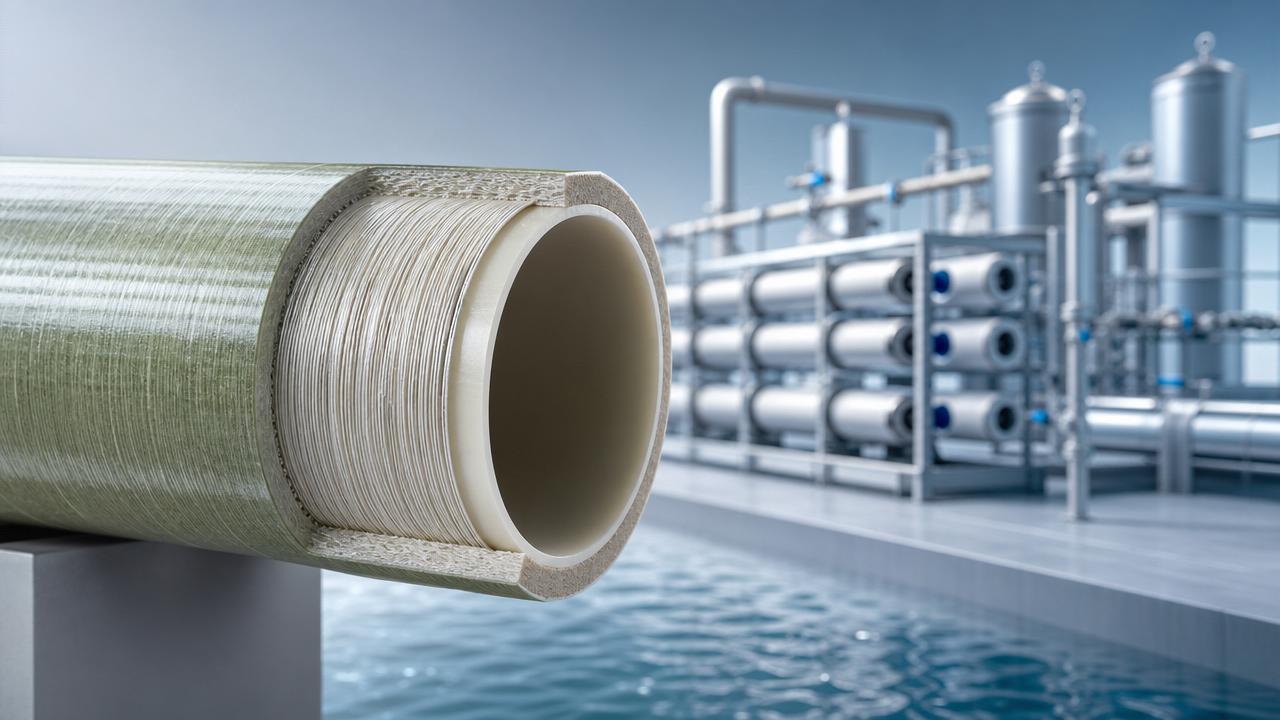
Glass Reinforced Epoxy is a high-performance composite material made by combining glass fibers with an epoxy resin matrix, delivering excellent strength, corrosion resistance, and long service life in demanding industrial environments.
As industries such as oil and gas, shipbuilding, LNG, chemical processing, and desalination seek lightweight piping solutions, Glass Reinforced Epoxy has become a practical alternative to metal systems.
This guide explains what Glass Reinforced Epoxy is, how it works, where it is used, and what to check before selecting GRE pipe for industrial projects.
Why Glass Reinforced Epoxy Needs a Checklist-Based Evaluation
Glass Reinforced Epoxy is not selected only by pipe diameter or pressure rating. Its performance depends on resin chemistry, fiber structure, service medium, temperature, installation quality, and testing.
A checklist approach helps compare GRE pipe with steel, stainless steel, HDPE, and other composite systems under real operating conditions.
It also reduces the risk of corrosion failure, incorrect joint selection, unsupported thermal expansion, and poor field handling.
For glass and ceramic material applications, this structured review is especially important because composite performance is closely linked to material interfaces and manufacturing control.
What Is Glass Reinforced Epoxy?
Glass Reinforced Epoxy, often called GRE, is a thermoset composite made from continuous glass fibers embedded in an epoxy resin system.
The glass fibers provide tensile strength, stiffness, and dimensional stability. The epoxy resin binds the fibers and protects them from chemicals, water, and abrasion.
In GRE pipe manufacturing, fibers are usually wound around a mandrel at controlled angles. This creates strength in axial, hoop, and combined loading directions.
After curing, the structure becomes a rigid composite pipe with high corrosion resistance and a favorable strength-to-weight ratio.
Core Material Characteristics
- Check resin compatibility with acids, alkalis, brine, hydrocarbons, seawater, and treatment chemicals before confirming any Glass Reinforced Epoxy piping specification.
- Confirm glass fiber orientation because winding angle affects burst strength, axial load resistance, stiffness, and long-term mechanical behavior.
- Review design pressure, operating temperature, surge pressure, vacuum conditions, and safety factors under continuous industrial service.
- Verify joint type, including adhesive bonded joints, mechanical joints, or flanged connections, according to installation space and maintenance requirements.
- Assess internal liner quality because the liner contacts the medium and strongly influences chemical resistance and service life.
Key Advantages of Glass Reinforced Epoxy in Industry
The main advantage of Glass Reinforced Epoxy is corrosion resistance. GRE pipe does not rust like carbon steel and often needs less coating protection.
Its lower weight also simplifies transportation, lifting, storage, and installation, especially on ships, offshore structures, and large industrial sites.
Compared with many metallic systems, GRE can reduce maintenance caused by scaling, pitting, galvanic corrosion, and aggressive water chemistry.
- Use Glass Reinforced Epoxy where corrosion control is costly, access is limited, and long operating intervals are required.
- Select GRE pipe when lightweight installation can reduce lifting equipment, labor intensity, and structural load on pipe supports.
- Apply GRE systems when smooth internal surfaces can help reduce friction loss and support stable hydraulic performance.
- Compare lifecycle cost instead of purchase price only, because reduced coating, lower maintenance, and longer service life may offset initial cost.
Core Checklist for Selecting Glass Reinforced Epoxy Pipe
Before choosing Glass Reinforced Epoxy, review the complete operating environment. GRE pipe performs best when material design matches actual service conditions.
- Define the transported medium, including chemical concentration, suspended solids, salinity, hydrocarbon content, pH level, and cleaning chemicals used during maintenance.
- Confirm the maximum operating temperature, because epoxy resin systems have defined thermal limits that influence strength retention and joint performance.
- Calculate pressure conditions, including normal pressure, surge events, shutdown pressure, water hammer, and hydrostatic test pressure.
- Check pipe stiffness and burial design when Glass Reinforced Epoxy is used underground, under roads, or in compacted trench conditions.
- Review support spacing, clamp design, anchor points, and thermal movement to avoid concentrated stress at fittings and joints.
- Specify qualified fittings, including elbows, reducers, tees, flanges, and branches, because fittings often experience complex stress conditions.
- Require factory pressure testing and dimensional inspection to confirm the pipe meets design requirements before shipment.
- Plan field inspection, adhesive curing control, alignment checks, and hydrostatic testing before commissioning the GRE piping system.
Where Glass Reinforced Epoxy Is Used in Industry
Oil and Gas Facilities
Glass Reinforced Epoxy is widely used in oil and gas facilities for produced water, injection water, seawater cooling, firewater, and low-pressure process lines.
Its corrosion resistance is valuable where chloride-rich water, dissolved gases, and aggressive field chemicals attack carbon steel pipelines.
Shipbuilding and Marine Piping
In ship ballast systems, GRE pipe helps reduce weight while resisting seawater corrosion. Lower weight can support better vessel design efficiency.
Marine applications often include ballast piping, bilge systems, cooling water lines, and non-critical utility systems that require durable composite materials.
LNG and Low-Temperature Support Systems
Glass Reinforced Epoxy is used around LNG infrastructure in utility, cooling, seawater, and auxiliary systems where corrosion resistance and reliability matter.
Material selection should always confirm temperature exposure, fire requirements, support design, and classification rules for each LNG-related application.
Chemical Plants
Chemical processing requires careful material compatibility. GRE pipe is suitable for many corrosive fluids when resin, liner, and design temperature are correctly specified.
It may be used in acid transfer, wastewater handling, cooling water, brine systems, and selected process utility lines.
Desalination and Salt Production
Desalination plants expose piping to seawater, brine, high chloride levels, and chemical cleaning cycles. These conditions make Glass Reinforced Epoxy highly relevant.
For projects requiring corrosion-resistant water transfer, GRE Pipe Desalination Plants can support intake, discharge, brine, and process water systems.
Commonly Overlooked Risks When Using GRE Pipe
Ignoring Field Joint Quality
A strong Glass Reinforced Epoxy pipe can still fail if adhesive bonding, surface preparation, curing temperature, or joint alignment is poorly controlled.
Field teams should follow approved procedures and verify each joint before pressure testing.
Underestimating Thermal Movement
GRE systems expand and contract differently from steel. Expansion loops, anchors, guides, and flexible connections may be needed in long pipe runs.
Ignoring movement can create stress at elbows, branches, supports, and equipment nozzles.
Using Wrong Support Details
Sharp edges, narrow clamps, excessive tightening, or poor saddle design can damage composite pipe walls and reduce long-term reliability.
Support design should distribute load and avoid crushing, abrasion, or localized stress.
Choosing by Pressure Rating Alone
Pressure class is only one part of Glass Reinforced Epoxy selection. Temperature, chemical exposure, stiffness, fatigue, and installation method also matter.
A full service review is more reliable than a simple pressure comparison.
Manufacturing and Testing Factors to Verify
Reliable Glass Reinforced Epoxy pipe depends on controlled filament winding, resin mixing, curing, dimensional accuracy, and pressure testing.
Shandong Ocean Pipe Technology Co., Ltd. operates 16 winding production lines and 174 pipe fitting winding machines with micro-control systems.
The factory is equipped with static water pressure testing machines and has an annual GRE pipe production and testing capacity of 25,000 tons.
Its products are used in oil and gas, ship ballast piping, LNG, chemical plants, hot spring piping, and salt-making applications.
- Verify production records, resin batch control, winding parameters, curing conditions, and inspection results for traceable composite quality.
- Request hydrostatic test data, dimensional reports, fitting inspection records, and packaging checks before transportation to site.
- Confirm experience in comparable industries, because oilfield, shipyard, desalination, and chemical applications have different risk profiles.
Practical Execution Guide for GRE Piping Projects
Start with a complete operating profile. Include pressure, temperature, medium chemistry, flow velocity, cleaning method, exposure environment, and expected service life.
Then match the Glass Reinforced Epoxy system to project drawings, support layouts, installation constraints, and testing requirements.
- Prepare a material compatibility review before selecting resin type, liner thickness, pressure class, and fitting configuration.
- Coordinate piping layout with support spacing, expansion control, flange loading, trench conditions, and equipment connection limits.
- Inspect delivered GRE pipe for surface damage, ovality, end condition, marking, and documentation before installation begins.
- Control field bonding procedures, curing time, ambient conditions, and installer workmanship during every jointing operation.
- Perform staged pressure testing and leak inspection according to approved procedures before placing the system into service.
Summary: How to Decide if Glass Reinforced Epoxy Is the Right Choice
Glass Reinforced Epoxy is a strong, corrosion-resistant composite material suited to many industrial piping systems where metal corrosion is a persistent problem.
It is used in oil and gas, shipbuilding, LNG, chemical processing, desalination, hot spring piping, and salt production because it balances durability and low weight.
The best decision comes from checking service medium, temperature, pressure, installation method, support design, joint control, and manufacturer capability.
For an industrial project, the next step is to define operating conditions and request a GRE pipe recommendation based on verified design data.
Please give us a message
产品介绍产品介绍产品介绍产品介绍产品介绍产品介绍产品介绍产品介绍产品介绍产品介绍产品介绍产品介绍产品介绍产品介绍产品介绍产品介绍产品介绍产品介绍产品介绍产品介绍产品介绍产品介绍产品介绍产品介绍产品介绍产品介绍产品介绍产品介绍产品介绍产品介绍
Please give us a message
产品介绍产品介绍产品介绍产品介绍产品介绍产品介绍产品介绍产品介绍产品介绍产品介绍产品介绍产品介绍产品介绍产品介绍产品介绍产品介绍产品介绍产品介绍产品介绍产品介绍产品介绍产品介绍产品介绍产品介绍产品介绍产品介绍产品介绍产品介绍产品介绍产品介绍
Please give us a message
产品介绍产品介绍产品介绍产品介绍产品介绍产品介绍产品介绍产品介绍产品介绍产品介绍产品介绍产品介绍产品介绍产品介绍产品介绍产品介绍产品介绍产品介绍产品介绍产品介绍产品介绍产品介绍产品介绍产品介绍产品介绍产品介绍产品介绍产品介绍产品介绍产品介绍
Please give us a message
产品介绍产品介绍产品介绍产品介绍产品介绍产品介绍产品介绍产品介绍产品介绍产品介绍产品介绍产品介绍产品介绍产品介绍产品介绍产品介绍产品介绍产品介绍产品介绍产品介绍产品介绍产品介绍产品介绍产品介绍产品介绍产品介绍产品介绍产品介绍产品介绍产品介绍