
Best Uses for Corrosion Resistant FRP Pipe Offshore
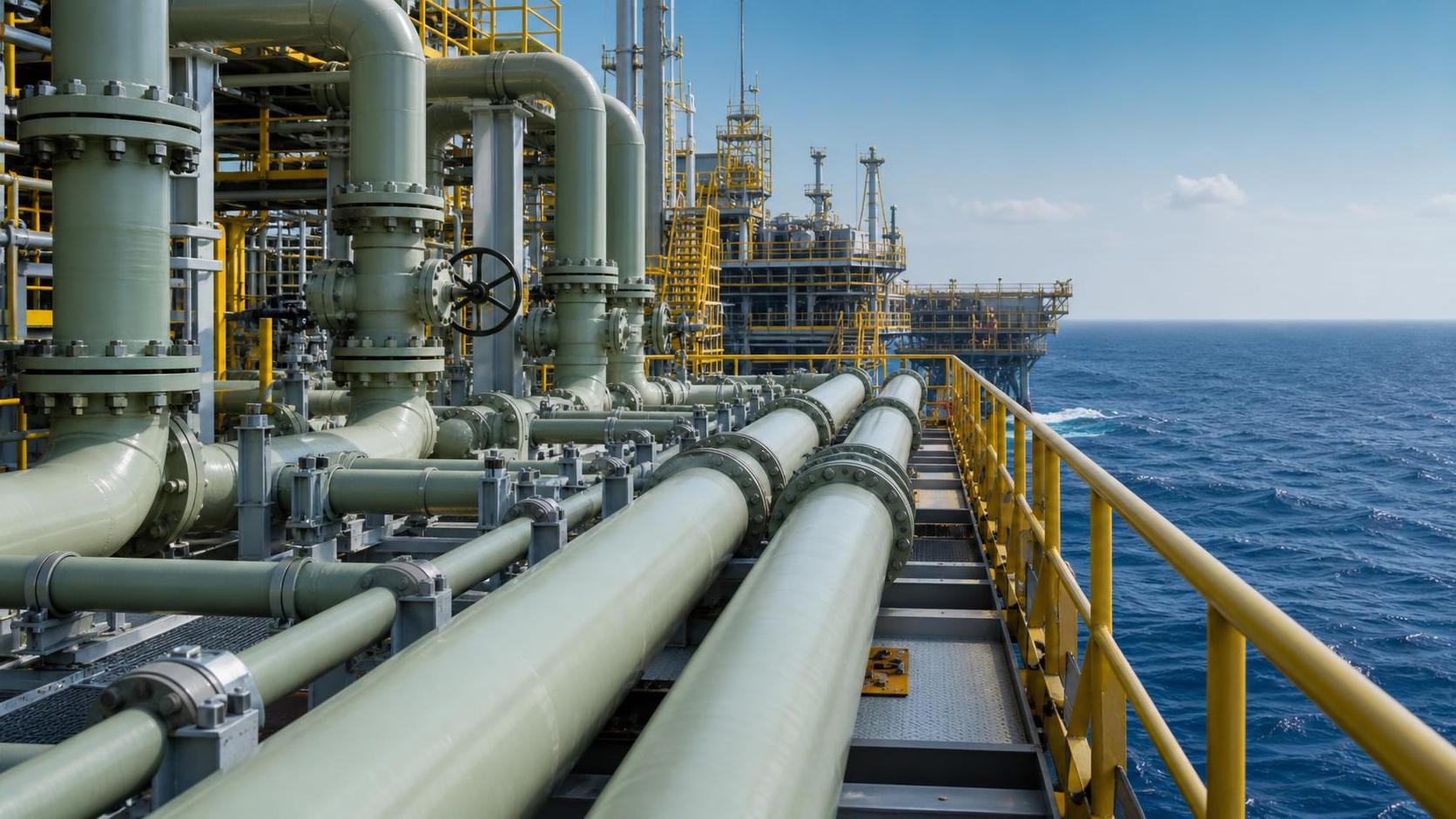
Best Uses for Corrosion Resistant FRP Pipe Offshore
In offshore oil operations, choosing corrosion resistant FRP pipe can significantly improve system reliability, reduce maintenance costs, and extend service life in harsh marine environments.
From seawater cooling and firewater systems to ballast and chemical transfer lines, this advanced piping solution supports safer and more efficient performance offshore.
In real projects, the value becomes clearer when salt, humidity, vibration, and aggressive fluids start attacking traditional metal lines.
Why Corrosion Resistant FRP Pipe Fits Offshore Conditions
Offshore platforms face a difficult mix of seawater, chlorides, temperature shifts, and limited maintenance windows.
That is exactly where corrosion resistant FRP pipe stands out.
It combines corrosion resistance, low weight, smooth internal surfaces, and reliable hydraulic performance.
Compared with carbon steel, it avoids rust-related failure and reduces coating repair work.
Compared with some stainless options, it can lower total lifecycle cost in many non-hydrocarbon process lines.
Its lighter weight also makes transport, handling, and installation easier on crowded offshore decks.
- Resists seawater corrosion and salt-laden air
- Reduces scaling and internal friction losses
- Supports faster installation with less lifting demand
- Helps extend service intervals in exposed areas
Best Uses for Corrosion Resistant FRP Pipe Offshore
1. Seawater Cooling Systems
Seawater cooling is one of the most practical uses for corrosion resistant FRP pipe offshore.
These systems run continuously and stay exposed to high chloride content.
Metal piping often suffers from pitting, wall loss, and unplanned shutdowns in this service.
FRP piping helps maintain steady flow while lowering the risk of corrosion-driven leakage.
Its smooth bore can also help limit pressure drop over time.
2. Firewater Lines
Firewater systems must remain ready even after long idle periods.
Corrosion inside metallic lines can compromise flow performance during a real emergency.
Using corrosion resistant FRP pipe helps preserve system integrity in marine conditions.
This is especially useful for ring mains, deluge lines, and utility firefighting distribution networks.
Reliable flow, low corrosion risk, and reduced maintenance make this a strong application choice.
3. Ballast and Bilge Piping
Ballast systems deal with seawater every day, which makes corrosion control a constant concern.
Corrosion resistant FRP pipe performs well in ballast transfer and related marine service lines.
The material handles wet service well and helps reduce long-term repair work.
That matters offshore, where access restrictions can turn simple piping repairs into expensive operations.
4. Chemical Injection and Transfer Lines
Offshore processing often involves chemicals for treatment, cleaning, and flow assurance.
Depending on resin selection and operating conditions, corrosion resistant FRP pipe can suit many chemical services.
It is commonly considered for dosing lines, wash water systems, and selected utility chemical transfer routes.
Material compatibility review remains essential before final selection.
5. Produced Water and Utility Drainage
Produced water and utility drainage can expose piping to corrosive mixtures and unstable operating cycles.
In these areas, corrosion resistant FRP pipe offers a practical balance of durability and service life.
It is often chosen where corrosion history has already caused repeated failures in metal systems.
Where It Delivers the Most Value
Not every offshore line needs the same piping material.
The strongest case for corrosion resistant FRP pipe appears in services with high external or internal corrosion exposure.
It also makes sense where maintenance access is difficult or shutdown costs are high.
Selection Points Before Installation
Good results depend on proper selection, not just material preference.
Before specifying corrosion resistant FRP pipe, review the full operating picture.
- Check fluid composition, including chloride level, solids, and cleaning chemicals.
- Confirm operating pressure, surge conditions, and temperature range.
- Review support spacing, vibration points, and deck movement exposure.
- Verify flange compatibility and connection details with surrounding equipment.
- Match the resin system to the actual service environment.
This step is where many offshore projects either gain durability or create avoidable future problems.
In adjacent industrial sectors, solutions such as Mining also show how composite piping performs under abrasive and corrosive duty.
Operational Advantages During Service Life
The offshore value of corrosion resistant FRP pipe is not limited to startup.
It keeps paying back during daily operation.
- Fewer corrosion inspections in non-critical utility systems
- Lower need for recoating and surface restoration
- More stable flow capacity over time
- Reduced risk of leakage from rust-related damage
- Better lifecycle planning for offshore maintenance teams
That combination helps operators focus on production instead of repeated piping repairs.
Choosing a Supplier with Offshore Experience
Product quality matters, but manufacturing consistency matters just as much.
Shandong Ocean Pipe Technology Co., Ltd. has focused on GRE pipe manufacturing since 2012.
Located in Dezhou, Shandong, the company has registered capital of USD4,200,000 and strong production capacity.
Ocean Pipe operates 16 winding production lines and 174 pipe fitting winding machines with micro control systems.
It also has 5 static water pressure testing machines and annual GRE production and testing capacity of 25,000 tons.
Its products serve oil and gas, ship ballast piping, LNG, chemical plants, hot spring pipe, and salt production projects.
Customers include CNOOC, CNPC, Sinopec, Shanghai Waigaoqiao Shipyard, Ningbo Xinle Shipyard, and Wuhan Qingshan Shipyard.
The company has also supplied overseas markets such as Australia, Iraq, Kazakhstan, and Turkey.
Final Takeaway
When offshore systems face seawater, chemicals, and constant exposure, corrosion resistant FRP pipe becomes a practical solution, not just an alternative material.
Its best uses include seawater cooling, firewater networks, ballast lines, chemical transfer, and corrosive utility services.
The key is choosing the right design, the right resin system, and a supplier with proven offshore manufacturing capability.
For operators looking to improve reliability and reduce corrosion-related downtime, this is one of the most effective piping upgrades to evaluate now.
Please give us a message
产品介绍产品介绍产品介绍产品介绍产品介绍产品介绍产品介绍产品介绍产品介绍产品介绍产品介绍产品介绍产品介绍产品介绍产品介绍产品介绍产品介绍产品介绍产品介绍产品介绍产品介绍产品介绍产品介绍产品介绍产品介绍产品介绍产品介绍产品介绍产品介绍产品介绍
Please give us a message
产品介绍产品介绍产品介绍产品介绍产品介绍产品介绍产品介绍产品介绍产品介绍产品介绍产品介绍产品介绍产品介绍产品介绍产品介绍产品介绍产品介绍产品介绍产品介绍产品介绍产品介绍产品介绍产品介绍产品介绍产品介绍产品介绍产品介绍产品介绍产品介绍产品介绍
Please give us a message
产品介绍产品介绍产品介绍产品介绍产品介绍产品介绍产品介绍产品介绍产品介绍产品介绍产品介绍产品介绍产品介绍产品介绍产品介绍产品介绍产品介绍产品介绍产品介绍产品介绍产品介绍产品介绍产品介绍产品介绍产品介绍产品介绍产品介绍产品介绍产品介绍产品介绍
Please give us a message
产品介绍产品介绍产品介绍产品介绍产品介绍产品介绍产品介绍产品介绍产品介绍产品介绍产品介绍产品介绍产品介绍产品介绍产品介绍产品介绍产品介绍产品介绍产品介绍产品介绍产品介绍产品介绍产品介绍产品介绍产品介绍产品介绍产品介绍产品介绍产品介绍产品介绍