
Open Loop vs. Closed Loop Scrubber Systems: Which Configuration Fits Your Vessel's Route?
Time : Oct 20, 2026
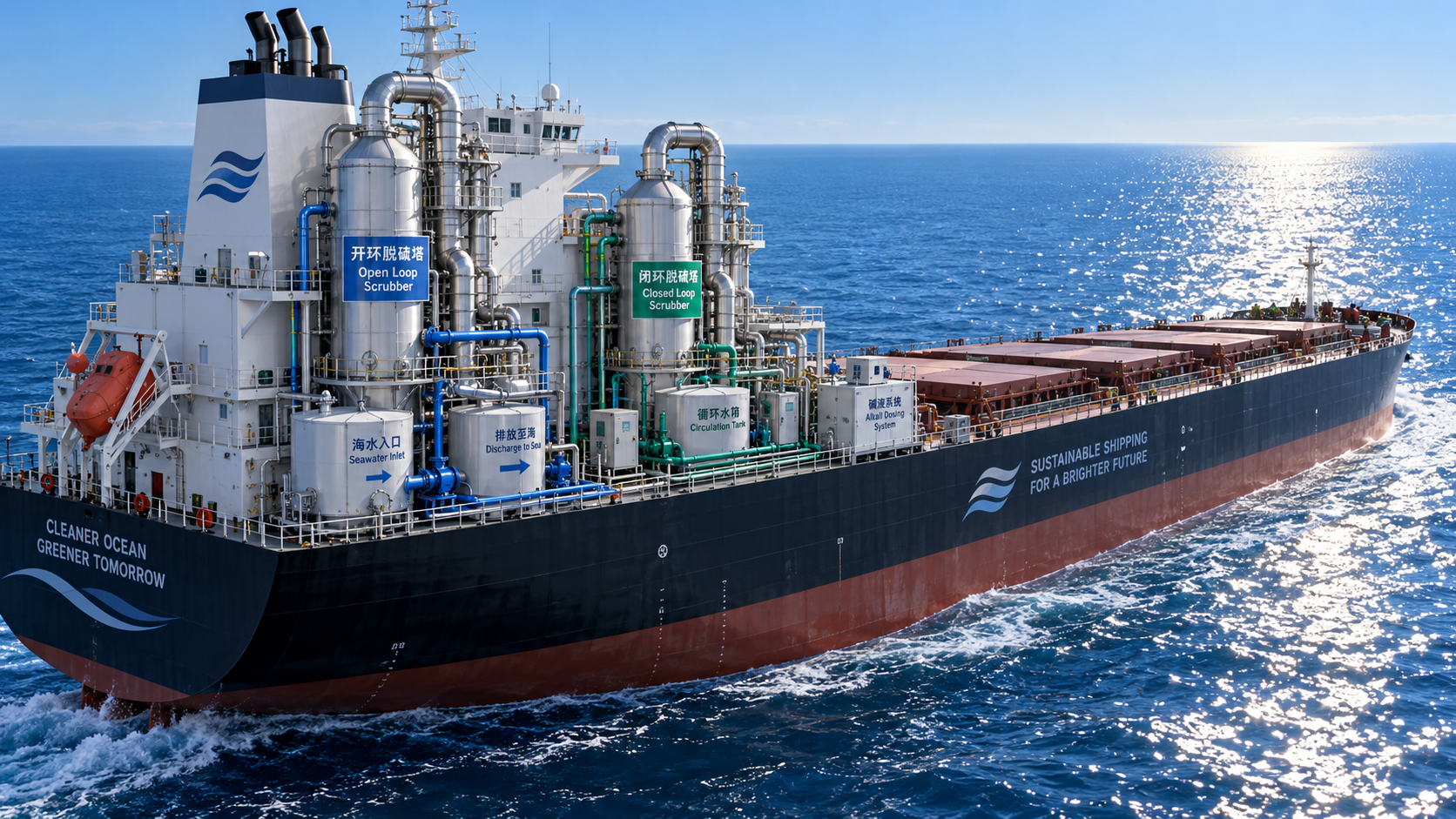
When evaluating ship scrubber systems, the open loop versus closed loop decision is not just a matter of component preference. It is a route-by-route compliance calculation. For technical assessors, the core question is straightforward: can the system legally and practically operate on the waters your vessel will actually transit?
The short answer is that open loop systems are the default choice for vessels with predictable, global trading patterns that avoid restricted emission zones. Closed loop systems are the fallback for vessels that must operate in ports or coastal areas with strict washwater discharge prohibitions. If your vessel frequently alternates between these environments, a hybrid system may be the only practical solution. The rest of this decision comes down to how you weigh capital expenditure against operational flexibility.
### The Core Difference Is Discharge, Not Cleaning
Both configurations remove sulfur oxides from exhaust gas using seawater or fresh water mixed with an alkaline agent. The critical distinction is what happens to the water after it has scrubbed the exhaust.
An open loop scrubber system uses natural seawater, drawn from the ocean, to wash the exhaust gases. The seawater's natural alkalinity neutralizes the sulfur. The washwater is then treated to reduce particulate matter and oil content, but it is ultimately discharged back into the sea. This is a continuous, once-through process. It is simple, requires no chemical storage, and has a lower initial capital cost. The catch is that the discharged water has a higher acidity and turbidity than the surrounding seawater.
A closed loop scrubber system recirculates the same washwater. Fresh water is used, and sodium hydroxide (caustic soda) is added to maintain the alkalinity needed to neutralize sulfur. The washwater is continuously cleaned in a water treatment plant onboard, removing solids and sulfates. Discharge is minimized, and when it does occur, the water is buffered and cooled to meet strict pH limits. This process requires storage for caustic soda and a sludge holding tank, adding weight and operational cost.
### Why the IMO’s “No Discharge” Rule Rerouted the Industry
When the IMO adopted the revised MARPOL Annex VI regulations for sulfur oxide emissions, the initial guidance permitted washwater discharge as long as it met certain criteria. This gave open loop scrubber systems a clear regulatory path. However, individual ports and local governments soon began enacting stricter rules.
Several key European ports and some coastal regions, along with specific jurisdictions in China and elsewhere, have restricted or banned washwater discharge entirely. For a vessel using an open loop scrubber system, entering one of these areas presents a serious issue: either switch to compliant fuel (low-sulfur marine gas oil) or divert to a different port. The operational penalty includes sourcing, handling, and burning significantly more expensive fuel. This is not a theoretical compliance risk; it is a recurring cost that affects chartering and scheduling.
This is where the industry discussion has settled. The open loop vs. closed loop scrubber systems debate really hinges on washwater discharge restrictions.
### Matching System Type to Your Vessel's Trade Routes
If your vessel operates globally, calling at ports across Asia, the Middle East, Africa, and the Americas, an open loop scrubber system is likely the most cost-effective solution. The capital cost is lower, the system is less complex, and maintenance is simpler. In most international waters and in many ports outside of Europe and a few other specific regions, washwater discharge is still permitted. The operational savings from burning cheaper heavy fuel oil versus compliant fuel will be consistent across these routes.
If your vessel trades predominantly in European waters, the Baltic Sea, the North Sea, or frequently calls at ports with zero-discharge rules—or if you operate on inland waterways—a closed loop scrubber system may be necessary. The ability to operate without discharging washwater is a requirement in these areas. However, this comes at a cost. You must allocate space for caustic soda storage, manage the sludge produced by the system, and budget for the ongoing expense of chemicals. The financial advantage of scrubbing versus using compliant fuel narrows significantly.
The hybrid option (open and closed loop combined) is worth investigating if your routes are split. You can use open loop mode in unrestricted areas and switch to closed loop mode when entering discharge-prohibited zones. This flexibility is appealing, but it introduces more complexity. The system occupies more space, has a higher initial cost, and requires more crew attention to manage the switchover and the water treatment process.
### The Operational Costs That Are Often Misjudged
Technical evaluators often underestimate the consumed power and chemical costs associated with closed loop operation. The pumps must circulate, the treatment plant must run, and the caustic soda dosing must be precise. If the dosage is miscalculated, the pH of the discharge can exceed limits, leading to fines. Open loop scrubbers also consume energy, but the power draw is generally lower because there is less process equipment running.
Wait time is another factor. When a closed loop system approaches its holding capacity, the vessel must either stop discharging entirely or treat and discharge slowly over a longer period. This can add hours to a port stay. An open loop scrubber system does not have this constraint; it operates congruently with the engine's fuel consumption without creating a bottleneck for waste storage.
### Washwater Quality and Corrosion: The Silent Compatibility Issue
Although both systems clean exhaust gas, their effect on the internal components of the scrubber and the vessel's piping differs.
Open loop scrubbers are exposed to the full particulate load and high temperatures of the exhaust. Because seawater is continuously introduced, there is a higher risk of scaling and corrosion unless the system is constructed from or lined with appropriate materials.
Closed loop scrubbers use fresh water, which reduces the corrosion risk from chlorides. However, the caustic soda environment creates its own chemical stress. The system must be designed to handle the caustic environment, and the sludge it produces is classified as a waste product. Disposal of activated sludge in a closed loop system requires a shore-side reception facility, adding logistics costs. This is an often-overlooked factor in the overall lifecycle cost, especially for vessels that need to carry slurry on board for extended periods between ports.
### A Route-Based Evaluation Checklist
To reach a decision, do not rely solely on current trading routes. Consider the vessel's next five-year charter outlook. The scrubber system is a long-term asset; selecting a configuration based on a single current charter could be a costly mistake.
First, map the vessel's intended operating regions against known washwater discharge restrictions. Confirm the status of specific ports and coastal waters you call at, not just the country's general policy. Second, evaluate the storage capacity you have available in the engine room. A closed loop system requires a caustic soda tank and a sludge holding tank. If space is already tight, a closed loop retrofit will be extremely difficult and costly. Third, consider the crew's technical proficiency. Closed loop systems require daily monitoring of pH levels, alkalinity, and sludge handling. A less experienced engine crew may struggle with this, leading to operational errors and potential fines. Finally, review the charter party agreements. The contract may specify scrubber system types, adding a contractual dimension to your selection.
The choice is rarely about which system is "better" from an engineering perspective. It is about which system allows your vessel to operate across its actual trading pattern without incurring crippling fuel costs, operational delays, or regulatory penalties. The route drives the decision. From there, it is a matter of matching the system's operational demands to your vessel's space, crew capability, and long-term trading flexibility.
Next page:Already the last
Please give us a message
Oil & Gas
产品介绍产品介绍产品介绍产品介绍产品介绍产品介绍产品介绍产品介绍产品介绍产品介绍产品介绍产品介绍产品介绍产品介绍产品介绍产品介绍产品介绍产品介绍产品介绍产品介绍产品介绍产品介绍产品介绍产品介绍产品介绍产品介绍产品介绍产品介绍产品介绍产品介绍
Please give us a message
Marine & Shipbuilding
产品介绍产品介绍产品介绍产品介绍产品介绍产品介绍产品介绍产品介绍产品介绍产品介绍产品介绍产品介绍产品介绍产品介绍产品介绍产品介绍产品介绍产品介绍产品介绍产品介绍产品介绍产品介绍产品介绍产品介绍产品介绍产品介绍产品介绍产品介绍产品介绍产品介绍
Please give us a message
Industry
产品介绍产品介绍产品介绍产品介绍产品介绍产品介绍产品介绍产品介绍产品介绍产品介绍产品介绍产品介绍产品介绍产品介绍产品介绍产品介绍产品介绍产品介绍产品介绍产品介绍产品介绍产品介绍产品介绍产品介绍产品介绍产品介绍产品介绍产品介绍产品介绍产品介绍
Please give us a message
Pipe Fittings
产品介绍产品介绍产品介绍产品介绍产品介绍产品介绍产品介绍产品介绍产品介绍产品介绍产品介绍产品介绍产品介绍产品介绍产品介绍产品介绍产品介绍产品介绍产品介绍产品介绍产品介绍产品介绍产品介绍产品介绍产品介绍产品介绍产品介绍产品介绍产品介绍产品介绍