
What Is a Ship Scrubber System and How Does It Work in Marine Emission Control?
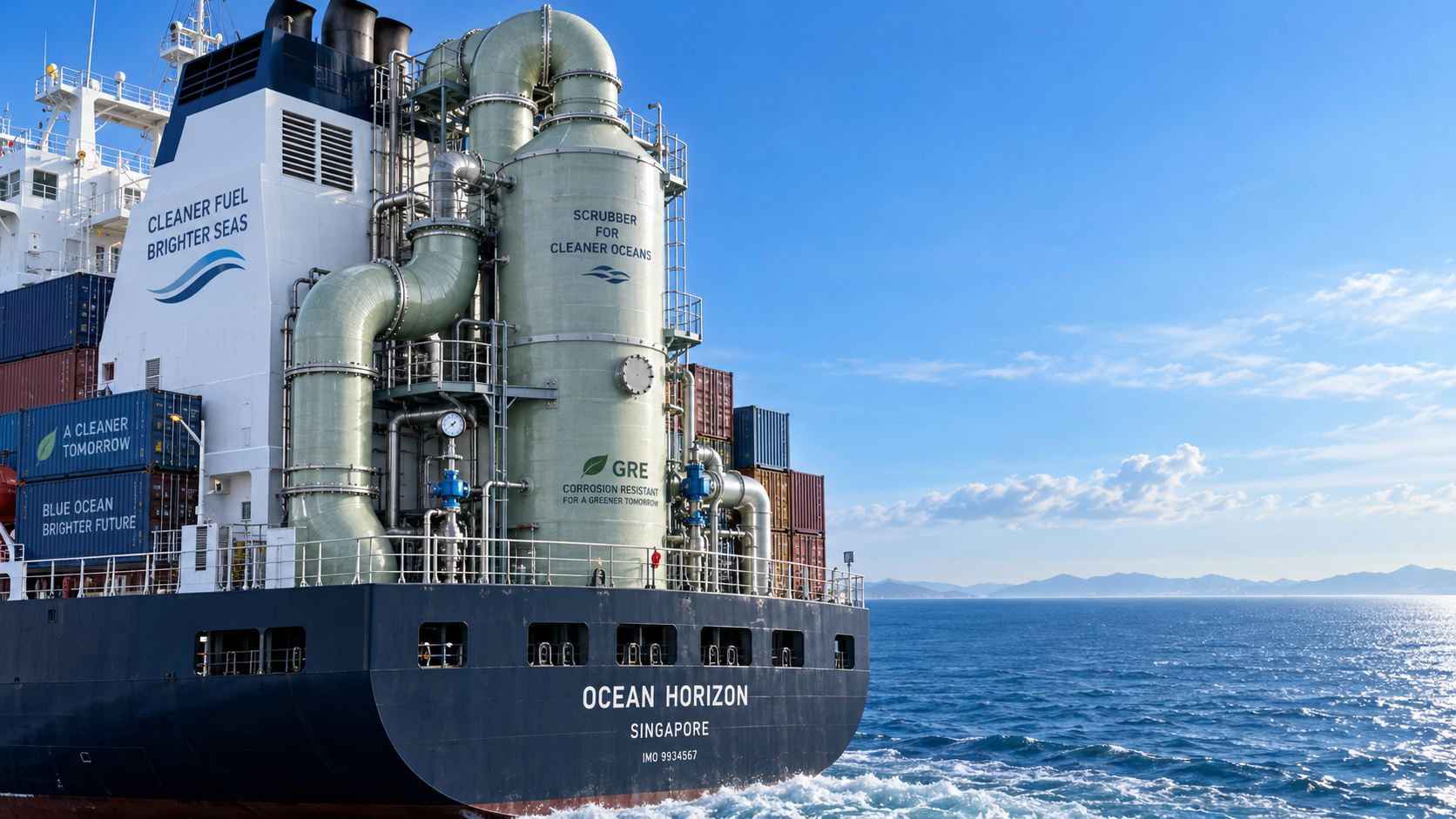
What a Ship Scrubber System Actually Does
A ship scrubber system, in straightforward terms, is an onboard exhaust gas cleaning device that removes sulfur oxides from the combustion gases of marine engines before they are released into the atmosphere. It is not a fuel additive, not a filtration upgrade, and not a retrofit that applies only to newbuilds. It is a direct response to the International Maritime Organization's sulfur cap regulations, which limit the sulfur content of marine fuel to 0.5% globally and 0.1% in emission control areas. Rather than switching from high-sulfur heavy fuel oil to more expensive low-sulfur alternatives, a ship operator can keep burning cheaper fuel and clean the exhaust instead.
That is the core trade-off. The scrubber allows a vessel to continue using high-sulfur fuel oil while meeting the same emission limits that would otherwise require distillate or blended low-sulfur fuels. For operators running high-consumption routes, the fuel cost difference can be substantial. But the decision to install a scrubber is not purely economic. It is also a question of operational complexity, retrofit feasibility, and long-term regulatory risk.
How the System Works in the Engine Room
The operating principle is relatively simple, although the hardware is not. Exhaust gas from the main engine or auxiliary boilers is routed into a dedicated scrubbing tower. Inside that tower, the gas is sprayed with wash water, which absorbs sulfur dioxide and other pollutants. The cleaned gas then continues up the funnel and exits through the stack, while the sulfur-laden wash water is treated and either discharged overboard or held in a tank for shore disposal.
There are two main configurations in service today.
Open-loop scrubbers use seawater as the washing medium. Seawater is naturally alkaline, so it neutralizes the sulfuric acid formed during the scrubbing process without the need for added chemicals. The wash water is then discharged back into the sea after basic treatment. This is the simpler and cheaper option, but it has a major constraint: it cannot be used in port or in some coastal waters where discharge of wash water is restricted. Many ports, particularly in Europe and China, have banned open-loop discharge outright.
Closed-loop scrubbers use fresh water mixed with an alkaline chemical, typically caustic soda, to achieve the same neutralization effect. The wash water is recirculated, treated, and stored onboard, so nothing is discharged during normal operation. This makes closed-loop systems acceptable in ports and sensitive water areas. The costs are higher—both in chemical consumption and in the need for onboard storage—but the operational flexibility is considerably better.
A third option, the hybrid system, can switch between open and closed modes depending on where the vessel is operating. In practice, most new installations over the past several years have leaned toward hybrid or closed-loop designs, precisely because port discharge restrictions have made the open-loop-only approach increasingly difficult to rely on.
What Shipowners Actually Need to Evaluate
If you are evaluating whether a scrubber makes sense for a specific vessel, the first question is not "how does it work" but "what is the vessel's operating profile." Scrubbers are not a universal solution, and several factors determine whether they are a sound investment.
- Fuel price spread. The economic case depends entirely on the gap between high-sulfur fuel oil and very low-sulfur fuel oil. When that spread narrows, the payback period lengthens. When it widens, scrubbers look attractive again. This spread has fluctuated significantly over the past few years, and nobody can reliably predict where it will sit over the 10- to 15-year remaining life of a vessel.
- Retrofit complexity. A scrubber installation is not a bolt-on accessory. It requires space in the engine room or on deck, significant steelwork, new piping runs, electrical integration, and often a larger or additional wash water treatment unit. On older vessels, the structural modifications can be extensive, and the vessel may need to be out of service for several weeks.
- Wash water management. Even with a closed-loop system, the wash water has to go somewhere. If it is held onboard, tank capacity limits how long the vessel can operate before needing to discharge or offload. If it is treated and discharged overboard, the treatment system must meet local and international discharge standards. Both paths add operational complexity that must be planned for, not discovered after installation.
- Crew competence. Scrubbers require ongoing monitoring, chemical handling, and troubleshooting. Many operators underestimate the training burden and the need to integrate scrubber alarms and control logic into the existing automation system. This is not equipment that can be ignored between port calls.
For vessels that operate on fixed deep-sea routes with long legs between ports, a well-sized hybrid or closed-loop scrubber can be a rational investment. For vessels that trade widely across different regions with varying discharge rules, the operational picture gets complicated. For vessels near the end of their economic life, the payback period may simply not be long enough.
Why the Piping and Material Choice Matter More Than Most Buyers Expect
One aspect that receives far less attention than it deserves is the piping infrastructure inside the scrubber system. The wash water circulating through a scrubber is not benign. In an open-loop system, it is warm seawater mixed with sulfur compounds—aggressive to standard steel piping. In a closed-loop system, it is a caustic solution that demands chemical resistance. The exhaust gas side is also corrosive, especially where temperatures drop and condensation forms.
This is where material selection becomes a practical concern rather than a theoretical one. Fiberglass reinforced epoxy (GRE) piping has been used with increasing frequency in marine exhaust gas cleaning systems because it handles both chemical attack and saltwater exposure better than coated carbon steel in many service conditions, while being significantly lighter than metal alternatives. The weight difference matters on a ship, where every tonne of added equipment affects fuel consumption and cargo capacity.
Manufacturers like Shandong Ocean Pipe Technology Co., Ltd., which produces GRE pipe for shipballast systems, LNG carriers, and chemical plant applications, supply piping that is engineered for this kind of corrosive service. For an operator or shipyard specifying a scrubber retrofit, understanding whether the selected piping is rated for the specific chemical concentration, temperature range, and pressure profile of the wash water loop is a detail that cannot be left to the general arrangement contractor.
The reliability of the piping directly affects system uptime. A leak in the wash water recirculation line means the scrubber goes offline, and the vessel cannot legally burn high-sulfur fuel in an emission control area. That forces an unexpected switch to compliant fuel, which is roughly the worst economic outcome for an operator who invested in a scrubber specifically to avoid that cost.
What Has Changed in the Scrubber Discussion
Early scrubber installations were driven heavily by the 2020 sulfur cap and the assumption that the price spread between high-sulfur and low-sulfur fuel would remain wide. That assumption has not held consistently. The spread narrowed considerably during parts of the post-pandemic period, which made some operators question whether their scrubber investment would ever pay back.
But the regulatory direction has not reversed. Emission control areas are expanding, not shrinking. The IMO is moving toward stricter carbon intensity regulations, and some flag states are considering regional discharge restrictions that go beyond current international rules. A scrubber is not a hedge against future carbon regulations—it only addresses sulfur—but it does protect a vessel from one specific class of compliance risk while leaving other regulatory challenges untouched.
Operators who installed scrubbers on well-traded deep-sea tonnage have generally seen the expected benefits. Those who installed them on vessels that spend significant time in port, where scrubbers must run in closed-loop mode and chemical costs add up, have had a more mixed experience. The technology works as designed. The question is whether it works for the specific trading pattern of the vessel.
For anyone currently evaluating a scrubber system, the practical takeaway is this: the decision should be driven by the fuel price spread and trading pattern, not by regulatory fear alone. And once the decision to install is made, the engineering details—especially the corrosion resistance of the piping and the wash water handling capacity—deserve the same level of scrutiny as the scrubber tower itself. Those details determine whether the system operates reliably in service or becomes a source of recurring operational expense and downtime.
Please give us a message
产品介绍产品介绍产品介绍产品介绍产品介绍产品介绍产品介绍产品介绍产品介绍产品介绍产品介绍产品介绍产品介绍产品介绍产品介绍产品介绍产品介绍产品介绍产品介绍产品介绍产品介绍产品介绍产品介绍产品介绍产品介绍产品介绍产品介绍产品介绍产品介绍产品介绍
Please give us a message
产品介绍产品介绍产品介绍产品介绍产品介绍产品介绍产品介绍产品介绍产品介绍产品介绍产品介绍产品介绍产品介绍产品介绍产品介绍产品介绍产品介绍产品介绍产品介绍产品介绍产品介绍产品介绍产品介绍产品介绍产品介绍产品介绍产品介绍产品介绍产品介绍产品介绍
Please give us a message
产品介绍产品介绍产品介绍产品介绍产品介绍产品介绍产品介绍产品介绍产品介绍产品介绍产品介绍产品介绍产品介绍产品介绍产品介绍产品介绍产品介绍产品介绍产品介绍产品介绍产品介绍产品介绍产品介绍产品介绍产品介绍产品介绍产品介绍产品介绍产品介绍产品介绍
Please give us a message
产品介绍产品介绍产品介绍产品介绍产品介绍产品介绍产品介绍产品介绍产品介绍产品介绍产品介绍产品介绍产品介绍产品介绍产品介绍产品介绍产品介绍产品介绍产品介绍产品介绍产品介绍产品介绍产品介绍产品介绍产品介绍产品介绍产品介绍产品介绍产品介绍产品介绍