
EGCS Compliance Checklist: Meeting IMO 2026 Sulfur Caps with Approved Scrubber Technology
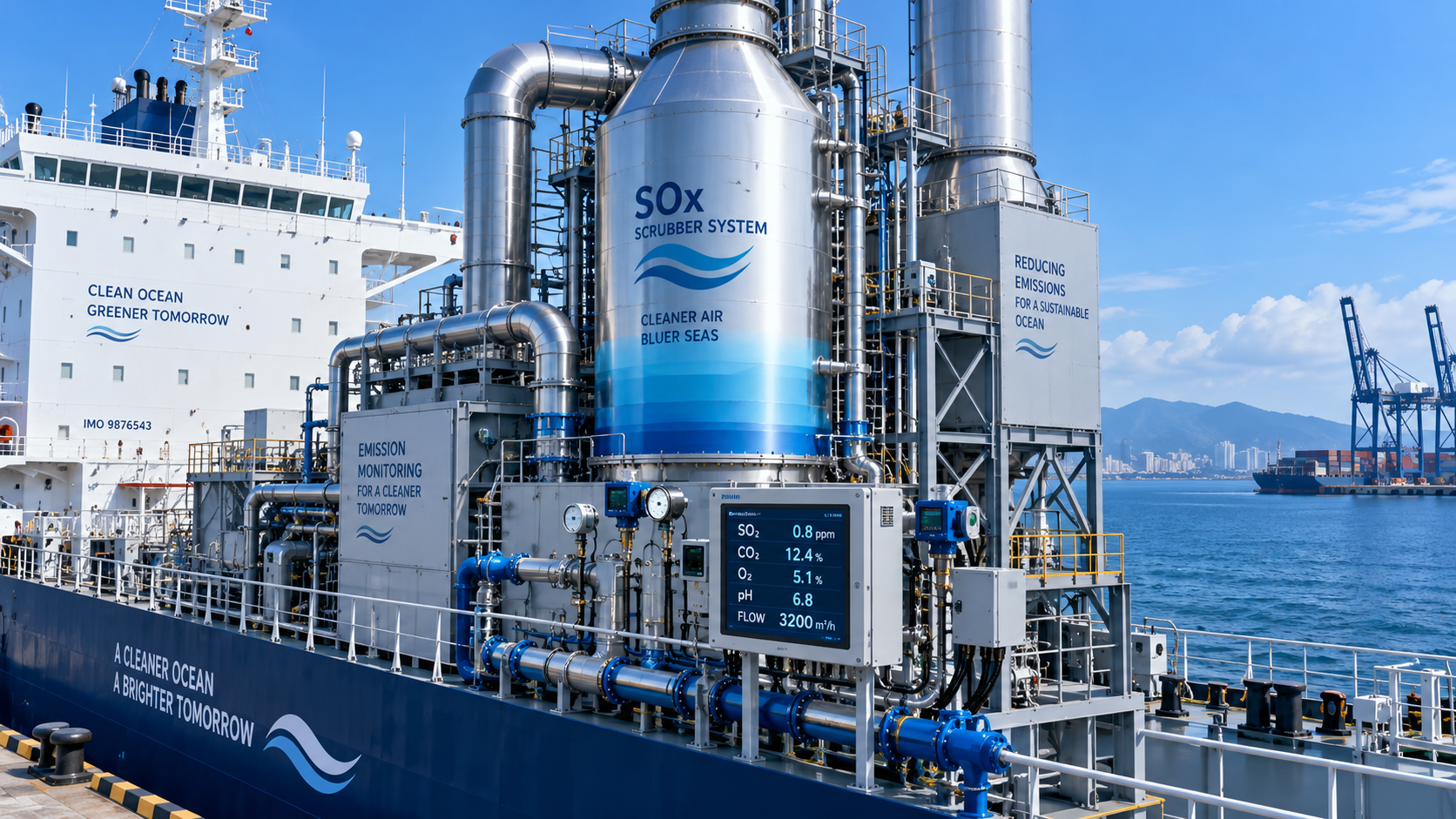
For quality and safety managers, the IMO 2026 sulfur cap isn’t a distant deadline—it’s a specification that affects procurement, retrofitting decisions, and daily operations now. An Exhaust Gas Cleaning System (EGCS), commonly called a ship scrubber system, is one way to meet the 0.10% sulfur limit in Emission Control Areas and the 0.50% global cap. But installing a scrubber is only the beginning. The harder part is proving that your system is approved, correctly operated, and genuinely compliant when inspectors come aboard.
This checklist focuses on the technical and procedural elements that actually determine whether your EGCS will pass scrutiny. It is written for people who have to verify documentation, oversee installation, and maintain operational integrity—not just sign off on a purchase order.
Start with the Type Approval and the Exact Scope of That Approval
The most common mistake is treating "approved" as a single, blanket status. In reality, approval is specific to the scrubber's design, the vessel's engine configuration, and the operating parameters set out in the certificate. Before you commit to a particular ship scrubber system, pull the Engine International Air Pollution Prevention (EIAPP) certificate and the separate EGCS type approval certificate. Check that they match the engine model, the fuel types you intend to use, and the wash water treatment capacity listed in the technical file.
A system approved for a low-sulfur residual fuel blend on a medium-speed engine may not hold up if your vessel burns a different blend or operates under significantly different load profiles. This is not just a paperwork issue. If the parameters do not match your actual operation, the system could fall out of compliance during a Port State Control inspection, regardless of how well it was installed.
Verify the Wash Water Compliance and the Discharge Criteria
Compliance is not solely about exhaust gas emissions. The wash water discharge from an open-loop scrubber is subject to its own set of criteria under the IMO’s 2020 EGCS Guidelines, and these rules carry forward into 2026. The critical parameters are pH, polycyclic aromatic hydrocarbons (PAH), turbidity, and nitrate levels. Each parameter has a specific threshold, and the discharge must be monitored continuously.
Your ship scrubber system must have a continuous monitoring system that records these values every second and flags exceedances. The data log—not the scrubber itself—is what the inspector will ask to see. If your monitoring equipment includes a bypass line that allows wash water to discharge when the scrubber is not running, make sure that line is sealed and logged. Any discharge outside the defined operating envelope will be treated as a violation, even if the exhaust gas itself is within limits.
Review the Testing Protocols Before Installation, Not After
By the time the system is on the vessel, you have lost most of your leverage. The testing protocols that matter are the ones defined in the approval documentation: the load profile test, the gas-side emission test, the water-side monitoring test, and the alarm and shutdown tests. Each of these must be performed according to the verification procedure referenced by the type approval.
When you review the test plan, pay attention to how the engine load is simulated. A system that passes at a steady 85% load may behave differently during transients, cold starts, or when the engine is at minimal load in a maneuvering zone. The approval will specify permissible operating ranges, and your team should compare those against your actual sailing routes. If your typical operations include extended periods at low load—common in canal transits, port approaches, or dynamic positioning—the scrubber's performance in that band may be exactly what an inspector will interrogate.
Check the Materials and Piping Against the Corrosion Risk
This is where the engineering reality sets in. A scrubber system introduces an aggressive environment: high-temperature exhaust gas, sulfuric acid condensate, and sea water or caustic soda, depending on the loop type. The piping, tank linings, and valves must be compatible with that chemistry over the life of the system—not just at commissioning.
Most scrubber systems rely on glass-reinforced epoxy (GRE) piping for parts of the water handling system, especially where corrosion resistance is critical. GRE is non-corroding and has a smooth bore that reduces fouling, which is why it is widely used in ballast piping and other seawater applications. If your vessel is retrofitted with a scrubber, the piping connecting the wash water pumps, the holding tanks, and the discharge lines is subjected to thermal cycling and chemical exposure that ordinary steel will not tolerate for long. Inspect the material specifications in the engineering package to confirm that the piping and fittings in the scrubber loop are specified for the expected temperature range and chemical concentration. A system that relies on unlined steel in a low-pH environment will start to fail in months, not years.
Confirm the Integration with the Vessel’s Existing Ballast and Cooling Systems
A scrubber system does not run in isolation. It draws water from the sea chest, and in many retrofits, that water supply is shared with the ballast system or the engine cooling system. Before installation, you need to verify that the capacity of the sea chest and the piping network is sufficient to feed the scrubber without starving other consumers. This is a frequent cause of operational delays: the scrubber pump comes online, the pressure drops in the engine cooling line, and the alarm system creates a cascade of false trip signals.
The safest approach is to map the entire water flow network and identify the point of maximum simultaneous demand. If the scrubber is running at full capacity while the ballast tanks are filling and the engine is at maximum load, can the sea chest and the pumps deliver? If not, the scrubber may need a dedicated sea chest or a booster pump arrangement. This is an engineering decision that should be made during the design review, not during sea trials. It is also the type of issue that Port State Control may pick up on if the vessel has a history of operational exceedances.
Define the Allowable Load Profile and the Fuel Switch Protocol
One underappreciated compliance point is the transition between compliant and non-compliant fuel. Many scrubber-equipped vessels operate on high-sulfur fuel oil and rely on the scrubber to achieve compliance. But there are zones—such as berths, ports, or certain inland waterways—where discharging wash water is restricted or prohibited. In those zones, the vessel must switch to a compliant fuel or switch the scrubber to closed-loop mode.
This transition takes time. The fuel switch requires adjusting for viscosity differences, and the scrubber mode switch requires a change in water treatment. Your compliance checklist should include a written fuel switch protocol that specifies the minimum time required, the throttle settings during the transition, and the recordkeeping that documents when the switch began and ended. In practice, the transition from open-loop to closed-loop should occur well before entering the restricted zone, not at the boundary. If the vessel is audited and the data shows that the scrubber was in open-loop mode while the vessel was still in a discharge-prohibited area, that is a violation—regardless of whether the exhaust gas emission was within the allowable limit.
Plan for the Annual Test, the Renewal Survey, and the Continuous Data Archive
The compliance cycle does not end with installation. Each vessel is subject to an annual test of the scrubber system, and the data from the continuous monitoring system must be retained for a defined period. The retention requirement is not just for the operator’s own records—it is what auditors and Port State Control will request when investigating an exceedance. Make sure that your data archiving system can export the monitoring records in a readable format, with timestamps that align with the vessel's voyage data recorder.
One detail that gets overlooked is the calibration of the sensors. The pH sensor, the turbidity meter, and the PAH analyzer all drift over time. If the sensors are not calibrated according to the manufacturer's schedule, the data they produce is of limited evidentiary value. A senior inspector will ask for the calibration logs as much as the emission data. Maintain a calibration log that is separate from the daily operations log, and ensure that the dates align with the manufacturer's recommended intervals.
What This Means for Your Next Purchase Decision
When you evaluate a ship scrubber system supplier, the questions should not stop at output capacity and removal efficiency. Ask about the test procedure used to validate the system, the material specification of the piping and tanks, and the compatibility with your vessel's existing water supply. Confirm the sensor calibration requirement and the data export format. If a supplier cannot provide a clear engineering package for the integration points and a defined testing protocol, that is a red flag, regardless of how efficient the scrubber appears on paper.
The IMO 2026 sulfur cap is designed to reduce the overall sulfur oxide emissions from shipping, and a properly installed and operated scrubber is a valid pathway to compliance. The margin between compliance and a detention notice often comes down to the documentation trail and the readiness of the crew to demonstrate the system’s operation under real conditions. That is where your focus should be—on the details that prove the system is not just installed, but genuinely effective.
Please give us a message
产品介绍产品介绍产品介绍产品介绍产品介绍产品介绍产品介绍产品介绍产品介绍产品介绍产品介绍产品介绍产品介绍产品介绍产品介绍产品介绍产品介绍产品介绍产品介绍产品介绍产品介绍产品介绍产品介绍产品介绍产品介绍产品介绍产品介绍产品介绍产品介绍产品介绍
Please give us a message
产品介绍产品介绍产品介绍产品介绍产品介绍产品介绍产品介绍产品介绍产品介绍产品介绍产品介绍产品介绍产品介绍产品介绍产品介绍产品介绍产品介绍产品介绍产品介绍产品介绍产品介绍产品介绍产品介绍产品介绍产品介绍产品介绍产品介绍产品介绍产品介绍产品介绍
Please give us a message
产品介绍产品介绍产品介绍产品介绍产品介绍产品介绍产品介绍产品介绍产品介绍产品介绍产品介绍产品介绍产品介绍产品介绍产品介绍产品介绍产品介绍产品介绍产品介绍产品介绍产品介绍产品介绍产品介绍产品介绍产品介绍产品介绍产品介绍产品介绍产品介绍产品介绍
Please give us a message
产品介绍产品介绍产品介绍产品介绍产品介绍产品介绍产品介绍产品介绍产品介绍产品介绍产品介绍产品介绍产品介绍产品介绍产品介绍产品介绍产品介绍产品介绍产品介绍产品介绍产品介绍产品介绍产品介绍产品介绍产品介绍产品介绍产品介绍产品介绍产品介绍产品介绍