
FPSO Pipe Procurement: What Affects Lead Time, Cost and Compliance
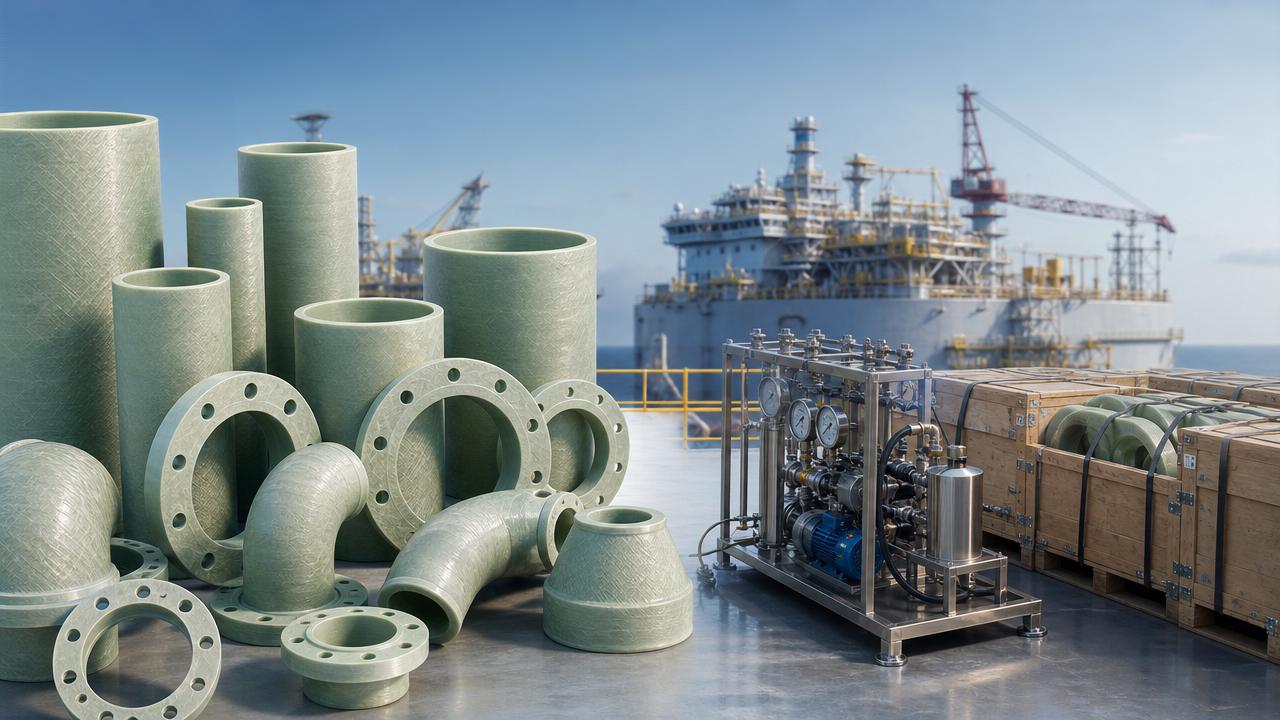
For procurement teams, sourcing pipe systems for an FPSO project is never just about unit price. Lead time, material compliance, supplier capacity, testing standards, and offshore installation risks all influence the final procurement decision. GRE piping, widely used in marine and oil & gas applications, can help reduce weight and corrosion concerns, but only when the supplier can meet strict project specifications and delivery schedules. This article explains the key factors that affect FPSO pipe procurement cost, timeline, and compliance—helping buyers make more confident sourcing decisions.
In floating production projects, pipe procurement connects engineering, class approval, fabrication windows, and offshore commissioning. A delay of 2–4 weeks in pipe delivery can affect module integration, pressure testing, and yard handover.
Why FPSO Pipe Procurement Is Different from Standard Marine Purchasing
An FPSO operates as a production unit, storage facility, and marine asset at the same time. Its piping must tolerate seawater, hydrocarbons, chemicals, vibration, and limited maintenance access.
For buyers, this means a procurement package usually involves more than pipe length. It may include fittings, flanges, spools, supports, test reports, coating requirements, and installation documentation.
Typical FPSO piping applications for GRE systems
Fiberglass Reinforced Epoxy pipe is often selected where corrosion resistance and weight reduction are important. Typical applications include ballast lines, seawater systems, cooling water, drains, and certain utility services.
- Marine ballast piping where seawater corrosion is a long-term maintenance concern.
- Oil and gas utility lines requiring stable performance under offshore operating conditions.
- Chemical plant and LNG-related auxiliary piping with defined temperature and pressure limits.
- Produced water, drain, and service systems connected to treatment or storage areas.
GRE is part of the glass fiber and resin composite material field. Its performance depends on winding angle, resin system, curing control, joint design, and pressure verification.
What makes procurement riskier
The risk is rarely one single factor. A 6-meter pipe section, a molded elbow, and a prefabricated spool may follow different production and inspection paths.
If drawings are revised after purchase order release, lead time may extend by 7–20 days, especially when new molds or additional hydrostatic testing are required.
Key Factors That Affect Lead Time in FPSO Pipe Sourcing
Lead time for an FPSO pipe package is shaped by engineering maturity, supplier capacity, raw material readiness, inspection requirements, and logistics route. Buyers should evaluate all 5 factors together.
For GRE pipe, production capacity is especially important because winding, curing, machining, fitting fabrication, and pressure testing must be scheduled in sequence.
Supplier capacity and production sequencing
Shandong Ocean Pipe Technology Co., Ltd. was established in 2012 in Wucheng Industrial Park, Dezhou City, Shandong Province, China.
The company has 16 winding production lines, 174 sets of pipe fitting winding machines, winding micro-control systems, and 5 static water pressure testing machines.
With an annual GRE pipe production and testing capacity of 25,000 tons, this scale helps procurement teams reduce schedule uncertainty for medium and large offshore packages.
The table below outlines common procurement lead-time drivers for FPSO GRE pipe packages and how buyers can reduce avoidable delays.
The key conclusion is simple: lead time is not only a factory issue. It is also an engineering discipline, inspection plan, and logistics planning issue.
Batch delivery versus single shipment
For FPSO yards, batch delivery can be more practical than waiting for a complete package. Priority lines may be shipped first to support module erection.
A common approach is to divide supply into 3 groups: standard pipe, critical fittings, and prefabricated spools. This helps reduce idle installation time.
Cost Drivers: Beyond Unit Price per Meter
FPSO pipe cost should be reviewed as total installed cost, not only quoted pipe price. A lower unit price may increase risk during installation or testing.
GRE pipe can reduce structural weight compared with metallic alternatives, but buyers must include fittings, joining kits, supports, inspection, packing, and field service.
Material selection and operating conditions
Pressure rating, temperature range, internal fluid, external exposure, and design life all affect material cost. A 10-bar line and 25-bar line require different laminate designs.
For marine applications, buyers should confirm resistance to seawater, UV exposure, mechanical impact, and chemical cleaning agents. These conditions affect resin and reinforcement selection.
The following comparison helps procurement teams understand how cost elements differ between common offshore piping options in FPSO utility and seawater systems.
Cost control is strongest when the buyer asks for a complete technical-commercial proposal. Missing documents may appear cheaper but create hidden approval delays.
Where buyers often underestimate cost
The most common underestimation is fittings. In a complex FPSO module, elbows, tees, reducers, and flanges may represent a significant part of total package value.
Another overlooked area is site installation support. A 1–2 day jointing training session can prevent rework, failed pressure tests, and schedule disputes.
Buyers sourcing broader utility infrastructure may also compare offshore pipe requirements with land-based systems such as a Wastewater Treatment Plant, where chemical resistance and pipe layout planning remain important.
Compliance, Testing, and Documentation Requirements
Compliance is a central part of FPSO procurement because offshore piping must satisfy project specifications, classification requirements, yard procedures, and end-user acceptance rules.
For GRE pipe, compliance normally covers design basis, material traceability, laminate quality, dimensional tolerances, hydrostatic test results, and installation instructions.
Documentation buyers should request before contract award
A complete FPSO pipe procurement file should be checked before price comparison is finalized. Documentation gaps often create 2 rounds or more of technical clarification.
- Technical data sheets showing diameter, pressure rating, temperature limits, and compatible service media.
- Material and manufacturing information covering glass fiber reinforcement, epoxy resin system, and curing control.
- Hydrostatic pressure test procedure, acceptance criteria, test duration, and reporting format.
- Dimensional inspection records for pipe, fittings, flange connections, and prefabricated spools.
- Packing list, marking method, traceability codes, and installation guidance for yard use.
Shandong Ocean Pipe supplies GRE piping for oil and gas, ship ballast piping, LNG, chemical plants, hot spring pipe, and salt-making applications.
Its customer base includes major groups and shipyards such as CNOOC, CNPC, Sinopec, Shanghai Waigaoqiao Shipyard, Ningbo Xinle Shipyard, and Wuhan Qingshan Shipyard.
Testing standards and acceptance logic
Buyers should not treat testing as a final paperwork step. Hydrostatic testing, visual inspection, and dimensional checks must be aligned with the FPSO project specification.
For example, if the project requires witness inspection, the supplier should reserve test-machine capacity and notify inspectors several days before the scheduled test date.
A practical acceptance plan usually includes 3 layers: factory quality control, buyer or third-party inspection, and receiving inspection at the shipyard.
A Practical Procurement Checklist for FPSO Buyers
A disciplined purchasing process helps buyers compare suppliers fairly. It also reduces dispute risk after production starts, especially when engineering revisions are frequent.
The following 6-step checklist can be used during inquiry, technical evaluation, negotiation, and contract execution for FPSO GRE pipe packages.
Step-by-step sourcing workflow
- Define service conditions, including fluid, pressure, temperature, design life, and offshore exposure.
- Confirm line list, drawings, fitting quantities, flange standards, and required spool fabrication.
- Request a technical proposal with production schedule, testing scope, and inspection hold points.
- Evaluate supplier capacity, including winding lines, fitting machines, and pressure-testing equipment.
- Negotiate commercial terms covering delivery batches, packing, Incoterms, payment, and change control.
- Track production milestones weekly and review documentation before final shipment release.
This workflow gives procurement teams a clearer view of schedule pressure. It also helps engineering, QA, and logistics teams work from the same assumptions.
Supplier evaluation questions
Before awarding an FPSO pipe order, buyers should ask practical questions that reveal real execution capability rather than only catalog information.
- How many winding lines and fitting machines can be assigned to this project within the requested delivery window?
- Can the supplier provide pressure testing for the required diameter range and test pressure?
- What is the normal response time for drawing review, technical clarification, and revision control?
- Can delivery be divided into 2–4 batches to match module installation sequence?
- What packing method is used to protect GRE pipe and fittings during international shipment?
These questions help distinguish a price quotation from a reliable supply plan. For offshore projects, the second is usually more valuable.
Common purchasing mistakes to avoid
One mistake is comparing suppliers without matching pressure class, resin system, and fitting scope. Apparent savings may disappear after technical clarification.
Another mistake is leaving installation method undecided. Adhesive bonding, mechanical joints, and flange connections each require different tools and quality controls.
A third mistake is underestimating documentation time. For FPSO projects, a complete release package can be as important as the physical pipe shipment.
Working with a GRE Pipe Manufacturer for Offshore Projects
For procurement personnel, a qualified GRE pipe manufacturer should support both technical review and delivery execution. The goal is fewer surprises between inquiry and installation.
Ocean Pipe has expanded its market to Australia, Iraq, Kazakhstan, Turkey, and other overseas countries, supporting buyers that require export coordination and project communication.
What a strong proposal should include
A useful proposal should present 4 areas clearly: scope, technical basis, production schedule, and quality assurance. This allows buyers to evaluate risk before award.
- Scope: pipe length, fittings, flanges, gaskets, joining materials, and optional spool fabrication.
- Technical basis: pressure rating, temperature range, chemical compatibility, and installation limits.
- Schedule: material preparation, winding, curing, machining, testing, packing, and shipment milestones.
- Quality assurance: inspection plan, hydrostatic test report, traceability documents, and final release package.
When these details are available at quotation stage, the buyer can reduce rework, shorten clarification cycles, and align delivery with yard requirements.
Final procurement advice
FPSO pipe procurement should balance lead time, compliance, and lifecycle cost. GRE piping can be a strong option when corrosion resistance and weight reduction matter.
The best sourcing decision is based on verified capacity, clear specifications, controlled testing, and realistic delivery planning, not on the lowest line-item price alone.
If your team is preparing an FPSO inquiry, share your line list, pressure requirements, and delivery schedule with Ocean Pipe to discuss a practical GRE pipe solution.
Contact us to request product details, technical support, or a customized quotation for your offshore, marine, LNG, chemical, or shipyard piping project.
Please give us a message
产品介绍产品介绍产品介绍产品介绍产品介绍产品介绍产品介绍产品介绍产品介绍产品介绍产品介绍产品介绍产品介绍产品介绍产品介绍产品介绍产品介绍产品介绍产品介绍产品介绍产品介绍产品介绍产品介绍产品介绍产品介绍产品介绍产品介绍产品介绍产品介绍产品介绍
Please give us a message
产品介绍产品介绍产品介绍产品介绍产品介绍产品介绍产品介绍产品介绍产品介绍产品介绍产品介绍产品介绍产品介绍产品介绍产品介绍产品介绍产品介绍产品介绍产品介绍产品介绍产品介绍产品介绍产品介绍产品介绍产品介绍产品介绍产品介绍产品介绍产品介绍产品介绍
Please give us a message
产品介绍产品介绍产品介绍产品介绍产品介绍产品介绍产品介绍产品介绍产品介绍产品介绍产品介绍产品介绍产品介绍产品介绍产品介绍产品介绍产品介绍产品介绍产品介绍产品介绍产品介绍产品介绍产品介绍产品介绍产品介绍产品介绍产品介绍产品介绍产品介绍产品介绍
Please give us a message
产品介绍产品介绍产品介绍产品介绍产品介绍产品介绍产品介绍产品介绍产品介绍产品介绍产品介绍产品介绍产品介绍产品介绍产品介绍产品介绍产品介绍产品介绍产品介绍产品介绍产品介绍产品介绍产品介绍产品介绍产品介绍产品介绍产品介绍产品介绍产品介绍产品介绍