
Where GRE pipes for oil and gas fit best in produced water systems
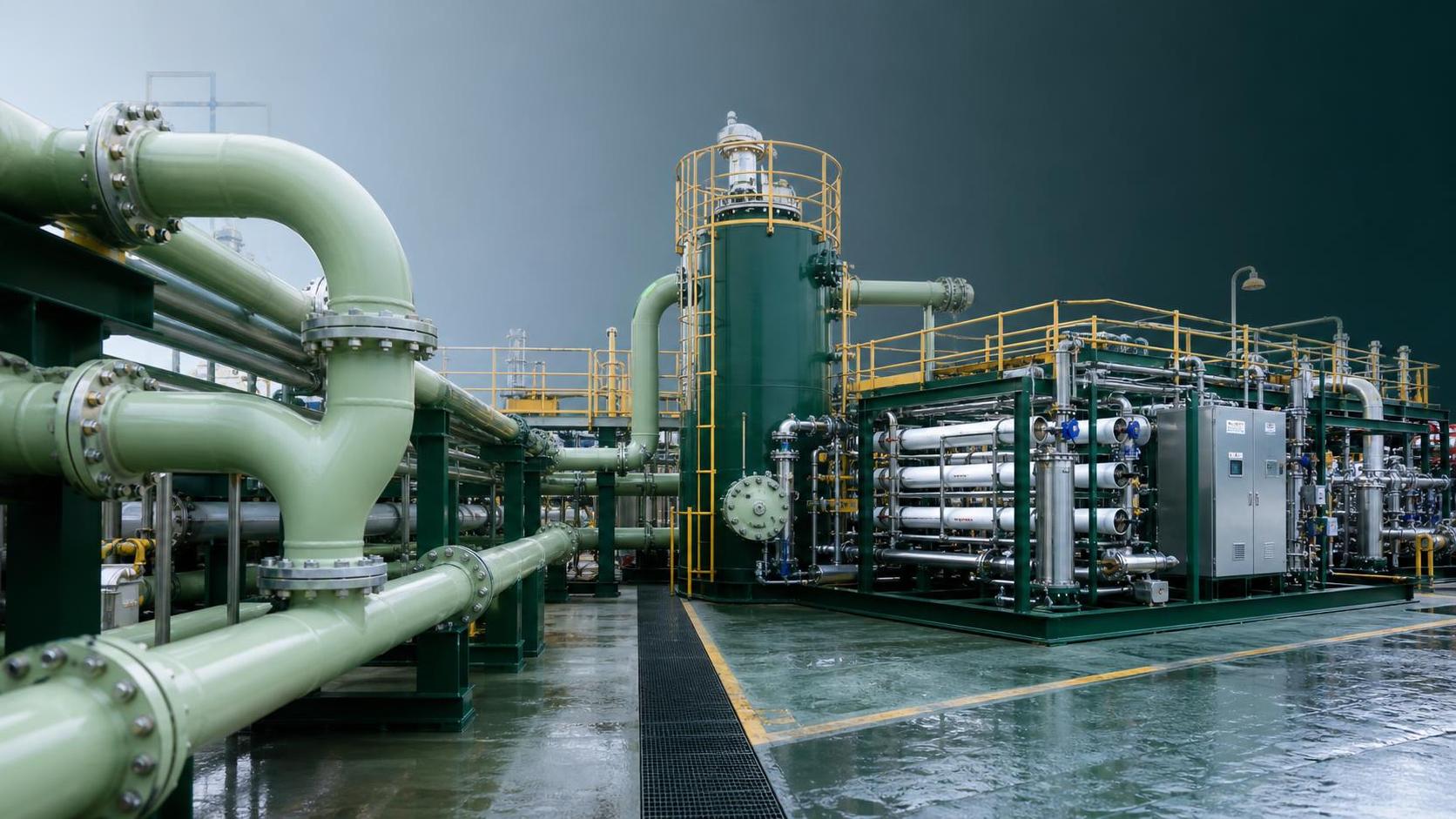
In produced water systems, the pipe decision is rarely about one headline property. It is about how the line will behave after months of continuous exposure to saline water, dissolved gases, treatment chemicals, solids, temperature swings, and operating upsets. For project managers assessing gre pipes for oil and gas, the practical question is not whether GRE is “good” in general, but where it creates a clear advantage over carbon steel, stainless steel, or thermoplastics inside the produced water network.
That distinction matters because produced water is not a uniform service. A transfer line from separator to treatment package behaves differently from a reinjection header, a skimmed water outlet, or a chemical dosing spool. If GRE is applied in the right zone, it can reduce corrosion-driven maintenance, stabilize lifecycle cost, and simplify long-term integrity management. If it is applied too broadly, without checking temperature, pressure fluctuation, joint design, and installation quality, it can create a different class of project risk.
Why produced water pushes pipe materials so hard
Produced water is one of the most persistent corrosion challenges in upstream and midstream facilities. Even when hydrocarbon content is relatively low, the fluid can still carry chlorides, CO2, H2S, oxygen ingress, solids, bacteria, scale-forming ions, and residual chemicals from separation and treatment. In steel systems, that combination often leads to internal corrosion, under-deposit attack, scaling, and recurring maintenance at low points, dead legs, and fittings.
This is where GRE starts to make commercial sense. Its main value in produced water service is not novelty; it is corrosion resistance in a fluid stream that punishes metallic systems over time. For operators that have already experienced repeated wall loss, lining failures, or coating repair cycles, GRE often enters the conversation as a way to shift the maintenance model rather than simply replace one pipe material with another.
Where GRE fits best in a produced water system
The best applications are usually the ones where corrosion is chronic, temperatures remain within the qualified envelope, and the line duty is relatively steady. In those areas, GRE can perform well because the material’s advantages align with the operating reality.
Produced water transfer lines
Transfer lines between separators, treatment skids, surge vessels, and disposal or storage sections are among the strongest candidates. These lines often carry highly saline water with moderate pressure and relatively predictable flow conditions. If the line is long enough, carbon steel corrosion allowance and inhibitor cost can become a recurring burden. In that setting, GRE can help reduce internal corrosion concerns and lower the volume of future maintenance intervention.
Treated water and disposal water lines
Once the water has passed through primary treatment, hydrocarbon loading may be lower, but the fluid can still remain chemically aggressive. Disposal lines, pond transfer lines, and treated water routing lines are often suitable GRE applications, especially where long-term corrosion resistance is valued more than high mechanical abuse tolerance.
Reinjection and utility-related water service
Some produced water reinjection systems use GRE successfully, particularly in corrosion-prone sections where operating pressure and temperature are within the design rating and surge events are controlled. This is not an automatic yes. Reinjection systems need closer review because pressure cycling, water hammer risk, and solids content can change the suitability decision. But in stable service windows, GRE may be a strong option.
Off-plot and buried produced water pipelines
For buried or remote transfer pipelines, GRE becomes attractive when corrosion monitoring and maintenance access are difficult. Steel may be familiar, but buried metallic systems can accumulate coating damage, cathodic protection issues, and inspection complexity over time. GRE can simplify the corrosion side of the equation, provided the burial design, soil load, external protection details, and joining method are all engineered correctly.
Where GRE is often less suitable, or needs closer review
One of the more common mistakes in material selection is turning a valid corrosion solution into a universal specification. GRE has clear strengths, but it should not be treated as a default answer for every produced water line.
- High-temperature zones: Elevated temperature can narrow the operating window quickly. Not all GRE systems are equivalent, and resin system selection matters. Service temperature, upset temperature, and long-duration exposure all need verification against the manufacturer’s qualified data.
- Severe slugging or high surge service: Repeated hydraulic shock can create problems at joints, supports, and fittings if the system has not been designed for transient loads.
- High solids or abrasive flow: Sand-laden produced water can increase internal wear risk, especially at elbows, reducers, tees, and velocity-sensitive sections.
- Mechanically exposed areas: Pipe racks with congestion, lifting exposure, or frequent modification work may favor materials with greater tolerance to impact and field abuse.
- Fire-critical zones: Passive fire requirements and hydrocarbon fire scenarios may limit where GRE can be used, depending on project philosophy and applicable standards【待核实】.
That means the most successful GRE applications are usually selective, not indiscriminate. They are chosen where corrosion savings are real and where the operating envelope is well understood.
What project managers should evaluate before specifying GRE
From a project perspective, the material itself is only part of the decision. The bigger issue is whether the whole package, design basis, manufacturing quality, transport, installation, and testing, can support reliable operation after handover.
1. Fluid composition, not just line name
“Produced water” is too broad to support specification on its own. The key variables include chloride content, oil carryover, aromatic exposure, H2S/CO2 presence, solids concentration, scaling tendency, and chemical treatment program. A line labeled as produced water in one facility may be relatively mild; in another, it may create aggressive conditions that change resin selection, joining method, or even the material choice entirely.
2. Real operating temperature and upset temperature
Many material problems start with nominal design temperature being treated as actual operating reality. Project teams should ask for both continuous operating temperature and upset cases. If water temperature excursions occur during start-up, shutdown, process upset, or chemical cleaning, those events matter. For some higher-temperature duties, project teams may review specialized options such as High Temperature GRE Pipe for Hydrocarbon Transportation with API Monogram , but even then the decision should rest on the certified service envelope rather than the product name alone.
3. Pressure cycling and hydraulic transients
GRE discussions often focus on static corrosion resistance, while actual failures may be linked to transients. Pumps tripping, valve closure rates, reinjection pressure changes, and slug flow events all affect suitability. A line with moderate design pressure can still be a poor GRE candidate if water hammer risk is not properly managed.
4. Jointing system and field workmanship
Many lifecycle outcomes are determined at the joints. Adhesive-bonded, laminated, flanged, or other connection types each have different installation controls and inspection implications. A good pipe body does not compensate for weak field procedures. Project managers should pay close attention to installer qualification, joint preparation control, ambient conditions during installation, cure requirements where applicable, and hydrotest acceptance practices.
5. Support design and routing discipline
GRE is not steel with a different corrosion profile. It needs support spacing, restraint, guide arrangement, thermal movement handling, and nozzle load control that match its mechanical behavior. Poor support design can lead to localized overstress, misalignment, or long-term joint distress even when the pipe chemistry is well matched to service.
What common market claims miss
In vendor and contractor discussions, GRE is sometimes reduced to a simple message: no corrosion, therefore lower cost. The first half is directionally true in the right service. The second half depends on whether the project team captures the full implementation picture.
For example, GRE may reduce corrosion-related maintenance, but it can increase the importance of installation discipline. It may lower lifecycle repair frequency, but only if routing, support, and surge control are right from the start. It may also shorten some maintenance planning discussions because internal corrosion monitoring requirements can change, yet that benefit should not be confused with “no integrity management needed.” Inspection strategy still matters, especially at joints, supports, and mechanically vulnerable areas.
Another oversimplification is that GRE is automatically the best answer whenever salinity is high. In reality, high salinity makes GRE more interesting, but temperature, solids, and transient loads may still push the decision elsewhere. Material selection in produced water systems is always conditional.
A more useful way to compare GRE with steel in produced water service
Supplier capability matters more than many buyers expect
For project managers, GRE procurement is not only about a data sheet. Manufacturing consistency, traceability, testing capability, and fitting production capacity all affect delivery risk and installation quality. This becomes more important in multi-line projects, fast-track schedules, or export work where replacement and field correction are expensive.
That is one reason buyers tend to look beyond nominal pipe size and pressure class and examine the manufacturer’s production depth, fitting capability, and testing infrastructure. A supplier with established winding lines, fitting production systems, and pressure testing capacity is generally better positioned to support project execution than a vendor focused only on standard catalog output. For large oil and gas packages, that execution capability often matters as much as material selection itself.
How to frame the decision at project stage
A practical screening question is this: is the produced water line primarily a corrosion problem, a mechanical problem, or a transient-load problem? If corrosion is the dominant issue and the operating envelope is controlled, GRE deserves serious consideration. If mechanical exposure, temperature upset, or surge risk dominates, the review needs to be more cautious.
For many facilities, the right answer is mixed material selection. GRE may be well suited for off-plot produced water transfer, treatment outlet, or buried disposal lines, while metallic systems remain more appropriate near hot process interfaces, heavily modified plant areas, or severe transient service. That approach often produces a better project outcome than trying to force a single material across the entire produced water package.
In other words, GRE works best in produced water systems when it is specified as a targeted reliability tool. Used in the right sections, it can improve corrosion control and lifecycle cost visibility. Used without enough attention to temperature, surge, joints, and field execution, it simply shifts risk from corrosion to design and installation. That is the decision line project managers should keep in view.
Please give us a message
产品介绍产品介绍产品介绍产品介绍产品介绍产品介绍产品介绍产品介绍产品介绍产品介绍产品介绍产品介绍产品介绍产品介绍产品介绍产品介绍产品介绍产品介绍产品介绍产品介绍产品介绍产品介绍产品介绍产品介绍产品介绍产品介绍产品介绍产品介绍产品介绍产品介绍
Please give us a message
产品介绍产品介绍产品介绍产品介绍产品介绍产品介绍产品介绍产品介绍产品介绍产品介绍产品介绍产品介绍产品介绍产品介绍产品介绍产品介绍产品介绍产品介绍产品介绍产品介绍产品介绍产品介绍产品介绍产品介绍产品介绍产品介绍产品介绍产品介绍产品介绍产品介绍
Please give us a message
产品介绍产品介绍产品介绍产品介绍产品介绍产品介绍产品介绍产品介绍产品介绍产品介绍产品介绍产品介绍产品介绍产品介绍产品介绍产品介绍产品介绍产品介绍产品介绍产品介绍产品介绍产品介绍产品介绍产品介绍产品介绍产品介绍产品介绍产品介绍产品介绍产品介绍
Please give us a message
产品介绍产品介绍产品介绍产品介绍产品介绍产品介绍产品介绍产品介绍产品介绍产品介绍产品介绍产品介绍产品介绍产品介绍产品介绍产品介绍产品介绍产品介绍产品介绍产品介绍产品介绍产品介绍产品介绍产品介绍产品介绍产品介绍产品介绍产品介绍产品介绍产品介绍