
Can GRE pipes for oil and gas reduce shutdowns caused by scaling
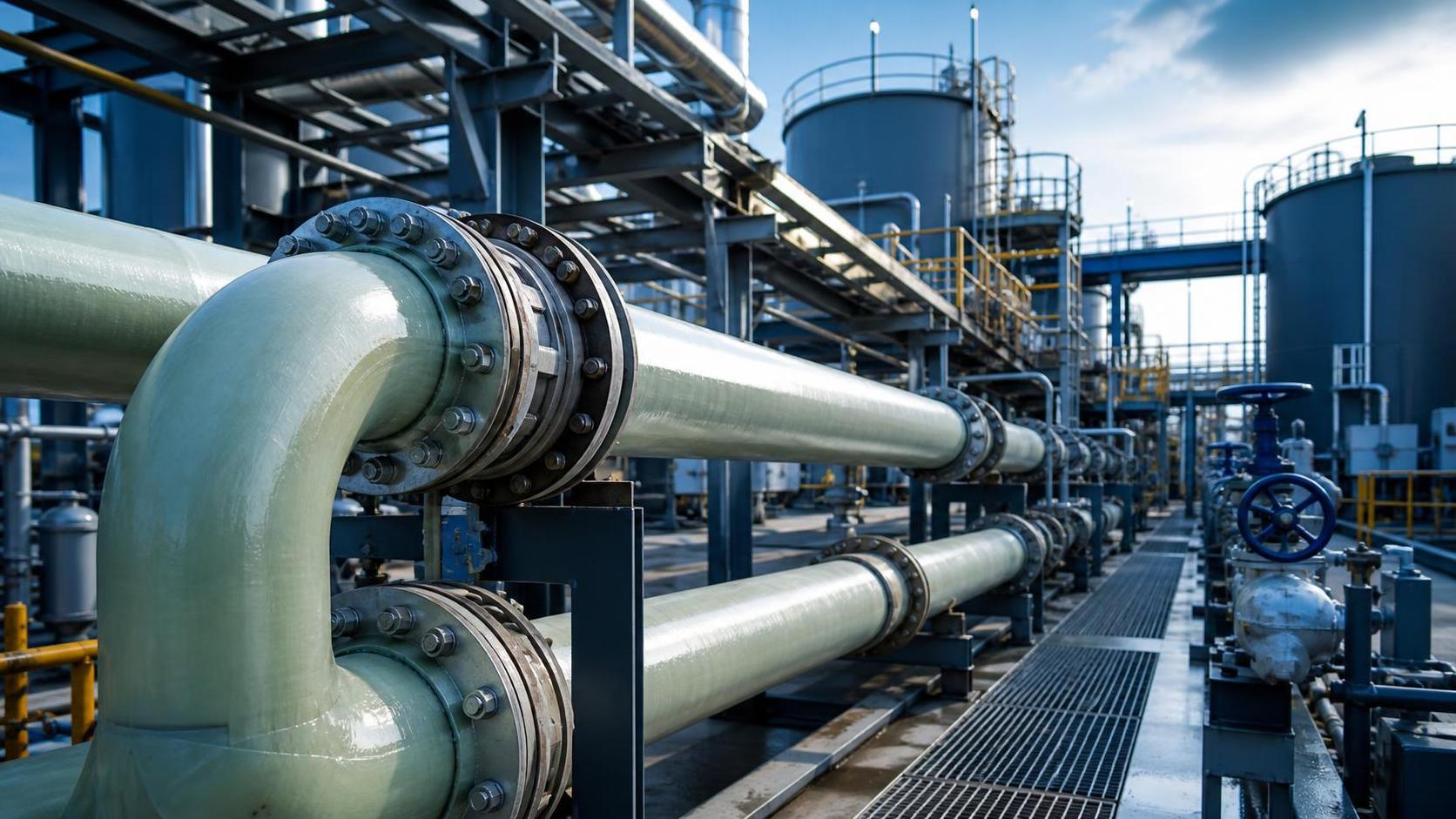
In oilfield operations, unplanned shutdowns caused by scale buildup can quickly raise costs and disrupt production. Many operators are now asking whether GRE pipes for oil and gas can help reduce these risks while improving flow reliability. With strong corrosion resistance, smooth inner surfaces, and proven use in demanding energy projects, GRE piping is becoming a practical option worth evaluating for more stable and efficient system performance.
The short answer is: GRE piping can help reduce some shutdowns linked to scaling, but not because it makes scale impossible. It helps by changing the conditions that often make deposits worse in metallic systems: internal corrosion, rough pipe walls, localized tuberculation, and debris accumulation. For operators, that distinction matters. If scaling is driven mainly by water chemistry, pressure drop, temperature change, or incompatible treatment practice, GRE alone will not solve the problem. If repeated shutdowns are being intensified by corroded carbon steel lines, rough internal surfaces, and difficult cleaning cycles, GRE may reduce the frequency and severity of those events.
That is the practical decision point in the field. The question is not whether GRE is “anti-scale” in a marketing sense. The real question is whether it can improve operating stability in your specific service.
Why scale-related shutdowns happen more often than expected
Operators usually see scaling first as a flow problem: rising differential pressure, unstable injection rate, reduced produced-water handling capacity, or repeated cleaning requirements. But scale does not build in isolation. In many oil and gas systems, it develops together with corrosion products, solids carryover, bacteria-related deposits, or treatment inconsistency.
In carbon steel lines, the internal wall condition often makes the situation worse. Once corrosion starts, the pipe surface becomes rougher. Corrosion products create anchor points where mineral crystals can attach more easily. Over time, the deposit is no longer just calcium carbonate, barium sulfate, strontium sulfate, or mixed solids. It becomes a harder, layered fouling structure that is more difficult to remove and more likely to trigger shutdowns.
This is where GRE piping enters the discussion. GRE does not change the chemistry that causes supersaturation. It changes the pipe environment in which deposits form and hold.
What GRE actually changes inside the line
For many operators, the most useful characteristic of GRE is not simply corrosion resistance in general terms. It is the combination of corrosion resistance and a relatively smooth bore that remains more stable over time than unlined steel exposed to aggressive produced water, seawater, or chemical service.
That matters in three ways.
One, a smoother internal surface gives scale fewer mechanical attachment points, especially in the early stage of deposition.
Two, GRE does not generate iron corrosion products that can combine with mineral scale and create denser fouling.
Three, maintaining a cleaner inner wall can make flow behavior more predictable, which helps operators identify whether they are dealing with chemistry upset, solids ingress, or true scaling progression.
In operating terms, this means that a GRE line may stay serviceable longer before pressure losses become unacceptable. It may also be easier to maintain treatment performance because the system is not simultaneously fighting corrosion-driven contamination.
That does not mean every deposit will release easily, and it does not mean pigging or chemical cleaning becomes unnecessary. It means the baseline conditions are often less favorable for stubborn buildup than in a deteriorating metallic line.
Where GRE pipes for oil and gas are most likely to reduce scale-related shutdowns
The strongest case is usually found in water-handling systems rather than high-temperature hydrocarbon lines. Typical candidates include produced water transfer, injection water systems, seawater service, disposal lines, and certain utility lines where internal corrosion and mineral deposition interact over time.
If your shutdown history shows a repeating pattern like this, GRE deserves attention:
- carbon steel lines develop internal roughness within a short operating cycle;
- scale inhibitor performance appears inconsistent even when dosage is stable;
- removed deposits contain both mineral scale and corrosion products;
- cleaning restores capacity only temporarily;
- some line sections foul much faster at elbows, reducers, dead legs, or low-velocity areas.
In these situations, replacing vulnerable sections with GRE may not eliminate scaling chemistry, but it can remove one of the main accelerating factors. The operational result is often fewer interventions, longer run time between cleanings, and less uncertainty in diagnosing the root cause of flow loss.
That is why GRE has gained acceptance well beyond upstream gathering and water service. Its use in other corrosive and wet-process environments also helps operators understand where the material performs well, including applications such as The application of GRE piping in marine scrubber systems, where fluid quality, corrosion resistance, and long-term reliability are also central concerns.
Where GRE will not fix the problem by itself
Some field teams overestimate what material substitution can do. If scale forms because incompatible waters are mixing, because pressure and temperature changes are forcing precipitation, or because treatment injection points are poorly located, then GRE will not stop the deposits from forming.
There are also services where the limits of GRE must be checked carefully before any replacement decision is made. Temperature, pressure, chemical compatibility, mechanical loading, surge conditions, support design, and fire safety requirements all need review against project specifications and relevant standards. In oil and gas systems, GRE selection is not just a matter of “non-metallic equals better.” The resin system, joining method, operating envelope, and installation quality all affect actual performance.
For example, if a line faces frequent thermal cycling, severe external mechanical impact, or operating conditions outside the supplier’s qualified range, the wrong GRE specification can create a different failure risk even if scaling improves. That is not a materials problem alone; it is usually a selection and engineering problem.
What operators should check before blaming the pipe material
When scale is causing shutdowns, the temptation is to treat the pipe as the root cause. In practice, operators should separate the problem into four questions.
What is the deposit made of?
Without deposit analysis, “scale” is too vague. Calcium carbonate, sulfate scale, iron sulfide, corrosion debris, sand, wax-associated solids, and mixed fouling behave very differently. Material change helps some combinations more than others.
Where does buildup start?
If deposition begins consistently downstream of pressure letdown, at stagnant branches, or near chemical injection points, the main issue may be process design rather than pipe wall material.
Is corrosion part of the fouling package?
If removed material contains a meaningful amount of iron oxides or other corrosion products, the argument for GRE becomes much stronger.
How is the line being operated?
Low-flow operation, frequent shutdown/startup, water-quality swings, and inconsistent inhibitor dosing often drive deposition regardless of material choice.
For field personnel, this framework is useful because it keeps the decision operational, not theoretical.
Installation quality matters as much as material choice
Many disappointing GRE results come from execution issues. A well-selected GRE line can underperform if joints are poorly made, supports are misapplied, alignment is forced during installation, or the operating team uses cleaning methods unsuitable for the material.
That is especially important where shutdown reduction is the business goal. If the line is installed in a way that introduces stress concentration, leakage risk, or joint reliability issues, the operator may exchange one maintenance problem for another.
For that reason, shutdown-focused evaluation should include:
- jointing method suitability for the service;
- installer qualification and site controls;
- support spacing and thermal movement allowance;
- compatibility with planned cleaning chemicals;
- inspection and pressure testing procedures;
- repair strategy and spare availability.
From an operations perspective, a material that reduces fouling but complicates maintenance logistics may still be a poor fit for remote assets. The right question is whether GRE improves total operating resilience, not just internal smoothness.
Cleaning and monitoring strategy still matters after conversion
Another common mistake is assuming that once GRE is installed, scale management can be relaxed. In reality, operators usually get the best results when GRE is paired with better monitoring discipline.
That includes trend tracking for differential pressure, flow velocity, water chemistry, inhibitor residuals where applicable, and solids loading. A smoother, corrosion-resistant line often makes these trends easier to interpret because corrosion is no longer distorting the picture. But the discipline still has to be there.
Chemical cleaning protocols also need review. Some field cleaning methods developed around carbon steel may not be ideal for composite systems. Chemical compatibility should always be confirmed with the supplier and engineering team. If the plant relies on mechanical cleaning, the cleaning method and tool selection should be assessed for GRE suitability instead of assumed.
How to judge whether GRE is worth trying in your system
For operators dealing with recurring shutdowns, the best candidates are rarely full-system replacements decided on principle. More often, the sensible path is to identify the sections where corrosion-assisted scaling is causing the most downtime and evaluate GRE there first.
Useful indicators include:
- high-maintenance water service lines with repeated internal corrosion;
- sections where deposits rebuild quickly after cleaning;
- locations where flow assurance problems are concentrated in steel spools, fittings, or branches;
- assets where shutdown cost is high enough that longer run length has real value;
- systems already using inhibitors correctly but still suffering from mixed corrosion-scale fouling.
In these cases, GRE pipes for oil and gas may offer a practical reliability gain even if they do not change the fundamental water chemistry. The benefit often appears as fewer surprise restrictions, less aggressive deposit bonding, and more stable hydraulic behavior over time.
Where the evidence points mainly to chemistry upset, poor separation, incompatible water mixing, or bad operating practice, the material change should come later, if at all. Otherwise the operation may spend capital without addressing the actual shutdown driver.
The realistic conclusion for field teams
GRE is not a universal anti-scale answer, but it can be an effective shutdown-reduction tool in the right service. Its main value is indirect but operationally important: it removes corrosion from the scaling cycle, keeps the bore smoother over time, and can reduce the formation of hard mixed deposits that are common in aging steel systems.
For operators, that means the decision should be based on deposit composition, service conditions, recurring failure pattern, cleaning practice, and installation quality—not on generic claims about composites. When those factors line up, GRE can help extend run time and reduce maintenance-driven interruptions. When they do not, scale control chemistry and process correction remain the primary solution.
The most useful mindset is not “Will GRE stop scale?” but “Is corrosion making our scaling shutdowns worse, and can this material remove that part of the problem?” In many water-handling and corrosive service applications, that is exactly where GRE earns its place.
Broader cross-industry experience also supports that view, including references such as The application of GRE piping in marine scrubber systems, where stable internal performance and resistance to aggressive media are equally important to long-term uptime.
Please give us a message
产品介绍产品介绍产品介绍产品介绍产品介绍产品介绍产品介绍产品介绍产品介绍产品介绍产品介绍产品介绍产品介绍产品介绍产品介绍产品介绍产品介绍产品介绍产品介绍产品介绍产品介绍产品介绍产品介绍产品介绍产品介绍产品介绍产品介绍产品介绍产品介绍产品介绍
Please give us a message
产品介绍产品介绍产品介绍产品介绍产品介绍产品介绍产品介绍产品介绍产品介绍产品介绍产品介绍产品介绍产品介绍产品介绍产品介绍产品介绍产品介绍产品介绍产品介绍产品介绍产品介绍产品介绍产品介绍产品介绍产品介绍产品介绍产品介绍产品介绍产品介绍产品介绍
Please give us a message
产品介绍产品介绍产品介绍产品介绍产品介绍产品介绍产品介绍产品介绍产品介绍产品介绍产品介绍产品介绍产品介绍产品介绍产品介绍产品介绍产品介绍产品介绍产品介绍产品介绍产品介绍产品介绍产品介绍产品介绍产品介绍产品介绍产品介绍产品介绍产品介绍产品介绍
Please give us a message
产品介绍产品介绍产品介绍产品介绍产品介绍产品介绍产品介绍产品介绍产品介绍产品介绍产品介绍产品介绍产品介绍产品介绍产品介绍产品介绍产品介绍产品介绍产品介绍产品介绍产品介绍产品介绍产品介绍产品介绍产品介绍产品介绍产品介绍产品介绍产品介绍产品介绍