
Is a GRP Pipe suitable for buried oilfield water transfer lines
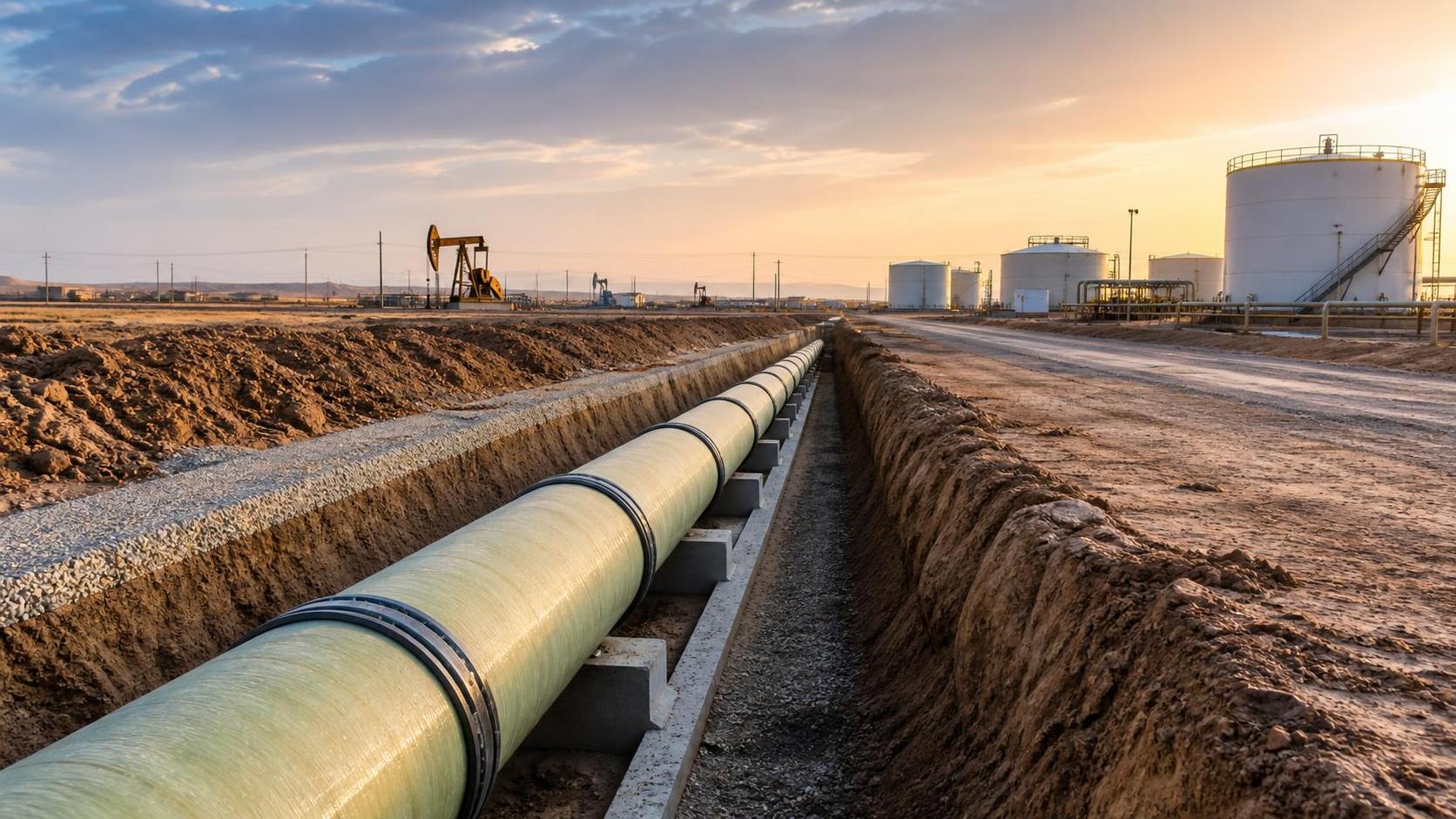
When a buried water transfer line is being planned for an oilfield, the material discussion usually stops being theoretical very quickly. The questions become practical: Will it survive aggressive water chemistry? Will the line be stable after backfilling? What happens if the route includes uneven soil, traffic loads, or repeated pressure changes from field operations? Many teams start by looking at steel out of habit, then pause when corrosion allowance, coatings, cathodic protection, and long-term maintenance enter the budget and schedule.
That is usually the point where a GRP Pipe comes into the conversation. It sounds attractive on paper, especially for water service, but buried service in an oilfield is not a simple environment. Soil conditions, installation quality, surge events, and connection details matter as much as the pipe material itself. So the better question is not simply whether GRP is suitable, but under which buried oilfield water transfer conditions it is a sound engineering choice and when extra caution is needed.
Start with the actual duty, not the material preference
One common mistake is evaluating buried pipe materials in isolation. In practice, buried oilfield water transfer lines vary a lot. Some carry produced water with a difficult chemical profile. Some move injection water that is cleaner but still operationally demanding. Some systems run steadily, while others see frequent start-stop cycles, pump switching, or pressure fluctuations. A pipe that performs well in one of these situations may need different wall design, joint selection, or burial support in another.
For that reason, suitability depends first on a few grounded questions:
- What is the water chemistry, especially chlorides, dissolved solids, oil traces, and possible scaling or sour components?
- Is the operating pressure stable, or are surge events likely during startup, shutdown, or valve changes?
- How deep will the line be buried, and what are the expected soil and surface loads?
- Will the route cross areas with poor compaction control, settlement risk, or vehicle traffic?
- What joining method and field installation quality can realistically be maintained on site?
If those questions are still unanswered, any decision about GRP, steel, HDPE, or another material is premature.
Where GRP makes sense in buried oilfield water service
A GRP Pipe is often a strong candidate when corrosion is a major concern. That is the most obvious reason it appears in oilfield water systems. Buried steel pipelines in corrosive soil and corrosive internal service usually demand several protective layers of control. If coating damage occurs or monitoring slips, the buried line can become a long-term maintenance issue. GRP avoids much of that internal corrosion concern because the pipe body itself is not vulnerable in the same way as carbon steel.
Another practical advantage is hydraulic stability. Composite pipe systems can provide a relatively smooth internal surface, which is useful in water transfer where pressure loss and flow efficiency matter over long distances. That does not eliminate system design work, but it helps reduce the number of hidden performance penalties that sometimes show up after commissioning.
Weight also matters more than many teams expect. In remote oilfield construction, handling heavy materials can slow trench work, require more lifting equipment, and complicate installation sequencing. A lighter pipe can simplify logistics and reduce some field handling pressure, especially where long pipeline sections are involved.
These are real advantages, but they only remain advantages if the buried design is done properly. GRP is not a “drop-in” answer that forgives poor trench preparation or careless backfill selection.
The buried condition changes the decision
Above-ground use and buried use are different engineering situations. Once a pipe is buried, soil-pipe interaction becomes part of the structural behavior. With GRP, this point deserves attention because the line depends on both pipe stiffness and proper support from surrounding embedment. If trench bottom preparation is uneven, if side support is weak, or if backfill contains large sharp material, the risk profile changes immediately.
That is why some mixed impressions about buried GRP come from installation history rather than material failure in isolation. A project team may hear that “composite pipe is fragile underground,” when the real issue was inadequate bedding, poor compaction, or load assumptions that were never aligned with field conditions.
For buried oilfield lines, the material can be suitable, but the installation method has to be treated as part of the design, not as an afterthought handed to the contractor once the pipe arrives.
Points that should be checked before approving it for the route
The first technical filter is the internal medium. Water transfer in oilfields may include suspended solids, oil residue, treatment chemicals, and temperature variation. The pipe resin system and liner selection should match the actual medium rather than a generic “water service” label. This is especially important when people use the term GRP broadly, because different composite constructions and resin systems do not behave identically.
The second is pressure regime. Steady operating pressure is only part of the story. Pressure surge from pumps, valve closures, or operational upset can challenge any pipeline. A buried GRP line should be reviewed for surge allowance, not just nominal operating pressure. If the system is known to cycle often, this deserves early review rather than late correction.
The third is soil condition. Buried composite pipelines need appropriate trench geometry, bedding, sidefill, and compaction control. Soft ground, expansive soil, or areas subject to settlement should trigger a more careful design discussion. In those locations, teams should resist the temptation to focus only on chemical resistance and forget structural support.
The fourth is external loading. Surface traffic, future maintenance vehicles, and crossing points can create concentrated loads. A route that is acceptable in open field burial may need a different stiffness class or additional protection where roads, plant access lanes, or equipment paths are involved.
The fifth is connections and transitions. Straight pipe performance often gets most of the attention, but buried systems are frequently defined by bends, tees, reducers, flanges, restrained sections, and transitions to pumps or steel equipment. If those details are weak, the line becomes hard to maintain even if the pipe barrel itself is appropriate.
Where decision-makers get misled
One frequent misunderstanding is assuming that corrosion resistance automatically means low risk. Corrosion resistance solves a major problem, but not every problem. A GRP line can still suffer from poor handling, incorrect supports, unsuitable joint assembly, or overload conditions. If a team selects it mainly to avoid steel corrosion management, that is reasonable, but the buried design still needs discipline.
Another misunderstanding is comparing materials by purchase price alone. In buried oilfield service, installation complexity, maintenance philosophy, expected inspection access, and repair practicality can matter as much as initial material cost. If the route is easy to access and the chemistry is mild, one material may be favored. If the route is long, corrosive, and difficult to revisit after burial, another material may become more attractive even if procurement looks different at first glance.
There is also a tendency to overgeneralize from one field condition to another. A positive result in ballast water piping, plant service, or above-ground chemical duty does not automatically confirm buried oilfield suitability unless burial loads, joining method, and soil interaction are reviewed on their own terms. In the same way, accessory components should be chosen with service compatibility in mind. On projects that also involve treatment skids or water handling units, teams sometimes review related composite equipment such as FRP/GRE Membrane Housing alongside pipeline materials, but that does not replace a separate buried line assessment.
A practical way to judge suitability
If you are deciding whether to specify a GRP Pipe for a buried oilfield water transfer line, the cleanest approach is to move through the decision in layers.
First, confirm chemical compatibility. Internal corrosion is one of the strongest arguments for GRP, but compatibility should be based on actual service composition and temperature range. If the line may handle changing water sources over time, that future operating envelope should be considered too.
Next, review the structural side of burial. This includes pipe stiffness selection, burial depth, trench width, bedding material, side support, compaction expectations, and anticipated live loads. This is the part many non-specialist buyers underweight, even though it often determines long-term buried performance.
Then review hydraulic and transient behavior. Pressure class alone is not enough. The system should be looked at for surge events and operating pattern. A line with smooth routine flow is one thing; a line tied to variable pumps and frequent valve action is another.
After that, pay attention to field practicality. Can the installation team reliably control joint assembly, alignment, embedment material, and backfill compaction? Composite systems are not uniquely difficult, but they do ask for method discipline. If the site cannot maintain that discipline, the theoretical benefits become less meaningful.
Finally, examine repair and interface strategy. Every buried line eventually needs tie-ins, branch connections, or modifications. If the project expects future changes, the design should account for how those interventions will be performed and who will support them.
When GRP is often a reasonable choice
It is usually a reasonable option when the transferred water presents ongoing corrosion concerns for metallic systems, when the route benefits from lighter handling, and when installation conditions can be controlled properly. It also fits well where long service life and stable hydraulic performance matter, provided the burial design is not treated casually.
It becomes especially attractive when the owner wants to reduce dependence on internal corrosion mitigation measures that come with metallic lines. In many oilfield water services, that is not a small consideration. The fewer corrosion management layers a buried asset depends on, the simpler long-term ownership can become.
Situations that deserve more caution
Buried GRP should be reviewed more carefully if the route crosses unstable soil, if heavy traffic loads are unavoidable, if construction quality is likely to be inconsistent, or if the line will experience severe or frequent hydraulic transients. None of these conditions automatically rule it out, but they raise the importance of detailed design and field control.
It also deserves extra attention where the line includes many interfaces with metal equipment, frequent branch points, or compact plant areas where alignment tolerances are tight. The issue there is usually not the straight buried run but the accumulation of detail points that can complicate construction and future maintenance.
The answer most teams actually need
So, is a GRP Pipe suitable for buried oilfield water transfer lines? In many cases, yes, provided the decision is based on service chemistry, pressure behavior, soil and load conditions, and installation quality rather than on corrosion resistance alone. It is not a universal answer for every buried route, but it is a technically credible and often practical choice when the buried system is designed as a system, not just purchased as pipe.
If your current debate is stuck between “composite is safer from corrosion” and “buried service feels risky,” the useful next step is to stop arguing in general terms and review the actual route conditions section by section. That usually makes the decision clearer. The same thinking helps when selecting other composite components used around water treatment and transfer packages, including items like FRP/GRE Membrane Housing. Material suitability becomes much easier to judge once service conditions, installation realities, and future maintenance expectations are brought into the same conversation.
Please give us a message
产品介绍产品介绍产品介绍产品介绍产品介绍产品介绍产品介绍产品介绍产品介绍产品介绍产品介绍产品介绍产品介绍产品介绍产品介绍产品介绍产品介绍产品介绍产品介绍产品介绍产品介绍产品介绍产品介绍产品介绍产品介绍产品介绍产品介绍产品介绍产品介绍产品介绍
Please give us a message
产品介绍产品介绍产品介绍产品介绍产品介绍产品介绍产品介绍产品介绍产品介绍产品介绍产品介绍产品介绍产品介绍产品介绍产品介绍产品介绍产品介绍产品介绍产品介绍产品介绍产品介绍产品介绍产品介绍产品介绍产品介绍产品介绍产品介绍产品介绍产品介绍产品介绍
Please give us a message
产品介绍产品介绍产品介绍产品介绍产品介绍产品介绍产品介绍产品介绍产品介绍产品介绍产品介绍产品介绍产品介绍产品介绍产品介绍产品介绍产品介绍产品介绍产品介绍产品介绍产品介绍产品介绍产品介绍产品介绍产品介绍产品介绍产品介绍产品介绍产品介绍产品介绍
Please give us a message
产品介绍产品介绍产品介绍产品介绍产品介绍产品介绍产品介绍产品介绍产品介绍产品介绍产品介绍产品介绍产品介绍产品介绍产品介绍产品介绍产品介绍产品介绍产品介绍产品介绍产品介绍产品介绍产品介绍产品介绍产品介绍产品介绍产品介绍产品介绍产品介绍产品介绍