
How GRE pipes for oil and gas handle internal corrosion over time
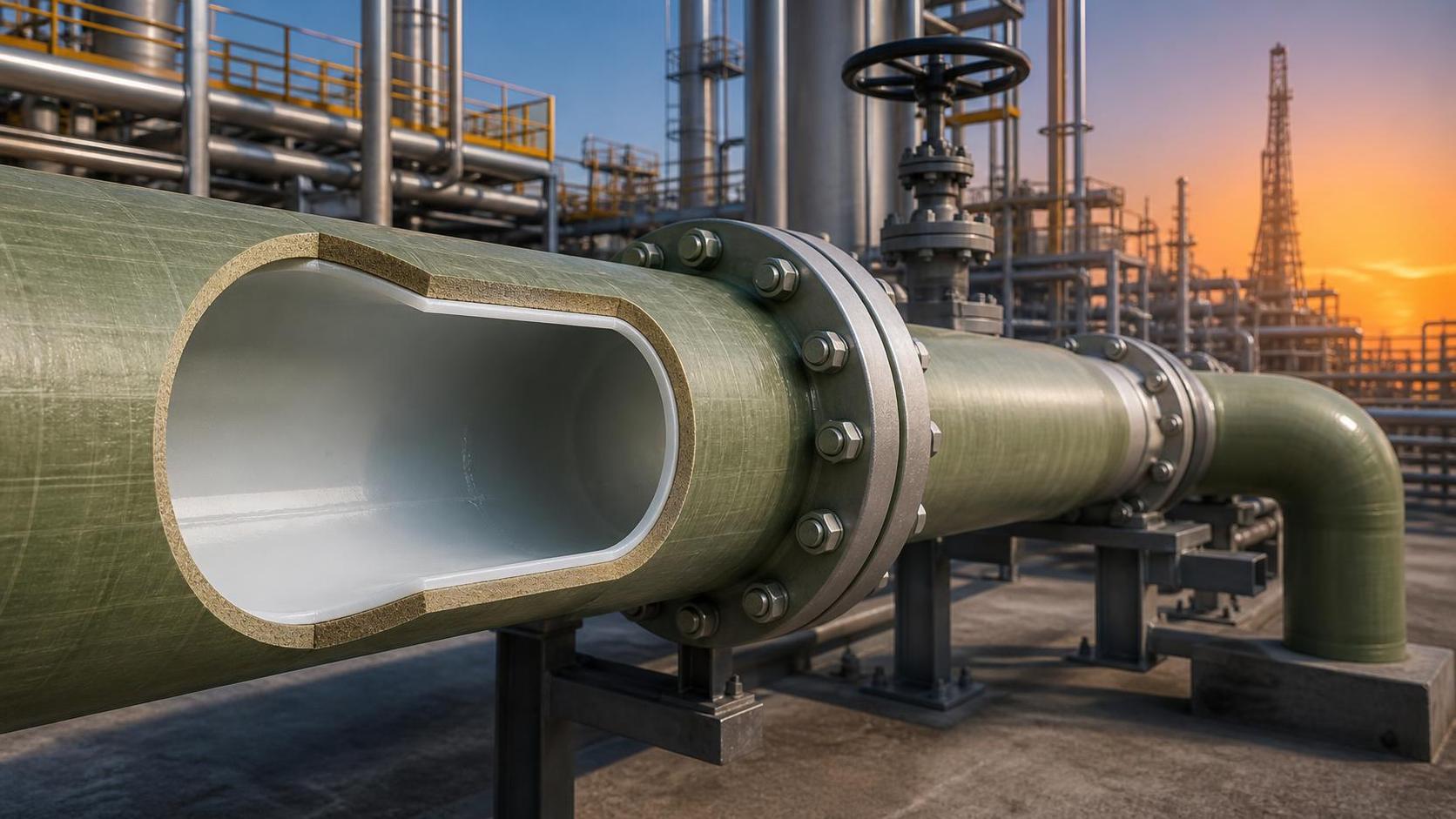
It usually starts with a practical question on a project desk or during a maintenance review: the fluid is corrosive, carbon steel has already caused trouble somewhere in the system, and someone asks whether a non-metallic line will really stay stable on the inside after years of service. That is where many discussions around gre pipes for oil and gas begin. The concern is reasonable. Internal corrosion is not always dramatic at first. It can show up as thinning, contamination, scaling, unexpected pressure loss, or repeated inspection findings that slowly turn a manageable line into a reliability problem.
In upstream and midstream service, the issue gets more complicated because the fluid itself is rarely simple. Produced water, chlorides, dissolved gases, residual solids, treatment chemicals, and temperature swings all change how a pipe behaves over time. If you are comparing materials, the real question is not whether corrosion exists in theory, but how a piping system resists the actual internal environment day after day, and what conditions can shorten its expected service life even when the material is marketed as corrosion-resistant.
Where the confusion usually comes from
A common misunderstanding is to treat all corrosion problems as if they work the same way. With steel, people are used to electrochemical attack, wall loss, pitting, and the need for coatings, inhibitors, or corrosion allowance. GRE behaves differently. It does not corrode internally in the metallic sense because the flow path is not metal exposed to the fluid. That alone makes it attractive in services where brine, seawater, produced water, or many chemical mixtures would steadily attack conventional metallic pipe.
But that does not mean GRE is immune to every internal aging mechanism. Engineers who work with these systems learn that the better question is whether the resin-rich inner surface, reinforcement structure, joints, and operating envelope match the service conditions. Over time, performance depends on chemical compatibility, temperature, pressure cycling, flow regime, solids content, and installation quality just as much as on the basic label of the material.
So when people ask how GRE handles internal corrosion over time, the most accurate answer is this: it avoids the classic internal rusting and pitting seen in metal pipe, but its long-term success depends on keeping the fluid, temperature, and mechanical loads within the pipe system’s design limits.
What protects the inside of a GRE pipe
The internal barrier in a GRE pipe is created by the epoxy resin system and the laminate construction. The fluid does not contact bare metal, so there is no direct path for electrochemical corrosion like the one that drives internal attack in carbon steel. In many oil and gas services, this is the main reason GRE is considered for water injection lines, produced water handling, utility systems, and other corrosive flow streams.
The inner surface is usually designed to provide chemical resistance and a relatively smooth bore. That smoothness matters more than people sometimes think. It can reduce the tendency for rough corrosion products to build up, and it may help maintain hydraulic performance over time compared with corroding metal surfaces. However, the smooth bore is not a free pass. If the line carries abrasive solids, scale-forming components, or debris from poor commissioning, the internal surface can still suffer wear or localized damage.
In practice, GRE resists internal corrosion because it replaces a corrosion-prone metal interface with a chemically resistant composite interface. That is the core advantage. The long-term question is whether the selected resin and laminate are suitable for the actual service chemistry and operating pattern, not just the nameplate fluid.
Why some lines age well and others become risky
When a GRE line performs well for years, it is usually because several decisions were correct at the start. The fluid composition was reviewed carefully. The service temperature stayed within the qualified range. Pressure fluctuations were controlled. The support layout avoided added stress. The joint system was installed correctly. None of these steps feels dramatic on its own, but together they decide whether the internal barrier remains stable.
Problems tend to appear when one or more of those assumptions drift. A line originally intended for relatively clean water may later see more solids. A process change may introduce stronger chemicals or different cleaning agents. Temperature excursions may be accepted informally because they seem brief. An upset condition may create pressure surges beyond the normal pattern. GRE often handles corrosive fluids better than steel, but it is less forgiving of being used outside its design envelope.
This is why internal corrosion resistance should never be judged only by a generic statement such as “composites do not rust.” True, they do not rust. But long-term integrity still depends on the combined effect of chemistry, heat, stress, and flow.
What to review before deciding GRE is suitable
One of the most useful habits during material selection is to stop talking about “oil and gas service” as if it were one environment. It covers many internal conditions, and each one matters. A sensible review normally begins with the actual transported media: produced water, seawater, multiphase stream, chemical injection fluid, drainage fluid, or utility water. Then it moves to less obvious factors such as dissolved gases, salinity, pH range, solids loading, and any intermittent treatment chemicals.
Temperature deserves special attention. Many failures in material selection discussions come from focusing on average operating temperature while ignoring maximum upset temperature or cleaning cycles. Resin systems respond to temperature differently from metals, and chemical resistance can change significantly when heat rises. A fluid that seems acceptable at one temperature may become more aggressive at another.
Pressure cycling is another item that often gets underestimated. Internal corrosion may not be the limiting factor if repeated pressure fluctuations add fatigue-like stress to the structure or joints. In other words, a line can be chemically suitable but mechanically vulnerable under unstable operation.
For teams looking at gre pipes for oil and gas, the practical path is to ask for a service-specific compatibility review rather than relying on broad assumptions. That review should include normal operation, start-up, shutdown, upset conditions, and any planned cleaning or chemical treatment events.
Common internal threats that are not “corrosion” in the steel sense
One reason this topic gets confusing is that operators may describe any internal deterioration as corrosion, even when the mechanism is different. In GRE systems, several internal threats can be mistaken for corrosion.
First, abrasion or erosion from entrained solids can gradually wear the inner surface. This is especially relevant in lines with sand, scale particles, or other hard solids moving at high velocity or through directional changes. The material is corrosion-resistant, but no piping material is completely indifferent to sustained abrasive flow.
Second, chemical permeation or resin attack can happen if the internal chemistry exceeds the resistance of the selected resin system. This is not rust, but it can still reduce long-term integrity. The warning signs may be less obvious than metal wall loss, which is why compatibility at the design stage matters so much.
Third, poor joint preparation or installation defects may create weak points where internal service conditions accelerate damage. In that situation, the pipe body may remain sound while a connection becomes the first concern.
Fourth, thermal shock and repeated transients can affect the laminate over time, especially if operation moves far from the intended range. Again, the issue is not classic corrosion, yet the end result is still loss of confidence in the line.
A more reliable way to judge long-term internal performance
If you are trying to decide whether GRE is a good answer for a corrosive service, it helps to shift from a yes-or-no mindset to a condition-based evaluation. Instead of asking, “Does GRE resist internal corrosion?” ask these more useful questions:
Is the fluid chemistry clearly defined, including contaminants and treatment chemicals? Are operating and upset temperatures both known? Will the line carry solids, and if so, at what likely concentration and velocity? Are there frequent pressure surges or shutdown cycles? What joint type will be used, and how sensitive is it to field workmanship? How will the system be inspected after commissioning?
Those questions may feel slower than a quick material comparison, but they reduce the chance of choosing a pipe for the right reason and then using it in the wrong service pattern.
In some projects, teams also compare line components beyond the main pipe body. For example, when evaluating smaller-bore or related composite flow paths, it may be helpful to review options such as GRE Tubing in the same compatibility mindset rather than treating each item as separate from the corrosion discussion. The key is still service matching, not just product naming.
What operators and engineers usually watch over time
GRE systems do not require the same internal corrosion monitoring approach as carbon steel, but they should not be ignored after installation. Over time, attention often shifts from measuring metal wall loss to observing signs of mechanical, chemical, or operational stress.
Many teams watch for changes in pressure behavior, unexplained leakage at joints, external signs that may indicate internal distress, and shifts in process conditions that were not part of the original design basis. If solids loading rises or a water stream changes composition, that should trigger a fresh review rather than an assumption that the original material decision still applies unchanged.
Inspection planning also benefits from realism. Since internal rust scale and pitting are not the main concern, the focus should be on the pipe system as an integrated structure: joints, supports, bends, transitions, and any locations exposed to unusual turbulence or recurring upset conditions. The better the operating records, the easier it is to decide whether a line is simply aging normally or moving outside the conditions it was selected for.
Practical mistakes that shorten service life
One recurring mistake is specifying GRE mainly to eliminate internal corrosion while giving too little attention to flow conditions. A line carrying aggressive water may be an excellent candidate for GRE, but if it also sees abrasive solids at problematic velocity, the conversation has to include erosion resistance, routing, and local wear risk.
Another mistake is allowing chemical cleaning agents or temporary service fluids into the system without checking compatibility first. People often review the permanent process fluid carefully and then overlook what happens during commissioning, flushing, preservation, or maintenance.
Installation detail is another area where the corrosion story gets oversimplified. A pipe material can be chemically suitable and still perform poorly if alignment, jointing, support spacing, or handling are not controlled. Long-term internal performance is not only about what the fluid does to the pipe; it is also about what the system design and field work do to the pipe before the fluid even starts moving.
There is also a tendency to compare GRE and steel only on the first problem that comes to mind. If the immediate problem is internal corrosion, GRE can look like an easy answer. But the better comparison includes the total service environment, maintenance strategy, repair philosophy, and inspection method. That broader view usually leads to a more confident choice.
When GRE is often a sensible fit
GRE is often considered where internal corrosion is persistent, where fluids are water-rich or chemically challenging, and where operators want to avoid the ongoing burden of metallic corrosion control. In those situations, the value of the material comes from not presenting a metal surface to the fluid and from maintaining a stable internal bore when the service is within design limits.
It tends to make the most sense when the line duty is clearly defined and the operating team is willing to preserve the original service assumptions. If the internal environment is likely to change frequently, or if solids, transients, and temperature excursions are not well controlled, then the evaluation has to be more careful. GRE may still be suitable, but only after the real risks are separated from the simple claim of “corrosion resistance.”
For some applications, related composite components such as GRE Tubing may enter the discussion as part of an overall non-metallic approach. Even then, the same rule applies: match the product to the actual service conditions rather than assuming all composite items behave identically in all oil and gas duties.
What usually settles the decision
Most uncertainty disappears once the conversation moves from general material preference to service-specific review. Internal corrosion over time is exactly where GRE can offer a strong advantage over metal pipe, particularly in corrosive water-based environments. But the material earns that advantage only when chemistry, temperature, pressure, solids, joints, and installation quality are all treated as part of the same decision.
So if you are reviewing gre pipes for oil and gas for a project or replacement line, the most realistic expectation is not “zero concern forever.” It is a different risk profile: far less vulnerability to internal metallic corrosion, with greater need to verify compatibility and operating discipline. That is usually the clearest way to understand how GRE holds up over time—and why it performs best when the selection process is as careful as the service is demanding.
Please give us a message
产品介绍产品介绍产品介绍产品介绍产品介绍产品介绍产品介绍产品介绍产品介绍产品介绍产品介绍产品介绍产品介绍产品介绍产品介绍产品介绍产品介绍产品介绍产品介绍产品介绍产品介绍产品介绍产品介绍产品介绍产品介绍产品介绍产品介绍产品介绍产品介绍产品介绍
Please give us a message
产品介绍产品介绍产品介绍产品介绍产品介绍产品介绍产品介绍产品介绍产品介绍产品介绍产品介绍产品介绍产品介绍产品介绍产品介绍产品介绍产品介绍产品介绍产品介绍产品介绍产品介绍产品介绍产品介绍产品介绍产品介绍产品介绍产品介绍产品介绍产品介绍产品介绍
Please give us a message
产品介绍产品介绍产品介绍产品介绍产品介绍产品介绍产品介绍产品介绍产品介绍产品介绍产品介绍产品介绍产品介绍产品介绍产品介绍产品介绍产品介绍产品介绍产品介绍产品介绍产品介绍产品介绍产品介绍产品介绍产品介绍产品介绍产品介绍产品介绍产品介绍产品介绍
Please give us a message
产品介绍产品介绍产品介绍产品介绍产品介绍产品介绍产品介绍产品介绍产品介绍产品介绍产品介绍产品介绍产品介绍产品介绍产品介绍产品介绍产品介绍产品介绍产品介绍产品介绍产品介绍产品介绍产品介绍产品介绍产品介绍产品介绍产品介绍产品介绍产品介绍产品介绍