
What drives the installed cost of GRE pipes for oil and gas projects
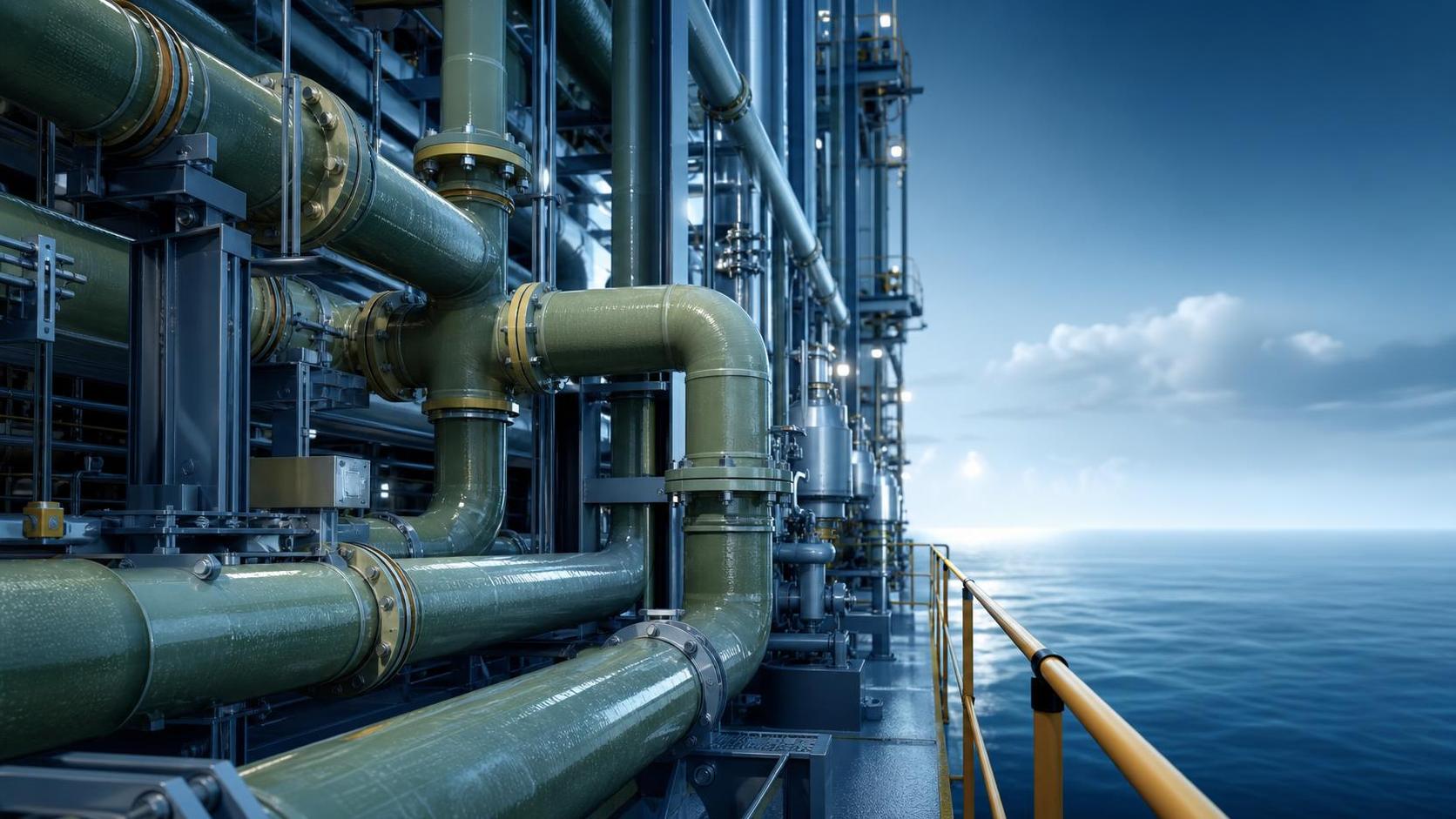
Installed cost in oil and gas piping is shaped by everything that happens after the unit price is quoted. With gre pipes for oil and gas, the biggest budgeting errors usually come from assuming that all GRE systems with the same nominal diameter are commercially equivalent. They are not. The resin system, glass content, winding structure, pressure class, joining method, spool complexity, and field handling requirements can shift the final installed cost far more than a small difference in pipe price per meter.
The first cost driver sits inside the pipe wall itself. GRE is specified by pressure, temperature, chemical exposure, and sometimes fire performance or external loading conditions. A line carrying produced water, injection water, seawater, or corrosive fluids may require a different laminate design than a low-pressure utility line. If the service includes temperature cycling, transient pressure events, or aggressive media, the manufacturer may need a higher-grade epoxy formulation, tighter curing control, or a thicker corrosion barrier. These choices affect raw material consumption, manufacturing time, qualification work, and eventually freight weight and installation effort. A lower initial quote may therefore hide a thinner design margin or a narrower operating envelope.
Pressure rating is often treated as a simple catalog item, but it changes several downstream costs. Once pressure class increases, the wall thickness usually grows, the pipe becomes heavier to handle, and fittings become more expensive. Supporting structures may also need review because GRE behaves differently from steel under load and deflection. In long above-ground runs, support spacing, anchor points, and guide design can influence whether the installation stays straightforward or requires additional civil and mechanical work. A line that is conservatively over-specified can raise total spend without adding practical value, while a line that is specified too close to the operating limit may create expensive redesigns during review.
Fittings often decide whether the budget holds
In many oil and gas projects, straight pipe looks economical until the fitting schedule is released. Elbows, tees, reducers, flanges, stub ends, puddle flanges, and special fabricated pieces can represent a large share of the installed cost because each one adds material, fabrication, inspection, packaging, and field assembly time. GRE systems with many branch connections or tight routing constraints tend to lose the apparent cost advantage of simple line-item pipe pricing. The geometry matters as much as the quantity. A project with repeated standard elbows is easier to price and install than one with many custom offsets, angle changes, and tie-in tolerances inherited from an existing facility.
Joining method is another strong cost lever. Adhesive-bonded joints may reduce the need for heavy bolting and can be efficient in long runs, but they depend on surface preparation discipline, cure conditions, and trained crews. Mechanical joints can speed certain tie-ins, especially where disassembly may be needed later, but they introduce additional components and sealing considerations. Flanged connections simplify interfaces to pumps, valves, tanks, and steel equipment, yet excessive flanging increases both material cost and installation hours. When evaluating gre pipes for oil and gas, the pipe body and the jointing philosophy have to be reviewed together, otherwise the quoted package and the installed package are not the same thing.
Field labor is sensitive to design quality
Labor productivity with GRE is highly dependent on how complete the engineering package is before fabrication starts. Small gaps in isometrics, support details, flange orientation, or tie-in coordinates can create disproportionate rework because field modification of GRE is less forgiving than cutting and welding carbon steel. Repeated fit-up problems may force extra spool adjustments, additional adhesive work, or replacement fittings. The material itself is light compared with many metallic alternatives, but lower handling weight does not automatically translate into lower installed cost if the design package leaves room for interpretation at site.
Dimensional control matters more than many teams expect. GRE spools must arrive with consistent end preparation, correct laying lengths, and flange drilling aligned to the actual connection standard used on site. A mismatch in drilling pattern, face type, or tolerance can stop installation even when the pipe rating is otherwise correct. Delays become expensive because they affect cranes, scaffolding, insulation sequencing, hydrotest windows, and other contractors working in the same area. Much of the installed cost is therefore tied to coordination quality rather than to pipe manufacturing alone.
Site conditions also change the economics. A desert project, an offshore module, and a brownfield onshore plant do not reward the same installation approach. Heat, dust, humidity, confined spaces, and limited laydown area influence adhesive jointing, storage, and spool handling. If installation must be done in short shutdown windows, prefabrication accuracy becomes more valuable than a lower ex-works price. Where routing passes through congested racks or existing units, the cost of surveying and trial fitting can rise quickly.
Transportation is rarely a minor line item
GRE can reduce lifting demand, but transportation cost still deserves close review. Pipe diameter, spool length, and packaging arrangement influence container utilization and breakage risk. Long fabricated spools may save field joints but ship inefficiently. Shorter pieces fit logistics better yet require more assembly on site. For export projects, transit protection is not a cosmetic issue. End damage, ovality from poor stacking, and mishandled flanges can create installation delays that are more expensive than the freight saving that caused them.
Remote oil and gas developments often add another layer of cost through customs timing, inland transport restrictions, or staged delivery requirements. If the delivery sequence does not match the construction sequence, material may sit too long in storage or arrive too late for planned work fronts. GRE should be protected from unnecessary mechanical damage and stored in a way that avoids distortion, contamination of bonding surfaces, or uncontrolled exposure conditions where the selected joining system is sensitive. These are ordinary logistics details, but they materially affect installed cost because repair and replacement in remote locations are slow.
Specification gaps create hidden extras
One of the most common sources of cost escalation is a specification that is clear about diameter and pressure but vague about the rest. The quote may then exclude assumptions on fittings, supports, gaskets, bolts, closure pieces, laminated joints, inspection records, or field technical attendance. GRE systems are especially vulnerable to this because the boundary between factory scope and site scope can vary widely from project to project. A low number on the commercial sheet may simply mean that several necessary items have been left outside the package.
Reviewing the bill of materials in detail is more useful than negotiating the pipe price in isolation. The cost significance of one fabricated tee or one special flange adapter can exceed the saving achieved on many meters of straight pipe. Questions around hydrotest responsibility, spare materials, repair kits, and supervision should also be settled early. If a line serves utility or produced-water infrastructure connected to process facilities such as a Wastewater Treatment Plant, interface points and operating conditions should be defined carefully, because crossover between process piping standards can otherwise generate late changes in fittings and end connections.
Installation support and training affect the final number
GRE is not difficult to install when crews follow the correct procedure, but the system is process-sensitive. Joint cleanliness, adhesive mixing, cure timing, ambient conditions, torque control on flanges, and alignment discipline all influence whether the work proceeds smoothly. If crews are unfamiliar with the selected joining system, the project may absorb the cost through slower productivity, rejected joints, or additional supervision. In some cases, the supplier’s field service scope is the difference between a predictable installation and repeated stoppages. That support has a cost, but so does omitting it where site experience is limited.
Another factor is testing and commissioning. GRE piping may require specific hold points for joint inspection, cure confirmation, visual examination, and hydrotest preparation. If the construction schedule assumes steel-like workflow without accounting for these steps, labor and equipment can idle while the line is made ready for testing. The issue is not that GRE is inherently slow; it is that the installation sequence has to match the material system. Projects that account for this upfront usually control cost better than those that attempt to compress the work at the end.
Lifecycle assumptions influence installed cost decisions
Some of the most expensive choices are made when a cheaper pipe package is selected without considering service life and maintenance access. GRE is often considered because corrosion resistance can reduce internal lining issues, coating maintenance, and replacement frequency in suitable services. But that lifecycle advantage depends on the line being matched correctly to pressure, temperature, fluid chemistry, surge conditions, and external loads. A design that is marginal in any of these areas can erase the expected maintenance benefit and introduce unplanned outage work later.
Fire exposure, ultraviolet exposure, buried service conditions, vacuum conditions, and cyclic loading should not be treated as footnotes. They can change the laminate design, joining method, support details, or installation precautions. For buried lines, trench preparation, backfill quality, and compaction become part of the installed cost story. For above-ground systems, support interfaces and thermal movement management deserve equal attention. The lowest installed cost is usually achieved when the system is specified accurately enough that neither overdesign nor corrective field engineering is needed.
Commercial comparison also becomes sharper when offers are normalized. Two suppliers may quote the same nominal pipe size and pressure class while assuming different fitting factors, different factory testing scope, different flange materials, or different field service boundaries. Unless these assumptions are aligned, price comparison is misleading. A realistic review looks at the full system package, not just the straight pipe schedule.
Installed cost for gre pipes for oil and gas projects is therefore built from design discipline, scope clarity, spool complexity, logistics, joining method, and the conditions under which the line will actually be installed and operated. When those pieces are defined early, GRE can be evaluated on its true economic basis rather than on a narrow material price that tells only part of the story.
Please give us a message
产品介绍产品介绍产品介绍产品介绍产品介绍产品介绍产品介绍产品介绍产品介绍产品介绍产品介绍产品介绍产品介绍产品介绍产品介绍产品介绍产品介绍产品介绍产品介绍产品介绍产品介绍产品介绍产品介绍产品介绍产品介绍产品介绍产品介绍产品介绍产品介绍产品介绍
Please give us a message
产品介绍产品介绍产品介绍产品介绍产品介绍产品介绍产品介绍产品介绍产品介绍产品介绍产品介绍产品介绍产品介绍产品介绍产品介绍产品介绍产品介绍产品介绍产品介绍产品介绍产品介绍产品介绍产品介绍产品介绍产品介绍产品介绍产品介绍产品介绍产品介绍产品介绍
Please give us a message
产品介绍产品介绍产品介绍产品介绍产品介绍产品介绍产品介绍产品介绍产品介绍产品介绍产品介绍产品介绍产品介绍产品介绍产品介绍产品介绍产品介绍产品介绍产品介绍产品介绍产品介绍产品介绍产品介绍产品介绍产品介绍产品介绍产品介绍产品介绍产品介绍产品介绍
Please give us a message
产品介绍产品介绍产品介绍产品介绍产品介绍产品介绍产品介绍产品介绍产品介绍产品介绍产品介绍产品介绍产品介绍产品介绍产品介绍产品介绍产品介绍产品介绍产品介绍产品介绍产品介绍产品介绍产品介绍产品介绍产品介绍产品介绍产品介绍产品介绍产品介绍产品介绍