
When GRE Pipe Is Better Than Carbon Steel
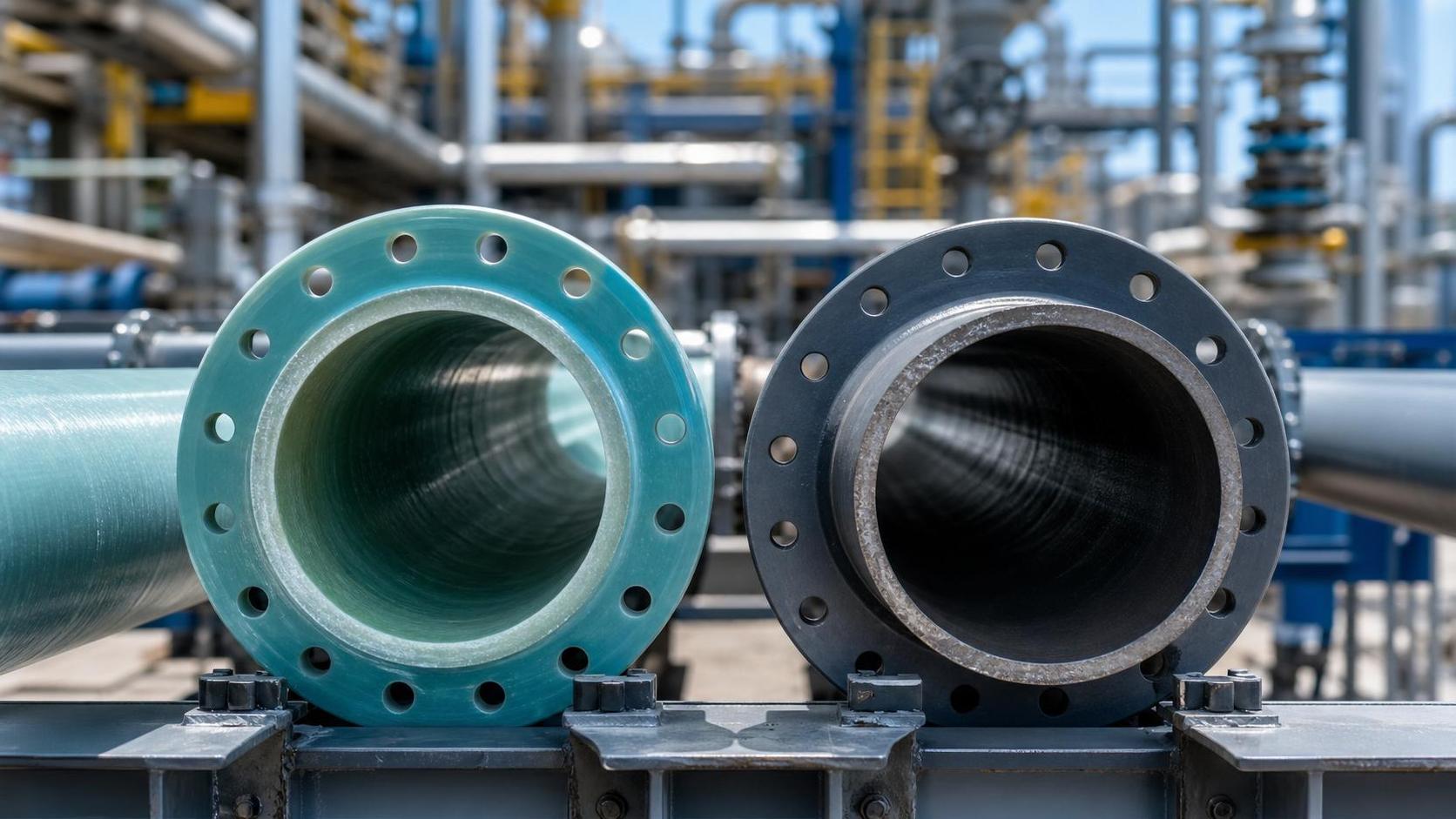
Choosing between GRE Pipe and carbon steel is rarely a simple material swap. In corrosive, weight-sensitive, or maintenance-heavy systems, the decision affects safety margins, installation speed, and total project cost for years. That is why GRE Pipe often enters serious evaluation in oil and gas, marine, LNG, chemical processing, hot spring transport, and salt-making lines, where the service environment can punish conventional steel faster than expected.
Why this comparison matters now
Carbon steel remains familiar, available, and structurally reliable. Yet familiarity does not always mean best fit. In many wet, saline, chemically aggressive, or buried applications, corrosion control becomes a permanent operating burden.
GRE Pipe belongs to the broader family of advanced composite materials, closely connected to the glass-based materials sector. Its performance comes from fiberglass reinforcement and epoxy resin, not from metallic protection systems.
That difference changes the discussion. Instead of asking how to protect steel, the question becomes whether a non-metallic pipe can remove recurring corrosion risks at the source.
What makes GRE Pipe different
GRE Pipe is a fiberglass reinforced epoxy piping solution. In practical terms, it combines glass fiber strength with the chemical resistance of cured epoxy to create a lightweight, corrosion-resistant pressure pipe.
For technical review, the material should not be judged only by pressure class. Its value often appears in lifecycle behavior: internal scaling resistance, lower maintenance demand, stable hydraulic performance, and easier handling during installation.
Compared with carbon steel, GRE Pipe does not depend on paint, galvanizing, or cathodic protection as its primary defense. That is often the turning point in harsh service conditions.
The material perspective behind performance
From a glass and ceramic materials perspective, GRE Pipe represents engineered use of glass fibers rather than bulk brittle glass. The reinforcing fibers deliver tensile strength, while the epoxy matrix distributes loads and resists media attack.
This composite structure helps explain why GRE Pipe performs well in environments where electrochemical corrosion limits steel service life.
Where GRE Pipe is usually better than carbon steel
The strongest case for GRE Pipe appears when corrosion, weight, and long-term maintenance matter more than raw impact toughness or extreme temperature tolerance.
This does not mean GRE Pipe is universally superior. It means the balance shifts when corrosion control becomes a repeated operating expense rather than a one-time design item.
Typical service conditions that favor GRE Pipe
In offshore and nearshore systems, seawater exposure is a major driver. Ballast piping, cooling water, fire water, and utility lines often face internal and external corrosion pressure at the same time.
In chemical plants, media compatibility often decides the material route. Where carbon steel would require lining, frequent inspection, or strict corrosion allowance, GRE Pipe may simplify the design basis.
In LNG and associated utility networks, auxiliary piping systems benefit from lighter components and lower maintenance exposure, especially where access is limited or shutdown cost is high.
Hot spring transport and salt-making operations also highlight the value of GRE Pipe. Mineral-rich fluids can accelerate scaling and corrosion in steel lines, while composite surfaces often remain more stable.
An adjacent example in field design
Projects that already evaluate media handling efficiency often review related flow-control components at the same time. In some upstream systems, Sand Control Screens may be considered alongside piping choices to reduce solids-related operational risk.
What technical evaluation should focus on
A strong comparison should move beyond purchase price. Installed cost, operating interruptions, inspection intervals, joining methods, and expected service chemistry all matter.
- Review fluid composition, including chlorides, acids, solids, and temperature variation.
- Check pressure class, surge conditions, and support design, not only normal operating pressure.
- Compare installation constraints such as lifting access, hot work limitations, and schedule pressure.
- Estimate long-term coating, inspection, and replacement costs for carbon steel alternatives.
- Confirm applicable standards, joining procedures, and site repair capability for GRE Pipe.
It is also useful to separate primary process piping from utility and auxiliary lines. In many projects, GRE Pipe first proves its value in water handling, seawater, drainage, ballast, and corrosive transfer services.
When carbon steel may still remain the better choice
A balanced assessment should also note the limits. Carbon steel may remain preferable in applications involving very high temperatures, severe mechanical abuse, or specific fire and impact requirements.
Certain plant areas also prioritize material familiarity, onsite welding flexibility, or legacy specification alignment. In those cases, the technical question becomes whether the benefits of GRE Pipe justify a change in established practice.
This is why the best answer is usually service-specific, not ideological.
Why manufacturing capability matters in the decision
Material selection is only part of the outcome. Execution quality matters just as much, especially for composite systems where winding precision, fitting consistency, and pressure testing directly affect field reliability.
Shandong Ocean Pipe Technology Co., Ltd., established in 2012 in Dezhou, Shandong, has developed into one of China’s larger GRE Pipe manufacturers. Its production base includes 16 winding lines, 174 pipe fitting winding machines, micro-control systems, and 5 static water pressure testing machines.
An annual production and testing capacity of 25,000 tons indicates that GRE Pipe supply is not limited to small specialty orders. That scale is relevant for projects requiring repeatability, matching fittings, and dependable delivery.
The operating references are also meaningful. Applications across oil and gas, ship ballast piping, LNG, chemical plants, hot spring pipelines, and salt-making facilities show where composite pipe performance is being validated in real service.
A practical way to decide
A useful decision path is to rank service lines by corrosion risk, access difficulty, shutdown cost, and weight sensitivity. The higher those factors are, the stronger the case for GRE Pipe usually becomes.
Then compare not only material properties, but also support requirements, joining methods, inspection strategy, spare philosophy, and lifecycle cost. That approach usually reveals whether carbon steel is only cheaper at the point of purchase.
If solids handling or production reliability is part of the broader system review, related components such as Sand Control Screens can be evaluated in parallel to improve overall media management.
For the next step, build a line-by-line comparison using actual fluid data, design temperature, pressure cycles, and maintenance assumptions. That is usually where the real advantage of GRE Pipe becomes clear, especially when long-term performance matters more than short-term familiarity.
Please give us a message
产品介绍产品介绍产品介绍产品介绍产品介绍产品介绍产品介绍产品介绍产品介绍产品介绍产品介绍产品介绍产品介绍产品介绍产品介绍产品介绍产品介绍产品介绍产品介绍产品介绍产品介绍产品介绍产品介绍产品介绍产品介绍产品介绍产品介绍产品介绍产品介绍产品介绍
Please give us a message
产品介绍产品介绍产品介绍产品介绍产品介绍产品介绍产品介绍产品介绍产品介绍产品介绍产品介绍产品介绍产品介绍产品介绍产品介绍产品介绍产品介绍产品介绍产品介绍产品介绍产品介绍产品介绍产品介绍产品介绍产品介绍产品介绍产品介绍产品介绍产品介绍产品介绍
Please give us a message
产品介绍产品介绍产品介绍产品介绍产品介绍产品介绍产品介绍产品介绍产品介绍产品介绍产品介绍产品介绍产品介绍产品介绍产品介绍产品介绍产品介绍产品介绍产品介绍产品介绍产品介绍产品介绍产品介绍产品介绍产品介绍产品介绍产品介绍产品介绍产品介绍产品介绍
Please give us a message
产品介绍产品介绍产品介绍产品介绍产品介绍产品介绍产品介绍产品介绍产品介绍产品介绍产品介绍产品介绍产品介绍产品介绍产品介绍产品介绍产品介绍产品介绍产品介绍产品介绍产品介绍产品介绍产品介绍产品介绍产品介绍产品介绍产品介绍产品介绍产品介绍产品介绍