
GRE Pipe for Produced Water Systems
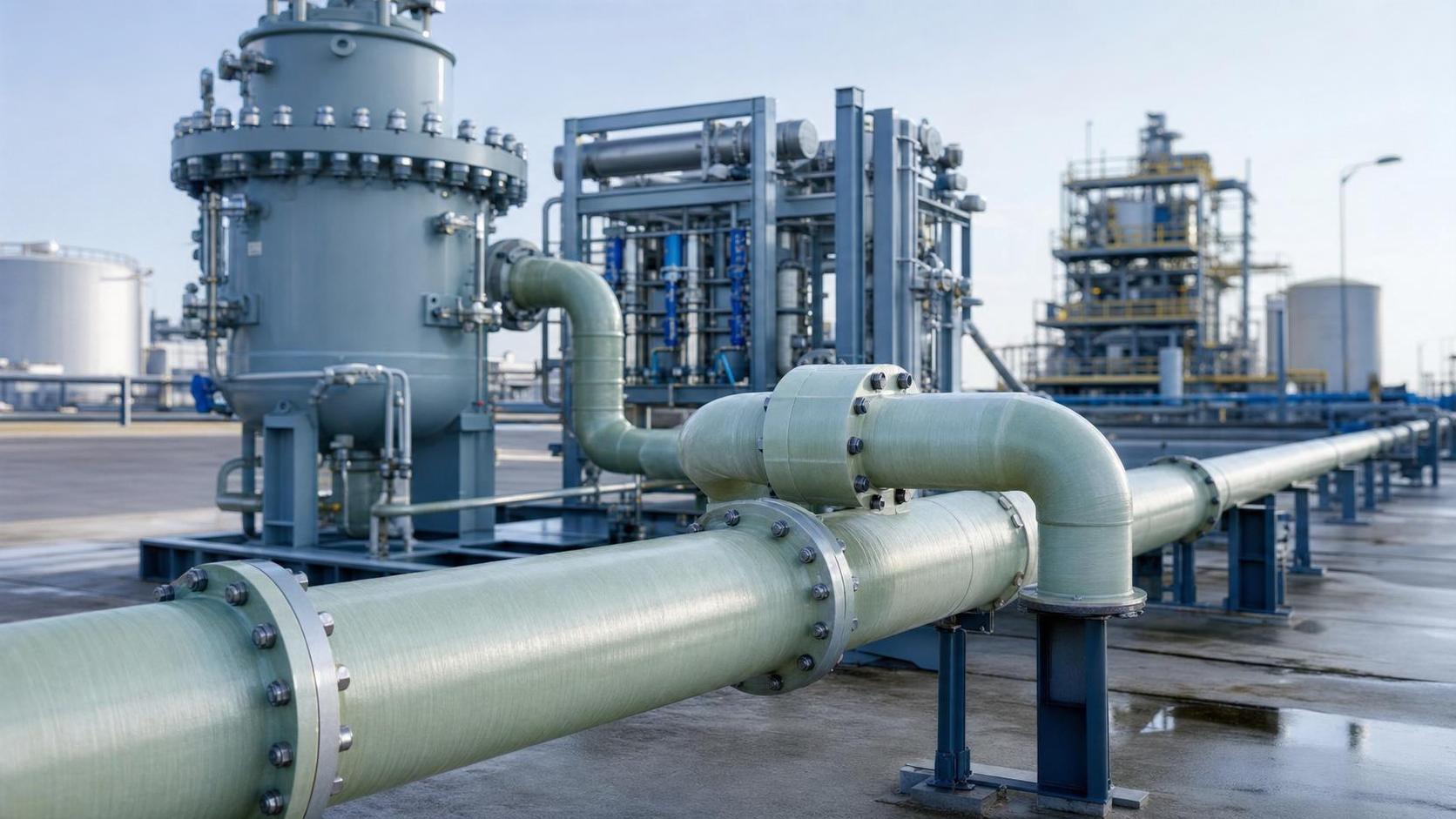
GRE Pipe for Produced Water Systems
For produced water infrastructure, material choice shapes project cost, uptime, and long-term operating stability.
In oil and gas environments, water streams often carry salts, chlorides, hydrocarbons, and abrasive particles.
That combination quickly exposes weak piping decisions.
A well-specified GRE Pipe gives produced water systems a strong balance of corrosion resistance, low weight, and installation efficiency.
It also helps reduce shutdown risk, simplify routing, and improve lifecycle value.
In practical terms, this matters most when lines run across skids, treatment units, offshore modules, or remote transfer networks.
The goal is not just to move water. The goal is to do it reliably, safely, and with fewer maintenance surprises.
Why GRE Pipe Fits Produced Water Conditions
Produced water is rarely a simple fluid.
It may include dissolved gases, solids, scale-forming compounds, and residual chemicals from upstream processing.
Traditional metallic systems often struggle when corrosion rates climb or coatings degrade over time.
This is where GRE Pipe becomes especially useful.
- High corrosion resistance supports long service life in saline and chemically aggressive water streams.
- Low weight reduces lifting demands and speeds installation in compact or elevated areas.
- Smooth internal surfaces help maintain flow efficiency and limit deposit buildup.
- Good hydraulic performance supports stable operation in transfer and disposal networks.
- Lower maintenance frequency can improve budget control across multi-year operations.
More importantly, GRE Pipe performs well when projects need both durability and construction flexibility.
That combination is valuable when schedules are tight and field access is limited.
Key Application Areas in Produced Water Systems
A GRE Pipe solution works across several produced water stages, not only in one isolated section.
Collection and Gathering Lines
Produced water often moves from well sites to central treatment points through gathering networks.
Here, GRE Pipe helps control corrosion exposure while keeping transportation and installation manageable.
Treatment Plant Piping
Within separators, flotation units, filtration skids, and chemical dosing areas, piping sees variable chemistry and flow rates.
A GRE Pipe system supports process stability while lowering the corrosion burden common in metallic pipe loops.
Reinjection and Disposal Networks
When treated water is sent for reinjection or disposal, piping reliability becomes critical.
Unexpected leaks can disrupt compliance targets, operating schedules, and field logistics.
A correctly engineered GRE Pipe layout helps reduce these risks at the system level.
What to Evaluate Before Selecting GRE Pipe
Not every produced water project has the same operating window.
Selection should begin with actual service conditions, not only nominal design assumptions.
- Review fluid chemistry, including salinity, pH, oil content, and chemical additives.
- Confirm operating and upset temperatures across all project phases.
- Check pressure range, surge conditions, and transient events during startup or shutdown.
- Assess solids content and erosion risk at elbows, reducers, and high-velocity sections.
- Match joining methods, fittings, and supports to field installation realities.
- Verify compliance needs for standards, testing, and owner specifications.
This evaluation step often decides whether a GRE Pipe project stays efficient after commissioning.
It also helps prevent underdesign, overdesign, and expensive late-stage changes.
Common Risks and How to Manage Them
Even the right GRE Pipe can underperform if project details are overlooked.
Poor Support Design
Support spacing, anchor positions, and thermal movement must be planned carefully.
Without that, stress concentration can shorten service life.
Incomplete Chemical Review
Produced water chemistry can change over time.
Periodic review protects the GRE Pipe specification from becoming outdated.
Installation Variability
Field quality matters just as much as material quality.
Joint preparation, alignment, and pressure testing should follow a disciplined procedure.
- Use clear inspection hold points before backfilling or insulation.
- Train crews on handling practices for composite piping.
- Document test records for each critical section.
These simple controls usually prevent the biggest reliability problems later.
Project Delivery Benefits Beyond Corrosion Resistance
Corrosion resistance is the headline advantage, but it is not the only one.
For produced water projects, a GRE Pipe package can support execution in several practical ways.
In many projects, these delivery gains are what turn a material choice into a business advantage.
That is especially true when downtime carries a high cost.
Manufacturing Strength Matters Too
A strong GRE Pipe design still depends on manufacturing consistency and testing discipline.
Shandong Ocean Pipe Technology Co., Ltd., established in 2012, is one of China’s major GRE pipe manufacturers.
The company operates 16 winding production lines and 174 pipe fitting winding machines.
It also has five static water pressure testing machines.
Annual GRE pipe production and testing capacity reaches 25,000 tons.
Its products serve oil and gas, LNG, ship ballast piping, chemical plants, hot spring projects, and salt production operations.
Customers include major groups such as CNOOC, CNPC, Sinopec, and well-known shipyards in China.
Overseas deliveries also extend to Australia, Iraq, Kazakhstan, and Turkey.
That kind of track record gives extra confidence when specifying GRE Pipe for demanding produced water applications.
System Integration Opportunities
Produced water projects often connect piping with filtration, membrane treatment, and chemical control packages.
In that broader setup, related composite equipment can also improve material compatibility.
For example, FRP/GRE Membrane Housing can fit naturally into advanced water treatment sections.
This creates a more coordinated solution where corrosion-resistant materials are used across connected process stages.
For projects planning treatment upgrades, that alignment can simplify maintenance strategy and spare parts planning.
A Practical Selection Checklist
- Define full produced water composition, not only average values.
- Check normal, peak, and upset temperature conditions.
- Review pressure surges and pump start-stop scenarios.
- Confirm routing constraints, support spacing, and installation access.
- Request testing data and quality control documentation from suppliers.
- Align fittings, joints, and accessories with the full piping package.
- Plan inspection and maintenance procedures before startup.
A reliable GRE Pipe decision usually comes from disciplined front-end review, not last-minute substitution.
When the specification matches real operating demands, produced water systems become easier to manage over time.
If the next project phase involves corrosive water handling, modular treatment expansion, or reinjection planning, GRE Pipe is a practical place to start.
Please give us a message
产品介绍产品介绍产品介绍产品介绍产品介绍产品介绍产品介绍产品介绍产品介绍产品介绍产品介绍产品介绍产品介绍产品介绍产品介绍产品介绍产品介绍产品介绍产品介绍产品介绍产品介绍产品介绍产品介绍产品介绍产品介绍产品介绍产品介绍产品介绍产品介绍产品介绍
Please give us a message
产品介绍产品介绍产品介绍产品介绍产品介绍产品介绍产品介绍产品介绍产品介绍产品介绍产品介绍产品介绍产品介绍产品介绍产品介绍产品介绍产品介绍产品介绍产品介绍产品介绍产品介绍产品介绍产品介绍产品介绍产品介绍产品介绍产品介绍产品介绍产品介绍产品介绍
Please give us a message
产品介绍产品介绍产品介绍产品介绍产品介绍产品介绍产品介绍产品介绍产品介绍产品介绍产品介绍产品介绍产品介绍产品介绍产品介绍产品介绍产品介绍产品介绍产品介绍产品介绍产品介绍产品介绍产品介绍产品介绍产品介绍产品介绍产品介绍产品介绍产品介绍产品介绍
Please give us a message
产品介绍产品介绍产品介绍产品介绍产品介绍产品介绍产品介绍产品介绍产品介绍产品介绍产品介绍产品介绍产品介绍产品介绍产品介绍产品介绍产品介绍产品介绍产品介绍产品介绍产品介绍产品介绍产品介绍产品介绍产品介绍产品介绍产品介绍产品介绍产品介绍产品介绍