
GRP Pipe in Oil and Gas: Where It Works Best
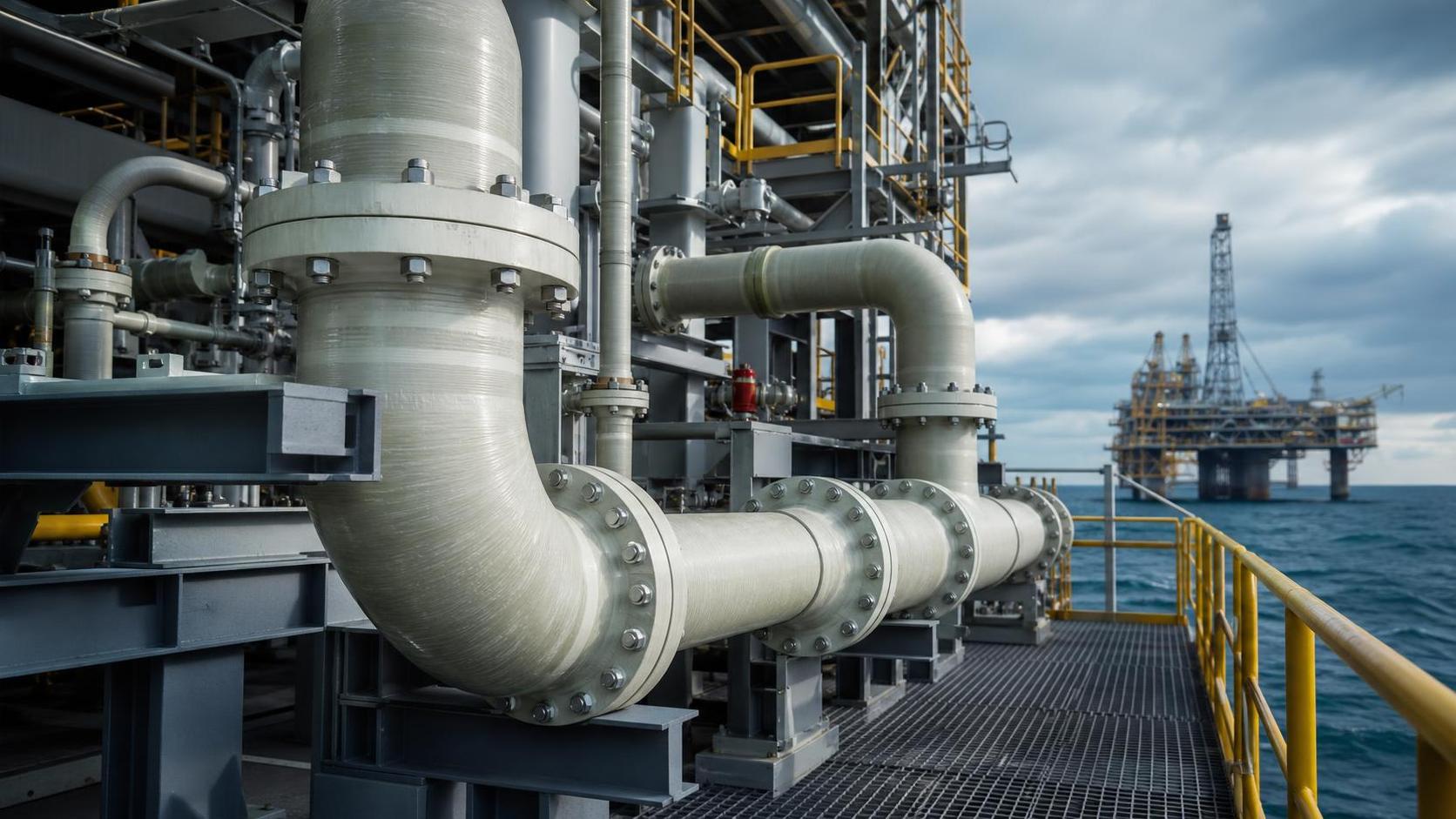
Why does GRP Pipe keep coming up in oil and gas projects?
Material choice in oil and gas is never just about moving fluid from one point to another.
It shapes corrosion risk, shutdown frequency, maintenance planning, and long-term operating cost.
That is why GRP Pipe attracts attention in systems exposed to saline water, aggressive chemicals, and wet offshore environments.
In simple terms, GRP Pipe is valued where steel faces persistent corrosion and where coating repair becomes a recurring burden.
The appeal is practical rather than theoretical.
Engineers look at service life, hydraulic behavior, weight, installation constraints, and inspection needs before they approve a material.
In many non-metallic service lines, GRP Pipe offers a strong balance between corrosion resistance and lifecycle economics.
This is especially relevant in produced water, firewater, seawater intake, utility lines, and selected process support systems.
The market has matured as well.
Shandong Ocean Pipe Technology Co., Ltd., established in 2012 in Dezhou, Shandong, has built large-scale GRE manufacturing capacity with 16 winding lines.
Its annual production and testing capacity reaches 25,000 tons, and its products serve oil, gas, LNG, ship ballast, and chemical applications.
That kind of operating background matters because field performance depends heavily on manufacturing consistency, testing discipline, and application matching.
So where does GRP Pipe actually work best?
The best use cases are usually corrosive services with moderate temperatures and predictable pressure envelopes.
GRP Pipe is not a universal replacement for metal, but it performs very well in specific parts of oil and gas infrastructure.
- Seawater transport and cooling water lines in offshore and coastal facilities.
- Produced water gathering and disposal systems where internal corrosion is a constant concern.
- Firewater networks that require reliable flow capacity and low maintenance over time.
- Underground utility piping where external corrosion protection is difficult to maintain.
- Chemical dosing and auxiliary plant lines with compatible media.
In these services, corrosion resistance is often the deciding factor.
A smooth inner surface also helps maintain flow efficiency, especially in water handling systems.
Another advantage appears during installation.
Because GRP Pipe is lighter than steel, it can reduce lifting demands and simplify work in congested plant areas or offshore modules.
Still, the phrase “works best” depends on service conditions.
The more stable the temperature, pressure cycling, and support conditions, the more suitable GRP Pipe tends to be.
When is GRP Pipe a smarter choice than steel or other non-metallic options?
The answer usually comes from comparing failure modes, not just material prices.
Steel remains strong and familiar, but in corrosive water service it may demand coatings, cathodic protection, and regular corrosion monitoring.
GRP Pipe can remove much of that corrosion management burden when the operating envelope is appropriate.
Compared with some plastics, GRP Pipe often offers better structural capability for larger diameters and industrial duty conditions.
A quick comparison helps clarify the decision.
In practice, the stronger case for GRP Pipe appears when downtime costs are high and corrosion-related repair is difficult.
That is common on offshore platforms, tank farms, and water treatment sections attached to energy facilities.
What should be checked before specifying GRP Pipe in an oil and gas system?
This is where many selection mistakes begin.
GRP Pipe performs well when the design basis is accurate, but poor specification can shorten service life.
The first check is media compatibility.
Resin selection must match the transported fluid, concentration, and operating temperature.
The second check is pressure behavior.
Steady operating pressure is only part of the story.
Surge events, pump trips, and valve closures can create short-term loads that matter just as much.
Support design also deserves attention.
GRP Pipe should not be treated like carbon steel during layout, anchoring, and restraint design.
A few practical checks usually reduce risk:
- Confirm design code, joint type, and test standard early in the project.
- Review burial depth, soil condition, and external loads for underground lines.
- Check fire exposure expectations and passive protection requirements.
- Verify installation crew experience with composite joining and handling methods.
- Request pressure test, dimensional, and quality documentation from the supplier.
Manufacturing capability matters at this stage.
A producer with controlled winding systems, fitting capability, and pressure testing capacity can support more reliable project execution.
That is one reason established GRE suppliers serving CNOOC, CNPC, and Sinopec attract attention in specification work.
Are there limits or misconceptions that people often miss?
Yes, and they are worth discussing before any material comparison becomes too simplified.
One common misconception is that GRP Pipe is always cheaper.
Initial purchase price may or may not be lower than steel, depending on diameter, fittings, and project location.
The stronger argument is usually reduced corrosion management over the life of the system.
Another misconception is that all composite pipes perform the same.
They do not.
Resin system, winding quality, joint configuration, and testing discipline can significantly change performance.
There is also a tendency to focus only on the pipe body.
In real installations, bends, reducers, flanged joints, and support transitions often become the critical details.
Some projects even evaluate related composite equipment, such as FRP/GRE Membrane Housing, alongside piping solutions.
That does not mean every composite product fits the same duty.
It simply shows that non-metallic materials are now considered across broader fluid handling systems.
The more useful mindset is to ask where GRP Pipe solves a real operating problem, and where another material remains more sensible.
How do cost, project timing, and maintenance usually compare?
This question matters because material selection rarely happens in isolation.
Oil and gas projects balance capital cost, construction schedule, commissioning risk, and long-term maintenance exposure.
GRP Pipe can support faster installation in some cases because of lower weight and easier handling.
That benefit becomes clearer in remote sites or offshore areas with lifting limits.
Maintenance can also be less intensive when internal and external corrosion are the dominant concerns.
However, savings only appear when the system is designed and installed correctly.
Poor support spacing, improper joining, or unreviewed surge conditions can erase the expected advantage.
A realistic evaluation usually includes these points:
- Delivered material cost, including fittings and joint systems.
- Field labor requirements and equipment needs during installation.
- Expected inspection frequency over the operating life.
- Potential corrosion mitigation cost if steel is used instead.
- Downtime impact if the line serves a critical water or utility function.
This is why experienced buyers and engineers often compare total ownership impact rather than line-item material pricing alone.
What is the practical next step if GRP Pipe seems suitable?
Start with the service conditions, not the catalog.
List the fluid, temperature range, operating pressure, surge risk, routing, and installation environment.
Then compare GRP Pipe against steel or other non-metallic options using the same design basis.
It also helps to review supplier capability beyond brochure claims.
Production scale, fitting manufacturing, hydrostatic testing, and export experience all affect delivery confidence.
Ocean Pipe’s footprint in domestic and overseas markets suggests the kind of manufacturing depth that complex oil and gas projects often require.
The key point is straightforward.
GRP Pipe works best where corrosion resistance, service life, and manageable lifecycle cost matter more than maximum temperature or extreme mechanical duty.
If that describes the line under review, the next useful move is to build a short technical checklist and verify the design limits before final selection.
Please give us a message
产品介绍产品介绍产品介绍产品介绍产品介绍产品介绍产品介绍产品介绍产品介绍产品介绍产品介绍产品介绍产品介绍产品介绍产品介绍产品介绍产品介绍产品介绍产品介绍产品介绍产品介绍产品介绍产品介绍产品介绍产品介绍产品介绍产品介绍产品介绍产品介绍产品介绍
Please give us a message
产品介绍产品介绍产品介绍产品介绍产品介绍产品介绍产品介绍产品介绍产品介绍产品介绍产品介绍产品介绍产品介绍产品介绍产品介绍产品介绍产品介绍产品介绍产品介绍产品介绍产品介绍产品介绍产品介绍产品介绍产品介绍产品介绍产品介绍产品介绍产品介绍产品介绍
Please give us a message
产品介绍产品介绍产品介绍产品介绍产品介绍产品介绍产品介绍产品介绍产品介绍产品介绍产品介绍产品介绍产品介绍产品介绍产品介绍产品介绍产品介绍产品介绍产品介绍产品介绍产品介绍产品介绍产品介绍产品介绍产品介绍产品介绍产品介绍产品介绍产品介绍产品介绍
Please give us a message
产品介绍产品介绍产品介绍产品介绍产品介绍产品介绍产品介绍产品介绍产品介绍产品介绍产品介绍产品介绍产品介绍产品介绍产品介绍产品介绍产品介绍产品介绍产品介绍产品介绍产品介绍产品介绍产品介绍产品介绍产品介绍产品介绍产品介绍产品介绍产品介绍产品介绍