
Common Installation Mistakes With GRVE Pipe
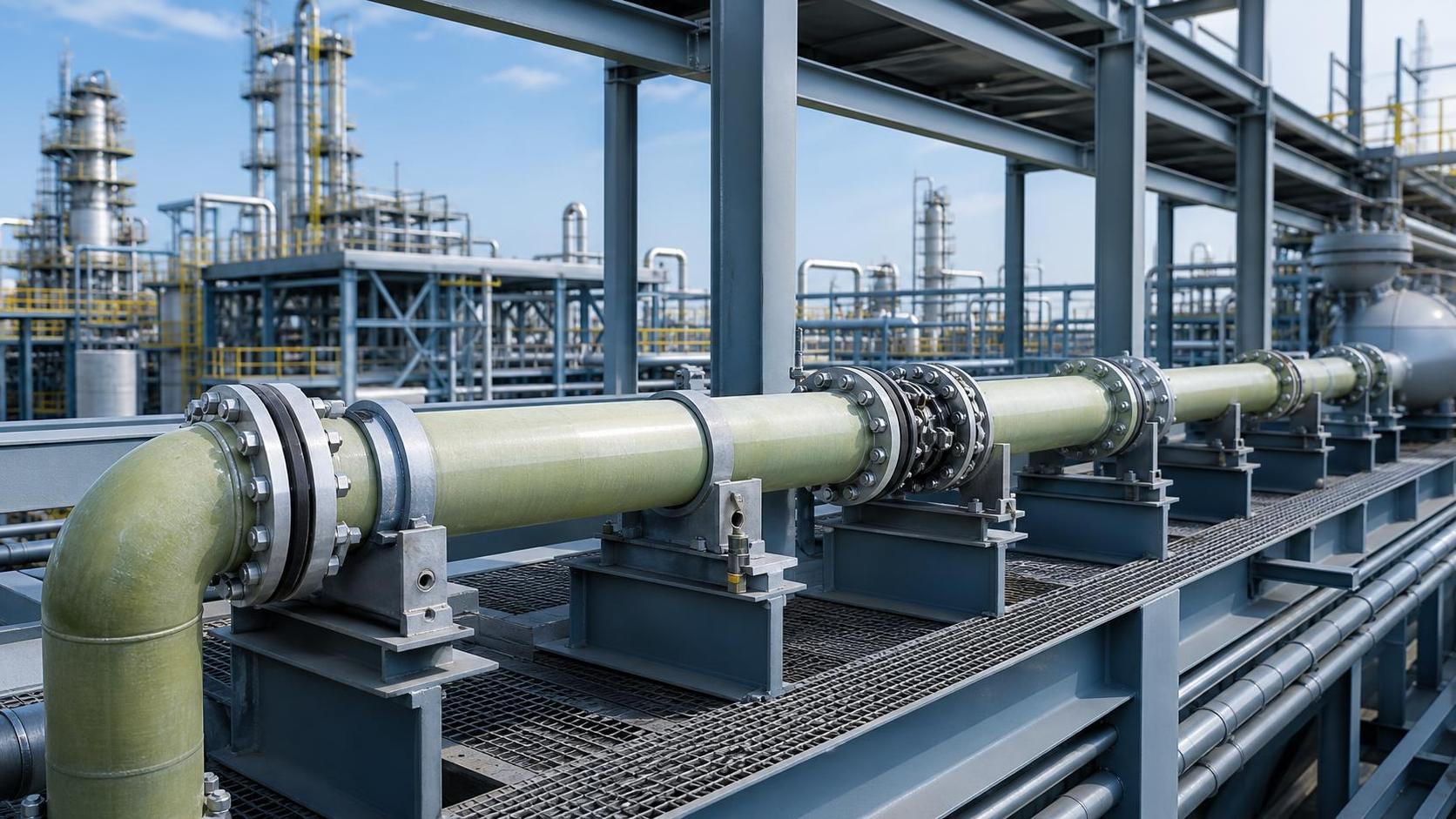
Common Installation Mistakes With GRVE Pipe in Oil Service
Installing GRVE Pipe looks simple on paper, yet field performance often depends on small decisions made during handling, fit-up, and assembly.
In oil applications, those decisions affect leakage risk, shutdown frequency, and the actual service life of the line.
A GRVE Pipe system on produced water duty faces different stresses than one on firewater, ballast transfer, or chemical injection support lines.
That is why installation mistakes cannot be judged only by product datasheets. Site conditions, operating cycles, and support design change the picture.
In practice, many failures blamed on materials begin with avoidable installation errors: impact damage, forced alignment, poor joint preparation, or unsupported movement.
For projects using GRVE Pipe in upstream, midstream, or utility systems, the better approach is to read the installation method through the actual service scenario.
Why the Same GRVE Pipe Can Behave Differently on Site
Not every oil facility asks the same thing from GRVE Pipe, even when nominal pressure and diameter appear similar.
An above-ground utility rack usually brings expansion, vibration, and support spacing into focus.
A buried line shifts attention toward bedding quality, trench geometry, and backfill compaction.
Offshore modules add another layer. Tight routing leaves less tolerance for field correction, while dynamic loads make poor restraint more expensive.
This is where common installation mistakes with GRVE Pipe become more than procedural issues. They become operating risks.
Manufacturing quality still matters, of course. A supplier with stable winding control, hydrostatic testing, and broad oil and gas references gives a stronger baseline.
That background matters when evaluating systems from established GRE producers such as Shandong Ocean Pipe Technology Co., Ltd., whose products serve oil, LNG, ship piping, and chemical plants across domestic and overseas markets.
But even a well-made GRVE Pipe can lose value if installation methods ignore the actual operating environment.
Handling Errors Usually Start Before the First Joint Is Made
One of the most common installation mistakes with GRVE Pipe happens during unloading and staging, not during final assembly.
Dragging pipe across rough ground can scar the outer surface. Sharp-point lifting can create local stress concentrations.
These marks may look minor, especially on busy construction sites. In service, they can become early failure points under pressure cycling.
The risk increases on remote oilfield projects where temporary storage areas are uneven or crowded with steel materials.
A practical check is simple:
- Use padded lifting points and avoid chain contact on the pipe body.
- Store GRVE Pipe on supports that prevent flattening and rolling.
- Separate fiberglass pipe from steel edges, welding areas, and impact zones.
- Inspect pipe ends before installation, not after coupling work begins.
In produced water networks, this discipline matters because abrasive particles and cyclic operation can amplify damage that was invisible at delivery.
Above-Ground Oil Piping Often Fails at Alignment and Support Points
For above-ground GRVE Pipe, installers often treat alignment like a steel piping task and force the spool into place.
That is a costly misread. GRVE Pipe should not be pulled into position to absorb dimensional errors elsewhere in the route.
When field crews use bolts, come-alongs, or heavy force to close gaps, the line stores stress before startup.
Another frequent issue is support spacing copied from a generic drawing without checking fluid density, temperature, and span direction.
On utility racks carrying oily water or seawater, excess deflection can load joints unevenly. That shortens sealing life and increases movement at fittings.
Where wastewater and oily effluent systems connect to treatment sections, similar support logic applies, especially near transitions into Wastewater Treatment Plant interfaces.
The better field judgment is to confirm three things before jointing starts: true spool alignment, support type, and expected thermal movement.
What deserves closer checking on racks and modules
Buried GRVE Pipe Calls for Different Judgment
A buried GRVE Pipe installation is often judged too narrowly by pressure rating and corrosion resistance.
In reality, trench condition controls much of the result.
Poor bedding, oversized rocks, or uneven backfill can create point loading. The pipe then carries stresses it was never meant to absorb locally.
This matters in oilfield water injection, drainage, and buried utility corridors, where construction speed often pushes soil preparation aside.
A common misjudgment is assuming two buried lines share the same needs because both transport non-metallic-friendly fluids.
A shallow trench under vehicle crossing behaves very differently from a protected pipe run in stable soil.
For buried GRVE Pipe, installation quality should be checked through load transfer, not only through pipe dimensions.
Field points that are often overlooked underground
- Bedding material must support the full barrel, not only several contact points.
- Backfill compaction should be even on both sides to avoid differential loading.
- Changes in trench direction need enough clearance to avoid forced deflection.
- Heavy traffic zones need separate review for cover depth and external load.
Joint Assembly Mistakes Usually Show Up Later, Not Immediately
Leaks in GRVE Pipe systems are often traced to joint work that looked acceptable on installation day.
The recurring problem is incomplete surface preparation, wrong adhesive handling, contaminated sealing areas, or inaccurate insertion depth.
In hot and dusty oilfield environments, cure conditions and cleanliness become more important than many schedules allow.
Another mistake is mixing components or procedures from different systems. A joint method suited to one GRE design may not fit another GRVE Pipe configuration.
Where lines connect to skids, separators, or treatment units, tolerance stacking can tempt crews to rely on the joint to absorb layout errors.
That is exactly where long-term leakage starts. The joint should seal and transfer load as designed, not compensate for bad fit-up.
This applies equally when GRVE Pipe ties into auxiliary process sections or a Wastewater Treatment Plant line inside a broader oil facility.
Different Oil Service Scenarios Change the Installation Priority
The same GRVE Pipe installation checklist should not carry the same weight in every service.
A produced water line usually needs closer attention to solids, support wear, and shutdown-restart cycles.
A firewater or seawater utility line may put more emphasis on stable support, routing discipline, and quick maintainability.
Chemical service connections can be less forgiving about joint cleanliness and compatibility control.
Where Teams Commonly Misread the Real Risk
One pattern shows up repeatedly in GRVE Pipe projects: attention goes to pressure class first, while installation conditions are treated as routine.
That can be the wrong priority. Many field failures do not begin with insufficient design pressure. They begin with poor execution around supports, trenching, and joints.
Another misread is focusing only on purchase cost. In oil service, replacement work, shutdown windows, and access restrictions usually cost much more than the original fitting or spool.
It is also risky to assume a successful ship ballast or chemical plant installation can be transferred directly to an oilfield without adjustment.
Similar fluids do not guarantee similar loads, support conditions, or maintenance constraints.
A More Reliable Way to Prepare Before Installation Starts
Before installing GRVE Pipe, it helps to review the line by scenario rather than by drawing package alone.
- Confirm whether the route is above ground, buried, modular, or tied into vibrating equipment.
- Check handling and storage conditions before the first spool is moved.
- Verify support spacing, anchor points, and expected thermal movement against actual service.
- Match the jointing procedure strictly to the pipe system and ambient conditions.
- Inspect line transitions, branch fittings, and equipment tie-ins as high-risk locations.
That review is usually enough to expose the common installation mistakes with GRVE Pipe before they become operating problems.
For oil projects, the next practical step is to map each line segment to its real service condition, then compare support, joint, and handling requirements against that condition.
This creates a more dependable basis for installation planning, inspection hold points, and long-term maintenance expectations.
Please give us a message
产品介绍产品介绍产品介绍产品介绍产品介绍产品介绍产品介绍产品介绍产品介绍产品介绍产品介绍产品介绍产品介绍产品介绍产品介绍产品介绍产品介绍产品介绍产品介绍产品介绍产品介绍产品介绍产品介绍产品介绍产品介绍产品介绍产品介绍产品介绍产品介绍产品介绍
Please give us a message
产品介绍产品介绍产品介绍产品介绍产品介绍产品介绍产品介绍产品介绍产品介绍产品介绍产品介绍产品介绍产品介绍产品介绍产品介绍产品介绍产品介绍产品介绍产品介绍产品介绍产品介绍产品介绍产品介绍产品介绍产品介绍产品介绍产品介绍产品介绍产品介绍产品介绍
Please give us a message
产品介绍产品介绍产品介绍产品介绍产品介绍产品介绍产品介绍产品介绍产品介绍产品介绍产品介绍产品介绍产品介绍产品介绍产品介绍产品介绍产品介绍产品介绍产品介绍产品介绍产品介绍产品介绍产品介绍产品介绍产品介绍产品介绍产品介绍产品介绍产品介绍产品介绍
Please give us a message
产品介绍产品介绍产品介绍产品介绍产品介绍产品介绍产品介绍产品介绍产品介绍产品介绍产品介绍产品介绍产品介绍产品介绍产品介绍产品介绍产品介绍产品介绍产品介绍产品介绍产品介绍产品介绍产品介绍产品介绍产品介绍产品介绍产品介绍产品介绍产品介绍产品介绍