
GRE Pipe Joining Methods and Field Risks
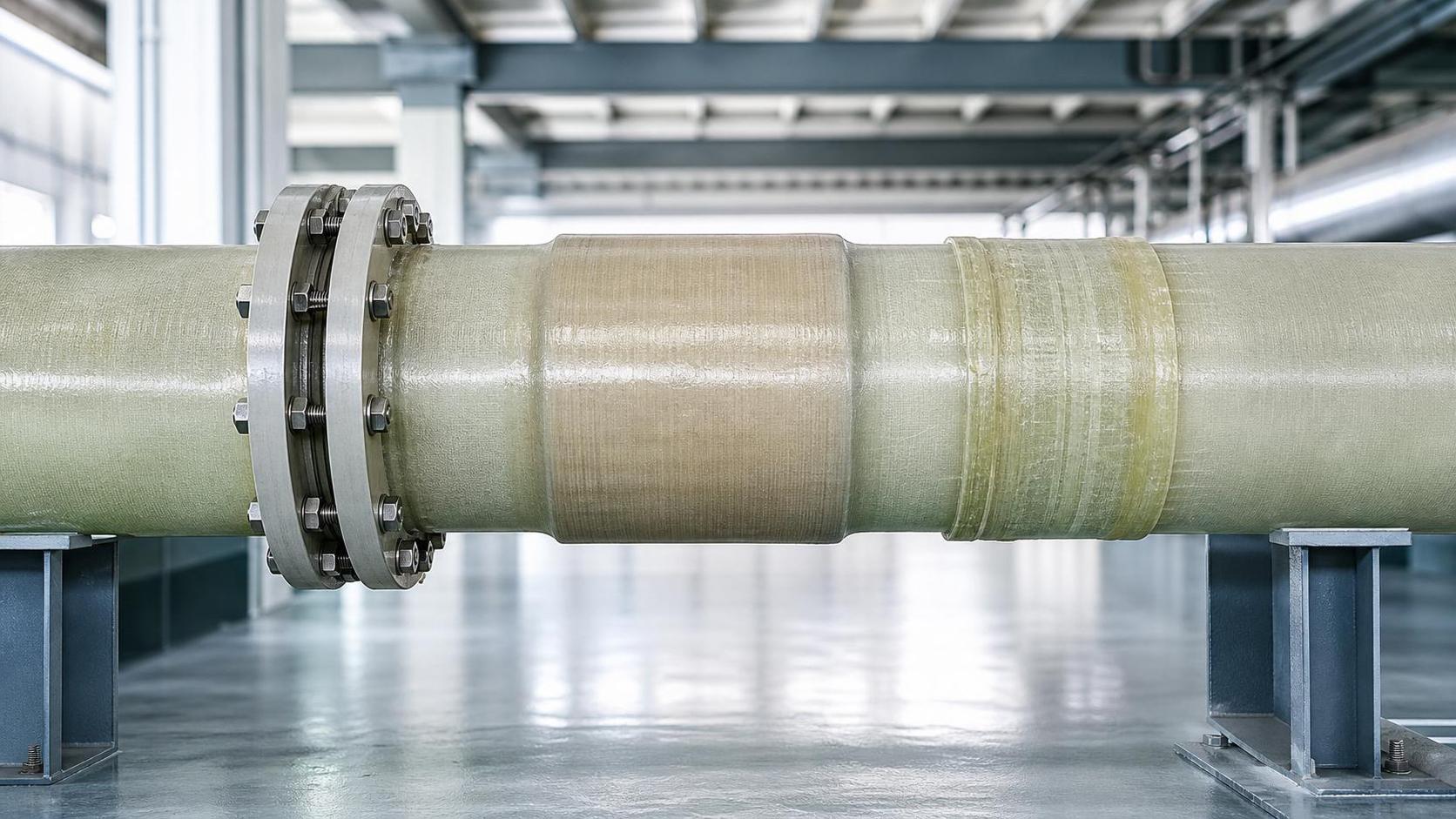
Selecting the right GRE Pipe joining method is not a minor installation detail. It directly affects leakage control, service life, shutdown risk, and maintenance cost. In oil and gas lines, ballast systems, LNG facilities, and chemical plants, a sound joint often determines whether a pipeline performs as designed or becomes a recurring field problem.
GRE Pipe belongs to the wider family of advanced glass-based composite materials. Its structure combines glass fiber reinforcement with epoxy resin, giving it corrosion resistance, low weight, and stable hydraulic performance. Those advantages are real, but they depend heavily on correct joining practice, because joints are usually the most exposed points in any composite piping network.
Why joining methods matter in GRE Pipe systems
A GRE Pipe body may perform well for years under corrosive service, yet the overall line can still fail early if the connection method does not match the operating condition. The field risk is rarely caused by one issue alone. It usually comes from the interaction of pressure, temperature, alignment, vibration, fluid chemistry, and installation quality.
This is especially important in fiberglass and composite piping, where the material does not behave like carbon steel. Excessive torque, poor surface preparation, uncontrolled curing, or uneven support loading can damage the joint even when the pipe barrel appears intact.
In practical terms, the joining decision should be treated as part of system design, not only site assembly. That is one reason leading GRE Pipe suppliers invest in both winding precision and pressure testing, because product consistency improves how reliably joints perform in service.
The main GRE Pipe joining options
Several joint types are common in GRE Pipe installations. Each has its own strengths, limitations, and field sensitivities.
Adhesive bonded joints
Bonded joints are widely used because they provide a smooth internal bore and strong corrosion resistance. When prepared correctly, they create a reliable seal and preserve the lightweight benefits of GRE Pipe.
The main risk lies in workmanship. Surface contamination, incorrect adhesive ratio, poor fit-up, or insufficient curing time can reduce bond strength. Temperature and humidity during installation also matter more than many field teams expect.
Mechanical joints
Mechanical couplings and flanged connections are often chosen where dismantling, inspection, or equipment interface is expected. They can simplify site work and help when alignment adjustments are required.
Their risks usually involve gasket compatibility, bolt tightening sequence, uneven compression, and vibration loosening. In composite systems, over-tightening is a common mistake. It can introduce localized stress that shortens service life.
Laminated and wrapped field joints
Laminated joints are often used for special layouts, repairs, or locations where prefabricated joining methods are less practical. They can provide continuity and structural integrity when carried out by trained personnel.
However, these joints are highly dependent on field discipline. Resin mix control, fiber placement, layer sequence, and curing environment must remain consistent. Small deviations may not look serious at installation time, yet can appear later as seepage or delamination.
Typical field risks behind joint failure
Most GRE Pipe joint failures can be traced to a limited number of patterns. Identifying them early makes troubleshooting more effective.
More worth noting is that many failures appear after commissioning, not during installation. A hydrotest may pass, while long-term thermal cycling or vibration gradually exposes a weak connection.
How operating conditions influence joint selection
No single method is ideal for every GRE Pipe system. The right choice depends on the service environment and the level of field control available.
- For corrosive fluids, chemical compatibility of adhesive, gasket, and laminate materials should be reviewed together.
- For marine lines, vibration, movement, and space limits often make installation technique as important as pressure rating.
- For buried or hard-to-access lines, long-term reliability may deserve higher priority than assembly speed.
- For skid packages and equipment tie-ins, mechanical access and future disassembly can justify flange use.
A useful example appears in ballast piping. Salt exposure, confined routing, and ship motion create a demanding combination. In that context, reviewing The application of GRE piping in marine ballast water systems helps connect joint choice with real operational constraints rather than treating the pipe as an isolated component.
What quality manufacturing changes in the field
Field performance begins long before installation. Dimensional stability, resin control, fiber winding accuracy, and fitting consistency all influence how well a GRE Pipe joint can be assembled and sealed.
Shandong Ocean Pipe Technology Co., Ltd., established in 2012 in Dezhou, Shandong, has developed large-scale GRE Pipe production with 16 winding lines and 174 fitting winding machines. That level of manufacturing capacity matters because repeatable joint dimensions reduce site adjustment and improve fit quality.
Its pressure testing capability and annual output also reflect a broader industry reality. Composite piping success depends on both material engineering and verification. In sectors such as oil and gas, LNG, ship ballast piping, hot spring systems, and chemical plants, stable production quality helps reduce variability that later shows up as field risk.
Practical checks before installation starts
Many joint problems can be avoided before the first section is connected. A short review at this stage usually saves much more time later.
- Confirm the joining method against pressure, temperature, and chemical service.
- Inspect pipe ends, fittings, sealing surfaces, and storage condition before use.
- Verify alignment tools, adhesive shelf life, torque tools, and curing requirements.
- Check support spacing and restraint points so joints are not forced to absorb movement.
- Make sure installation records capture batch numbers, ambient conditions, and inspection results.
These are not administrative details. For GRE Pipe, they are often the line between predictable service and recurring repair work.
Where closer attention pays off
The highest-value focus areas are usually simple. Watch transitions between straight pipe and equipment. Review supports near elbows and tees. Recheck flange torque after initial settling. Protect bonding work from dust, moisture, and uncontrolled temperature swings.
It also helps to compare not only joining methods, but the full operating context around them. A GRE Pipe connection that works well in a static chemical line may need different precautions in a vibrating marine system or a thermally active process unit.
A sound next step is to build a short evaluation sheet for each line class: service medium, movement level, maintenance access, preferred joint type, installation controls, and inspection checkpoints. That approach turns GRE Pipe selection from a generic material decision into a more reliable field strategy.
Please give us a message
产品介绍产品介绍产品介绍产品介绍产品介绍产品介绍产品介绍产品介绍产品介绍产品介绍产品介绍产品介绍产品介绍产品介绍产品介绍产品介绍产品介绍产品介绍产品介绍产品介绍产品介绍产品介绍产品介绍产品介绍产品介绍产品介绍产品介绍产品介绍产品介绍产品介绍
Please give us a message
产品介绍产品介绍产品介绍产品介绍产品介绍产品介绍产品介绍产品介绍产品介绍产品介绍产品介绍产品介绍产品介绍产品介绍产品介绍产品介绍产品介绍产品介绍产品介绍产品介绍产品介绍产品介绍产品介绍产品介绍产品介绍产品介绍产品介绍产品介绍产品介绍产品介绍
Please give us a message
产品介绍产品介绍产品介绍产品介绍产品介绍产品介绍产品介绍产品介绍产品介绍产品介绍产品介绍产品介绍产品介绍产品介绍产品介绍产品介绍产品介绍产品介绍产品介绍产品介绍产品介绍产品介绍产品介绍产品介绍产品介绍产品介绍产品介绍产品介绍产品介绍产品介绍
Please give us a message
产品介绍产品介绍产品介绍产品介绍产品介绍产品介绍产品介绍产品介绍产品介绍产品介绍产品介绍产品介绍产品介绍产品介绍产品介绍产品介绍产品介绍产品介绍产品介绍产品介绍产品介绍产品介绍产品介绍产品介绍产品介绍产品介绍产品介绍产品介绍产品介绍产品介绍