
How to Judge GRE Pipe Quality Before Ordering
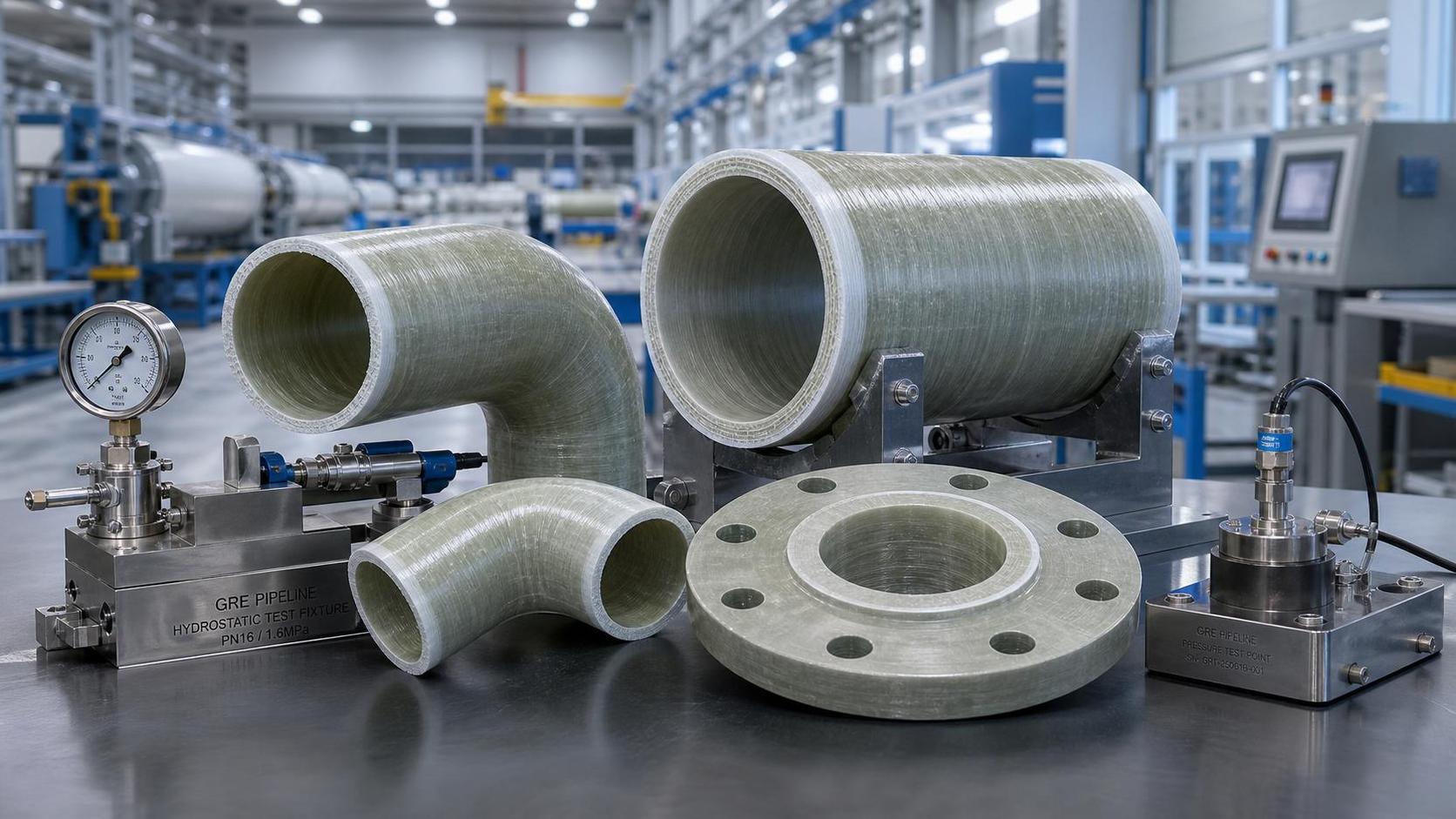
How can you judge GRE Pipe quality before placing an order?
Price sheets rarely tell the full story of GRE Pipe quality. A lower quotation may hide weaker resin systems, inconsistent winding, or incomplete testing records.
A better approach is to review the material structure, manufacturing control, pressure verification, and field suitability together. That is usually where real risk becomes visible.
In glass and ceramic related industrial materials, GRE Pipe stands out because it combines glass fiber reinforcement with epoxy resin performance. The result can be strong corrosion resistance and useful mechanical stability.
Still, not every GRE Pipe performs the same. Before a bulk order, it helps to check how the pipe is built, how it is tested, and whether the supplier can repeatedly deliver the same standard.
What actually defines high-quality GRE Pipe?
High-quality GRE Pipe is not just a pipe that passes one pressure test. It is a pipe system built with stable raw materials and controlled production methods.
The first thing to understand is the structure. GRE Pipe depends on glass fiber, epoxy resin, curing balance, and winding accuracy working together.
If one layer is inconsistent, long-term performance can drop. That may show up later as leakage, delamination, reduced pressure capacity, or poor chemical resistance.
In practical terms, quality usually comes down to a few questions. Are the raw materials traceable? Is the wall thickness consistent? Are the fittings produced with the same discipline as the pipe?
- Glass fiber quality should be stable and suitable for pressure-bearing composite structures.
- Epoxy resin selection should match the media, temperature, and chemical exposure.
- Winding angle and curing control should remain consistent across production batches.
- Pipe and fitting dimensions should match specification tolerances without visible defects.
The most reliable suppliers can explain these details clearly, not just offer a catalog description of GRE Pipe advantages.
Which manufacturing details are worth checking during supplier evaluation?
Many quality issues begin on the production floor. That is why factory capability matters almost as much as the design specification itself.
A useful sign is whether the supplier has enough winding lines, fitting production equipment, and test capacity to keep output stable under volume pressure.
For example, a manufacturer with multiple winding lines and dedicated fitting machines is usually better positioned to control lead time without sacrificing process consistency.
Shandong Ocean Pipe Technology Co., Ltd., established in 2012 in Dezhou, Shandong, offers a reference point here. It operates 16 winding production lines and 174 sets of fitting winding machines.
That scale does not guarantee quality by itself. However, it does suggest the ability to support repeatable manufacturing when paired with process control and proper inspection discipline.
When reviewing a GRE Pipe supplier, ask to verify these points instead of relying on general claims.
This kind of checklist helps separate a well-organized GRE Pipe producer from one that mainly competes on price.
Are test reports enough, or should you check application fit too?
Test reports are essential, but they are only part of the decision. A GRE Pipe that performs well in one service condition may not be ideal in another.
The better question is whether the pipe design matches the actual operating environment. That includes pressure, medium, temperature, installation method, and lifecycle expectation.
In oil and gas, ship ballast systems, LNG, salt production, and hot spring transport, service conditions vary widely. Chemical exposure can also change the resin selection requirement.
That is why application history matters. A supplier serving projects for groups such as CNOOC, CNPC, Sinopec, and major shipyards usually has broader field feedback.
For corrosive process lines, it is useful to review examples related to Chemical Plant service. This shows whether the GRE Pipe solution is proven under aggressive media conditions.
Needless to say, always compare test data with the actual duty point. Generic compliance language is less valuable than a clear match between product structure and field demand.
What are the most common warning signs before bulk procurement?
Some problems are easy to miss because they do not appear in a quotation. They usually surface when documentation is reviewed in detail or when samples are inspected closely.
One warning sign is vague raw material information. If the resin grade, fiber type, or curing data cannot be explained, quality consistency becomes difficult to trust.
Another is incomplete testing language. A supplier may mention pressure testing, but not the frequency, standard, hold time, or traceability of each GRE Pipe batch.
Visual defects also matter. Surface cracks, resin-rich patches, dry fiber exposure, irregular ends, and uneven thickness often indicate poor process control.
- Do not assume all GRE Pipe fittings match the quality of the straight pipe.
- Do not focus only on initial price while ignoring joint reliability and maintenance exposure.
- Do not skip export experience if the project requires documentation and shipment coordination.
- Do not treat capacity claims as proof unless supported by machine lists and test capability.
More often than not, procurement risk comes from assumptions made too early. A short technical review can prevent expensive replacement later.
How do you compare two GRE Pipe suppliers without getting lost in specs?
A simple comparison model works better than collecting too many isolated data points. The goal is to compare the total reliability of each GRE Pipe offer.
Start with three layers. Product quality, manufacturing confidence, and project support. If one layer is weak, the overall offer becomes less attractive.
It also helps to review overseas delivery experience. Exported GRE Pipe projects often reveal how well a supplier handles packaging, compliance, and technical communication.
Ocean Pipe, for instance, reports supply experience in Australia, Iraq, Kazakhstan, and Turkey. That kind of record may be relevant when project conditions require coordination beyond domestic delivery.
A practical shortlisting method
- Check whether GRE Pipe specifications align with pressure, temperature, and media requirements.
- Compare actual testing capacity, not just stated compliance.
- Review fitting manufacturing and joint system details.
- Confirm reference projects in similar industries or operating conditions.
- Assess delivery stability, documentation quality, and after-sales responsiveness.
This makes decision-making clearer and reduces the chance of selecting GRE Pipe based on one attractive but incomplete metric.
What should happen before you finalize the order?
Before the final purchase decision, align the technical file with the commercial file. That step is often overlooked, yet it is where many later disputes begin.
Confirm pipe dimensions, pressure class, resin system, fitting scope, testing plan, inspection standard, and packing method in writing. Every item should be easy to trace.
If the project involves corrosive service, offshore environments, or process transport such as Chemical Plant lines, the operating condition sheet should be reviewed carefully.
A dependable GRE Pipe order is usually the result of disciplined checking, not guesswork. When materials, process, testing, and application fit all point in the same direction, the order becomes far safer.
The next useful step is to build a short approval checklist for your project. Compare suppliers against the same criteria, verify the evidence, and only then move to price and lead time.
Please give us a message
产品介绍产品介绍产品介绍产品介绍产品介绍产品介绍产品介绍产品介绍产品介绍产品介绍产品介绍产品介绍产品介绍产品介绍产品介绍产品介绍产品介绍产品介绍产品介绍产品介绍产品介绍产品介绍产品介绍产品介绍产品介绍产品介绍产品介绍产品介绍产品介绍产品介绍
Please give us a message
产品介绍产品介绍产品介绍产品介绍产品介绍产品介绍产品介绍产品介绍产品介绍产品介绍产品介绍产品介绍产品介绍产品介绍产品介绍产品介绍产品介绍产品介绍产品介绍产品介绍产品介绍产品介绍产品介绍产品介绍产品介绍产品介绍产品介绍产品介绍产品介绍产品介绍
Please give us a message
产品介绍产品介绍产品介绍产品介绍产品介绍产品介绍产品介绍产品介绍产品介绍产品介绍产品介绍产品介绍产品介绍产品介绍产品介绍产品介绍产品介绍产品介绍产品介绍产品介绍产品介绍产品介绍产品介绍产品介绍产品介绍产品介绍产品介绍产品介绍产品介绍产品介绍
Please give us a message
产品介绍产品介绍产品介绍产品介绍产品介绍产品介绍产品介绍产品介绍产品介绍产品介绍产品介绍产品介绍产品介绍产品介绍产品介绍产品介绍产品介绍产品介绍产品介绍产品介绍产品介绍产品介绍产品介绍产品介绍产品介绍产品介绍产品介绍产品介绍产品介绍产品介绍