
What standards should a GRP Pipe meet for oil and gas service
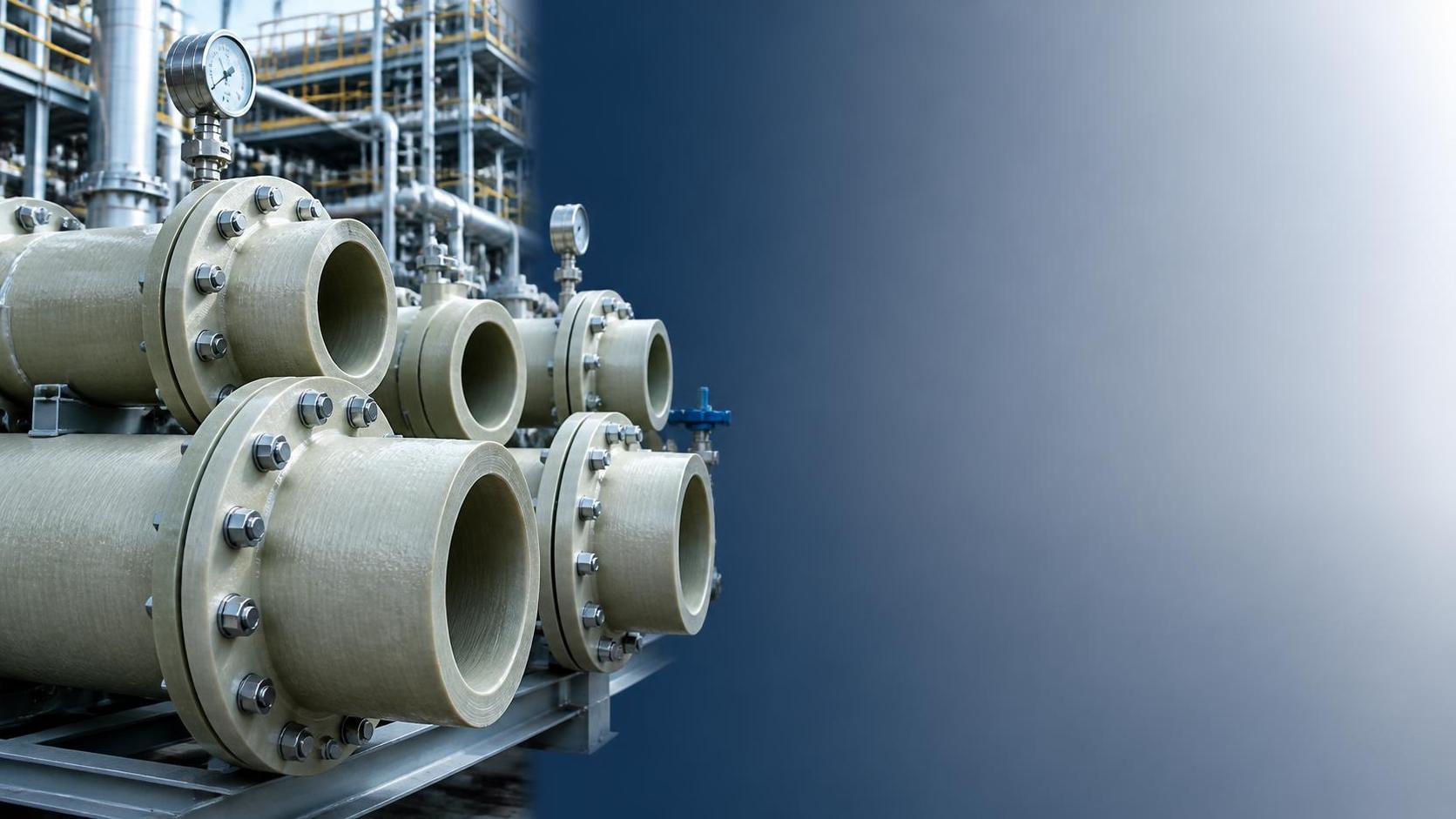
For oil and gas service, a GRP pipe is rarely judged by one certificate or one lab test. What quality and safety teams really need to know is whether the pipe system can hold pressure over time, resist the fluid it will carry, survive the site environment, and remain traceable back to a controlled manufacturing process. In practice, “meets the standard” only matters if the standard itself matches the duty: produced water is not the same as firewater, offshore ballast is not the same as sour water, and above-ground utility lines do not face the same risks as buried flowlines.
That is why the first question is not simply which standard applies, but which risk the standard is supposed to control. For GRP Pipe in oil and gas, the answer usually spans four areas at once: structural integrity, chemical resistance, fire and safety performance where relevant, and production consistency from raw material to final hydrotest. A pipe that looks acceptable on paper can still become a field problem if these four are checked in isolation rather than as one service package.
Start with the service condition, not the catalog
In oil and gas projects, GRP and GRE piping are typically considered because of corrosion resistance and weight advantages, especially in water handling, utility service, ballast systems, seawater, chemical lines, and selected process support systems. But the standards you need to verify depend on the actual service envelope:
- Design pressure and surge pressure
- Operating and upset temperature
- Internal medium, including salinity, hydrocarbons, solids, acids, or H2S exposure
- Installation mode: buried, above ground, rack-mounted, offshore, or splash-zone
- Fire exposure requirements
- Joining method and field installation controls
This matters because many failures attributed to “poor material” are actually misalignment failures between service condition and qualification basis. A pipe qualified for ambient-temperature water duty may not be suitable for elevated temperature chemical service. A product with good corrosion resistance may still be vulnerable to impact, joint misassembly, vacuum loading, or cyclic pressure if those conditions were not part of the original design verification.
Which standards are usually relevant
There is no single global standard that answers every oil and gas GRP piping question. Instead, project teams normally work with a combination of product, qualification, testing, and installation standards. The exact list can vary by operator and region, but several references are commonly important.
1. Product and system qualification standards
For reinforced thermosetting resin pipe systems used in the petroleum and natural gas sector, ISO 14692 is one of the most important references. It is widely used because it does not only describe product properties; it also addresses system design, material qualification, manufacturing requirements, joining, installation, and operation. For quality and safety personnel, that broader scope is useful because it connects the pipe’s laboratory performance to the actual field lifecycle.
If a supplier claims compliance for oil and gas duty, ISO 14692 is often the first document to check, especially for GRE systems. The practical point is not just whether the standard name appears in a datasheet, but whether the manufacturer can provide qualification records tied to the specific pipe construction, resin system, pressure class, temperature rating, and joint type being offered.
In some markets or owner specifications, ASTM-based references may also be used for specific tests or product characteristics. Those can be relevant, but they should be read as part of the package, not as substitutes for full system qualification in demanding oilfield service.
2. Pressure and long-term performance verification
For oil and gas piping, short-term hydrostatic success is not enough. GRP pipe should demonstrate long-term hydrostatic strength, stiffness retention, and resistance to creep or degradation over the intended design life. Depending on project requirements, this may involve pressure regression testing, ring stiffness testing, axial performance checks, and qualification of joints under sustained or cyclic conditions.
Quality teams should be careful with a common assumption here: passing a factory hydrotest does not prove long-term service reliability. Hydrotest mainly confirms immediate manufacturing soundness. Long-term performance comes from design basis validation, material compatibility, controlled curing, laminate structure consistency, and a tested manufacturing window.
3. Fire performance where the location demands it
Not every GRP piping application in oil and gas needs the same fire qualification, but in hydrocarbon-processing environments, offshore facilities, or safety-critical utility systems, fire behavior can become a gating issue. The relevant requirement may involve flame spread, smoke generation, fire endurance, or functional survival for a defined period under fire exposure. Project specifications often control this more tightly than generic product standards do.
This is one area where generic marketing language can mislead buyers. “Corrosion-proof” does not mean “fire-safe,” and “flame-retardant resin” does not automatically mean the full piping system meets the project’s fire scenario. Safety managers should ask what exactly was tested: coupon, laminate, pipe spool, or full assembly; and under which standard or owner acceptance protocol.
4. Chemical resistance and medium compatibility
For produced water, seawater injection support, brine, process chemicals, and drainage systems, chemical compatibility is central. But chemical resistance should not be treated as a broad yes-or-no statement. Resin type, curing quality, temperature, concentration, and exposure duration all influence performance. A resin system that performs well in one water chemistry may not be acceptable in another service with oxidizers, solvents, or elevated temperature.
In review practice, one of the more useful documents is the manufacturer’s chemical resistance basis linked to the exact resin system and service limits. If the service is unusual or severe, additional confirmation may be needed rather than relying on a generic compatibility chart.
What quality managers should verify beyond the certificate
A recurring procurement mistake is to accept a standard reference at face value without checking the production controls behind it. For GRP pipe, manufacturing discipline directly affects field reliability. Two suppliers may cite the same standard and still deliver very different consistency.
At minimum, the review should cover the following:
- Raw material traceability for resin, glass reinforcement, curing agents, liners, and fillers if used
- Defined laminate structure and winding parameters for each pressure class
- Controlled curing process and evidence of process repeatability
- Dimensional inspection records
- Hydrostatic or pressure test records by lot or production batch
- Joint qualification records matching the proposed joining method
- Repair, rejection, and nonconformance procedures
- Marking and traceability from shipment back to production documentation
This is where factory capability becomes relevant. A manufacturer with a larger production base, multiple winding lines, fitting production capability, and dedicated pressure-testing equipment may be better positioned to maintain batch consistency, especially on projects that require mixed diameters, fittings, and export documentation across several deliveries. That does not replace qualification, but it does reduce execution risk when the project depends on stable output rather than one-off samples.
The joint is often the real risk point
In many GRP piping incidents, the pipe barrel is not the weakest link. The joint is. Adhesive-bonded, laminated, threaded, flanged, or mechanical joints each bring different inspection and installation risks. A pipe may comply structurally, yet fail early because adhesive mixing was poorly controlled, joint surfaces were contaminated, alignment was off, or bolt torque on a flange was uneven.
For that reason, quality and safety teams should ask a more specific question than “Is the pipe qualified?” The better question is “Is this pipe-and-joint system qualified for this installation method and this field crew environment?”
That question becomes even more important on remote projects, offshore modules, or brownfield sites where installation conditions are harder to control. In such cases, supplier training records, jointing procedures, site supervision arrangements, and field acceptance criteria deserve nearly as much attention as the material certificate itself.
Buried service, above-ground service, and offshore duty are not the same review
The standard review should also reflect where the pipe will be used. Buried lines need attention to soil load, deflection, trench preparation, compaction, and external damage risk. Above-ground lines require review of supports, thermal movement, vibration, occasional impact, and UV exposure. Offshore duty adds splash-zone effects, salt-rich atmosphere, space constraints, and often stricter fire and safety requirements.
That is why a technically correct GRP solution in one environment can be a poor choice in another. A quality manager reviewing buried water lines may focus heavily on stiffness, deflection control, and installation practice. A safety manager reviewing offshore utility lines may put more weight on fire behavior, support design, and joint accessibility for inspection.
Documents that should exist before approval
Before sign-off, the file should normally include more than a brochure and a compliance statement. A defensible review package often includes:
If any of these are missing, the buyer is not really reviewing a standard-compliant system; they are reviewing a commercial promise.
Where buyers often overestimate compliance
There are a few recurring weak points in GRP procurement for oil and gas service.
- A supplier references a standard, but the offered product configuration was not actually tested under that qualification basis.
- The certificate applies to a material or component, while the project requires system-level validation.
- The pipe is suitable for corrosion duty, but pressure cycling or temperature excursions were not properly assessed.
- Factory tests are available for pipe, but fittings and joints are less thoroughly documented.
- Field installers are approved in theory, but no practical training or supervision plan exists.
For quality and safety functions, these gaps are more important than polished product literature. In many projects, the true risk is not absence of standards, but shallow verification of what the stated standards actually cover.
How adjacent composite products can help frame the review
One useful way to think about composite equipment qualification is to look beyond piping alone. In other industrial fluid systems, products such as FRP/GRE Membrane Housing also depend on the same basic discipline: resin selection, laminate control, pressure containment, corrosion resistance, and traceable testing. The lesson is not that all composite equipment is interchangeable, but that composite performance is process-dependent. The manufacturing window matters almost as much as the design concept.
Supplier capability still matters after technical compliance
Once the technical basis is acceptable, execution capability becomes the next filter. Oil and gas projects are rarely buying bare pipe in isolation. They are buying a package that may include fittings, documentation, testing, export handling, replacement support, and schedule reliability. A manufacturer serving this market should be able to show not just production scale, but repeatable QA systems and experience with similar duty profiles.
For example, a producer with dedicated winding lines, fitting fabrication capacity, and in-house hydrostatic testing infrastructure is generally better placed to support consistent supply and project documentation than a workshop focused mainly on small-volume trading. That distinction matters for buyers managing multi-lot inspection, owner approval, and long lead-time risk.
Shandong Ocean Pipe Technology, established in 2012 in Shandong Province, is one example of a manufacturer positioned around this type of industrial supply model, with GRE-focused production lines, fitting winding equipment, hydrostatic testing resources, and reference exposure across oil and gas, marine ballast, LNG, and chemical applications. For a quality reviewer, the relevance of that profile is not branding. It is whether the supplier can connect declared standards to repeatable production evidence.
The right decision is usually a narrower one
When people search what standards a GRP pipe should meet for oil and gas service, they are usually trying to avoid a bad approval decision. The practical answer is narrower than many expect: the pipe should meet the standards that prove fitness for the exact service, installation condition, and risk profile involved, and those standards must be backed by manufacturing records, joint qualification, and field controls.
That means quality and safety teams should resist broad claims such as “suitable for oil and gas” unless they can be translated into a specific compliance trail: which standard, which service limit, which test basis, which joint design, which production batch, and which installation procedure. Once those answers are clear, GRP pipe can be a very effective solution. Until they are clear, the standard has not really been met in the way the project needs.
Please give us a message
产品介绍产品介绍产品介绍产品介绍产品介绍产品介绍产品介绍产品介绍产品介绍产品介绍产品介绍产品介绍产品介绍产品介绍产品介绍产品介绍产品介绍产品介绍产品介绍产品介绍产品介绍产品介绍产品介绍产品介绍产品介绍产品介绍产品介绍产品介绍产品介绍产品介绍
Please give us a message
产品介绍产品介绍产品介绍产品介绍产品介绍产品介绍产品介绍产品介绍产品介绍产品介绍产品介绍产品介绍产品介绍产品介绍产品介绍产品介绍产品介绍产品介绍产品介绍产品介绍产品介绍产品介绍产品介绍产品介绍产品介绍产品介绍产品介绍产品介绍产品介绍产品介绍
Please give us a message
产品介绍产品介绍产品介绍产品介绍产品介绍产品介绍产品介绍产品介绍产品介绍产品介绍产品介绍产品介绍产品介绍产品介绍产品介绍产品介绍产品介绍产品介绍产品介绍产品介绍产品介绍产品介绍产品介绍产品介绍产品介绍产品介绍产品介绍产品介绍产品介绍产品介绍
Please give us a message
产品介绍产品介绍产品介绍产品介绍产品介绍产品介绍产品介绍产品介绍产品介绍产品介绍产品介绍产品介绍产品介绍产品介绍产品介绍产品介绍产品介绍产品介绍产品介绍产品介绍产品介绍产品介绍产品介绍产品介绍产品介绍产品介绍产品介绍产品介绍产品介绍产品介绍