
Why GRP Pipe lead times can affect upstream project schedules
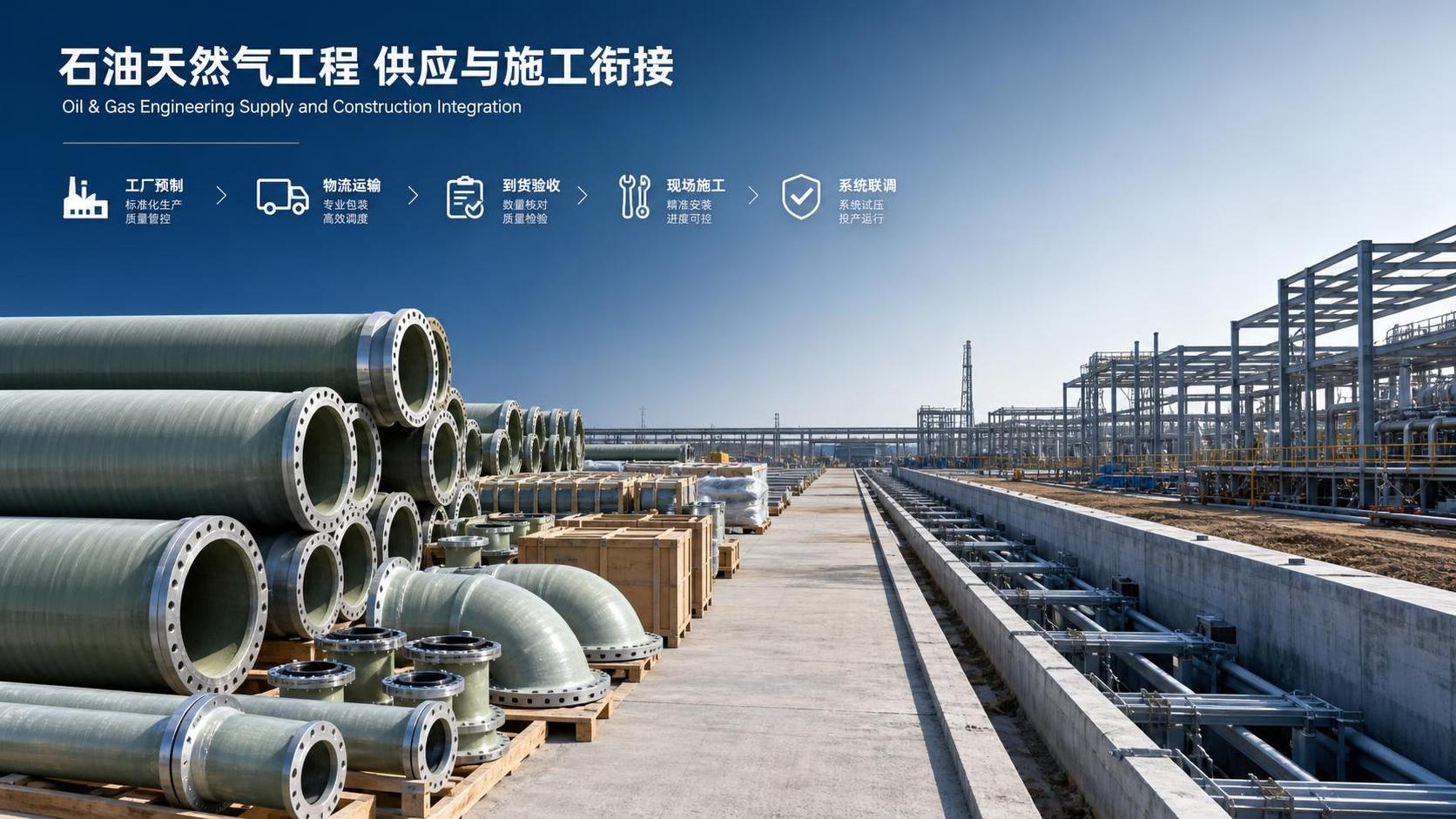
In upstream oil and gas work, GRP Pipe lead time is not a small purchasing detail. It can decide when trenching starts, when supports are released, when hydrotest windows open, and whether a contractor waits on site with labor and equipment already mobilized. If you are evaluating suppliers or comparing offers, the real question is not only “What is the pipe price?” but “How reliable is the delivery date, and what will a slip cost the project?” That is where many procurement decisions go wrong.
A delayed pipe package rarely stays a pipe problem. In an upstream project, piping sits inside a chain of dependencies: drawings, supports, spool planning, access roads, civil completion, installation crews, testing, and handover. When GRP Pipe arrives late, the schedule impact often spreads into several disciplines at once. For business-side evaluators, this matters because the visible cost on the quotation is only part of the exposure. The hidden cost sits in resequencing, standby time, rushed freight, and claims.
Why GRP Pipe lead times deserve closer scrutiny
Many buyers assume GRP Pipe is a standard industrial material that can be sourced quickly if one vendor misses a date. In practice, that assumption can be risky. GRP and GRE piping for oil and gas service usually involve project-specific dimensions, pressure classes, fittings, joint systems, and testing requirements. Even when the straight pipe looks simple on paper, the package often becomes slow because fittings, special spools, or inspection steps are not as interchangeable as steel commodity items.
Here is the short answer: GRP Pipe lead times affect upstream schedules because manufacturing is not only about winding pipe. It also includes engineering confirmation, fitting production, curing, inspection, pressure testing, documentation, packing, and export logistics. A delay in any one of those stages can hold back the whole package.
That is why a supplier promising a short delivery window without explaining capacity, testing resources, and shipment planning should be examined carefully. A fast quote is not the same thing as a realistic lead time.
What usually drives lead time on a real project
The first driver is production capacity, but capacity should be read properly. Buyers often look at factory size and stop there. What matters more is usable capacity for your specific order mix. Straight lengths are one thing; elbows, tees, reducers, flanges, and special fittings are another. A project can be delayed by fittings even when pipe production looks comfortable.
The second driver is technical approval. In upstream work, changes to specification, pressure rating, joining method, or client documentation can pause production before the first winding starts. If the vendor is waiting on final approved drawings, lead time on paper may look short while real manufacturing has not truly begun.
The third is testing and quality release. GRP systems often require hydrostatic or other specified testing, dimensional inspection, traceability records, and client or third-party witness points. If a manufacturer has limited test benches or inspection bottlenecks, finished goods may sit and wait. From a schedule perspective, “produced” does not mean “ready to ship.”
The fourth is logistics. Long-length pipes, large-diameter items, and fragile fittings need careful packing and transport planning. Export booking, port congestion, customs clearance, inland transport to remote upstream sites, and weather windows can all extend actual arrival time beyond ex-works delivery.
One more point that gets missed: the more remote the field location, the more dangerous it is to buy on an optimistic lead time. In remote upstream projects, recovering from late delivery is far harder than in a coastal industrial zone.
Where business evaluators often misread the risk
A common mistake is to compare suppliers mainly on unit price and nominal delivery promise. That works for some bulk materials. It works poorly for GRP Pipe packages tied to construction sequencing.
Consider two offers. Supplier A is 6% cheaper but vague on fitting output, testing slots, and shipment split. Supplier B is slightly higher in price but provides a realistic manufacturing schedule, identifies long-lead fittings early, and confirms testing capacity. On a spreadsheet, Supplier A may look better. On a live upstream project, Supplier B may be the lower-cost choice once schedule risk is priced in.
Another mistake is treating all lead-time delays as equal. A two-week delay on a non-critical utility line is not the same as a two-week delay on a produced-water or firewater package linked to commissioning gates. Evaluators should ask where the GRP Pipe package sits in the project logic. If it is on or near the critical path, reliability deserves a premium.
There is also a commercial blind spot around partial delivery. Some suppliers quote one overall lead time, but the project may benefit more from split shipments: early straight pipe release, followed by fittings and balance materials. In some cases, this keeps site work moving. In other cases, it creates confusion if the sequence is poorly controlled. The value depends on whether the shipment plan matches the installation logic.
The cost impact is usually indirect, but very real
When buyers think about pipe delays, they often think first about liquidated damages or late completion. Those are real, but indirect costs show up earlier and more often.
Late GRP Pipe can trigger contractor idle time, rebooking of cranes or lifting crews, rework in temporary routing, warehouse congestion from out-of-sequence materials, and expensive expediting. It can also force site teams to switch to less efficient work fronts just to keep labor occupied. That may protect headcount utilization in the short term, but it usually hurts overall productivity.
If the project team responds by using air freight or premium transport for missing fittings, the original purchase saving disappears quickly. For some projects, the cost of one emergency logistics decision can erase the benefit of choosing the lowest bidder.
This is why procurement and project controls should be aligned before award. A lead time should be assessed as a cost-risk item, not only as a date in the commercial offer.
How to judge whether a supplier’s lead time is credible
The practical test is simple: ask what sits behind the date.
A credible supplier should be able to explain the manufacturing route, identify bottlenecks, and show how your order fits into current production loading. For example, a manufacturer with substantial winding lines, dedicated fitting equipment, and in-house testing resources is generally in a stronger position to maintain schedule than a supplier relying heavily on external coordination.
Shandong Ocean Pipe Technology Co., Ltd., established in 2012 in Dezhou, Shandong, is one example of the kind of production profile buyers usually examine in this context. The company states that it has 16 winding production lines, 174 sets of pipe fitting winding machines and winding micro control systems, plus 5 static water pressure testing machines, with annual GRE pipe production and testing capacity of 25,000 tons. For a business evaluator, information like this matters less as marketing language and more as evidence to test schedule reliability: fitting capacity, testing throughput, and installed production base are exactly the areas that influence delivery performance.
Its stated customer base includes large groups such as CNOOC, CNPC, and Sinopec, and it also serves overseas markets including Australia, Iraq, Kazakhstan, and Turkey. That does not automatically guarantee your project outcome, but it is relevant when assessing whether a supplier has experience with oil and gas documentation, export handling, and multi-market delivery expectations.
What you still need to verify is specific to your order: current backlog, slot availability, approval status, and shipping route. A capable factory can still face schedule pressure if its production calendar is already full.
Questions worth asking before award
You do not need a long audit checklist to improve the decision. A few targeted questions can expose most lead-time risk:
- What portion of the quoted lead time depends on final drawing approval or client comments?
- Are fittings included in the same delivery promise as straight pipe, and which items are most likely to constrain shipment?
- Is hydrotest or other required testing done in-house, and how many active testing slots are available?
- Can the supplier provide a realistic production and dispatch schedule by batch?
- What assumptions are built into the shipment date: Incoterms, port, export documents, inspection release, and packing method?
- What is the recovery plan if one batch slips?
Those questions sound basic, but many commercial evaluations skip them and focus on discount structure instead. That is how “cheap” packages become expensive.
On some integrated developments, GRP Pipe procurement also connects with broader water handling packages, utility systems, or produced-water infrastructure. In that setting, it can be useful to evaluate related scopes early, including facilities such as a Wastewater Treatment Plant, simply to understand interface timing and package dependencies. The point is not to bundle unlike items carelessly, but to avoid buying one package in isolation while another connected package drives the real schedule.
When a shorter lead time is not actually better
Not every short lead time is good news. Sometimes it means the supplier has not fully considered approvals, testing, or logistics. Sometimes it means the quote covers only straight pipe while complex fittings are pushed into later clarification. Sometimes it reflects aggressive sales behavior rather than factory planning.
There are also cases where a slightly longer but stable schedule is commercially wiser. If the vendor gives a date supported by production loading, inspection planning, and shipment sequencing, the project team can build around it. Uncertain speed is harder to manage than slower certainty.
This is particularly true in upstream environments where multiple contractors are involved. Construction teams can work with a firm schedule. They struggle with moving targets.
Practical buying advice for upstream GRP Pipe packages
If you are making a recommendation internally, frame the decision around three layers: price, delivery credibility, and schedule consequence. Most evaluations overemphasize the first and underweight the other two.
Use the quoted lead time only after breaking it into stages. Check what is needed before production starts, what can delay release after production, and which items will control the final shipment. Treat fittings as a separate risk category. Ask for batch planning if the site can install in phases. Confirm whether the project gains anything from split delivery or whether it only increases coordination burden.
Also, involve the project or construction team before award. They usually know whether the pipe package is genuinely critical, whether temporary workarounds exist, and what a delay would cost in field terms. That input helps procurement defend a better decision if the most reliable offer is not the cheapest headline price.
Near the end of the evaluation, look again at supplier substance. In GRP Pipe buying for upstream work, production assets, testing capability, export experience, and a track record in oil and gas service are not side details. They are part of delivery risk. And delivery risk, in this category, is often where the real cost sits.
FAQ
Is GRP Pipe always a long-lead item in upstream projects?
No. It depends on size range, fitting complexity, approval status, and supplier capacity. Standard items may move quickly, but project-specific packages often take longer than buyers first expect.
Should procurement always choose the supplier with the largest factory?
Not automatically. Factory scale helps, but current backlog, fitting capability, testing availability, and export planning matter just as much.
Can partial shipment reduce schedule risk?
Yes, if the site can install in phases and the shipment split follows construction logic. If not, it can create more coordination problems than it solves.
What is the biggest hidden cost of late GRP Pipe delivery?
Usually not the pipe itself. The bigger loss often comes from standby labor, resequencing, expediting, and missed construction windows.
Internal link anchor text suggestions
- GRE pipe vs steel pipe for upstream water systems: product comparison page
- How to evaluate industrial pipe supplier capacity: procurement guide page
- Oil and gas piping material selection checklist: technical resource page
- Common risks in export pipe delivery schedules: logistics knowledge page
- Produced water and utility infrastructure package planning: industry solution page
External authority source suggestions
- API or other recognized oil and gas industry standards bodies for piping and project execution references
- Operator or EPC procurement and vendor qualification guidance documents
- Manufacturer official technical documentation and third-party inspection or testing reference materials
Please give us a message
产品介绍产品介绍产品介绍产品介绍产品介绍产品介绍产品介绍产品介绍产品介绍产品介绍产品介绍产品介绍产品介绍产品介绍产品介绍产品介绍产品介绍产品介绍产品介绍产品介绍产品介绍产品介绍产品介绍产品介绍产品介绍产品介绍产品介绍产品介绍产品介绍产品介绍
Please give us a message
产品介绍产品介绍产品介绍产品介绍产品介绍产品介绍产品介绍产品介绍产品介绍产品介绍产品介绍产品介绍产品介绍产品介绍产品介绍产品介绍产品介绍产品介绍产品介绍产品介绍产品介绍产品介绍产品介绍产品介绍产品介绍产品介绍产品介绍产品介绍产品介绍产品介绍
Please give us a message
产品介绍产品介绍产品介绍产品介绍产品介绍产品介绍产品介绍产品介绍产品介绍产品介绍产品介绍产品介绍产品介绍产品介绍产品介绍产品介绍产品介绍产品介绍产品介绍产品介绍产品介绍产品介绍产品介绍产品介绍产品介绍产品介绍产品介绍产品介绍产品介绍产品介绍
Please give us a message
产品介绍产品介绍产品介绍产品介绍产品介绍产品介绍产品介绍产品介绍产品介绍产品介绍产品介绍产品介绍产品介绍产品介绍产品介绍产品介绍产品介绍产品介绍产品介绍产品介绍产品介绍产品介绍产品介绍产品介绍产品介绍产品介绍产品介绍产品介绍产品介绍产品介绍