
Are FRP Pipe demand trends changing in onshore oilfield infrastructure
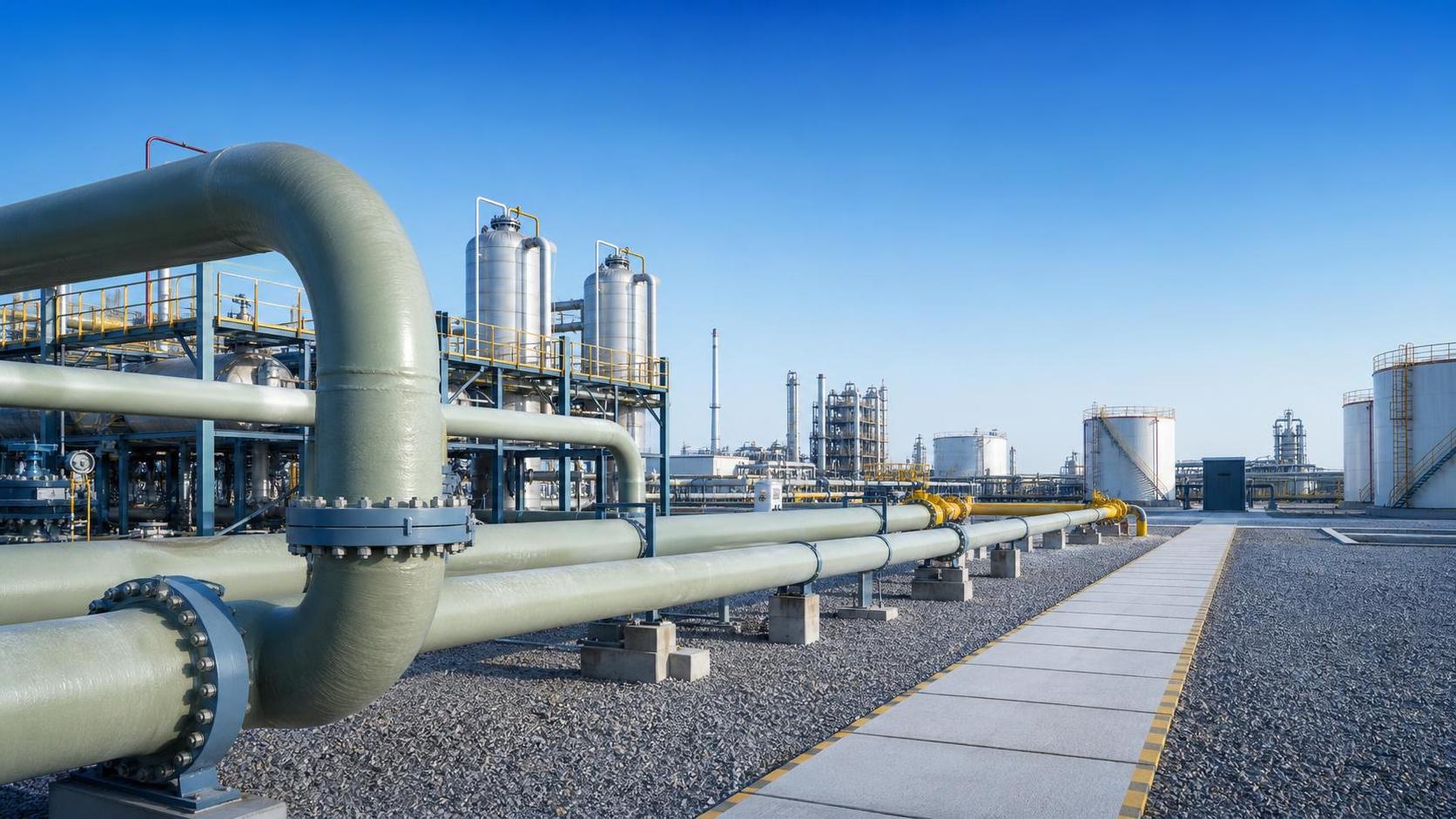
Yes, FRP Pipe demand is changing in onshore oilfield infrastructure, and the shift is not just about replacing steel with a newer material. Buyers are becoming more selective about where FRP Pipe creates measurable value and where it does not. In practical terms, demand is moving toward produced water lines, injection water systems, corrosive flowlines, gathering networks, and utility piping where corrosion, maintenance cost, and shutdown risk are harder to ignore than initial purchase price.
That matters because many onshore operators are no longer judging piping decisions only by capex. They are looking harder at total installed cost, expected service life, maintenance exposure, labor availability, and how quickly a line can be put into service. Once that lens changes, FRP Pipe starts to look less like an alternative material and more like a risk-management choice.
What is actually changing in FRP Pipe demand
A few years ago, many oilfield discussions around non-metallic piping were still stuck at a basic question: “Can it replace steel?” That is no longer the most useful question. The real issue now is where FRP Pipe delivers a better lifecycle result than carbon steel, stainless steel, HDPE, or lined pipe.
In onshore fields, demand is getting stronger in applications where internal corrosion is predictable, chemical exposure is routine, and maintenance access is expensive or disruptive. Produced water transport is a good example. So are saltwater disposal lines and some utility systems around treatment, storage, and water handling facilities. In these services, corrosion is not a theoretical future problem. It is often a budget line item already.
There is also a more operational driver behind the trend: field teams want fewer repairs. Every leak, spool replacement, coating failure, or unplanned outage takes labor, permits, equipment, and lost time. That pushes procurement and engineering teams to reconsider materials that reduce corrosion-related interventions, even if the unit price per meter is not the lowest on paper.
If the question is whether demand is rising everywhere, the honest answer is no. Demand is becoming more targeted, more specification-driven, and more tied to lifecycle performance.
Why onshore oilfields are reassessing steel-heavy piping strategies
The old steel-first habit is still strong in many projects, especially where engineering standards were written around familiar materials and long-standing contractor practices. But several field realities are making that habit harder to defend without a closer review.
One is chemistry. Water cut rises over field life. Produced water systems become more aggressive. Chlorides, CO2, dissolved solids, treatment chemicals, and variable operating conditions can accelerate internal corrosion. When operators already know a system will fight corrosion from day one, it becomes harder to justify a material choice that depends heavily on coatings, inhibitors, inspections, and recurring repair work.
Another is labor. Onshore projects in many regions are under pressure to build and maintain assets with tighter crews and shorter schedules. FRP Pipe can help here because lower weight often simplifies handling and installation. That does not mean it is effortless or mistake-proof, but installation logistics can be easier than with heavy metallic systems, especially in remote locations where lifting capacity and skilled welding resources are constrained.
Then there is uptime. Decision-makers are increasingly less tolerant of infrastructure that performs adequately in year one but becomes a maintenance burden in years three to seven. In mature fields, this is often where the economics turn. A cheaper line is not really cheaper if it creates repeat shutdowns, chemical dependence, or continuous integrity work.
In short: the demand shift is being shaped by operating pain, not by fashion.
Where FRP Pipe is gaining ground, and where it still faces resistance
FRP Pipe is gaining traction fastest in corrosive, water-dominant services. That includes produced water gathering, water injection support systems, utility water, some low- to medium-pressure process lines, and aboveground or buried systems where corrosion control on steel has become expensive to sustain.
It is also seeing more interest in brownfield upgrades. That is a practical trend worth noting. Greenfield projects can still be conservative because design standards are often inherited from older templates. Brownfield teams, by contrast, usually know exactly where failures keep happening. When a specific network has a history of corrosion leaks or coating breakdown, the case for FRP Pipe becomes easier to make.
Resistance remains in applications with very high temperature, severe mechanical abuse, poor support control, repeated impact risk, or operating conditions that exceed the resin system and design envelope. Some buyers also hesitate because they have seen failures caused by bad installation, poor joint execution, or material selected without enough attention to service conditions.
That hesitation is not irrational. FRP Pipe is not a universal answer. It performs well when specification, design, fabrication quality, joining method, and installation discipline all line up. When those pieces are weak, disappointment follows quickly.
This is one of the most common mistakes in the market: treating FRP Pipe as a simple commodity. It is not. The pipe, fittings, joining process, pressure class, corrosion design basis, and supplier quality system all matter.
The market is rewarding suppliers with manufacturing depth, not just low quotes
Procurement teams are more cautious than they were before. They want evidence that a supplier can control consistency, testing, and production scale, especially for projects that involve multiple pipe diameters, fittings, and staggered delivery schedules.
That is why experienced manufacturers tend to stand out in current demand discussions. Shandong Ocean Pipe Technology Co., Ltd., established in 2012 in Wucheng Industrial Park, Dezhou, Shandong, has built its position around GRE manufacturing scale and repeatability. The company reports 16 winding production lines, 174 sets of pipe fitting winding machines and winding micro control systems, along with 5 static water pressure testing machines and annual GRE pipe production and testing capacity of 25,000 tons. For buyers, numbers like these matter less as marketing claims and more as indicators of manufacturing depth, testing discipline, and supply reliability. Its customer base includes major groups such as CNOOC, CNPC, and Sinopec, as well as shipbuilding and overseas industrial clients, which suggests the company is already operating in environments where specification compliance is taken seriously.
That does not automatically make one supplier right for every project. It does show what the market is rewarding: proven production capability, quality control, and familiarity with demanding industrial applications.
Why demand is shifting from “cheapest material” to “best lifecycle fit”
A short answer is this: FRP Pipe demand in onshore oilfield infrastructure is becoming more selective but more serious. Buyers are moving away from broad material preferences and toward service-by-service decisions based on corrosion exposure, maintenance burden, installation efficiency, and expected operating life.
That change sounds obvious, but many companies still buy piping through a narrow procurement lens. They compare material prices but underweight leak risk, inspection cost, coating maintenance, repair labor, and production loss. In corrosive services, that can distort the decision badly.
Consider two simplified scenarios. In the first, a steel line is cheaper upfront but requires corrosion allowance, protective systems, recurring monitoring, and planned interventions. In the second, an FRP Pipe system costs more initially but reduces internal corrosion concerns and cuts maintenance frequency. The right answer depends on actual field conditions, but the market trend is clear: more owners are willing to run that comparison properly instead of defaulting to familiar materials.
This is also why engineering teams are asking harder questions about resin system selection, jointing reliability, installation practices, and long-term field support. A serious buyer wants to know not only whether the pipe can work, but under what exact conditions it keeps working.
What decision-makers should check before reading the trend too broadly
It is easy to misread the current interest in FRP Pipe as a blanket market replacement story. It is not. A better way to look at it is as a targeted expansion into services where corrosion cost has finally become impossible to ignore.
Before shifting specifications, it helps to check five things carefully:
- Fluid composition and upset conditions, not just normal operating data
- Temperature and pressure range across the full operating cycle
- Buried, aboveground, or exposed installation environment
- Contractor capability for handling, jointing, and support installation
- Supplier testing, traceability, and fitting availability
These points sound routine, but many project delays and field failures come from underestimating one of them. For example, a technically suitable pipe can still underperform if supports are poorly spaced, crews are unfamiliar with the joining method, or the service conditions were simplified too aggressively during specification.
Another detail often missed in early discussions is fittings. Straight pipe gets most of the attention, but elbows, tees, reducers, flanges, and closures frequently determine whether a system performs consistently over time. Buyers who focus only on pipe pricing usually discover this too late.
In some cases, reviewing adjacent applications can help a team understand supplier capability. For example, products such as GRE Pipe for Municipal Project may not be an oilfield product by itself, but it can still indicate how a manufacturer approaches corrosion-resistant piping across different infrastructure environments. The point is not to borrow another sector’s specification blindly. It is to judge process maturity, manufacturing breadth, and how the supplier handles long-life piping demands.
The next phase of demand will likely be quieter, but stronger
The next stage of FRP Pipe adoption in onshore oilfield infrastructure probably will not look dramatic from the outside. It may not come as a sudden material switch across entire asset portfolios. It is more likely to show up in a steady expansion of approved service scopes, more confident use in brownfield replacement programs, and tighter specifications from operators that have already learned where metallic systems cost them too much over time.
That kind of demand is actually more durable than a hype cycle. It comes from repeated field experience. Once an operator sees better performance in corrosive water service, that experience tends to influence later material selections elsewhere in the network.
Still, discipline matters. FRP Pipe should be adopted where the operating case supports it, not where internal teams are simply chasing a lower maintenance promise without verifying the design basis. The strongest projects are the ones where engineering, procurement, and operations agree on the service envelope before buying anything.
So, are FRP Pipe demand trends changing in onshore oilfield infrastructure? Yes, clearly. But the real story is not broad substitution. It is smarter substitution. Demand is moving toward applications where FRP Pipe solves an expensive operating problem, holds up under real field conditions, and gives owners a more stable lifecycle outcome than the materials they have relied on for years.
FAQ
Is FRP Pipe replacing steel across all onshore oilfield systems?
No. It is expanding mainly in services where corrosion, maintenance cost, and repair frequency make steel less attractive over the full operating life.
What is driving FRP Pipe demand more than anything else?
Lifecycle economics. Corrosion resistance matters, but the real trigger is the cost of leaks, repairs, downtime, and field labor over time.
Where do buyers make the wrong call most often?
They either reject FRP Pipe too early because they compare only upfront price, or they accept it too casually without checking temperature, pressure, chemistry, and installation capability.
Is supplier scale important for GRE and FRP projects?
Yes. Consistent pipe quality, fittings availability, testing capability, and delivery reliability all become more important when a project moves beyond a small trial order.
Should brownfield projects look at FRP Pipe first?
Often yes, especially where a system already has a known history of internal corrosion or repeated steel maintenance.
Internal Link Anchor Text Suggestions
- FRP Pipe vs steel pipe in corrosive oilfield service: material comparison page
- GRE pipe applications in produced water systems: application guide
- How to select non-metallic pipe for onshore oil and gas projects: technical blog
- Common failures in oilfield pipeline corrosion control: troubleshooting article
- GRE pipe fittings and jointing methods: product category or knowledge center page
External Authority Source Directions
- Industry association reports on non-metallic pipe use in oil and gas infrastructure
- Operator or engineering standards from major oil and gas companies for GRE/FRP piping
- Independent technical guidance from standards organizations or academic corrosion research institutions
Please give us a message
产品介绍产品介绍产品介绍产品介绍产品介绍产品介绍产品介绍产品介绍产品介绍产品介绍产品介绍产品介绍产品介绍产品介绍产品介绍产品介绍产品介绍产品介绍产品介绍产品介绍产品介绍产品介绍产品介绍产品介绍产品介绍产品介绍产品介绍产品介绍产品介绍产品介绍
Please give us a message
产品介绍产品介绍产品介绍产品介绍产品介绍产品介绍产品介绍产品介绍产品介绍产品介绍产品介绍产品介绍产品介绍产品介绍产品介绍产品介绍产品介绍产品介绍产品介绍产品介绍产品介绍产品介绍产品介绍产品介绍产品介绍产品介绍产品介绍产品介绍产品介绍产品介绍
Please give us a message
产品介绍产品介绍产品介绍产品介绍产品介绍产品介绍产品介绍产品介绍产品介绍产品介绍产品介绍产品介绍产品介绍产品介绍产品介绍产品介绍产品介绍产品介绍产品介绍产品介绍产品介绍产品介绍产品介绍产品介绍产品介绍产品介绍产品介绍产品介绍产品介绍产品介绍
Please give us a message
产品介绍产品介绍产品介绍产品介绍产品介绍产品介绍产品介绍产品介绍产品介绍产品介绍产品介绍产品介绍产品介绍产品介绍产品介绍产品介绍产品介绍产品介绍产品介绍产品介绍产品介绍产品介绍产品介绍产品介绍产品介绍产品介绍产品介绍产品介绍产品介绍产品介绍