
Scrubber System Maintenance Downtime: Root Causes of Corrosion and Blockage in Marine Exhaust Lines
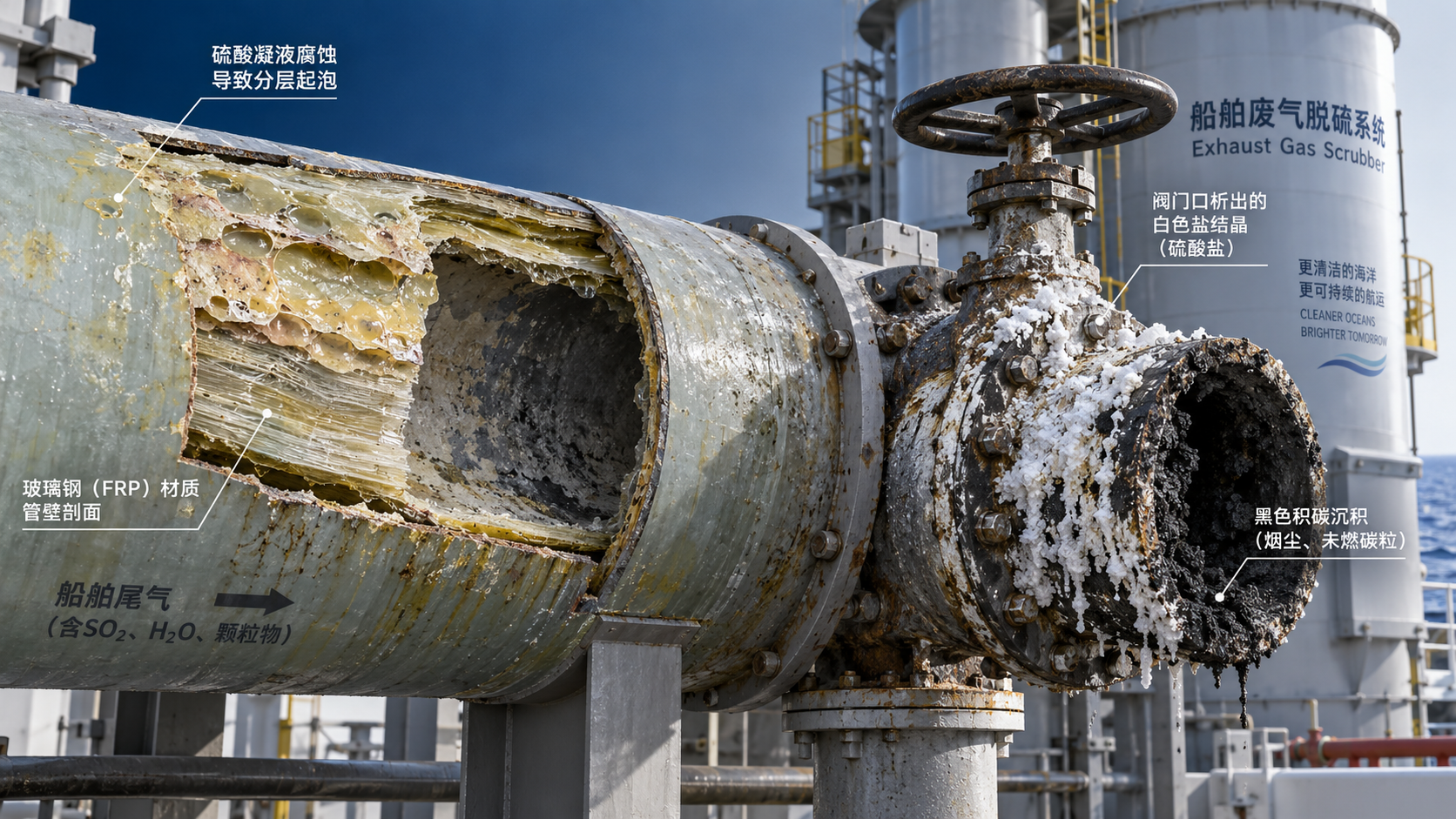
Scrubber System Maintenance Downtime: Root Causes of Corrosion and Blockage in Marine Exhaust Lines
For maintenance crews tackling ship scrubber system failures, corrosion and blockage in marine exhaust lines remain the top culprits behind costly downtime. Understanding these root causes is the first step toward reliable repairs and longer service intervals. This guide highlights key failure mechanisms and practical prevention strategies for onboard teams.
Why Do Scrubber Exhaust Lines Fail Faster Than Other Piping Systems?
Scrubber exhaust lines operate under a unique combination of high temperatures, acidic condensate, and turbulent gas flow. Unlike standard ballast or oil piping, these lines constantly handle sulfur-rich exhaust gas mixed with seawater or caustic solution. That environment accelerates wear in ways that surprise even experienced marine engineers.
The most common failure pattern involves localized pitting corrosion near weld seams and flanges. When sulfur oxides dissolve in water vapor, they form sulfuric acid that attacks the pipe wall. If the GRE pipe surface has any microscopic defects, acid penetrates deeper and spreads beneath the protective layer, causing blistering and delamination.
Blockage issues typically stem from salt crystallization and soot accumulation. When exhaust gas cools rapidly in the scrubber section, dissolved salts precipitate out and adhere to pipe walls. Over time, these deposits harden into scale that reduces the effective cross-section and increases backpressure on the engine.
What Are the Hidden Costs of Scrubber Downtime Beyond Repair Bills?
Direct repair costs are only a fraction of the total financial impact. Every hour a scrubber system is offline means the vessel may be operating outside emission compliance zones. In many ports, this triggers fines, inspection delays, or even detention orders that disrupt the entire voyage schedule.
Idle crew time also adds up quickly. When maintenance teams are troubleshooting a corroded exhaust line, they are not performing routine checks on other critical equipment. This opportunity cost often goes unmeasured but can be substantial over a year of repeated failures.
Fuel efficiency suffers as well. A partially blocked exhaust line forces the engine to work harder to push gas through the system. This increases specific fuel oil consumption and negates the environmental benefits the scrubber was installed to provide.
Corrosion Mechanisms: Which Type Attacks GRE Exhaust Lines Most Aggressively?
Since 2012, Shandong Ocean Pipe Technology has supplied GRE pipe systems for demanding applications in oil, gas, and shipbuilding. Our experience shows that sulfuric acid corrosion is the dominant mechanism in marine scrubber exhaust lines. The acid concentration varies with fuel sulfur content, but even low-sulfur fuels produce enough SOx to create aggressive condensate.
Crevice corrosion develops in gaps between flanges and gaskets where stagnant acid pools. This type of attack is particularly dangerous because it progresses silently under the joint until sudden leakage occurs. Regular torque checks and gasket replacement are essential to prevent this failure mode.
Galvanic corrosion can also appear where GRE pipes connect to metallic components such as valves or expansion joints. Dissimilar materials create small electrical currents in the presence of seawater, accelerating metal loss at the connection points. Insulating kits and sacrificial anodes are effective countermeasures.
Blockage Formation: How Does Soot and Salt Accumulate in Practice?
Blockage does not happen uniformly along the exhaust line. The most vulnerable areas are bends, reducers, and points where temperature drops sharply. Low-velocity zones downstream of these fittings allow particulates to settle out of the gas stream and build up gradually.
Salt deposition follows a predictable pattern related to gas velocity and humidity. When the exhaust gas exits the scrubber wash section, it is nearly saturated with water vapor. Any cooling in the pipe causes rapid condensation, and dissolved salts crystallize directly onto the pipe wall.
Soot agglomeration compounds the problem. Unburned carbon particles from the engine mix with salt crystals to form a dense, cement-like layer. Once this hardened scale forms, water jetting alone is rarely sufficient to remove it. Mechanical scraping or chemical dissolution becomes necessary.
How to Inspect Exhaust Lines Before Failure Occurs?
Non-destructive testing should be scheduled at every dry docking and major overhaul. Ultrasonic thickness measurements can detect wall loss from corrosion before leakage develops. For GRE pipes, acoustic emission testing is particularly useful because it can identify delamination and fiber fracture that ultrasonic methods might miss.
Visual inspection of the interior using borescopes should be performed at flanged connections and inspection ports. Look for white powdery deposits, which indicate acid attack on the glass fiber reinforcement. Brown or black deposits suggest soot accumulation that needs more aggressive cleaning.
Thermal imaging can reveal hot spots caused by reduced gas flow from partial blockages. A sudden temperature increase downstream of a fitting often signals that deposits are restricting the cross-section. Early detection allows cleaning before backpressure affects engine performance.
Proven Prevention Strategies for Onboard Maintenance Teams
Implementing a regular flushing cycle with fresh water after each scrubber operation is the single most effective preventive measure. This dilutes residual acid and removes loose salt deposits before they crystallize. When designing new installations, include dedicated flushing connections at all low points.
Temperature management is equally important. Insulating the exhaust line and maintaining gas temperature above the acid dew point prevents aggressive condensation. Installing a low-point drain with automatic steam tracing ensures that any condensate is evacuated before it can sit against the pipe wall for extended periods.
For existing ships, retrofitting corrosion monitoring probes at critical locations provides real-time data on wall thickness loss. These probes allow maintenance teams to track corrosion rates and plan repairs based on actual condition rather than fixed intervals.
When Should You Replace Rather Than Repair a GRE Exhaust Line?
If ultrasonic testing shows wall thickness loss exceeding 30 percent of the nominal value, replacement should be seriously considered. Repairing a heavily corroded GRE pipe with patching or wrapping provides only temporary relief and often fails again within months.
Consider the operating envelope as well. If the vessel is being prepared for a long deployment without dry docking availability, replacing all high-risk sections is more prudent than managing a series of emergency repairs far from proper repair facilities.
Reliable GRE pipe systems from established manufacturers with a track record of deploying products in harsh oil and gas environments offer the longest service life. Look for manufacturers with comprehensive testing facilities and quality control processes in place.
Design Improvements That Reduce Future Corrosion and Blockage Risks
New scrubber installations should consider increasing the pipe diameter by one nominal size to reduce gas velocity. Slower flow allows larger particles to drop out in vertical sections before reaching sensitive bends and fittings. This simple design change significantly reduces blockage frequency.
Specifying low-permeability GRE pipe manufactured with epoxy resin systems that resist sulfuric acid exposure extends service life. High-quality winding patterns with adequate resin coverage on the inner surface prevent acid from penetrating to the glass fibers.
Install inspection tees every 15 to 20 meters along long horizontal runs. These access points allow periodic cleaning and do not add significant cost during manufacturing. They also facilitate future retrofit of monitoring instrumentation if operating conditions change.
How to Build a Maintenance Schedule Around Likely Failure Patterns?
Divide the exhaust line into three risk zones based on temperature and flow characteristics. The highest risk zone includes the first five meters downstream of the scrubber unit where acid attack is most severe and soot loading is highest. Schedule quarterly internal inspections in this area and monthly flushing cycles.
The transition zone, typically 5 to 20 meters downstream, experiences moderate corrosion with occasional salt buildup. Biannual inspections and quarterly flushing are appropriate here. Monitor backpressure trends to detect developing blockages before they cause problems.
The final low-temperature section near the funnel requires annual inspection and flushing after each bunkering operation. This section is also where differential thermal expansion between the GRE pipe and steel funnel can cause stress at connection points, so check gaskets frequently.
Choosing the Right GRE Pipe Grade for Marine Scrubber Service
Not all GRE pipes are equal when facing sulfuric acid at elevated temperatures. Specify pipe grades that have been certified for hydrocarbon and chemical service, not just general marine piping. Offshore oil and gas industry specifications are a good reference point for these demanding conditions.
Shandong Ocean Pipe Technology tests its GRE pipes using static water pressure equipment and stringent quality checks on all 174 fitting winding machines. This ensures consistent wall thickness and resin distribution across every joint and fitting. Always request documentation on batch test results from your supplier, and inspect the certification records carefully before accepting delivery.
Proper installation is as critical as the material itself. Ensure that cutting and chamfering tools are clean and that the pipe ends are free from contamination before joining or flanging. Contractors should have specific experience with GRE pipe handling to avoid introducing surface defects that become corrosion initiation points later.
Responding to an Unexpected Scrubber Line Failure: Immediate Steps
When leakage or blockage is detected mid-voyage, immediately isolate the affected section using shut-off valves and vent the line to relieve pressure. Do not attempt to operate the scrubber while the exhaust line is compromised, as this can cause acid splash or structural collapse of the failed section.
For temporary repairs, use a marine-grade epoxy putty that cures under moisture and can withstand temperatures up to 150 degrees Celsius. This provides a seal for several weeks but must be monitored daily and properly replaced at the next port call.
Contact the pipe manufacturer with the specific details of the failure, including photographs, temperature readings, and the type of fuel used. A reputable manufacturer can advise on whether design modifications are needed or if the failure was isolated to a particular operational condition.
Scrubber exhaust line failures do not need to be a recurring nightmare. By understanding that corrosion follows a predictable pattern and blockage builds gradually, maintenance teams can implement targeted inspections and cleanings that intercept problems before they cause downtime. Invest in high-quality GRE piping from the beginning, document every inspection, and build a schedule that matches the real operating conditions of your vessel. This approach cuts unexpected repair costs and keeps your ship compliant, efficient, and moving.
Please give us a message
产品介绍产品介绍产品介绍产品介绍产品介绍产品介绍产品介绍产品介绍产品介绍产品介绍产品介绍产品介绍产品介绍产品介绍产品介绍产品介绍产品介绍产品介绍产品介绍产品介绍产品介绍产品介绍产品介绍产品介绍产品介绍产品介绍产品介绍产品介绍产品介绍产品介绍
Please give us a message
产品介绍产品介绍产品介绍产品介绍产品介绍产品介绍产品介绍产品介绍产品介绍产品介绍产品介绍产品介绍产品介绍产品介绍产品介绍产品介绍产品介绍产品介绍产品介绍产品介绍产品介绍产品介绍产品介绍产品介绍产品介绍产品介绍产品介绍产品介绍产品介绍产品介绍
Please give us a message
产品介绍产品介绍产品介绍产品介绍产品介绍产品介绍产品介绍产品介绍产品介绍产品介绍产品介绍产品介绍产品介绍产品介绍产品介绍产品介绍产品介绍产品介绍产品介绍产品介绍产品介绍产品介绍产品介绍产品介绍产品介绍产品介绍产品介绍产品介绍产品介绍产品介绍
Please give us a message
产品介绍产品介绍产品介绍产品介绍产品介绍产品介绍产品介绍产品介绍产品介绍产品介绍产品介绍产品介绍产品介绍产品介绍产品介绍产品介绍产品介绍产品介绍产品介绍产品介绍产品介绍产品介绍产品介绍产品介绍产品介绍产品介绍产品介绍产品介绍产品介绍产品介绍