
What installation mistakes shorten the life of a GRE Pipe system
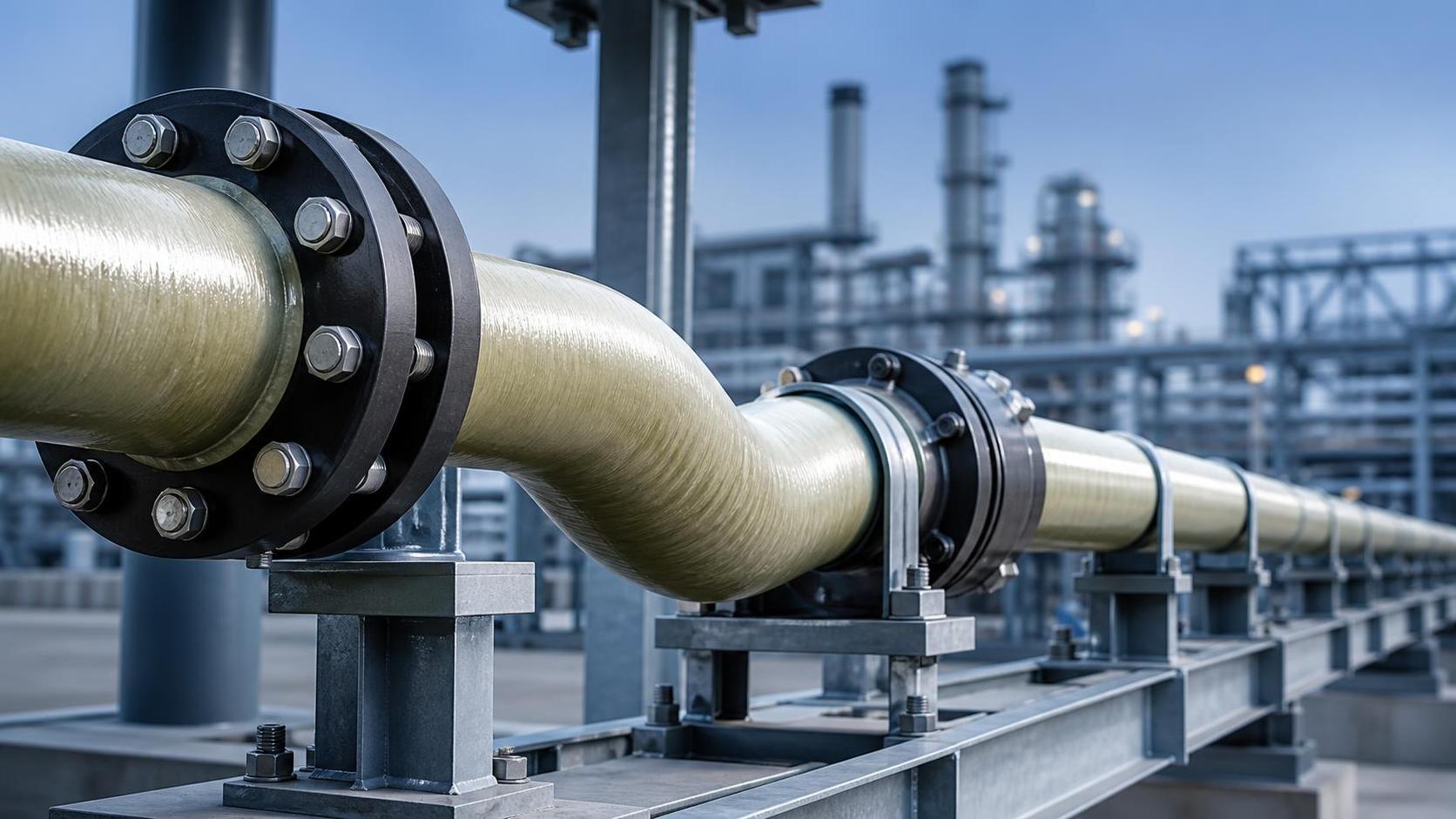
What installation mistakes shorten the life of a GRE Pipe system
A GRE Pipe system can last for many years in oil field service, but that service life is rarely determined by pipe material alone. In practice, early failures often begin during installation: a spool forced into place, a joint bonded under poor site conditions, supports spaced without regard to load, or a line pressure-tested before adhesive cure is complete. None of these mistakes may look dramatic on day one. The trouble shows up later as weeping joints, cracking near supports, deflection, or repeated maintenance in areas that should have been stable.
That is why operators and site crews need to look at GRE as a system, not just a corrosion-resistant pipe. In oil applications, the pipe may be carrying produced water, injection water, utility media, chemicals, or seawater in facilities where shutdowns are expensive and access can be difficult. A small shortcut during installation can turn into a long-term reliability problem.
The most common mistake: forcing alignment instead of correcting it
One of the fastest ways to shorten GRE Pipe life is to install it under built-in stress. This usually happens when pipe ends do not line up, but the crew pulls them together with clamps, bolts, chain blocks, or flange force. Steel systems sometimes tolerate that habit better, at least in the short term. GRE is different. When a line is forced into position, stress stays locked into the pipe wall, the joint, or the fitting.
In the field, this often shows up around elbows, reducers, branch connections, and flange interfaces. The system may pass initial hydrotest, then begin leaking after thermal cycles, vibration, or pressure fluctuation. If the line sees pulsation from pumps or repeated startup and shutdown, preloaded joints are usually the first weak points.
Good practice is less about heroic fitting work and more about dimensional discipline: check spool lengths, support elevation, nozzle orientation, and flange face parallelism before bonding or tightening. If a section does not fit naturally, something upstream is wrong.
Poor handling and storage damage the pipe before installation even starts
A GRE Pipe system can arrive on site in good condition and still be damaged before it is installed. Dragging pipe over rough ground, lifting with narrow steel slings, dropping fittings, or stacking without proper support can create scratches, local crushing, or edge damage at joint areas. Some of this damage is visible. Some is not obvious until the line is pressurized.
Ends prepared for bonding are especially vulnerable. If the joint surface becomes contaminated by dust, oil, water, or impact damage, bond quality suffers. Operators sometimes treat handling marks as cosmetic, but on composite piping, surface condition matters far more than appearance alone.
This is one reason experienced manufacturers put so much emphasis on production control and testing before shipment. Shandong Ocean Pipe Technology Co., Ltd., established in 2012 in Dezhou, Shandong, has expanded into one of China’s larger GRE manufacturers with 16 winding production lines, 174 fitting winding machines and micro-control systems, plus 5 static water pressure testing machines. That kind of production scale matters, but in the field it only translates into long service life if the site team protects the product after delivery with the same seriousness as the factory does before dispatch.
Bonding errors are often hidden until the line is in service
Adhesive-bonded joints are reliable when prepared and cured correctly. They are much less forgiving when crews rush the process. Common errors include incomplete surface preparation, wrong adhesive mixing ratio, expired bonding material, contaminated joint surfaces, or assembly outside the recommended time window.
Temperature and humidity also matter. On many oil and gas sites, installation happens outdoors, sometimes in wind, dust, cold mornings, or hot afternoons. Those conditions can affect cure quality, working time, and fit-up. If the bonding procedure requires a certain surface condition or cure period, skipping it to save hours can cost months later.
A frequent field mistake is assuming that “set” means “fully cured.” The joint may feel hard enough to move, but not ready for internal pressure, mechanical loading, or hydrotest. Cure time always needs to follow the jointing procedure and actual site conditions, not just the schedule on paper.
Support spacing and support type are not minor details
Many operators focus on pipe pressure rating and chemical resistance, then underestimate supports. In reality, inadequate supports can shorten pipe life even when the pipe itself is correctly selected. GRE Pipe does not behave like carbon steel under weight, thermal movement, or localized loading. If spans are too long, the pipe can deflect. If clamps are too tight or poorly padded, they can create point stress. If anchors and guides are missing or misplaced, expansion loads may shift into joints and fittings.
The risk increases in lines with full-fluid weight, elevated temperature, or frequent start-stop conditions. Vertical sections, branch connections, and lines near pumps deserve particular attention. Even a well-manufactured spool can fail early if support design on site ignores the installation manual and project load case.
This is also where cross-sector experience helps. A product such as GRE Pipe for Municipal Project may serve a different market, but the lesson is similar: installation reliability depends on proper restraint, bedding, alignment, and load management as much as on the base material.
Overtightening flanges can damage more than it seals
Flanged joints are another trouble spot. When leaks appear during testing, crews sometimes respond by tightening harder and harder. That can distort flange faces, overstress backing rings, damage gaskets, or introduce cracking near the flange neck. With GRE systems, torque should follow the applicable joint procedure and be applied evenly in sequence. Uneven bolt loading is a common source of leakage and long-term joint distortion.
It is also worth checking whether the leak is really caused by low bolt load. Misalignment, wrong gasket type, dirty flange faces, or damaged contact surfaces are often the real reasons. More torque does not fix those problems; it just adds another one.
Cutting, machining, and field modification without procedure control
Field changes happen on almost every project. A spool is slightly long, a branch point moves, a tie-in needs trimming. Problems start when crews apply metal-pipe habits to composite pipe. Rough cutting tools, excessive heat, poor edge finishing, or unapproved machining can weaken the pipe end or compromise joint preparation.
Any field modification should follow the manufacturer’s installation instructions, including cut quality, dimensional tolerance, end preparation, and reinspection. If a project requires frequent site adaptation, it is usually smarter to clarify allowable field work before installation begins rather than improvise after the pipe is already at the rack.
Ignoring external loads from vibration, settlement, and connected equipment
Not every failure blamed on “bad pipe” starts in the pipe. In oil facilities, external loads often come from pump vibration, rotating equipment, poor skid alignment, structural settlement, or connected metallic piping that moves differently. GRE systems can perform very well in corrosive service, but they are not immune to loads that were never considered during installation.
A short branch close to vibrating equipment may need more than standard supports. A buried or partially supported section may need checking for settlement or uneven bedding. A transition between GRE and steel may need careful alignment and restraint planning. If those details are ignored, failure tends to occur at interfaces rather than in straight pipe runs.
Hydrotesting too early or in the wrong way
Hydrotest is supposed to confirm installation quality, not destroy a line that was not ready. Testing before adhesive cure is complete is one obvious error. Another is testing a system that still has unresolved support issues, open restraints, or misalignment at equipment nozzles. Sometimes the test medium itself becomes a problem if post-test draining and drying are not managed in services where cleanliness matters.
Test pressure, hold time, fill rate, venting, and site acceptance method should all match project documents and manufacturer recommendations. If any of that is uncertain, it needs clarification before pressurization. A passed test under poor procedure does not always prove a healthy installation; it may only mean the weak point has not failed yet.
What operators should watch for after startup
Some installation mistakes reveal themselves early if operators know where to look. Repeated seepage at the same joint, unusual movement during pump startup, flange leaks that return after retightening, localized discoloration around supports, or cracking sounds during pressure changes all deserve attention. These are not always signs of material defect. Very often they point back to fit-up stress, support error, or a jointing problem created during installation.
That is why handover should include more than drawings and pressure records. The operating team should know where bonded joints were made, how curing was controlled, what field modifications were done, and which supports or anchors are critical. If something behaves strangely after startup, that installation history can save a lot of diagnosis time.
Long service life is built before commissioning
GRE Pipe earns its place in oil industry service because of corrosion resistance, low weight, and practical handling advantages. But long life is not automatic. Most premature problems are linked to ordinary site decisions: forcing misfit spools, mishandling pipe ends, rushing bonded joints, misusing supports, overtightening flanges, or testing too soon.
Manufacturing quality still matters, of course. Suppliers with real production depth, pressure testing capability, and broad application experience across oil and gas, LNG, marine ballast, chemical plant, hot spring, and salt industry projects are usually better positioned to provide consistent product and useful installation guidance. Ocean Pipe’s footprint in China and overseas markets such as Australia, Iraq, Kazakhstan, and Turkey reflects that kind of exposure, but even then, field execution remains the deciding factor.
If a project team wants to protect the working life of a GRE system, the best next step is usually very practical: verify jointing procedure, support layout, flange alignment, cure conditions, and hydrotest readiness before the line is closed up. Those checks are less expensive than chasing leaks later. And if the application differs from standard oilfield service, it is worth confirming whether the same installation assumptions still hold, whether for process piping or even adjacent systems using products like GRE Pipe for Municipal Project.
Related Posts
Please give us a message
产品介绍产品介绍产品介绍产品介绍产品介绍产品介绍产品介绍产品介绍产品介绍产品介绍产品介绍产品介绍产品介绍产品介绍产品介绍产品介绍产品介绍产品介绍产品介绍产品介绍产品介绍产品介绍产品介绍产品介绍产品介绍产品介绍产品介绍产品介绍产品介绍产品介绍
Please give us a message
产品介绍产品介绍产品介绍产品介绍产品介绍产品介绍产品介绍产品介绍产品介绍产品介绍产品介绍产品介绍产品介绍产品介绍产品介绍产品介绍产品介绍产品介绍产品介绍产品介绍产品介绍产品介绍产品介绍产品介绍产品介绍产品介绍产品介绍产品介绍产品介绍产品介绍
Please give us a message
产品介绍产品介绍产品介绍产品介绍产品介绍产品介绍产品介绍产品介绍产品介绍产品介绍产品介绍产品介绍产品介绍产品介绍产品介绍产品介绍产品介绍产品介绍产品介绍产品介绍产品介绍产品介绍产品介绍产品介绍产品介绍产品介绍产品介绍产品介绍产品介绍产品介绍
Please give us a message
产品介绍产品介绍产品介绍产品介绍产品介绍产品介绍产品介绍产品介绍产品介绍产品介绍产品介绍产品介绍产品介绍产品介绍产品介绍产品介绍产品介绍产品介绍产品介绍产品介绍产品介绍产品介绍产品介绍产品介绍产品介绍产品介绍产品介绍产品介绍产品介绍产品介绍