
When GRE Tubing makes sense for chemical injection in oilfields
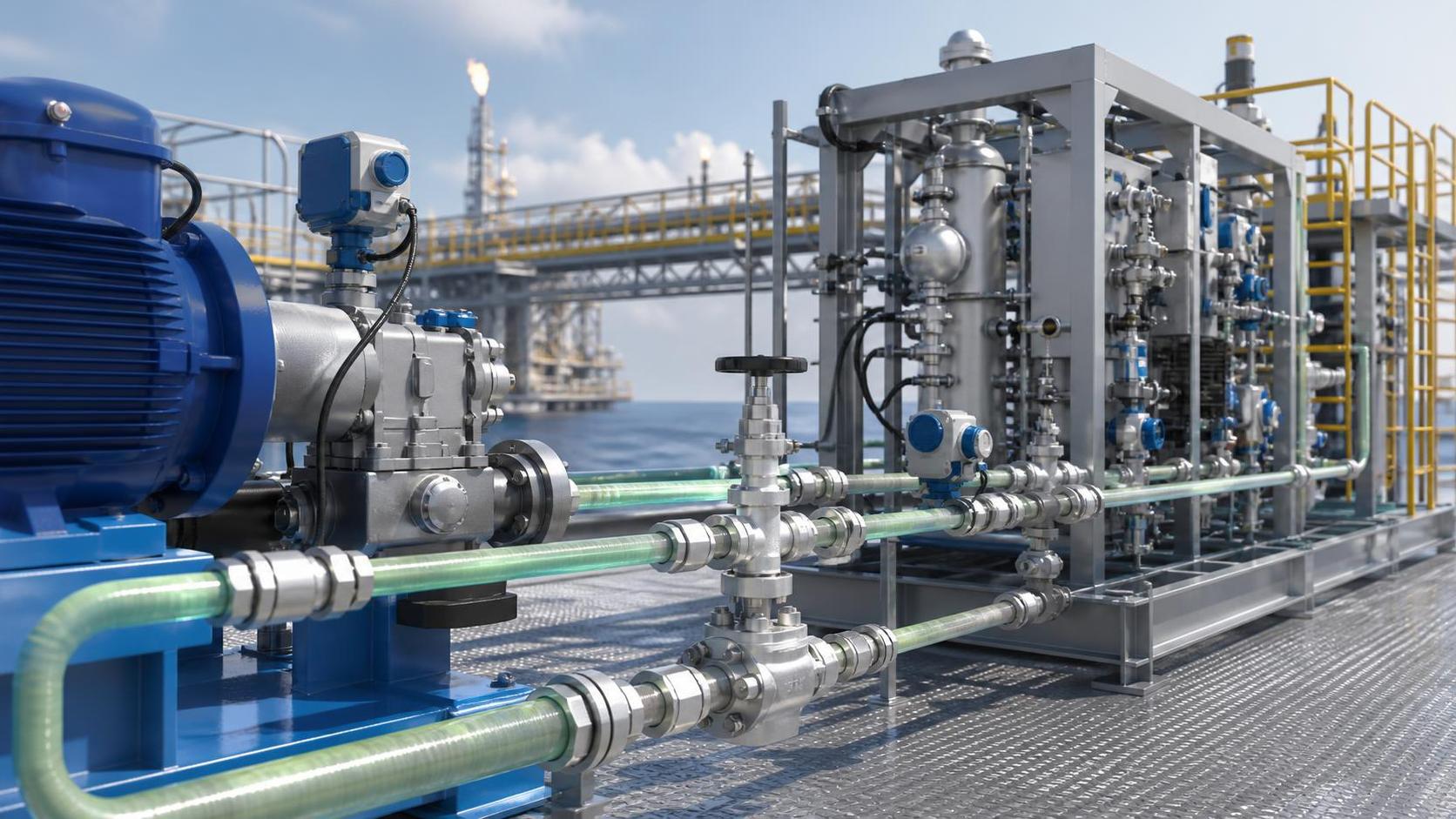
In oilfield chemical injection systems, selecting the right material can directly affect safety, service life, and maintenance costs. GRE Tubing makes sense when operators need strong corrosion resistance, reliable pressure performance, and lower lifecycle expense in demanding field conditions. For project managers and engineering leaders, understanding where GRE Tubing delivers clear value is essential to making efficient, risk-controlled pipeline decisions.
Chemical injection lines are rarely the largest part of an oilfield development budget, but they often create outsized operational headaches. Small-bore lines run continuously, carry aggressive fluids, and are exposed to vibration, temperature cycling, UV, salt spray, or corrosive atmospheres depending on the site. When these lines fail, the problem is not just replacement cost. The real impact comes from production interruption, HSE exposure, repeated maintenance mobilization, and loss of confidence in the wider piping package.
That is why the material decision around GRE Tubing should not be treated as a simple substitution exercise against steel or thermoplastics. In practice, it is a fit-for-purpose decision. The question is not whether GRE is “better” in general, but whether it reduces technical and execution risk in the specific chemical injection duty being designed.
Where GRE Tubing usually creates the most value
GRE Tubing is most compelling in oilfield injection service when corrosion is the dominant lifecycle issue. This is common in systems handling methanol, corrosion inhibitors, scale inhibitors, biocides, produced-water treatment chemicals, and other formulations that may challenge metallic tubing over time. In offshore or coastal environments, external corrosion often makes the problem worse, especially where supports, clamps, splash zones, or insulation interfaces create hidden deterioration points.
For project teams, the strongest case for GRE often appears in one of four situations:
- carbon steel has a history of internal or external corrosion-related leaks;
- stainless steel is technically workable but too expensive for the line class or project budget;
- remote locations make maintenance intervention costly and slow;
- the operator wants to reduce total ownership cost rather than only minimize initial material price.
In those cases, GRE Tubing can shift the conversation from replacement frequency to service stability. That is a meaningful difference for project managers measured on handover quality and for operating teams that inherit the consequences.
Why corrosion resistance matters more here than in many other piping decisions
Chemical injection tubing may look simple on a P&ID, but its duty is often unforgiving. Flow rates can be low, chemicals can be concentrated, and upset conditions may expose the line to incompatible mixtures or stagnant pockets. Metallic systems can survive for years, then fail unexpectedly at fittings, dead legs, support interfaces, or localized corrosion points. Because these are small lines, deterioration may remain unnoticed until leakage affects adjacent equipment or creates environmental and personnel exposure.
GRE addresses this problem differently from metals. It does not “resist corrosion” in the same way alloy selection does; rather, it avoids many of the electrochemical corrosion mechanisms that drive failure in steel systems. That is especially attractive where the site has a mixed history of chlorides, humidity, aggressive treatment chemicals, or high-maintenance atmospheric conditions.
For many project leaders, the practical takeaway is straightforward: if corrosion monitoring, coating repair, and tubing replacement have become recurring work orders, GRE deserves serious review.
Pressure performance is important, but it should be judged correctly
One common mistake in material selection is to assume that if a line is small-bore, pressure capability is automatically easy to achieve. In chemical injection service, design pressure can still be demanding, especially upstream of injection quills, at pump discharge sections, or in systems with pulsation. GRE Tubing may be suitable, but the decision must be tied to actual operating envelope, not nameplate assumptions.
Project teams should look at:
- maximum operating and design pressure;
- pressure cycling frequency;
- surge and pulsation behavior from dosing pumps;
- temperature derating effects;
- jointing system reliability under field installation conditions.
This is where some selections go wrong. A material that looks acceptable in a datasheet can become marginal if the system sees frequent start-stop cycles, pump pulsation, or poorly controlled temperature exposure. GRE Tubing makes sense when pressure requirements are within the proven capability of the selected system and when the design team accounts for dynamic loading, not just static pressure.
That evaluation should be backed by manufacturer data, applicable standards, and project-specific design review. If any claimed pressure rating cannot be matched to a clear qualification basis, it should be treated as 【待核实】 rather than accepted into procurement.
Weight and installation benefits are real, but not automatic
Compared with many metallic alternatives, GRE systems can offer lower weight and easier handling. In congested skids, offshore modules, brownfield tie-ins, or elevated rack installations, that can translate into practical project savings. Lighter piping can reduce handling equipment requirements, simplify support planning, and improve installation productivity in areas where labor access is limited.
Still, project managers should be careful not to overstate this advantage. Installation benefit depends heavily on crew familiarity, jointing method, QA discipline, and site conditions. A theoretically faster system can lose its edge if installers are not trained, if environmental controls are poor during bonding or joining, or if field routing creates too many difficult fit-ups.
In other words, GRE Tubing is not a shortcut around execution quality. It can reduce installation burden, but only if the project team treats it as a system requiring competent field control.
When GRE Tubing is a stronger choice than stainless steel
This comparison appears often in chemical injection projects because stainless steel is the default upgrade path when carbon steel fails too often. But stainless is not always the most economical long-term answer. In many oilfield environments, the issue is not just fluid chemistry; it is the combination of chemical exposure, chloride-rich atmosphere, crevice conditions, and maintenance reality.
GRE Tubing can be the stronger option when:
- the corrosion risk is persistent and predictable;
- the line routing exposes tubing to harsh atmospheric conditions;
- the project is sensitive to weight or installation logistics;
- the operator wants to reduce coating, inspection, and replacement interventions.
Stainless steel may still be preferred in areas with higher temperatures, mechanical abuse risk, or where plant standards strongly favor metallic tubing for specific safety or fire scenarios. That is why the decision should be made line by line, not by material preference alone.
Where GRE Tubing may not be the right answer
Good application decisions depend as much on exclusion as selection. GRE Tubing is not universally suitable for every chemical injection line. There are several cases where project teams should pause:
- elevated temperatures that exceed the qualified operating range of the selected resin system;
- high mechanical impact exposure or areas with frequent dropped-object risk;
- fire-critical zones where project specifications impose strict material restrictions;
- services involving chemicals with uncertain compatibility;
- systems with severe vibration, poor support conditions, or high cyclic loading that have not been engineered properly.
The compatibility point is especially important. “Chemical injection” is too broad a label for material selection. Resin performance depends on the actual chemical package, concentration, temperature, and exposure profile. A line carrying one inhibitor blend may be suitable for GRE, while a line carrying another formulation from a different supplier may require separate confirmation. Compatibility should never be assumed from generic chemical family names alone.
What project managers should verify before approving GRE Tubing
From an execution standpoint, the technical case is only half the decision. The other half is whether the supply and installation framework is mature enough to support trouble-free delivery.
Before final approval, a project team should normally verify:
- applicable product standards and project specification alignment;
- pressure-temperature rating basis for the exact tubing system;
- chemical compatibility confirmation for all injection media;
- jointing procedure, installer qualification, and inspection method;
- support spacing, clamp design, and allowance for thermal movement;
- quality records for hydrotesting or other required acceptance testing;
- supplier manufacturing capacity and lead-time reliability.
That last point matters more than many buyers expect. GRE components are not simply commodity pipe. For oilfield work, consistency in winding quality, fittings, dimensional control, and testing discipline has a direct effect on field fit-up and long-term reliability. A supplier with scale, production control, and established industrial references reduces execution uncertainty. In related industrial applications, some buyers reviewing GRE Pipe for Refinery packages use the same logic: not just whether the material is suitable, but whether the manufacturer can deliver repeatable quality across the full system.
The lifecycle cost argument is usually stronger than the purchase price argument
GRE Tubing is often evaluated too narrowly on material price per meter. That misses the actual economic logic in oilfields. Small-bore chemical injection lines are maintenance-sensitive assets. If a cheaper metallic option leads to repeated corrosion inspection, recoating, leak repair, or unplanned replacement, the project has not saved money; it has simply deferred cost into operations.
For remote onshore fields, offshore platforms, and export projects with expensive labor mobilization, lifecycle economics usually favor materials that reduce intervention frequency. This is why operators with mature asset management systems increasingly focus on total installed cost plus expected maintenance burden, rather than only procurement budget.
For project managers, that changes the approval discussion. The right question is not “Is GRE cheaper than stainless?” It is “Will GRE lower the full cost of ownership over the service period we actually care about?” In many corrosion-prone injection duties, the answer can be yes.
Common mistakes that weaken GRE projects
Most GRE failures in the field are not caused by the basic concept being wrong. They are more often linked to weak application control. The recurring mistakes are familiar:
- selecting GRE without confirming chemical compatibility in detail;
- using pressure ratings without proper temperature derating review;
- underestimating pulsation and vibration effects near pumps;
- treating installation as equivalent to metal tubing work;
- choosing suppliers based mainly on lowest bid rather than system capability.
Another mistake is to import lessons from large-diameter GRE pipeline projects directly into tubing decisions. The material family may be related, but small-bore injection service has different failure modes, support details, and installation tolerances. Project teams should evaluate tubing as its own engineered package.
How to decide if GRE Tubing makes sense on your project
A useful screening approach is to start with the risk drivers, not with the material list. If the line will carry corrosive or aggressive chemicals, run in a harsh environment, operate at manageable temperature and pressure, and be expensive to maintain after startup, GRE Tubing deserves a place on the shortlist. If the line is exposed to severe heat, heavy mechanical abuse, uncertain chemical formulations, or strict fire-related material restrictions, the case becomes weaker and may point elsewhere.
In practical project terms, GRE is most persuasive where reliability, corrosion control, and reduced maintenance are worth more than material familiarity. That is often true in offshore chemical injection skids, produced-water treatment packages, coastal facilities, enhanced recovery systems, and remote wellsite infrastructure where intervention costs accumulate quickly.
It is also where disciplined suppliers and sound engineering matter most. Buyers looking across broader process sectors sometimes compare tubing decisions with other corrosion-resistant composite systems such as GRE Pipe for Refinery, because the same procurement logic applies: compatibility, qualification, fabrication control, and field execution all matter more than generic material claims.
GRE Tubing makes sense for chemical injection in oilfields when the project objective is not only to make the line work on day one, but to keep it working with fewer corrosion problems, lower maintenance burden, and more predictable operating performance. For project and engineering leaders, that is usually the real decision standard.
Please give us a message
产品介绍产品介绍产品介绍产品介绍产品介绍产品介绍产品介绍产品介绍产品介绍产品介绍产品介绍产品介绍产品介绍产品介绍产品介绍产品介绍产品介绍产品介绍产品介绍产品介绍产品介绍产品介绍产品介绍产品介绍产品介绍产品介绍产品介绍产品介绍产品介绍产品介绍
Please give us a message
产品介绍产品介绍产品介绍产品介绍产品介绍产品介绍产品介绍产品介绍产品介绍产品介绍产品介绍产品介绍产品介绍产品介绍产品介绍产品介绍产品介绍产品介绍产品介绍产品介绍产品介绍产品介绍产品介绍产品介绍产品介绍产品介绍产品介绍产品介绍产品介绍产品介绍
Please give us a message
产品介绍产品介绍产品介绍产品介绍产品介绍产品介绍产品介绍产品介绍产品介绍产品介绍产品介绍产品介绍产品介绍产品介绍产品介绍产品介绍产品介绍产品介绍产品介绍产品介绍产品介绍产品介绍产品介绍产品介绍产品介绍产品介绍产品介绍产品介绍产品介绍产品介绍
Please give us a message
产品介绍产品介绍产品介绍产品介绍产品介绍产品介绍产品介绍产品介绍产品介绍产品介绍产品介绍产品介绍产品介绍产品介绍产品介绍产品介绍产品介绍产品介绍产品介绍产品介绍产品介绍产品介绍产品介绍产品介绍产品介绍产品介绍产品介绍产品介绍产品介绍产品介绍