
How GRE Tubing resists corrosion in produced water handling units
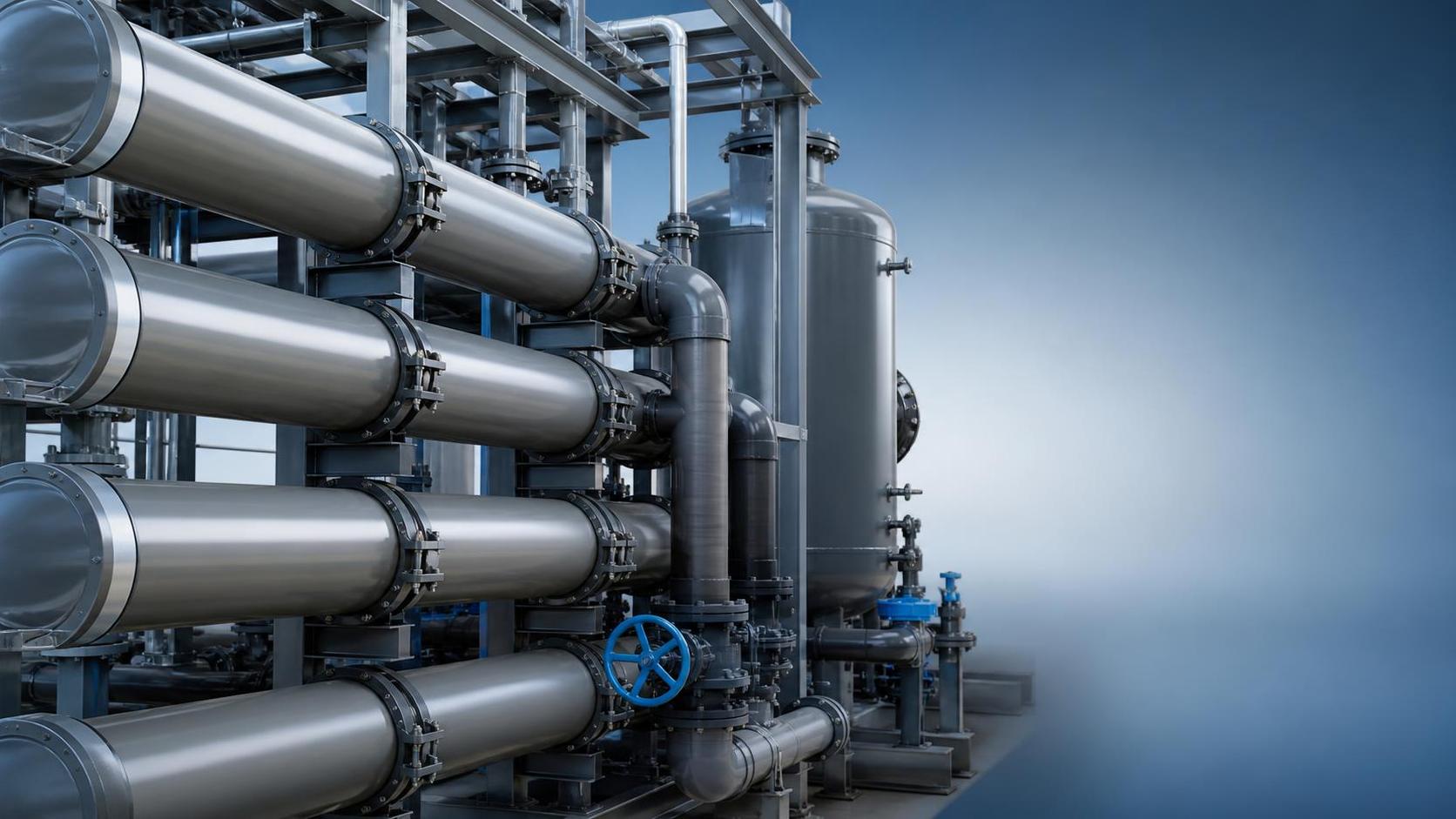
In produced water handling units, corrosion is rarely a side issue. It is often the factor that decides whether a system runs with predictable maintenance or turns into a cycle of leaks, unplanned shutdowns, and repeated replacement. That is why GRE Tubing continues to attract attention in oilfield water service: not because it is a fashionable alternative to steel, but because it addresses one of the hardest material problems in produced water systems—continuous exposure to saline, chemically aggressive, solids-laden flow.
For readers evaluating materials from a technical or sourcing perspective, the useful question is not simply whether GRE resists corrosion in general. The more practical question is how it resists corrosion in actual produced water duty, where fluid chemistry, temperature, pressure cycling, flow regime, and installation quality all interact.
Why produced water is so corrosive in the first place
Produced water is not a uniform medium. Its corrosivity depends on the reservoir, the production chemistry, and the treatment sequence. In many fields it contains high chlorides, dissolved gases such as CO₂ and sometimes H₂S, residual hydrocarbons, suspended solids, treatment chemicals, and bacteria. Even when oxygen is controlled, carbon steel remains vulnerable to internal attack. Localized corrosion, under-deposit corrosion, pitting, and microbiologically influenced corrosion can all appear in the same handling train.
This matters because many produced water units combine several corrosion drivers at once:
- High salinity that accelerates electrochemical attack on metals
- Acidic conditions linked to dissolved CO₂
- Possible sour service complications where H₂S is present
- Sand or fine solids that damage linings and expose substrate materials
- Scaling tendencies that create deposits and differential aeration cells
- Intermittent operating modes that make corrosion control less stable
Traditional metallic systems can be managed through coatings, corrosion inhibitors, internal linings, cathodic protection, and corrosion monitoring. But these methods add operating complexity. In remote or maintenance-constrained assets, operators increasingly look at non-metallic materials because the most reliable way to reduce corrosion may be to avoid corrosion-prone substrates altogether.
What gives GRE Tubing its corrosion resistance
GRE Tubing—glass reinforced epoxy tubing—does not resist corrosion in the same way alloy steels do. Steel resists by forming protective films or by adding alloying elements that reduce attack rates. GRE resists because its structural and wetted materials are fundamentally non-metallic. The epoxy resin matrix acts as the chemical barrier, while the glass reinforcement provides mechanical strength.
In produced water service, this changes the corrosion mechanism completely. Chloride-rich water that aggressively attacks carbon steel has limited direct effect on a properly selected epoxy composite. The material does not rust, does not pit in the metallic sense, and is not subject to galvanic corrosion as carbon steel is. That is the primary reason GRE has become established in oilfield water systems, injection lines, and certain process utility applications.
The corrosion performance depends on three layers of design logic:
- Resin chemistry: The epoxy system determines chemical resistance and temperature capability.
- Reinforcement architecture: Filament winding angle and laminate design affect pressure performance and mechanical stability.
- Barrier integrity: The inner liner or resin-rich layer limits permeation and shields the structural laminate from fluid exposure.
When readers compare GRE with generic “fiberglass” assumptions, this distinction matters. Not all composite tubing performs equally in produced water. Resin selection and manufacturing quality are decisive.
Resistance to saline water is the main advantage, but not the only one
In produced water handling, saline water resistance is often cited first, and rightly so. High total dissolved solids and chlorides are among the most persistent causes of metallic corrosion. GRE Tubing performs well in this environment because dissolved salts do not initiate electrochemical corrosion of the composite wall.
That said, the field benefit usually extends beyond simple salt resistance.
GRE can also reduce risk associated with internal deposition and roughness changes over time. In steel lines, corrosion products and scale often interact: roughened surfaces trap solids, deposits build up, and localized attack develops underneath. GRE’s smooth internal surface can help limit deposit adhesion compared with corroding steel surfaces, especially in applications where scaling is moderate and flow remains within design limits. This does not eliminate fouling, but it can slow the self-reinforcing cycle of corrosion-plus-deposit formation.
That is one reason GRE-related materials are also evaluated in adjacent fluid handling equipment, including selected chemical and water treatment components such as FRP/GRE Membrane Housing, where corrosion resistance and stable internal surfaces are important to service life.
How chemical exposure affects long-term performance
One common misunderstanding is that because GRE does not rust, it is therefore chemically immune. It is not. GRE resists many produced water environments very effectively, but long-term performance still depends on compatibility between the fluid and the resin system.
The key technical concern is not metallic corrosion but chemical degradation mechanisms such as:
- Resin softening or plasticization
- Permeation over long exposure periods
- Hydrothermal aging at elevated temperatures
- Attack from specific solvents or treatment chemicals
- Loss of bond integrity at the laminate or joint interface
In other words, GRE shifts the engineering question from corrosion rate control to chemical compatibility control. That is often a favorable trade, but only if the service envelope is properly defined. Produced water systems frequently use biocides, oxygen scavengers, demulsifiers, scale inhibitors, and cleaning chemicals. A tubing material that tolerates the base water chemistry may still be challenged by periodic chemical treatment or upset conditions.
For that reason, serious evaluation should include chemical composition, maximum and normal operating temperature, pressure profile, solids content, and cleaning regime—not just a broad statement such as “for produced water use.”
Where GRE performs well, and where caution is needed
In oilfield practice, GRE Tubing tends to perform best where corrosion is the dominant material threat and where temperatures remain within qualified limits. Typical strong-fit applications include produced water transfer, disposal water systems, offshore utility water lines, and some skid-based handling modules where weight reduction and reduced corrosion maintenance offer clear operational value.
Its advantages become especially visible in assets where internal corrosion monitoring, inhibitor management, or frequent metallic replacement has become a recurring cost center.
But there are limits, and overlooking them is one of the fastest ways to make a good material appear unreliable.
Caution is needed when the service includes:
- High sustained or cycling temperatures approaching resin limits
- Severe external impact risk or poor handling during installation
- High solids erosion at elbows, restrictions, or turbulent zones
- Rapid pressure transients such as water hammer
- Fire exposure scenarios requiring specific fire performance measures
- Fluid compositions outside validated chemical compatibility data
The important point for information-stage readers is that GRE failures, when they occur, often come from operating outside design assumptions rather than from ordinary saline corrosion. This is a different risk profile from carbon steel.
Joint integrity is as important as pipe wall chemistry
In produced water service, tubing performance is not only about the straight pipe section. Jointing methods frequently determine whether a GRE system delivers its expected life. Adhesive-bonded joints, threaded composite connections, flanged arrangements, and other connection systems each have different strengths and field sensitivities.
A corrosion-resistant pipe body can still underperform if:
- Joint preparation is inconsistent
- Field curing conditions are poorly controlled
- Alignment loads are transferred into the joint
- Thermal expansion is not properly accommodated
- Installation crews apply metallic piping practices to composite systems
This is one of the practical reasons buyers and EPC teams should not evaluate GRE Tubing on material name alone. Manufacturing quality, joining system qualification, installer competence, and documented field procedures all have direct influence on service reliability.
What standards and qualification questions buyers should ask
For readers researching technical standards, the right approach is to ask which codes or specifications govern the exact application rather than expecting one universal standard to cover every produced water use case.
Depending on service, project location, and system type, relevant references may include composite pipe product standards, operator specifications, and project-specific testing requirements. In oil and gas applications, buyers commonly review hydrostatic qualification, stiffness, pressure rating, chemical resistance data, joining procedure qualification, and quality documentation. Specific standard applicability should be verified against the project scope and jurisdiction. If a supplier cites a standard, the buyer should confirm whether it applies to tubing, pipe, fittings, or a broader composite system, because these are not always interchangeable claims.
Where standards or approvals are unclear, the responsible approach is to mark them as 【待核实】 rather than rely on generic statements.
Comparing GRE with carbon steel in produced water units
For information researchers, the strategic comparison is less about upfront material price and more about which risk dominates the system.
If the main challenge is internal corrosion from saline water and treatment chemicals, GRE often has a strong lifecycle case. It may reduce inhibitor dependence, cut internal corrosion inspection burden, and avoid repeated replacement from pitting or wall loss. Weight savings can also support easier installation, especially offshore or on modular skids.
If the main challenge is extreme temperature, severe impact risk, or high-energy mechanical abuse, steel may still be the safer choice, provided corrosion mitigation is manageable.
That is why the best material decision is not “GRE versus steel” in the abstract. It is “which failure mode is more likely and more costly in this service.” In many produced water units, corrosion is the dominant failure mode, and that is where GRE Tubing earns its place.
The market reason GRE keeps gaining attention
The industry trend behind GRE adoption is not driven by novelty. It is tied to operating discipline. Producers are under pressure to control maintenance costs, extend brownfield asset life, and reduce shutdown risk. Produced water volumes are also increasing in many mature fields, which makes water handling infrastructure more critical than before.
As a result, materials that can lower corrosion exposure without depending entirely on continuous chemical management are becoming more attractive. This applies not only to pipelines and tubing but across a wider category of corrosion-resistant composite components, including systems adjacent to separation and water treatment packages such as FRP/GRE Membrane Housing where non-metallic corrosion resistance supports longer service intervals.
For sourcing teams, supply capability is part of the equation as well. Composite products are only as dependable as the manufacturing controls behind them—winding consistency, resin handling, testing capacity, and fitting production quality all influence field outcomes. In this segment, supplier evaluation should include not just catalog range, but actual production scale, pressure testing practice, and ability to support fittings and system integration.
The most common mistake in evaluating GRE Tubing
The biggest mistake is treating GRE as a universal corrosion-proof substitute. It is better understood as a highly effective corrosion-resistant solution within a clearly defined service window.
When the fluid chemistry is known, the operating limits are respected, the jointing method is qualified, and installation is done to composite-specific procedures, GRE Tubing can deliver a strong performance advantage in produced water handling units. When those conditions are ignored, users may blame the material for failures that actually originated in poor specification or field execution.
For engineers, buyers, and market researchers, that is the real takeaway: GRE resists corrosion in produced water systems not by defeating every operating hazard, but by removing the metallic corrosion pathway that causes so many failures in saline, chemically aggressive water service. The quality of the final result depends on whether that material advantage is matched by correct design, qualification, and installation discipline.
Please give us a message
产品介绍产品介绍产品介绍产品介绍产品介绍产品介绍产品介绍产品介绍产品介绍产品介绍产品介绍产品介绍产品介绍产品介绍产品介绍产品介绍产品介绍产品介绍产品介绍产品介绍产品介绍产品介绍产品介绍产品介绍产品介绍产品介绍产品介绍产品介绍产品介绍产品介绍
Please give us a message
产品介绍产品介绍产品介绍产品介绍产品介绍产品介绍产品介绍产品介绍产品介绍产品介绍产品介绍产品介绍产品介绍产品介绍产品介绍产品介绍产品介绍产品介绍产品介绍产品介绍产品介绍产品介绍产品介绍产品介绍产品介绍产品介绍产品介绍产品介绍产品介绍产品介绍
Please give us a message
产品介绍产品介绍产品介绍产品介绍产品介绍产品介绍产品介绍产品介绍产品介绍产品介绍产品介绍产品介绍产品介绍产品介绍产品介绍产品介绍产品介绍产品介绍产品介绍产品介绍产品介绍产品介绍产品介绍产品介绍产品介绍产品介绍产品介绍产品介绍产品介绍产品介绍
Please give us a message
产品介绍产品介绍产品介绍产品介绍产品介绍产品介绍产品介绍产品介绍产品介绍产品介绍产品介绍产品介绍产品介绍产品介绍产品介绍产品介绍产品介绍产品介绍产品介绍产品介绍产品介绍产品介绍产品介绍产品介绍产品介绍产品介绍产品介绍产品介绍产品介绍产品介绍