
What certification documents are expected for GRE Tubing supply
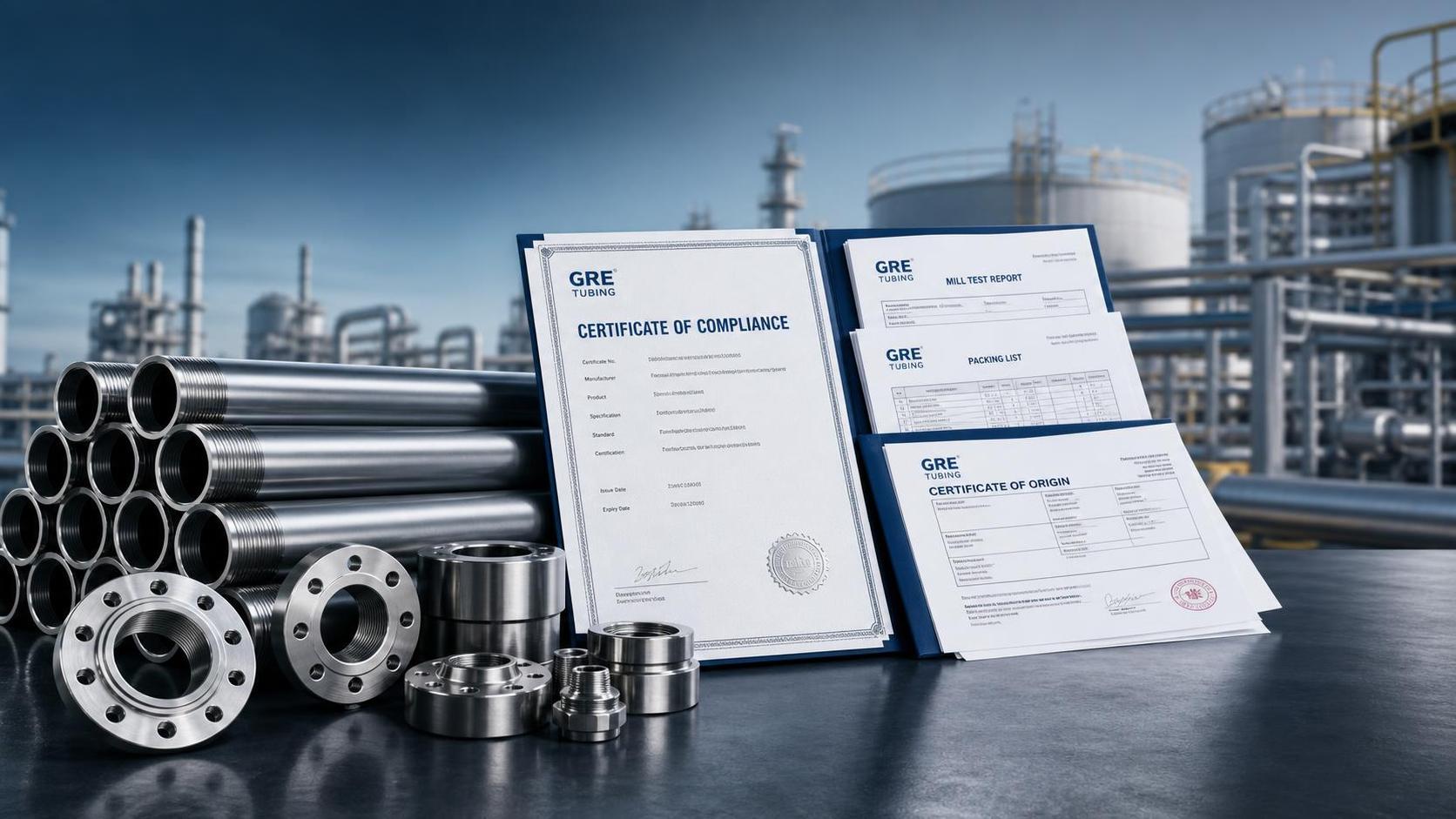
For distributors and agents sourcing GRE Tubing for oil and gas projects, certification documents are a key factor in evaluating supplier reliability, product compliance, and market readiness. Understanding what certificates are typically required can help streamline procurement, reduce project risks, and ensure smooth approval from end users. This guide outlines the essential certification documents expected for GRE Tubing supply and what they mean for your business.
What Buyers Really Want to Confirm Before Ordering GRE Tubing
When people search for certification documents for GRE Tubing supply, they usually do not want theory. They want to know which papers must be available before a quotation becomes a purchase order.
For distributors, agents, and stockists, the core concern is practical. Can this supplier provide documents that satisfy EPC contractors, oil companies, inspectors, and project consultants without causing approval delays?
In most oil and gas projects, the answer is straightforward. Buyers expect a complete documentation package covering product standards, raw material traceability, testing records, quality management, and shipment-related certificates.
If any of these documents are missing, the commercial risk rises quickly. Even when the GRE Tubing itself performs well, incomplete paperwork can stop vendor registration, postpone site acceptance, or create claims later.
That is why experienced channel partners evaluate certification capability as seriously as production capacity. A supplier that ships fast but cannot support documentation is often more costly than one with a stronger compliance process.
The Core Certification Documents Expected for GRE Tubing Supply
The first document most buyers ask for is the product compliance certificate. This confirms that the supplied GRE Tubing is manufactured according to the relevant technical standard or approved project specification.
Depending on the application, the standard may refer to internal oil company requirements, project-specific datasheets, or recognized industry frameworks for fiberglass reinforced epoxy piping systems used in energy projects.
A mill or manufacturer certificate is also expected. This document normally identifies product dimensions, pressure rating, batch information, production date, and a declaration that the goods meet the purchase specification.
In serious procurement environments, buyers also request a Certificate of Origin. This is especially important for customs clearance, import duties, trade compliance, and projects where country-of-origin rules affect vendor approval.
Another common requirement is the commercial invoice and packing list package, but those are not enough on their own. Project buyers want technical certification, not only shipping documentation.
A complete GRE Tubing supply package should therefore include compliance certificates, inspection and test records, traceability documents, and shipment papers prepared in a consistent, reviewable format.
Why Quality Management Certificates Matter More Than a Simple Product Declaration
Many new distributors assume that a supplier declaration is enough. In oil and gas, it usually is not. Buyers want proof that the factory operates under a structured and auditable quality system.
This is why ISO 9001 remains one of the most commonly requested certificates. It does not replace product testing, but it signals that manufacturing, inspection, document control, and corrective actions follow a managed process.
For agents entering new export markets, ISO certification helps reduce the first layer of buyer hesitation. It shows that the supplier is not only making products, but also controlling how products are made and verified.
In practice, quality system certification can support faster prequalification. End users often compare several GRE Tubing sources, and documented management systems help separate serious manufacturers from trading-only suppliers.
For a manufacturer serving oil and gas, marine, LNG, and chemical sectors, the strength of the quality system matters because buyers expect repeatability across different batches, fittings, and pressure classes.
What Test Certificates Are Usually Required for GRE Tubing
Testing documentation is often the most important part of the package because it proves actual product performance rather than declared intent. Distributors should review these records before promoting any GRE Tubing line.
Hydrostatic pressure test reports are commonly requested. These records demonstrate that the tubing or associated pipe products have been tested under controlled pressure conditions according to applicable requirements.
Dimensional inspection reports are also important. Buyers want confirmation that diameter, wall thickness, length, end preparation, and tolerance values are consistent with drawings and purchase specifications.
For some projects, buyers may ask for raw material test certificates covering resin, fiberglass, curing system, or liners. These documents help support material traceability and consistency of long-term performance.
Where project conditions are severe, additional tests may be requested. These can include stiffness, axial strength, ring deflection, chemical resistance, or other qualification data tied to the operating environment.
What matters for distributors is not collecting every possible report. It is confirming that the supplier can provide the exact tests required by the project, and can link them clearly to the delivered goods.
Traceability Documents Reduce Claims and Approval Delays
In oil and gas supply, traceability is not a formality. It is a control tool. Buyers want to know which production batch, raw materials, and inspection records belong to the GRE Tubing they receive.
A good traceability package usually includes batch numbers, production records, inspection status, and references connecting each shipment to the corresponding test and compliance documents.
This becomes especially important when products are supplied through distributors rather than directly to end users. Every handoff in the supply chain increases the need for clean, consistent documentation.
If a field question appears later, traceability documents help identify whether the issue relates to installation, storage, specification mismatch, or manufacturing. Without that record trail, liability discussions become much harder.
For channel partners, strong traceability also supports market credibility. It allows you to answer technical and quality questions with evidence instead of relying on general supplier claims.
Project-Specific Approvals Often Matter More Than Generic Certificates
One of the most common mistakes in GRE Tubing sourcing is assuming that general certificates are enough for every project. In reality, many oil and gas jobs require project-specific approval documents.
These may include approved data sheets, inspection and test plans, material submittals, method statements, technical queries, or client-approved vendor document registers.
For EPC and owner-controlled projects, a supplier may need to submit drawings, qualification reports, and test documentation for review before manufacturing or shipping begins. This is normal, not exceptional.
Distributors should therefore ask early whether the supplier has experience supporting document approval workflows. A factory can have good production capability and still struggle with formal submittal procedures.
This is where an established manufacturer often has an advantage. Companies serving major energy groups usually understand how to prepare document packages for consultant review, inspection release, and final dossier submission.
Which Certificates Help Distributors Sell GRE Tubing More Effectively
From a sales perspective, not all documents create equal value. The most useful certificates are the ones that help your customer make a faster and safer decision.
First, quality management certificates such as ISO 9001 help open conversations with serious buyers. Second, manufacturer test certificates support technical evaluation. Third, origin and shipment documents support actual transaction completion.
For larger tenders, references to previous supply experience in oil and gas, LNG, marine, or chemical projects can also strengthen buyer confidence, even though these are not certificates in the strict sense.
When presented properly, documentation becomes a sales tool. It shows that the supplier is organized, transparent, and prepared for project scrutiny. That lowers perceived risk for your customer.
Some distributors also cross-sell related composite products when a buyer is already evaluating corrosion-resistant systems. In those cases, products such as FRP/GRE Membrane Housing can fit broader industrial discussions when relevant to the customer’s application scope.
How to Evaluate a GRE Tubing Supplier’s Documentation Capability
Before committing to representation or stocking, ask the supplier for a sample document package from a previous order. This is often more revealing than a brochure or website description.
Check whether the documents are consistent in naming, batch references, product descriptions, and specification numbers. Incomplete or mismatched paperwork usually signals weak internal control.
You should also confirm whether certificates can be customized to project requirements. Many buyers need their PO number, item code, client specification, or destination details reflected accurately in the documents.
Another useful check is response speed. If a supplier takes too long to provide basic quality certificates during evaluation, document support may become a bottleneck once the project is active.
Ask who prepares final dossiers, who controls revisions, and whether English-language documentation is standard for export orders. These details matter a great deal in cross-border oil and gas business.
Experienced manufacturers with established production lines and test facilities are generally better positioned to support this process because certification is tied directly to their daily manufacturing and inspection routines.
Common Documentation Gaps That Create Problems for Agents and Importers
The first common gap is outdated certificates. Buyers notice quickly when ISO certificates, test reports, or declarations are expired, incomplete, or disconnected from the current shipment.
The second issue is generic testing language. A report that does not identify the actual GRE Tubing supplied has limited value during project review or quality disputes.
The third problem is lack of traceability between invoice, packing list, production batch, and test certificate. When these references do not align, approval teams may reject the document package.
Another frequent weakness is poor formatting or missing signatures. In international trade, presentation matters because documents often pass through procurement, QA, inspection, logistics, and customs teams.
Finally, some suppliers provide only standard factory documents and cannot support project-specific submittals. This can block business with high-value oil and gas customers even when the physical product is acceptable.
What a Reliable GRE Tubing Documentation Package Should Include
For most distributor-led transactions, a solid package should include a manufacturer certificate, product compliance certificate, inspection and test reports, Certificate of Origin, packing list, and commercial invoice.
It should also include traceability references, quality management certification, and any project-required approvals or supporting technical documents requested by the buyer.
If the order involves additional corrosion-resistant system components, the same documentation logic should apply across the full package, whether for GRE Tubing or related items such as FRP/GRE Membrane Housing.
The exact list will vary by country, project owner, and application conditions, but the principle remains the same. A credible supplier must be able to prove compliance, quality, and traceability in document form.
Final Takeaway for Distributors and Agents
For GRE Tubing supply in oil and gas markets, certification documents are not just administrative attachments. They are a direct measure of supplier readiness, project compatibility, and commercial reliability.
The documents most buyers expect include product compliance certificates, manufacturer certificates, test reports, quality management certificates, origin documents, and clear traceability records linked to each shipment.
Distributors who understand this can qualify suppliers more effectively, reduce approval delays, and protect their reputation with end users. In many cases, strong documentation support is what turns an inquiry into repeat business.
When evaluating a GRE Tubing manufacturer, do not ask only whether certificates exist. Ask whether the documents are current, project-ready, traceable, and backed by real production and testing capability.
That is the standard serious buyers use, and it is the standard that helps agents and distributors build a stronger, lower-risk business in the industrial composite piping market.
Please give us a message
产品介绍产品介绍产品介绍产品介绍产品介绍产品介绍产品介绍产品介绍产品介绍产品介绍产品介绍产品介绍产品介绍产品介绍产品介绍产品介绍产品介绍产品介绍产品介绍产品介绍产品介绍产品介绍产品介绍产品介绍产品介绍产品介绍产品介绍产品介绍产品介绍产品介绍
Please give us a message
产品介绍产品介绍产品介绍产品介绍产品介绍产品介绍产品介绍产品介绍产品介绍产品介绍产品介绍产品介绍产品介绍产品介绍产品介绍产品介绍产品介绍产品介绍产品介绍产品介绍产品介绍产品介绍产品介绍产品介绍产品介绍产品介绍产品介绍产品介绍产品介绍产品介绍
Please give us a message
产品介绍产品介绍产品介绍产品介绍产品介绍产品介绍产品介绍产品介绍产品介绍产品介绍产品介绍产品介绍产品介绍产品介绍产品介绍产品介绍产品介绍产品介绍产品介绍产品介绍产品介绍产品介绍产品介绍产品介绍产品介绍产品介绍产品介绍产品介绍产品介绍产品介绍
Please give us a message
产品介绍产品介绍产品介绍产品介绍产品介绍产品介绍产品介绍产品介绍产品介绍产品介绍产品介绍产品介绍产品介绍产品介绍产品介绍产品介绍产品介绍产品介绍产品介绍产品介绍产品介绍产品介绍产品介绍产品介绍产品介绍产品介绍产品介绍产品介绍产品介绍产品介绍