
Can GRE Tubing lower maintenance frequency in offshore utility lines
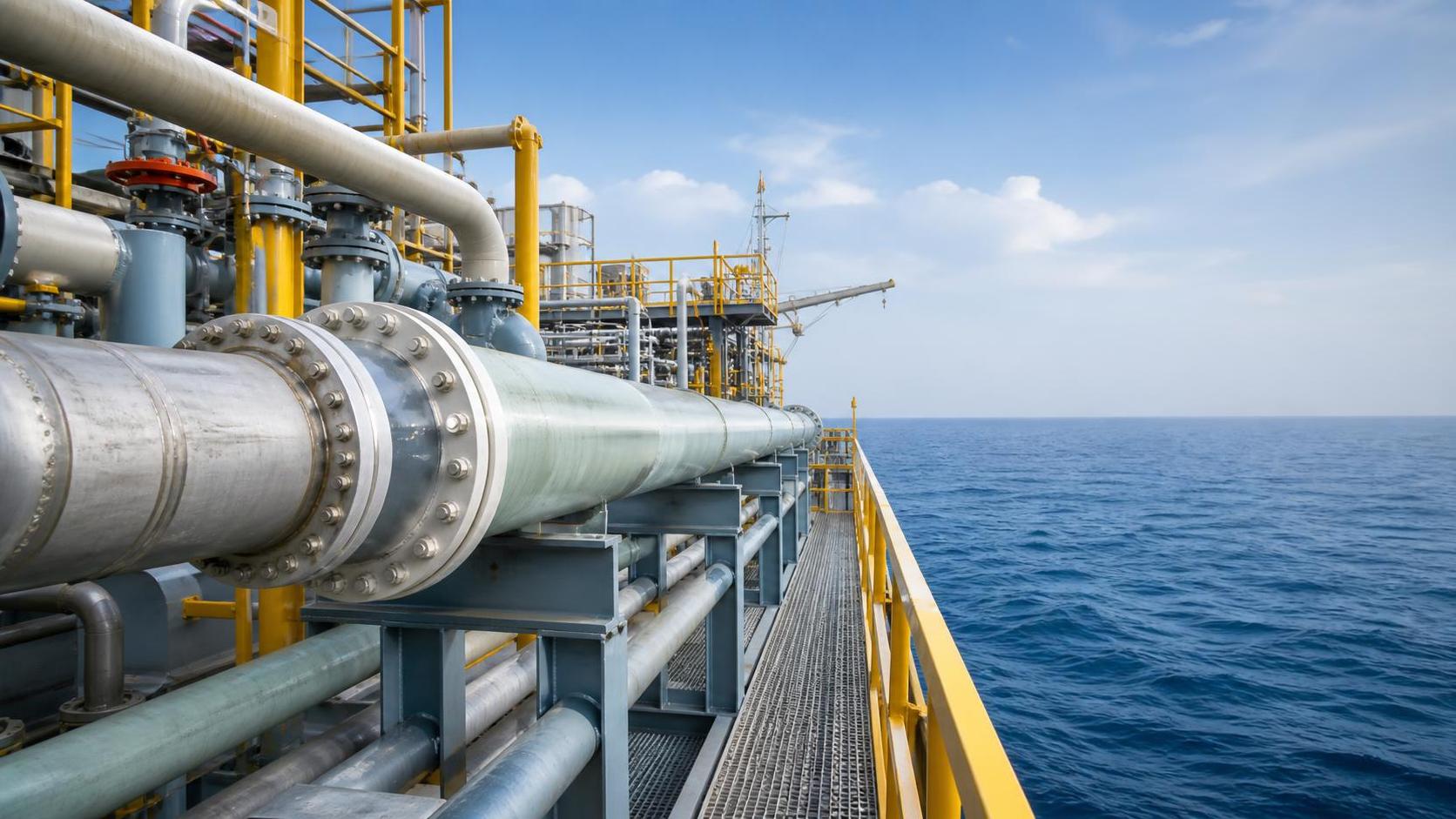
It usually starts with a small maintenance issue that does not look strategic at first. A utility line on an offshore platform needs another inspection because of suspected internal scaling, external corrosion, or a fitting that has begun to show signs of leakage. The line may not even be carrying hydrocarbons directly. It could be service water, fire water, cooling water, drain service, ballast-related utility flow, or another support medium that keeps the larger operation stable. But once maintenance teams have to revisit the same line too often, the question changes from “How do we repair this section?” to “Why does this line keep demanding attention?”
That is where many operators begin looking seriously at GRE Tubing. Not because it sounds newer, but because offshore utility systems punish materials in a very specific way. Salt-laden air, wet supports, changing temperatures, vibration, and chemically aggressive fluids can all combine to make routine maintenance feel less routine. If a line material is vulnerable to corrosion or frequent coating repair, maintenance intervals often shorten, access planning becomes more complicated, and shutdown windows become harder to protect.
When frequent maintenance is really a material problem
A common mistake is to treat repeated maintenance in offshore utility lines as purely an installation or inspection issue. Sometimes the supports are wrong, sometimes fluid chemistry changed, and sometimes the line routing created avoidable stress. Those things matter. Still, in many offshore environments, the base material remains the central factor in how often a line must be checked, repaired, recoated, or partially replaced.
Traditional metallic utility lines often demand attention for familiar reasons: external corrosion under marine exposure, internal corrosion from water quality variations, scaling that affects flow, or local thinning around joints and supports. None of these problems are surprising offshore. The real problem is that they tend to recur. A maintenance team can repair coatings, replace affected spools, or increase inspection frequency, but that does not always change the underlying maintenance rhythm.
GRE Tubing enters the discussion because it addresses one of the most persistent offshore triggers: corrosion. Fiberglass reinforced epoxy systems are selected in many applications not because they eliminate every possible failure mode, but because they remove or reduce some of the most common causes of repeated intervention. For utility lines, that shift can matter more than any headline performance claim.
Can GRE Tubing actually reduce maintenance frequency?
In many offshore utility applications, yes, it can reduce maintenance frequency when the service conditions match the material and the system is properly designed, installed, and operated. The key point is that lower maintenance does not come from the word “composite” by itself. It comes from the combination of corrosion resistance, smoother internal surface behavior, and the absence of some recurring metal-line repair tasks.
If a utility line’s maintenance history is dominated by rust, wall loss, recurring coating work, or deposits that create pressure drop and cleaning needs, GRE Tubing may change the maintenance pattern in a practical way. Teams often find that the focus moves away from corrosion repair and toward normal condition verification, support checks, joint integrity monitoring, and service-specific inspection planning. That is a different workload, and often a lighter one, provided the tubing has been selected for the right duty.
It is important not to overstate the point. GRE Tubing does not mean “install and forget.” Offshore lines still require inspection, and composite systems still require attention to handling, joining, supports, and operating limits. But reducing the number of maintenance events is not the same as eliminating maintenance completely. Decision-makers usually get the best outcome when they compare not the ideal version of each material, but the real maintenance history each option tends to produce in marine service.
The offshore conditions that make the difference
Whether GRE Tubing lowers maintenance frequency depends heavily on what has been driving maintenance in the first place. In offshore utility lines, four conditions usually deserve close review.
First is exposure to corrosive environments. Splash zones, humid process areas, and deck-level installations often expose piping to salt, moisture, and contaminants that gradually attack metallic materials. If external corrosion is already a recurring burden, a non-metallic material changes the conversation immediately.
Second is fluid composition. Utility lines do not always carry “clean water.” They may contain varying salts, solids, treatment chemicals, or intermittent contaminants. If the internal environment is contributing to corrosion or deposition, material selection becomes more than a procurement choice. It becomes a maintenance strategy.
Third is access difficulty. A line that is easy to inspect in a fabrication yard may be awkward and expensive to reach once offshore. In those situations, even modest reductions in maintenance frequency can have operational value because every intervention offshore has planning, labor, and safety implications.
Fourth is operating stability. Some utility systems run steadily, while others cycle, pulse, or experience frequent pressure variation. That affects any piping system, including composite ones. A line material that performs well chemically still needs to be mechanically suited to the actual service pattern.
Where people often judge the option too quickly
One common misunderstanding is to compare GRE Tubing only on purchase cost or only on corrosion resistance. Neither gives a reliable decision on its own. Offshore maintenance frequency is shaped by the full lifecycle picture: how often the line will be inspected, whether coating repair is needed, whether scaling or roughness increases cleaning frequency, how easy it is to replace sections, and how sensitive the joints are to installation quality.
Another frequent misunderstanding is assuming that any utility line can be switched to GRE without deeper review. That is not a safe shortcut. The right judgment depends on pressure rating, operating temperature, fluid compatibility, support spacing, fire performance requirements where applicable, connection design, and the practical skill level available for installation and repair. If those issues are ignored, a material chosen to reduce maintenance can create a different kind of maintenance burden.
This is also why product selection inside the GRE category matters. Some offshore services involve elevated temperature or hydrocarbon-adjacent conditions where a more specialized pipe construction is appropriate. In those cases, it may be useful to review options such as High Temperature GRE Pipe for Hydrocarbon Transportation with API Monogram as part of a broader material evaluation, especially when the utility network interfaces with hotter process areas or more demanding operating envelopes.
A more practical way to decide
If the goal is to lower maintenance frequency, the better question is not “Is GRE Tubing good?” but “Which maintenance tasks might disappear, which ones remain, and which new ones appear?” That shift leads to a much more grounded decision.
Tasks that may reduce or become less frequent in suitable service include external corrosion repair, coating touch-up associated with marine exposure, replacement caused by internal corrosion, and some cleaning work linked to rough internal surfaces or corrosion products. Those are often the hidden repeat costs in utility lines.
Tasks that still remain include visual inspection, support condition review, joint inspection, verification after process changes, and periodic review of operating conditions against design limits. Composite systems are not self-correcting. If they are overstressed, poorly clamped, or exposed to conditions outside their intended range, maintenance will return in another form.
New considerations may include stricter control over installation practices, attention to impact handling during maintenance work nearby, and ensuring spare components and trained personnel are available. These are manageable issues, but they should be recognized early rather than treated as minor details.
What to examine before making the switch
For offshore utility lines, the most useful evaluation often starts with the maintenance records rather than the material catalog. Look at why interventions happened in the last few cycles. Was it corrosion under insulation, marine atmospheric attack, internal wall deterioration, deposit buildup, recurring flange issues, or support-related damage? If corrosion and surface degradation dominate the history, GRE Tubing deserves serious attention.
Then review the line’s service envelope. Temperature is critical. So are design pressure, transient conditions, and possible upset scenarios. Utility lines are sometimes assumed to be simple, but they can see conditions beyond the nominal operating description. A line that occasionally experiences higher temperature or pressure excursions needs to be judged on those realities, not on the average day.
After that, review geometry and support layout. Composite piping systems respond differently to support practices, thermal movement, and localized loads than metallic systems. A line with poor support spacing, high vibration, or heavy concentrated attachments may need design adjustment before a material change produces the expected maintenance benefit.
Connection strategy also matters. In many real-world offshore systems, maintenance frequency is not just about the straight pipe. It is about where leaks and stress tend to appear: fittings, transitions, valves, supports, and branch points. A good material choice can still underperform if the joining and connection details are treated casually.
Installation quality decides whether the maintenance benefit is real
Many discussions about GRE Tubing focus on material properties, but offshore experience often proves that installation discipline is equally important. If handling practices are rough, if alignment is forced, or if supports introduce unintended point loads, the expected reduction in maintenance can be diluted quickly.
That does not mean composite systems are fragile in a simple sense. It means they perform best when the installation method matches the material behavior. Offshore projects with clear procedures for cutting, joining, support placement, and inspection are much more likely to see the maintenance pattern they intended when selecting GRE in the first place.
For operators planning a transition, it is wise to treat the first installation scope as a controlled learning phase rather than assuming the crew can apply metal-pipe habits without adjustment. Lower maintenance frequency is often earned at the design and installation stage long before the line enters service.
Situations where the answer may be no
There are cases where GRE Tubing will not be the best route to lower maintenance frequency. If the line experiences mechanical abuse, repeated impact risk, severe vibration that has not been engineered out, or service conditions beyond the temperature and pressure limits of the selected GRE system, the maintenance picture may not improve. Likewise, if the line’s main issue is not corrosion but poor routing, chronic support movement, or process instability, changing material alone may do very little.
Another caution is organizational readiness. If a facility can source metallic repairs immediately but has no established practice for composite inspection, spares, or field joining, the transition should be planned carefully. The maintenance advantage comes from fit-for-service application, not from replacing one material with another in a procedural vacuum.
In more demanding service areas, it may also be necessary to look at a product with a temperature capability aligned to the operating environment, such as High Temperature GRE Pipe for Hydrocarbon Transportation with API Monogram , rather than assuming one GRE construction fits every offshore line.
So, when does GRE Tubing make the strongest case?
The case is strongest when offshore utility lines suffer repeated corrosion-related maintenance, when access for repairs is costly or disruptive, and when operating conditions are within a properly selected GRE system’s design range. In that setting, GRE Tubing can shift maintenance from frequent corrective work toward more predictable monitoring and condition control.
That is usually the point decision-makers care about most. Not whether a material sounds advanced, but whether it changes the maintenance pattern in a credible way. For offshore utility lines, GRE Tubing often does exactly that when it is chosen for the right service, detailed correctly, and installed with discipline. The reduction in maintenance frequency is not automatic, but it is realistic enough to justify a serious evaluation wherever corrosion has become the routine trigger for intervention.
Please give us a message
产品介绍产品介绍产品介绍产品介绍产品介绍产品介绍产品介绍产品介绍产品介绍产品介绍产品介绍产品介绍产品介绍产品介绍产品介绍产品介绍产品介绍产品介绍产品介绍产品介绍产品介绍产品介绍产品介绍产品介绍产品介绍产品介绍产品介绍产品介绍产品介绍产品介绍
Please give us a message
产品介绍产品介绍产品介绍产品介绍产品介绍产品介绍产品介绍产品介绍产品介绍产品介绍产品介绍产品介绍产品介绍产品介绍产品介绍产品介绍产品介绍产品介绍产品介绍产品介绍产品介绍产品介绍产品介绍产品介绍产品介绍产品介绍产品介绍产品介绍产品介绍产品介绍
Please give us a message
产品介绍产品介绍产品介绍产品介绍产品介绍产品介绍产品介绍产品介绍产品介绍产品介绍产品介绍产品介绍产品介绍产品介绍产品介绍产品介绍产品介绍产品介绍产品介绍产品介绍产品介绍产品介绍产品介绍产品介绍产品介绍产品介绍产品介绍产品介绍产品介绍产品介绍
Please give us a message
产品介绍产品介绍产品介绍产品介绍产品介绍产品介绍产品介绍产品介绍产品介绍产品介绍产品介绍产品介绍产品介绍产品介绍产品介绍产品介绍产品介绍产品介绍产品介绍产品介绍产品介绍产品介绍产品介绍产品介绍产品介绍产品介绍产品介绍产品介绍产品介绍产品介绍