
What Distributors Should Check Before Sourcing GRP Pipe
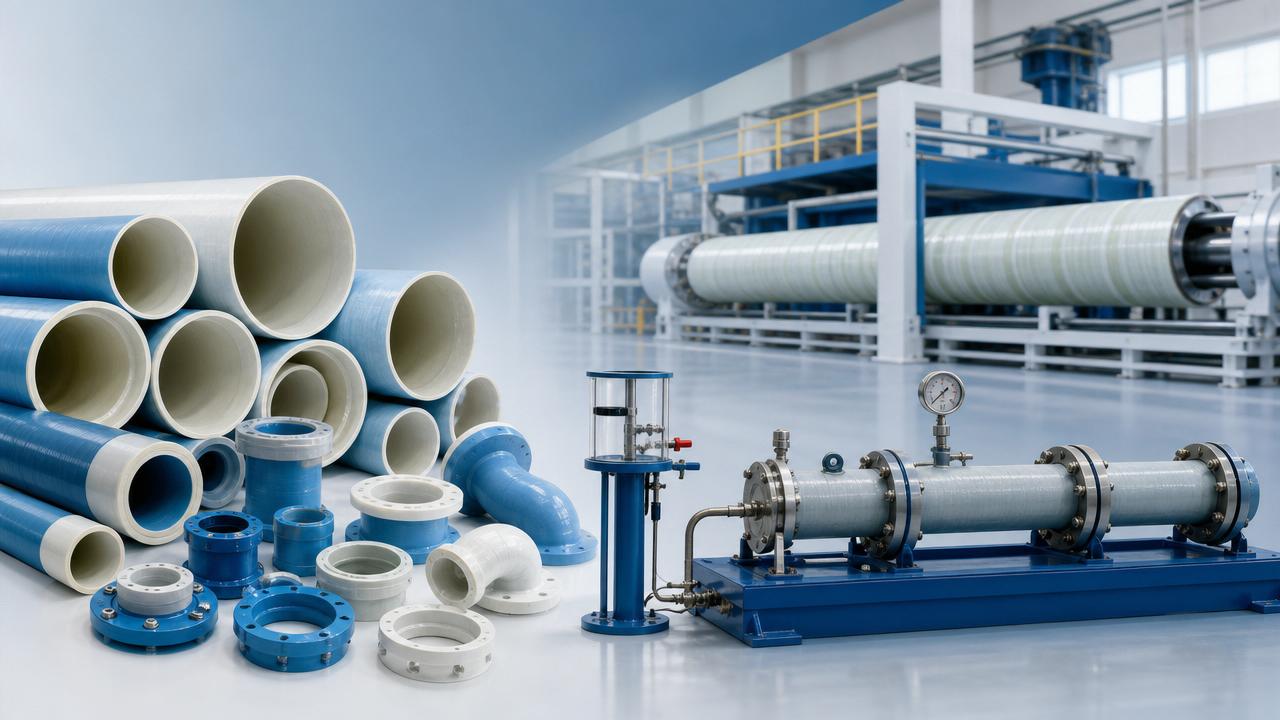
What Distributors Should Check Before Sourcing GRP Pipe
For distributors, choosing the right GRP Pipe supplier is not only about price—it directly affects project reliability, delivery stability, and long-term customer trust.
Before sourcing, product quality, production capacity, testing standards, application experience, and after-sales support all need careful evaluation.
Demand is growing across oil and gas, marine, chemical, water, and industrial piping sectors.
Understanding what to check in advance helps reduce sourcing risks, protect margins, and build a stronger GRP Pipe supply chain.
Start with the Application Scenario, Not Only the Quotation
A GRP Pipe order may look simple on paper, but operating conditions can change the whole sourcing decision.
Pressure, temperature, medium, installation method, soil condition, and design life affect pipe structure and resin selection.
In glass fiber reinforced composite piping, performance depends on more than diameter and pressure class.
Fiber winding angle, resin system, liner design, curing control, and joint quality all influence field reliability.
A reliable supplier should ask scenario-based questions before confirming a GRP Pipe specification.
If a quotation ignores fluid chemistry or installation environment, hidden project risks may appear later.
Oil and Gas Projects Require Pressure and Corrosion Verification
Oil and gas projects often use GRP Pipe for produced water, seawater injection, brine, and utility lines.
These systems demand stable corrosion resistance, high hydraulic efficiency, and dependable pressure performance.
Before sourcing, confirm whether the supplier has experience with oilfield media and high-salinity environments.
The pipe should be checked against design pressure, surge pressure, vacuum conditions, and long-term creep behavior.
Static hydrostatic testing is especially important for this scenario.
Testing records should show pressure holding time, leakage inspection, and traceability for each production batch.
Shandong Ocean Pipe Technology Co., Ltd. has supplied composite piping for oil and gas applications.
Its annual GRE pipe production and testing capacity reaches 25,000 tons, supported by multiple hydrostatic testing machines.
Marine and Offshore Use Needs Lightweight Strength and Approval Awareness
Marine piping has different priorities from buried industrial lines.
Ship ballast systems, cooling water, fire water, and offshore utility lines need lightweight materials and corrosion resistance.
A GRP Pipe used in marine service should handle vibration, confined installation, saltwater exposure, and strict inspection requirements.
Weight reduction can improve installation speed and reduce support loads compared with metallic piping.
However, joint design, flame performance, and system layout must match project requirements.
For marine and offshore sourcing, related experience is critical.
Ocean Pipe supplies composite piping to shipbuilding and offshore-related customers, including major shipyard projects.
For specialized vessel applications, review GRE Pipe for Marine & Offshore when matching corrosion, weight, and installation needs.
Chemical Plants Need Media Compatibility Before Price Comparison
Chemical plants are among the most sensitive GRP Pipe sourcing scenarios.
Acids, alkalis, solvents, wastewater, and mixed process fluids may require different resin systems and liner structures.
Before placing an order, request a chemical compatibility review based on concentration, temperature, and service duration.
A low-priced GRP Pipe can become expensive if the resin system is not suitable.
Premature blistering, softening, cracking, or leakage may create shutdown losses and warranty disputes.
Ask whether the supplier can provide technical guidance for aggressive media.
The best sourcing decision combines chemical resistance, mechanical strength, and proven field references.
Hot Spring, Salt Making, and Brine Systems Need Long-Term Stability
Hot spring and salt making projects often expose GRP Pipe to warm water, minerals, and high chloride content.
These conditions can accelerate corrosion in steel pipes, making fiberglass reinforced piping attractive.
The key sourcing question is not only whether the pipe resists salt.
Thermal cycling, buried load, UV exposure, and joint sealing should also be checked.
For brine transfer, pressure classes and abrasion conditions should be confirmed early.
If solids are present, inner liner durability becomes more important.
A qualified GRP Pipe supplier should explain expected service behavior under actual operating temperatures.
Compare Scenario Requirements Before Confirming the Supplier
This comparison helps avoid using one GRP Pipe selection rule for every project.
Different conditions need different technical evidence, even when nominal pipe size is identical.
Production Capacity Should Match Delivery Commitments
Supply stability matters when GRP Pipe is sourced for multiple projects or overseas delivery.
A factory with limited winding lines may struggle during peak production periods.
Check the number of production lines, fitting equipment, mold availability, and testing capacity.
These factors influence lead time more directly than verbal promises.
Ocean Pipe was established in 2012 in Wucheng Industrial Park, Dezhou City, Shandong Province, China.
The company has a registered capital of USD 4,200,000 and ranks among major Chinese GRE pipe manufacturers.
Its factory operates 16 winding production lines and 174 sets of pipe fitting winding machines.
Winding micro control systems support consistent fiberglass reinforcement and resin distribution.
For large GRP Pipe orders, this capacity helps improve delivery planning and batch consistency.
Testing Standards Are the Core of Risk Control
GRP Pipe quality cannot be judged only by appearance.
A smooth surface is important, but structural performance must be confirmed by controlled testing.
Key checks include hydrostatic pressure testing, stiffness testing, dimension inspection, visual inspection, and fitting compatibility.
For pressure pipelines, hydrostatic testing is especially valuable because it verifies leakage resistance before shipment.
Ask for test reports, inspection procedures, and traceability documents for each GRP Pipe batch.
Factory inspection should also cover raw materials.
Glass fiber, resin, curing agents, and additives should come from controlled sources.
In glass and ceramic materials sectors, stable raw material quality directly affects final composite performance.
Fittings, Joints, and Installation Support Cannot Be Ignored
Many piping failures occur at joints rather than straight pipe sections.
Elbows, tees, reducers, flanges, and couplings should be evaluated together with the GRP Pipe system.
A supplier with strong fitting production capacity can reduce mismatch risks.
Check whether fittings are wound, cured, inspected, and pressure-tested under clear procedures.
Installation guidance is also important for field performance.
Proper trench preparation, support spacing, torque control, and adhesive bonding can determine service life.
A dependable GRP Pipe supplier should provide drawings, handling instructions, and technical responses during installation.
Common Sourcing Misjudgments That Increase Project Risk
- Comparing GRP Pipe only by unit price without checking resin system and design conditions.
- Accepting delivery promises without reviewing production line capacity and testing bottlenecks.
- Ignoring fittings, joints, and field installation requirements.
- Using general corrosion data instead of project-specific media compatibility.
- Failing to request batch traceability and hydrostatic test records.
- Overlooking export experience, packaging, and documentation for overseas projects.
These issues often appear after shipment, when correction costs are higher.
A preventive sourcing checklist is more effective than solving quality disputes later.
Scenario-Based Supplier Checklist for Better Decisions
- Confirm the application scenario, medium, pressure, temperature, and installation environment.
- Review GRP Pipe resin system, liner design, stiffness class, and pressure rating.
- Check production capacity, winding control, fitting equipment, and mold availability.
- Request hydrostatic testing records, dimensional inspection reports, and batch traceability.
- Evaluate references in oil and gas, marine, chemical, brine, or related industries.
- Confirm packing, export documentation, lead time, and after-sales technical support.
This checklist turns sourcing from a price discussion into a structured risk review.
It also supports more accurate quotation comparison between different GRP Pipe suppliers.
Build a Safer GRP Pipe Supply Chain with Verified Capability
The best GRP Pipe sourcing decision balances technical suitability, stable manufacturing, testing confidence, and practical project experience.
Ocean Pipe serves oil and gas, ship ballast piping, LNG, chemical plants, hot spring piping, and salt making projects.
Its customer base includes well-known groups such as CNOOC, CNPC, Sinopec, and major Chinese shipyards.
The company has also expanded into Australia, Iraq, Kazakhstan, Turkey, and other overseas markets.
Before confirming the next GRP Pipe order, prepare project data, operating conditions, quantity, and expected delivery schedule.
Then request a scenario-based technical review, supporting test documents, and a clear production plan.
This approach helps secure reliable composite piping while protecting customer trust and long-term distribution value.
Please give us a message
产品介绍产品介绍产品介绍产品介绍产品介绍产品介绍产品介绍产品介绍产品介绍产品介绍产品介绍产品介绍产品介绍产品介绍产品介绍产品介绍产品介绍产品介绍产品介绍产品介绍产品介绍产品介绍产品介绍产品介绍产品介绍产品介绍产品介绍产品介绍产品介绍产品介绍
Please give us a message
产品介绍产品介绍产品介绍产品介绍产品介绍产品介绍产品介绍产品介绍产品介绍产品介绍产品介绍产品介绍产品介绍产品介绍产品介绍产品介绍产品介绍产品介绍产品介绍产品介绍产品介绍产品介绍产品介绍产品介绍产品介绍产品介绍产品介绍产品介绍产品介绍产品介绍
Please give us a message
产品介绍产品介绍产品介绍产品介绍产品介绍产品介绍产品介绍产品介绍产品介绍产品介绍产品介绍产品介绍产品介绍产品介绍产品介绍产品介绍产品介绍产品介绍产品介绍产品介绍产品介绍产品介绍产品介绍产品介绍产品介绍产品介绍产品介绍产品介绍产品介绍产品介绍
Please give us a message
产品介绍产品介绍产品介绍产品介绍产品介绍产品介绍产品介绍产品介绍产品介绍产品介绍产品介绍产品介绍产品介绍产品介绍产品介绍产品介绍产品介绍产品介绍产品介绍产品介绍产品介绍产品介绍产品介绍产品介绍产品介绍产品介绍产品介绍产品介绍产品介绍产品介绍