
GRP Pipe Installation Guide: Trench, Bedding and Jointing Requirements
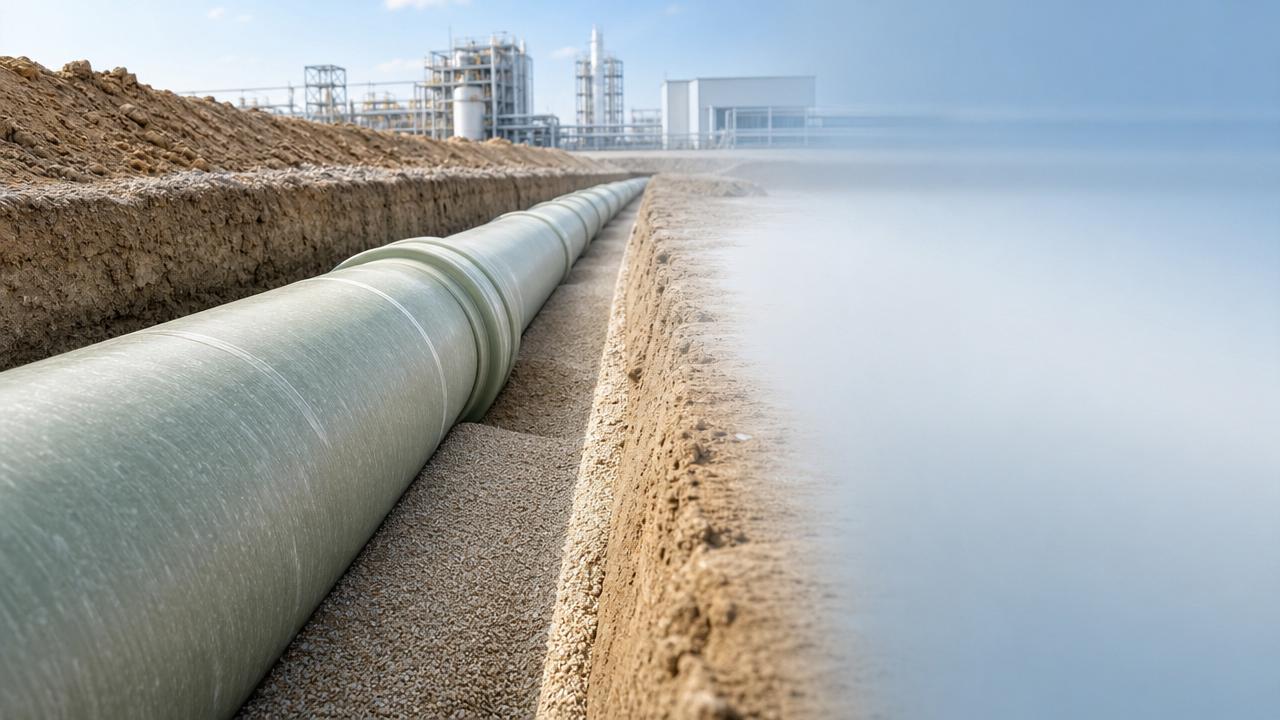
Proper GRP Pipe installation is essential for long-term pipeline performance, safe operation, and reduced maintenance in demanding industrial environments.
For site operators and installation teams, trench preparation, bedding support, alignment, and jointing control directly affect leakage risk and pipe service life.
This guide explains practical installation steps for GRP Pipe in water transmission, chemical plants, marine systems, and oil and gas projects.
What Operators Need to Control First
Most GRP Pipe failures during service are not caused by pipe material alone. They often come from poor installation control.
The most important factors are stable trench geometry, correct bedding material, uniform side support, clean jointing surfaces, and controlled backfilling.
Operators should treat installation as a support system. The pipe, soil, bedding, joints, and compaction work together under load.
If one part is ignored, the pipeline may deform, leak, or lose hydraulic performance before reaching its design life.
Before work begins, confirm pipe class, diameter, joint type, soil condition, groundwater level, traffic load, and project installation specification.
Pre-Installation Checks Before Lowering GRP Pipe
Every GRP Pipe section should be inspected before installation. Check the pipe body, spigot, socket, gasket groove, and protective surfaces.
Look for cracks, delamination, impact damage, contaminated sealing areas, or deformation caused by incorrect storage or handling.
Operators should verify that the delivered pipe matches the approved pressure rating, stiffness class, length, fittings, and project drawings.
For industrial projects, installation teams should also confirm chemical compatibility, operating temperature range, and any special lining or resin system requirements.
Use lifting belts instead of chains or sharp hooks. GRP Pipe is strong in service but can be damaged by concentrated impact.
Store pipes on level ground with proper supports. Avoid dragging pipe ends across gravel, steel edges, or rough concrete surfaces.
Trench Width, Depth, and Stability Requirements
Trench design must provide enough working space for bedding placement, pipe alignment, jointing, and side backfill compaction.
A trench that is too narrow makes compaction difficult. Poor side compaction can reduce pipe support and increase deflection risk.
A trench that is unnecessarily wide may increase earth load and backfill cost, especially under roads or heavy industrial yards.
The trench bottom should be stable, level, and free from large stones, debris, frozen soil, and sharp objects.
If the native soil is weak, soft, or unstable, remove unsuitable material and replace it with approved granular bedding.
Where groundwater is present, dewatering should be controlled before bedding work. Installing pipe in flowing water can disturb support material.
Trench walls must be protected according to local safety rules. Safe access is as important as technical installation quality.
Bedding Material and Pipe Support Requirements
Bedding provides the first structural support for GRP Pipe. It must distribute load evenly and protect the pipe from point contact.
Common bedding materials include clean sand, fine gravel, or selected granular soil meeting project grading requirements.
The bedding should be compacted to the specified level before pipe laying, while maintaining a shaped surface for proper pipe seating.
Operators should avoid clay lumps, organic material, oversized stones, construction waste, or aggressive materials that may damage the pipe surface.
The pipe must not rest on blocks, bricks, timber wedges, or isolated hard points after final positioning.
For municipal networks, drainage lines, and pressure pipelines, products such as GRE Pipe for Municipal Project require the same careful bedding control to maintain stable service.
After the pipe is placed, bedding should support the lower arc uniformly. Gaps beneath the pipe can create stress concentration.
Lowering, Alignment, and Grade Control
GRP Pipe should be lowered gently into the trench using approved lifting equipment and trained personnel.
Never drop pipe sections, roll them into the trench, or use force that may damage the joint area.
Alignment should be checked continuously during installation. Small deviations can accumulate and create joint stress or hydraulic losses.
For gravity pipelines, grade control is critical. Incorrect slope may cause sedimentation, reduced flow, or difficult maintenance later.
For pressure systems, alignment affects joint sealing, thrust restraint design, and the stability of fittings and bends.
Operators should use survey instruments, string lines, laser levels, or approved positioning tools depending on project accuracy requirements.
Any adjustment should be made by modifying the bedding, not by forcing the pipe body or joint into position.
Jointing Requirements for Leak-Free Performance
Jointing is one of the most sensitive steps in GRP Pipe installation. Cleanliness and correct assembly determine sealing reliability.
Before jointing, clean the spigot end, socket, gasket, groove, and sealing surfaces. Remove sand, mud, grease, and packaging residue.
Inspect the gasket for cuts, twisting, hardening, or incorrect size. Damaged gaskets should never be reused.
Apply the lubricant recommended by the pipe manufacturer. Do not use oil, solvent, or unsuitable grease that may attack rubber seals.
During insertion, keep the pipe aligned with the socket axis. Angled pushing can roll the gasket or damage the sealing lip.
Use controlled pulling or pushing equipment, not uncontrolled impact. Marked insertion depth helps confirm the joint is fully seated.
For restrained joints, flanged joints, or laminated joints, follow the approved method statement, curing requirement, torque sequence, and inspection procedure.
After assembly, verify joint gap, angular deflection allowance, and position against the project specification or manufacturer instruction.
Side Backfill and Compaction Around the Pipe
Side backfill is not simple trench filling. It is a structural operation that helps the pipe resist external load.
Place backfill evenly on both sides of the pipe. Uneven placement can push the pipe out of alignment.
Compaction should be performed in layers, using suitable tools that do not strike or damage the pipe wall.
The haunch area below the pipe sides requires special attention. Poor haunch compaction is a common reason for excessive deflection.
Operators should avoid using heavy compactors directly above the pipe until enough cover has been placed.
Backfill material near the pipe should meet the specified grading, moisture condition, and compaction requirement.
Large rocks or sharp debris should not be placed near the pipe. They may create abrasion points or local stress.
Minimum Cover and Protection from External Loads
Minimum cover depends on pipe stiffness, soil type, compaction quality, traffic load, and project design requirements.
Insufficient cover may expose GRP Pipe to excessive impact from vehicles, construction equipment, or ground surface movement.
In roads, plant yards, ports, or shipyard areas, temporary construction loads may be heavier than final operating loads.
Operators should control equipment movement near the trench. Heavy machines should not cross newly installed pipelines without approved protection.
If shallow installation is unavoidable, use engineered protection such as slabs, sleeves, controlled fill, or special structural measures.
For aboveground transitions, supports and anchors must be designed to prevent vibration, thermal movement, and concentrated bearing stress.
Handling Bends, Tees, Valves, and Thrust Forces
Pipeline fittings create special installation challenges. Bends, reducers, tees, valves, and end caps can generate thrust under pressure.
Thrust blocks, restrained joints, anchors, or engineered supports may be required depending on pressure and pipeline layout.
Do not rely on ordinary soil support alone where hydraulic thrust is significant unless the design specifically allows it.
Valves should be independently supported when needed. Heavy valve loads should not be transferred directly to the GRP Pipe joint.
Flanged connections must be aligned correctly before tightening. Pulling misaligned flanges together can damage sealing faces and pipe fittings.
Tighten bolts gradually in a cross pattern. Use specified torque values to avoid leakage or flange overstress.
Hydrostatic Testing and Commissioning Checks
Testing should be performed only after sufficient backfill and restraint are in place, unless the project specification states otherwise.
Before pressure testing, remove air from the line carefully. Trapped air can create unstable readings and unsafe test conditions.
Increase pressure gradually and monitor joints, fittings, valves, anchors, and exposed sections for leakage or movement.
Pressure, duration, allowable loss, and acceptance criteria should follow the contract documents and applicable standards.
If leakage occurs, release pressure safely before inspection. Never tighten or repair pressurized joints without approved procedures.
After testing, record results, repaired areas, pressure charts, inspection notes, and final acceptance confirmation for future maintenance reference.
Common Installation Mistakes to Avoid
One common mistake is placing GRP Pipe directly on uneven trench bottoms, stones, or hard supports.
Another mistake is ignoring side compaction because the pipe looks stable after being laid in the trench.
Dirty jointing surfaces also cause many avoidable leaks. Even small sand particles can affect gasket sealing performance.
Operators should not exceed allowed joint deflection. Excessive angular movement can reduce sealing margin and increase stress.
Using unsuitable lubricants, damaged gaskets, or incorrect insertion methods can lead to early joint failure.
Backfilling too quickly without inspection may hide defects. Important control points should be checked before each stage is covered.
Practical Quality Control Checklist for Site Teams
A simple checklist helps installation teams maintain consistent quality, especially when multiple crews work along the same pipeline route.
Before laying, confirm pipe inspection, trench approval, bedding material, dewatering condition, lifting method, and safety access.
During laying, check pipe direction, grade, alignment, joint cleanliness, gasket condition, lubrication, and insertion depth.
During backfill, verify haunch support, layer thickness, compaction method, material quality, and pipe position after compaction.
Before testing, confirm restraints, anchors, valve supports, air release points, pressure gauge calibration, and emergency safety measures.
After completion, document as-built position, test records, material batches, inspection results, and any deviations approved by engineering staff.
Why Manufacturer Guidance Still Matters
General installation principles are useful, but each GRP Pipe system may have specific jointing, stiffness, pressure, and handling requirements.
Manufacturer guidance helps operators match field practice with pipe design, resin system, gasket type, and tested performance.
Shandong Ocean Pipe Technology Co., Ltd. manufactures GRE pipe and fittings for oil and gas, ship ballast, LNG, chemical, and municipal applications.
With multiple winding production lines and hydrostatic testing capacity, the company supports projects requiring controlled quality and reliable pipe performance.
For site teams, using supplier instructions together with project specifications reduces uncertainty and improves installation consistency.
Conclusion: Good Installation Protects the Whole Pipeline
GRP Pipe installation succeeds when operators control trench preparation, bedding support, alignment, jointing, backfill, and testing as one system.
The key is not speed, but stable support, clean sealing surfaces, correct compaction, and careful verification before each stage is covered.
When these requirements are followed, GRP Pipe can deliver dependable service in demanding industrial and municipal environments.
For operators and installation teams, disciplined field practice is the most effective way to prevent leakage, deformation, downtime, and costly repairs.
Please give us a message
产品介绍产品介绍产品介绍产品介绍产品介绍产品介绍产品介绍产品介绍产品介绍产品介绍产品介绍产品介绍产品介绍产品介绍产品介绍产品介绍产品介绍产品介绍产品介绍产品介绍产品介绍产品介绍产品介绍产品介绍产品介绍产品介绍产品介绍产品介绍产品介绍产品介绍
Please give us a message
产品介绍产品介绍产品介绍产品介绍产品介绍产品介绍产品介绍产品介绍产品介绍产品介绍产品介绍产品介绍产品介绍产品介绍产品介绍产品介绍产品介绍产品介绍产品介绍产品介绍产品介绍产品介绍产品介绍产品介绍产品介绍产品介绍产品介绍产品介绍产品介绍产品介绍
Please give us a message
产品介绍产品介绍产品介绍产品介绍产品介绍产品介绍产品介绍产品介绍产品介绍产品介绍产品介绍产品介绍产品介绍产品介绍产品介绍产品介绍产品介绍产品介绍产品介绍产品介绍产品介绍产品介绍产品介绍产品介绍产品介绍产品介绍产品介绍产品介绍产品介绍产品介绍
Please give us a message
产品介绍产品介绍产品介绍产品介绍产品介绍产品介绍产品介绍产品介绍产品介绍产品介绍产品介绍产品介绍产品介绍产品介绍产品介绍产品介绍产品介绍产品介绍产品介绍产品介绍产品介绍产品介绍产品介绍产品介绍产品介绍产品介绍产品介绍产品介绍产品介绍产品介绍