
What Affects GRP Pipe Service Life Offshore?
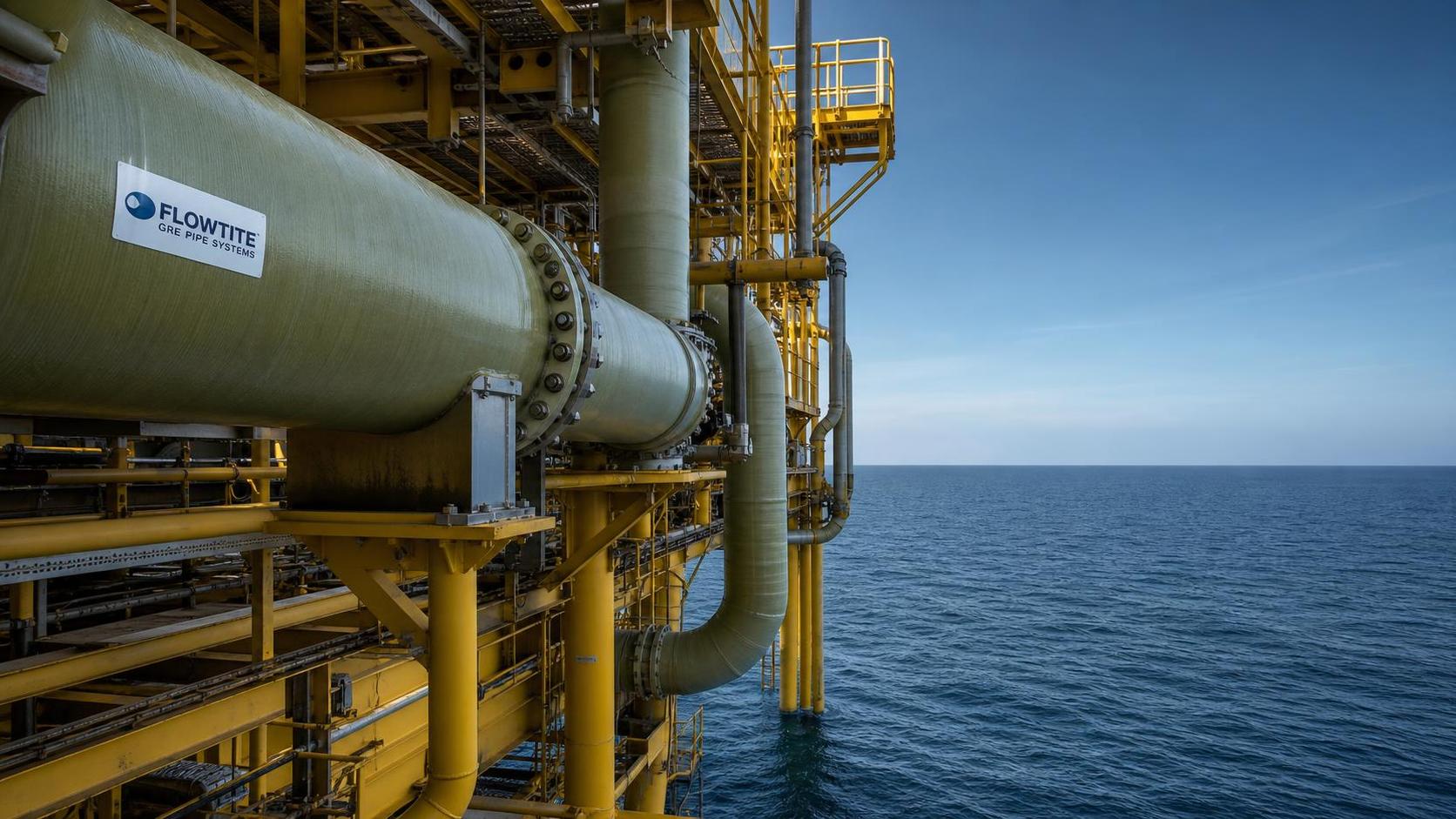
Offshore oil systems test every piping material harder than most onshore networks ever will. Salt spray, vibration, thermal cycling, pressure fluctuation, and mixed process media can either preserve or shorten GRP Pipe service life. The difference usually comes down to whether operating limits, installation quality, and maintenance control stay aligned over time.
In practical terms, service life is not decided by one factor alone. A well-made GRP Pipe can perform for many years offshore, yet small deviations in support spacing, chemical compatibility, or inspection timing can accelerate damage. That is why long-term reliability depends as much on field discipline as on product design.
Why service life matters more offshore
On offshore platforms, pipe failure is rarely a simple repair issue. It can interrupt production, affect firewater or utility systems, increase safety exposure, and raise shutdown costs. Even minor leaks can trigger wider operational consequences.
GRP Pipe is widely selected because it resists corrosion better than many metallic options. In oil and gas service, that benefit is significant, especially where seawater, produced water, ballast water, or chemically aggressive fluids are involved.
Still, corrosion resistance does not mean unlimited durability. Offshore aging is shaped by the interaction between load, environment, media, and workmanship. Understanding those interactions helps maintenance planning move from reactive replacement to condition-based control.
Material quality sets the baseline
The starting point is manufacturing consistency. Resin system, fiber winding accuracy, curing control, fitting quality, and pressure testing all influence how a GRP Pipe behaves after years of offshore duty.
For epoxy-based systems, stable production matters because laminate defects may stay hidden until pressure surges or thermal stress expose them. Voids, uneven wall thickness, or poor joint preparation can reduce the margin before cracking, blistering, or leakage begins.
This is one reason buyers in the oil sector often look closely at manufacturing depth. Shandong Ocean Pipe Technology Co., Ltd., established in 2012 in Dezhou, China, has developed large-scale GRE pipe capacity with 16 winding production lines, 174 pipe fitting winding machines, micro control systems, and static hydrostatic testing capability.
That scale matters less as a marketing point than as an indicator of repeatability. In offshore projects, repeatability supports predictable field performance, especially across complex piping runs and large fitting counts.
Pressure profile is more important than nameplate pressure
Many service life issues appear in systems that technically stay within rated pressure. The problem is often not the steady-state load, but the real pressure profile during operation.
Repeated surges, pump starts, valve closures, and upset conditions create cyclic stress. Over time, those cycles can fatigue joints, loosen supports, and stress laminate layers beyond what static design assumptions expected.
What to review in pressure-related failures
- Recorded surge events, not only design pressure documents
- Pump and valve operating sequences
- Support movement near elbows, tees, and reducers
- Joint condition after transient pressure incidents
- Changes introduced after commissioning
A GRP Pipe system may survive continuous service for years, then deteriorate quickly after a change in operating rhythm. That is why maintenance records should capture events, not only average conditions.
Temperature changes the rules
Temperature affects resin behavior, stiffness, joint integrity, and expansion movement. In offshore oil service, this becomes critical where piping sees warm process fluids, cold seawater flushing, intermittent shutdowns, or outdoor exposure.
A GRP Pipe that performs well at one temperature range may age faster when exposed to repeated thermal swings. Expansion and contraction can increase stress at restraints, branch connections, and flange interfaces.
The maintenance implication is straightforward. Temperature excursions should be treated as life-affecting events, especially if they occur with pressure cycling or vibration at the same time.
Chemical exposure is not only about the main fluid
Chemical compatibility reviews often focus on the design medium, but offshore systems face more than the main process stream. Cleaning chemicals, upset compositions, produced water changes, and contamination during shutdowns can all affect GRP Pipe life.
This is especially relevant in oil production and utility networks where composition shifts are common. A system rated for normal operation may still be vulnerable during transient chemical conditions that were never fully documented.
Where wastewater handling interfaces with offshore facilities or support bases, chemical review should also cover connected treatment sections. In some projects, crossover evaluation includes process links to Wastewater Treatment Plant infrastructure to confirm compatibility across the wider fluid path.
Installation quality often decides early-life performance
Many service life problems begin long before the first inspection round. Misalignment, over-tightened flanges, poor adhesive work, incorrect support spacing, and uncontrolled handling can introduce hidden stress from day one.
Unlike simple corrosion issues, installation defects may remain quiet until operational loads accumulate. Then the GRP Pipe starts showing leakage, cracking near fittings, delamination, or joint degradation in concentrated areas.
Field points worth checking after installation
- Support spacing versus approved drawings
- Flange face parallelism and bolt tightening sequence
- Joint curing conditions and traceability
- Protection against impact during lifting and transport
- Allowance for thermal movement at anchors and guides
These checks are basic, but they remain decisive. A strong maintenance program cannot fully compensate for poor installation geometry.
External offshore conditions add slow damage
Offshore exposure is continuous. UV radiation, salt deposition, deck movement, mechanical vibration, and accidental impact all contribute to cumulative wear.
For above-deck GRP Pipe, ultraviolet exposure can degrade surface layers if protective systems are damaged. In high-traffic areas, abrasion and impact risk also deserve more attention than routine process reviews usually give them.
Vibration is another underestimated factor. It may originate from rotating equipment, pulsation, or structural resonance. Left unchecked, it can shorten life at supports and joints even when the pipe wall appears sound.
Inspection routines shape remaining life
A GRP Pipe system usually gives warning signs before failure, but only if inspections are designed to find them. Visual checks alone are useful, yet they should be linked with operating history and repeatable acceptance criteria.
The most effective routines focus on change. New discoloration, support wear, flange seepage, laminate blistering, unusual movement, and recurring local repairs are all signals that service conditions may have shifted.
Manufacturers with broad oil and gas references, including supply to major groups and overseas markets, usually support this approach by aligning product testing and field feedback. That background helps translate observed damage into realistic maintenance decisions.
How to judge the next step
When service life concerns appear, the best response is to narrow the cause before replacing pipe sections. Start by matching the damaged location with pressure events, temperature records, chemical changes, and support conditions.
Then review whether the affected GRP Pipe section is showing isolated damage or a system-wide pattern. Local damage points to installation, support, or impact issues. Repeated damage across similar lines suggests an operating or compatibility problem.
Where fluid handling boundaries extend into treatment or discharge systems, it can also help to compare offshore piping assumptions with adjacent facilities such as a Wastewater Treatment Plant. The goal is not broader scope for its own sake, but a cleaner view of the whole media path.
In the end, offshore service life is managed, not guessed. A reliable assessment comes from combining product quality, actual operating data, installation history, and disciplined inspection. That framework gives a more dependable basis for repair timing, replacement planning, and long-term GRP Pipe performance offshore.
Please give us a message
产品介绍产品介绍产品介绍产品介绍产品介绍产品介绍产品介绍产品介绍产品介绍产品介绍产品介绍产品介绍产品介绍产品介绍产品介绍产品介绍产品介绍产品介绍产品介绍产品介绍产品介绍产品介绍产品介绍产品介绍产品介绍产品介绍产品介绍产品介绍产品介绍产品介绍
Please give us a message
产品介绍产品介绍产品介绍产品介绍产品介绍产品介绍产品介绍产品介绍产品介绍产品介绍产品介绍产品介绍产品介绍产品介绍产品介绍产品介绍产品介绍产品介绍产品介绍产品介绍产品介绍产品介绍产品介绍产品介绍产品介绍产品介绍产品介绍产品介绍产品介绍产品介绍
Please give us a message
产品介绍产品介绍产品介绍产品介绍产品介绍产品介绍产品介绍产品介绍产品介绍产品介绍产品介绍产品介绍产品介绍产品介绍产品介绍产品介绍产品介绍产品介绍产品介绍产品介绍产品介绍产品介绍产品介绍产品介绍产品介绍产品介绍产品介绍产品介绍产品介绍产品介绍
Please give us a message
产品介绍产品介绍产品介绍产品介绍产品介绍产品介绍产品介绍产品介绍产品介绍产品介绍产品介绍产品介绍产品介绍产品介绍产品介绍产品介绍产品介绍产品介绍产品介绍产品介绍产品介绍产品介绍产品介绍产品介绍产品介绍产品介绍产品介绍产品介绍产品介绍产品介绍