
What Affects Fiberglass Pipe Price in Industrial Projects?
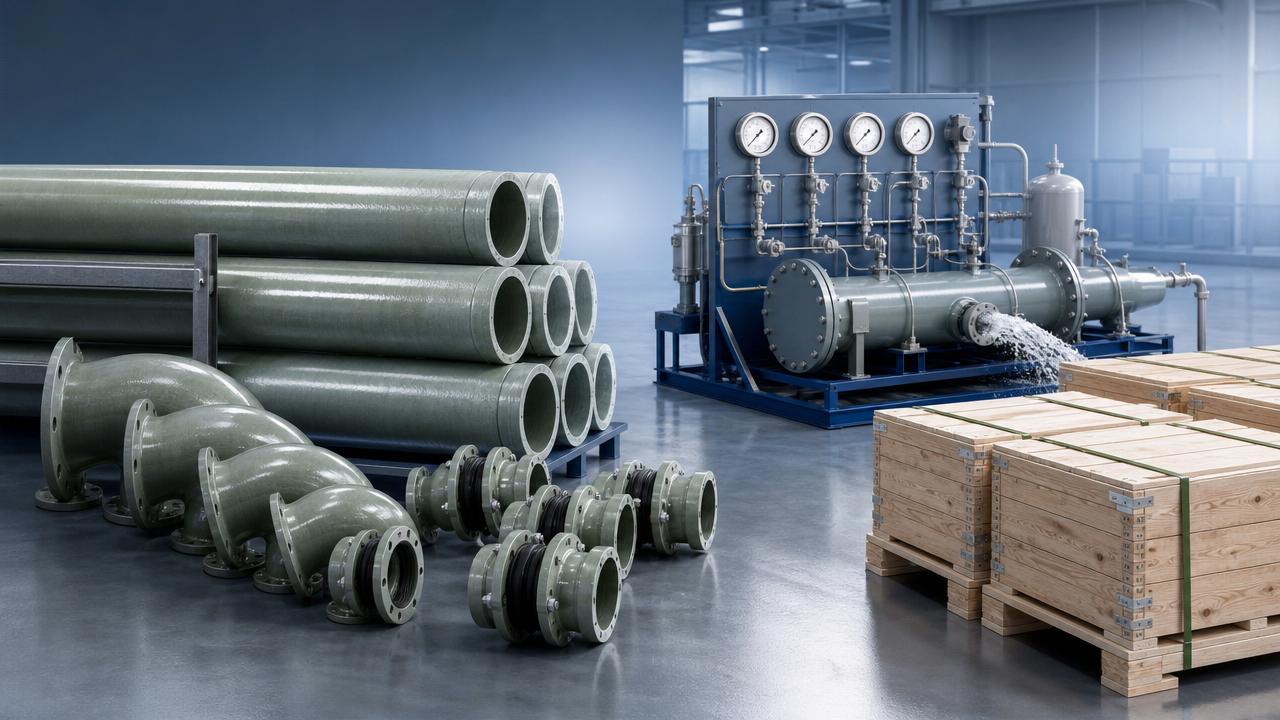
For financial approvers, the true Fiberglass Pipe price in industrial projects is not determined by unit cost alone. Material specifications, pressure ratings, project scale, testing requirements, delivery schedule, and supplier reliability can all affect total investment and long-term operating value. Understanding these cost drivers helps procurement and finance teams compare quotations more accurately, reduce hidden risks, and approve budgets with greater confidence for oil and gas, LNG, chemical, shipbuilding, and other demanding applications.
In capital-intensive projects, a small difference in pipe pricing can influence installation cost, maintenance frequency, shutdown risk, and lifecycle expenditure. For this reason, Fiberglass Pipe evaluation should be linked to engineering requirements, procurement strategy, and financial control rather than treated as a simple line-item purchase.
Why Unit Price Alone Can Mislead Budget Approval
A quotation for Fiberglass Pipe may look attractive at first glance, but financial approval should examine what is included and what is excluded. Two offers with the same diameter and nominal pressure may differ significantly in resin system, wall thickness, joint type, testing scope, and delivery readiness.
In industrial applications, pipeline replacement or repair can cost far more than the original material savings. A 3% lower purchase price may not be meaningful if it increases field rework, inspection delays, or unplanned downtime during commissioning.
Key Cost Layers Behind a Fiberglass Pipe Quotation
Finance teams usually approve budgets based on supplier quotations, but the quotation structure must be transparent. The following cost layers help separate real value from incomplete pricing.
The key conclusion is simple: a complete Fiberglass Pipe price should include the components required for safe installation and acceptance. Missing fittings, unclear testing, or vague delivery terms can shift cost from procurement to construction, where correction is usually more expensive.
Why Financial Approvers Should Ask for Scope Clarity
Before approving a Fiberglass Pipe budget, finance managers should request a scope matrix. At minimum, it should define pipe length, pressure class, fitting list, joint method, inspection standard, packing terms, and expected delivery period.
For projects involving 500 meters, 2,000 meters, or more than 10,000 meters of piping, incomplete scope comparison can create large budget deviations. Even a small omission per meter may become a major cost when multiplied across the full project.
Material Specification and Pressure Rating: The First Price Drivers
Fiberglass Pipe is widely used because it combines corrosion resistance, relatively light weight, and stable hydraulic performance. However, those benefits depend heavily on the selected resin system, reinforcement design, pressure rating, and operating environment.
A pipe used for seawater ballast, LNG auxiliary systems, chemical transfer, or oilfield water handling may require different design priorities. The financial team does not need to redesign the pipe, but it should understand why each technical requirement affects cost.
Resin System, Glass Reinforcement, and Wall Structure
The material structure of Fiberglass Pipe normally includes an inner corrosion-resistant liner, a reinforced structural layer, and an external protective surface. Higher chemical resistance or higher temperature tolerance can require a more specialized resin selection.
For GRE pipe, epoxy resin and glass fiber reinforcement are designed to withstand demanding industrial conditions. In corrosive media, this can reduce coating maintenance and replacement cycles compared with some metallic alternatives.
Common Specification Factors to Review
- Nominal diameter range, such as DN50–DN1000, depending on project flow requirements.
- Pressure class, commonly reviewed in steps such as 6 bar, 10 bar, 16 bar, or higher.
- Operating temperature range, especially for chemical plants, hot spring pipelines, and thermal water systems.
- Fluid type, including seawater, brine, condensate, chemical solution, or process water.
- Joint method, because bonded joints, flanged joints, and mechanical couplings affect labor and accessories.
When these requirements are not clearly stated, suppliers may price different assumptions. This is one reason Fiberglass Pipe quotations can vary even when the basic diameter appears identical.
Pressure Rating and Safety Margin
Pressure rating is one of the most direct cost drivers. A higher pressure class usually requires additional reinforcement, stricter process control, and more detailed hydrostatic testing before shipment.
For financial approvers, over-specification and under-specification are both costly. Over-specification may lock unnecessary capital into materials, while under-specification can create operational risk, change orders, and acceptance disputes.
A practical approach is to confirm 3 values with engineering teams: normal operating pressure, surge pressure, and design safety margin. These numbers help identify whether the quoted Fiberglass Pipe pressure class is commercially and technically reasonable.
Project Scale, Fittings, and Delivery Schedule
The same Fiberglass Pipe specification may have different pricing under different project quantities. Production batch size, fitting complexity, inspection schedule, and shipping plan all influence the final payable amount.
Large orders may support more efficient production planning, but they also require stronger coordination. In offshore, shipbuilding, LNG, and chemical projects, delayed pipe supply can affect installation milestones measured in weeks rather than days.
How Quantity Changes Commercial Terms
For small repair orders, setup time and documentation may represent a higher percentage of total cost. For medium and large projects, economies of scale can improve unit price, but warehousing, phased delivery, and cash flow timing become more important.
A project requiring 100 pieces of straight pipe has a very different cost profile from one requiring 100 pieces plus 80 customized fittings. Finance teams should therefore evaluate both total material value and installation readiness.
Typical Procurement Variables by Application
The table below summarizes common industrial scenarios and the procurement variables that may change Fiberglass Pipe price. Actual requirements should always be confirmed through project drawings and technical specifications.
For finance teams, this comparison highlights a core principle: Fiberglass Pipe price should be evaluated by application risk. A marine system and a chemical transfer line may require different evidence, even if both use reinforced composite piping.
Delivery Schedule and Inventory Risk
Delivery time can affect total project cost through labor standby, vessel docking windows, construction sequencing, and contract penalties. A typical industrial order may require 2–6 weeks depending on specification complexity and order volume.
Rush production can increase cost, while excessive early delivery can create storage and damage risk. A balanced procurement plan normally includes 3 milestones: technical confirmation, production inspection, and shipment coordination.
Testing, Documentation, and Supplier Reliability
In industrial procurement, testing and documentation are not administrative extras. They are risk-control tools that help finance teams avoid payment disputes, installation rejection, and operating failures.
A reliable Fiberglass Pipe supplier should support traceability from production to delivery. For critical projects, the cost of verified quality is often lower than the cost of uncertainty.
Testing Requirements That Influence Price
Hydrostatic pressure testing, dimensional checks, visual inspection, and fitting verification can all affect production workload. If third-party inspection is required, the timeline and documentation process may also change.
Shandong Ocean Pipe Technology Co., Ltd. was established in 2012 in Wucheng Industrial Park, Dezhou City, Shandong Province, China. The company has 16 winding production lines, 174 sets of pipe fitting winding machines, and 5 static water pressure testing machines.
With an annual GRE pipe production and testing capacity of 25,000 tons, Ocean Pipe serves demanding sectors including oil and gas, ship ballast piping, LNG, chemical plants, hot spring pipelines, and salt making companies.
Supplier Checks for Budget Confidence
- Confirm whether the supplier can produce both straight pipe and fittings under coordinated quality control.
- Review pressure testing capability and whether test records are included in the quotation.
- Check experience in at least 2 similar applications, such as offshore, shipbuilding, or chemical service.
- Ask for a delivery plan with production, inspection, packing, and shipment milestones.
- Clarify payment terms, warranty scope, and responsibility for specification changes.
These checks help financial approvers compare more than price. They reveal whether a Fiberglass Pipe supplier can reduce operational uncertainty throughout procurement, installation, and acceptance.
Marine and Offshore Procurement Considerations
Marine and offshore projects often require compact routing, corrosion resistance, lightweight installation, and dependable fitting accuracy. In these cases, reviewing GRE Pipe for Marine & Offshore can help procurement teams align technical selection with budget control.
For shipyards and offshore contractors, a lighter composite pipe system may reduce handling difficulty and support faster installation. However, finance teams should still verify joint details, testing scope, and delivery responsibility before approval.
How Finance Teams Should Compare Fiberglass Pipe Quotes
A disciplined comparison process can reduce hidden cost and avoid choosing the wrong offer. Instead of ranking suppliers only by unit price, finance and procurement teams can use a 5-step review method.
A Practical 5-Step Approval Method
- Step 1: Confirm technical scope, including diameter, pressure, temperature, medium, and fitting schedule.
- Step 2: Separate base pipe price from fittings, accessories, testing, packing, and freight.
- Step 3: Compare delivery periods, especially when the project schedule is shorter than 30–45 days.
- Step 4: Review supplier production capacity, pressure testing resources, and similar application experience.
- Step 5: Evaluate lifecycle implications, including maintenance, corrosion risk, repair access, and downtime exposure.
This method allows financial approvers to identify whether a low Fiberglass Pipe quotation is genuinely efficient or simply incomplete. It also helps project teams defend the approved budget during internal review.
Common Mistakes That Increase Total Cost
One frequent mistake is comparing price per meter without considering fittings. In complex pipeline layouts, fittings may determine installation success and can represent a significant share of the total supply package.
Another mistake is ignoring documentation requirements until shipment. If acceptance reports are requested after production, re-testing or document reconstruction may add time and cost.
A third mistake is approving an unrealistic delivery date. When suppliers promise very short lead times without clear production allocation, the buyer may face schedule pressure later in the project.
Quotation Questions Worth Asking
- Are all fittings included according to the latest project drawings?
- Is the hydrostatic test performed for every required pipe or by batch sampling?
- What packing method will be used for export or long-distance shipment?
- How many production days are needed after final technical confirmation?
- What changes will trigger price adjustment or delivery extension?
These questions are straightforward, but they often reveal whether the Fiberglass Pipe quotation is ready for approval or still requires clarification.
Final Budget Perspective for Industrial Buyers
For industrial projects, Fiberglass Pipe price is shaped by specification, pressure rating, fittings, testing, schedule, and supplier capability. A well-priced offer is not necessarily the lowest offer; it is the one that matches engineering needs while controlling future risk.
Ocean Pipe supports project buyers with GRE pipe production capacity, fitting manufacturing resources, pressure testing equipment, and experience across oil and gas, LNG, shipbuilding, chemical, hot spring, and salt making applications.
If your finance or procurement team is reviewing a Fiberglass Pipe budget, share your drawings, pressure requirements, application medium, and delivery schedule with us. Contact Ocean Pipe to request a tailored quotation, discuss product details, or explore suitable solutions for your next industrial project.
Please give us a message
产品介绍产品介绍产品介绍产品介绍产品介绍产品介绍产品介绍产品介绍产品介绍产品介绍产品介绍产品介绍产品介绍产品介绍产品介绍产品介绍产品介绍产品介绍产品介绍产品介绍产品介绍产品介绍产品介绍产品介绍产品介绍产品介绍产品介绍产品介绍产品介绍产品介绍
Please give us a message
产品介绍产品介绍产品介绍产品介绍产品介绍产品介绍产品介绍产品介绍产品介绍产品介绍产品介绍产品介绍产品介绍产品介绍产品介绍产品介绍产品介绍产品介绍产品介绍产品介绍产品介绍产品介绍产品介绍产品介绍产品介绍产品介绍产品介绍产品介绍产品介绍产品介绍
Please give us a message
产品介绍产品介绍产品介绍产品介绍产品介绍产品介绍产品介绍产品介绍产品介绍产品介绍产品介绍产品介绍产品介绍产品介绍产品介绍产品介绍产品介绍产品介绍产品介绍产品介绍产品介绍产品介绍产品介绍产品介绍产品介绍产品介绍产品介绍产品介绍产品介绍产品介绍
Please give us a message
产品介绍产品介绍产品介绍产品介绍产品介绍产品介绍产品介绍产品介绍产品介绍产品介绍产品介绍产品介绍产品介绍产品介绍产品介绍产品介绍产品介绍产品介绍产品介绍产品介绍产品介绍产品介绍产品介绍产品介绍产品介绍产品介绍产品介绍产品介绍产品介绍产品介绍